Interesting Things You Didn’t Know About Shih Tzus

Did you know Shih Tzus go beyond their cute looks and rich ancient history? Originating in Tibet, they were once the favored pets of Chinese royalty. Their "chrysanthemum face" comes from distinctively growing hair that improves their charm, and though small, these dogs are surprisingly agile and quick learners. They nearly went extinct during China's Communist Revolution but were saved by 14 surviving dogs who revived the breed. Fascinatingly, their coat color can change as they grow. Sacred companions in Tibetan monasteries and loved by Queen Elizabeth II, there are many more compelling aspects to these delightful dogs.
Key Takeaways
- Shih Tzus originated in Tibet and were considered sacred companions in monasteries, symbolizing luck and fortune.
- The breed was exclusively reserved for Chinese nobility during the Ming Dynasty, with severe penalties for commoners owning them.
- Despite their reputation as lap dogs, Shih Tzus have surprising agility and have achieved championship titles in canine sports.
- The breed's lineage today traces back to only 14 dogs that survived the Communist Revolution, crucial for their revival.
- Shih Tzus' "chrysanthemum face" results from their long hair growing in multiple directions, adding to their unique charm.
Ancient Roots and History
Dating back over a millennium, the Shih Tzu boasts one of the most ancient pedigrees in the canine world. This ancient breed has its origins in Tibet, where Tibetan monks bred them, creating a lineage that would eventually enchant Chinese royalty. These "little lions," as their name translates in Mandarin, were cherished for their resemblance to the lions depicted in traditional Chinese art. Their regal bearing and dignified presence made them the official royal dog of the Ming Dynasty.
The Shih Tzu's history is intertwined with wealth and nobility, as they were often seen frolicking in the halls of Chinese palaces. However, their association with the elite almost led to their downfall. During the Communist Revolution, the breed faced near extinction, with their numbers dwindling due to political upheaval and their connection to the old aristocracy. Modern Shih Tzus owe their existence to a mere 14 dogs that survived that turbulent period.
Artistic depictions of Shih Tzus in paintings and statues, dating as far back as the 6th century AD, highlight their esteemed status and enduring appeal. These depictions serve as a reflection of their revered place in ancient Chinese culture.
Unique Physical Traits
Having captivated ancient Chinese royalty with their elegance and charm, Shih Tzus continue to enchant with their unique physical traits. One of the most distinctive features of a Shih Tzu is its "chrysanthemum face." This charming appearance comes from the long hair that grows in multiple directions around their face, creating a delightful, flower-like effect. Their short muzzle and large, expressive eyes add to their adorable and endearing facial features, making them irresistible companions.
Shih Tzus are small dogs, yet their compact body is sturdy and robust, typically weighing between 9 to 16 pounds. This makes them perfect for those who love small but resilient pets. Their double coat, consisting of a silky outer layer and a soft undercoat, is another hallmark of the breed. This luxurious, long hair requires regular grooming to prevent mats and tangles, ensuring your Shih Tzu looks its best.
Interestingly, Shih Tzus can experience coat color changes as they mature. Dark coats may lighten, and white pups might develop distinct markings over time, adding an element of surprise as your pet grows. Cherish these unique traits that make the Shih Tzu so special.
Cultural and Royal Connections
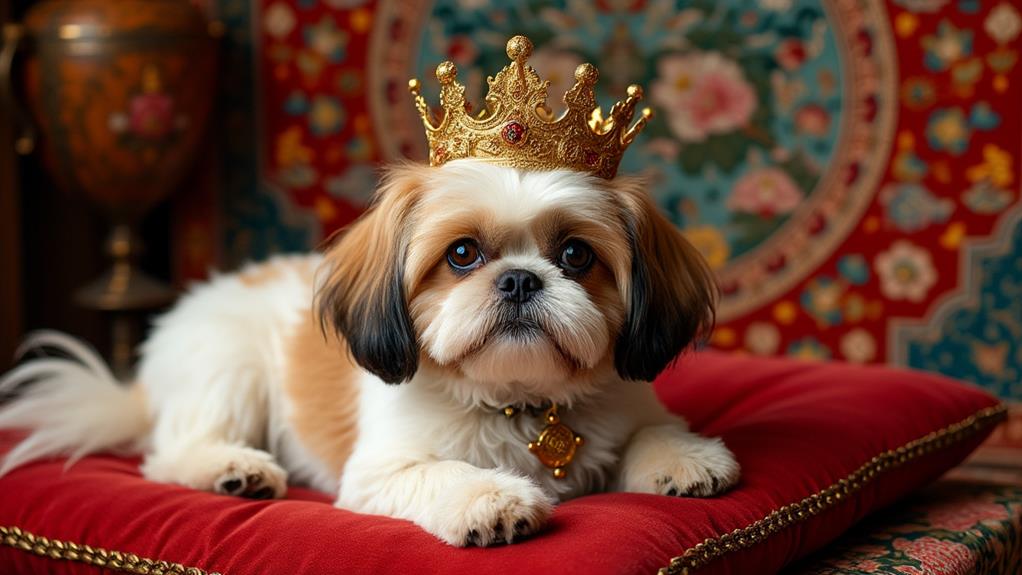
Shih Tzus boast a rich cultural tapestry, having been cherished as sacred companions in Tibetan monasteries and later gifted to Chinese royalty. These sacred dogs were more than just pets; they symbolized luck and fortune. The name "Shih Tzu" translates to "lion dog" in Mandarin, a nod to their resemblance to lions in traditional Chinese art and culture. This lion-like appearance only added to their allure and significance.
During the Ming Dynasty, purebred Shih Tzus were so highly valued that the breed was reserved exclusively for nobility. Their presence in the imperial courts underscored their high status. Severe penalties awaited commoners who dared possess these dogs, further emphasizing their cultural significance and the tight control over their ownership.
The Shih Tzu's odyssey through history didn't stop in ancient China. Queen Elizabeth II's fondness for the breed brought them into another domain of royal appreciation, solidifying their prestigious connections. These small, regal dogs have walked the halls of power and influence, from the sacred spaces of Tibetan monasteries to the opulent imperial courts. Even today, Shih Tzus continue to capture hearts with their rich heritage and undeniable charm.
Near Extinction and Revival
While Shih Tzus enjoyed a life of luxury among royals and nobility, their expedition took a dramatic turn during the 20th century. The Communist Revolution in China brought about near extinction for the Shih Tzu, as their close ties to wealth and royalty led to persecution. After Dowager Empress Tzu Hsi passed away in 1908, the royal breeding programs that had carefully maintained the breed were disbanded. This disbandment resulted in a drastic reduction of the Shih Tzu population.
Incredibly, the modern lineage of purebred Shih Tzus can be traced back to only 14 surviving dogs. These resilient animals became the foundation for revival efforts. Preservation initiatives in Europe during the early 20th century played an essential role in re-establishing the breed and restoring its popularity. Dedicated breeders focused on responsible breeding practices to guarantee the genetic diversity and health standards of the Shih Tzu were preserved.
The revival of the Shih Tzu breed serves as a reflection of the importance of maintaining these standards. Today, Shih Tzus continue to thrive, a living reminder of how close they came to disappearing and the efforts made to save them.
Surprising Athletic Abilities

When you think of Shih Tzus, athletic prowess might not immediately spring to mind, but these small dogs pack a surprising punch in the world of canine sports. This breed, often mistaken for being lazy lap dogs, actually possesses an impressive ability to excel in diverse athletic arenas. Shih Tzus are intelligent and demonstrate remarkable agility, often participating in competitions that showcase their skills. Their playful and curious nature fuels their engagement in physically demanding tasks, proving they're more than just adorable companions.
In 2014, Shih Tzus achieved championship and agility titles, highlighting their hidden athletic potential. With the right training and socialization, these dogs can improve their agility and performance, challenging stereotypes. Their intelligence allows them to learn quickly, making them excellent contenders in agility competitions and other canine sports. By involving your Shih Tzu in these activities, you're not only tapping into their athletic abilities but also enriching their lives and strengthening your bond.
Embrace the Shih Tzu's athletic side by incorporating regular training sessions and socialization into their routine. This will guarantee they remain both mentally stimulated and physically fit, allowing their true potential to shine in the world of canine sports.