Human Foods Cats Can and Can’t Eat: A Complete Guide for Pet Owners
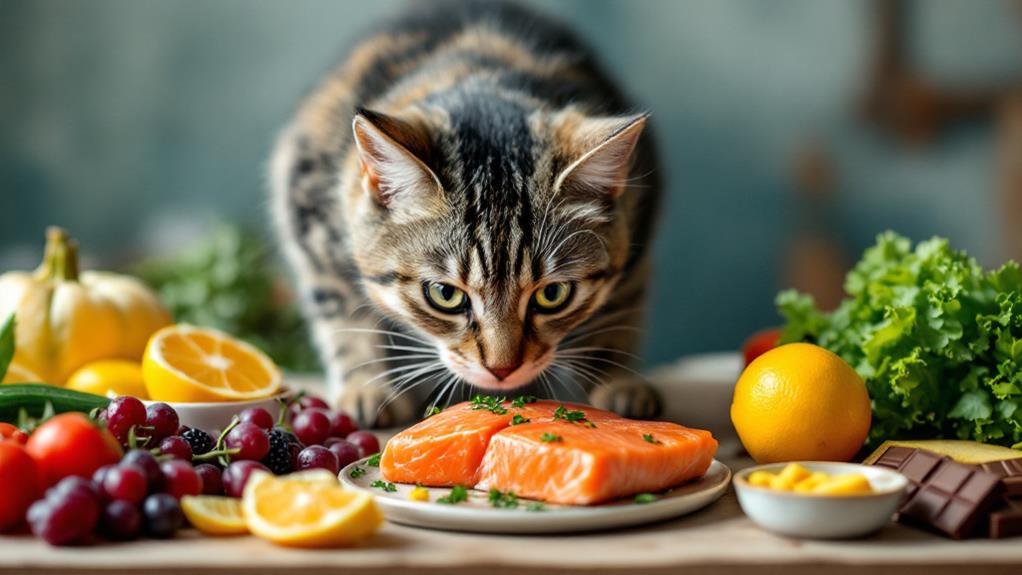
You need to know which human foods are safe for your cat and which ones can harm them. Cats can enjoy plain cooked meats like chicken and turkey, and small portions of fruits like apples and bananas. Cooked vegetables such as carrots and green beans also offer health benefits. However, avoid chocolate, onions, and grapes, which are toxic and could lead to severe health issues. Be cautious with dairy, as many cats are lactose intolerant, causing stomach upset. Knowing these simple guidelines can help you keep your feline friend healthy. There's a wealth of information to guarantee you're fully informed.
Safe Human Foods for Cats
Regarding sharing human foods with your feline friend, it's important to know which ones are safe. Cats are obligate carnivores, so their primary diet should consist of meat. Cooked meats like chicken, turkey, and beef are safe for cats and provide significant nutritional value. Confirm they're served without bones or seasoning to avoid any health risks.
Alongside meats, you can offer certain fruits cats enjoy, such as apples (peeled and seedless), bananas, and blueberries. These fruits can be given in small amounts as occasional treats, providing vitamins and antioxidants. In relation to vegetables, consider carrots, cucumbers, and green beans. These should be cooked and unseasoned, offering vital vitamins and fiber without overwhelming their carnivorous diet.
Cooked eggs are another excellent protein source. They're safe for cats when fully cooked, but raw eggs should be avoided due to potential bacteria. While whole grains like oats and brown rice can be included, they should only be in small amounts. Remember, in feeding cats, focus on their meat-based needs, and supplement with these safe human foods as a balanced addition to their regular diet.
Foods Cats Should Avoid
Why is it crucial to know which foods cats should avoid? Being aware of toxic foods protects your feline from severe health issues. Chocolate, for instance, is highly dangerous to cats due to theobromine, especially in dark chocolate. It can cause heart problems and seizures. Onions and garlic are similarly harmful. They damage red blood cells, potentially leading to anemia, and even small amounts are toxic to cats.
Grapes and raisins pose a risk as well. They are linked to kidney failure, with no known safe quantity for cats. It's best to keep these off their menu entirely. Caffeine is another harmful substance. Found in coffee, tea, and energy drinks, caffeine can lead to rapid breathing, muscle tremors, and severe cardiovascular issues in cats.
Then, there are dairy products. Many cats are lactose intolerant, meaning milk and cheese can cause gastrointestinal distress, resulting in vomiting and diarrhea. As a pet owner, your vigilance about these foods guarantees your cat remains healthy and happy. By steering clear of such harmful items, you prevent potential emergencies and maintain your cat's well-being.
Dairy Products and Their Risks
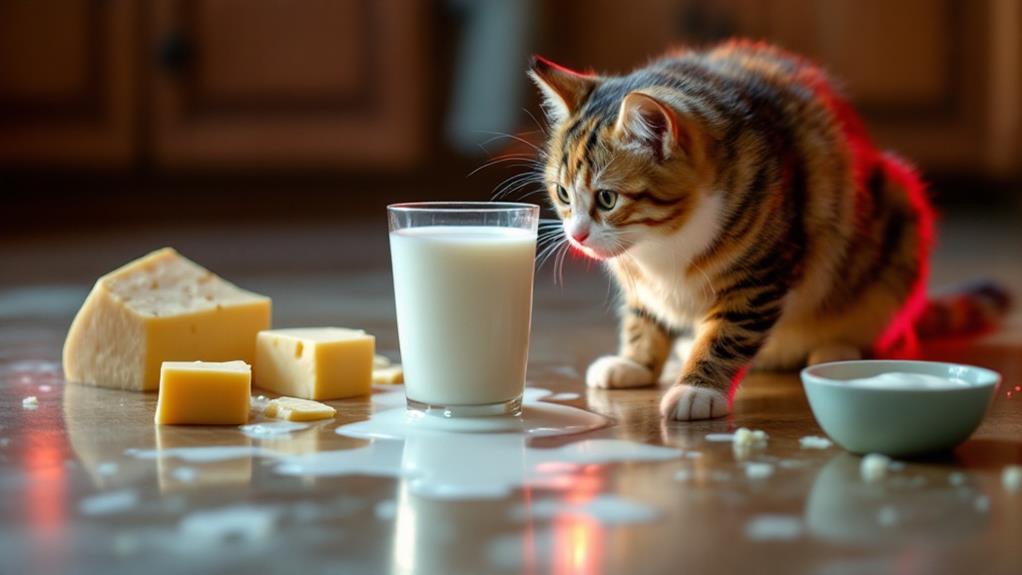
Understanding what foods can harm your cat is essential, and dairy products are often misunderstood in this regard. Most cats are actually lactose intolerant, meaning they lack the enzyme lactase necessary to properly digest lactose. This can lead to gastrointestinal distress, including symptoms like vomiting and diarrhea. While you might think a bowl of milk is a treat for your feline friend, it could actually result in digestive issues.
Here's a breakdown of common dairy products and their risks:
- Cheese: Although it contains lower levels of lactose than milk, cheese can still cause digestive issues if given in large amounts. Offer it sparingly, if at all.
- Ice Cream: High in both sugar and lactose, ice cream is a double whammy for your cat's digestive system. It's best to avoid this sweet treat altogether.
- Yogurt: Some sources suggest small amounts of yogurt might be okay, but there's no scientific consensus. It's best to proceed with caution when introducing yogurt to your cat's diet.
Key Takeaways on Cat Nutrition
A few fundamental principles guide cat nutrition, guaranteeing your feline friend stays healthy and happy. Primarily, cats are obligate carnivores, so their diet should mainly consist of meat to satisfy their protein and nutrient needs. This means that while some safe human foods can be offered as treats, they should only make up 10% of your cat's daily calorie intake to keep a balanced diet.
Be cautious with human foods, as many common items like chocolate, onions, and grapes are toxic to cats and should be avoided entirely. Introducing new foods gradually is crucial to prevent gastrointestinal upset. Cats have sensitive digestive systems, and sudden dietary changes can lead to problems. Always monitor your cat's response to new foods to identify any adverse reactions, such as allergies or intolerances. If you notice anything unusual, consult a veterinarian promptly.
Understanding these aspects of cat nutrition helps you make informed decisions about what to feed your pet. Always prioritize their health by focusing on protein-rich diets, carefully selecting treats, and avoiding toxic substances. This way, you'll guarantee your kitty thrives on wholesome and safe nutrition.
Additional Resources for Pet Owners
You have a variety of resources at your disposal to confirm your cat's diet is both safe and nutritious. If you're ever in doubt about your cat's exposure to potentially toxic foods, the ASPCA Animal Poison Control Center and the Pet Poison Helpline are invaluable for immediate assistance. They'll provide expert advice to help manage any dietary concerns swiftly.
For thorough information on cat nutrition and safe human foods, veterinary websites and pet care organizations are your go-to. They offer detailed guides to help you understand what your feline friend can and cannot eat. This verifies you're always informed when choosing their meals.
Here are three key resources to take into account:
- Personalized Advice: Consult with veterinary professionals who can offer recommendations tailored to your cat's breed, maturity, and health conditions.
- Educational Materials: Obtain pamphlets and brochures from local shelters or veterinary clinics. These materials keep you updated on toxic foods and safe alternatives.
- Online Communities: Engage with fellow pet owners in online forums. Sharing experiences can provide insights into safe feeding practices and address dietary concerns.