How to Tell If Your Pet Bird Is Unhappy: Warning Signs to Watch
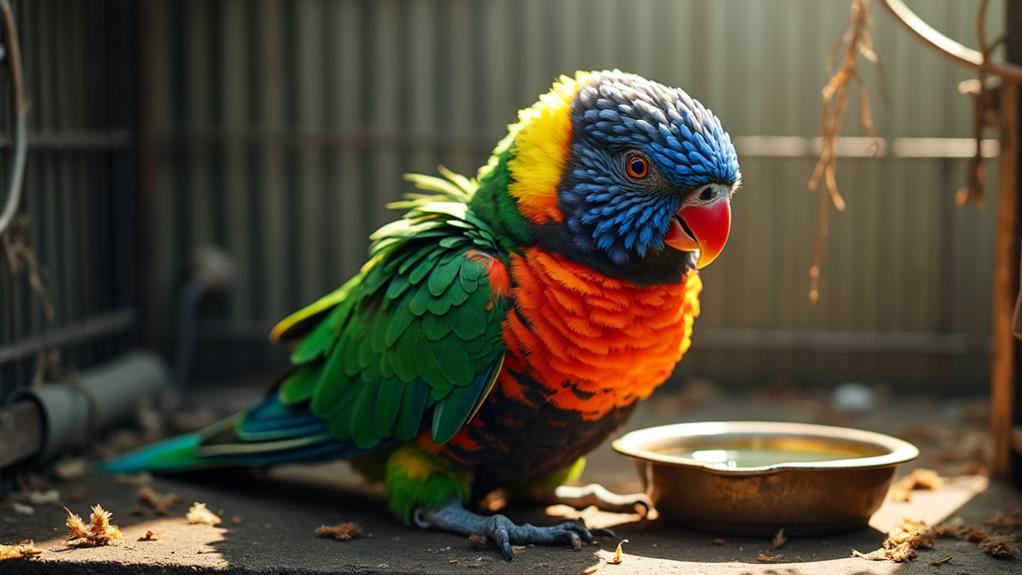
To tell if your pet bird is unhappy, look for signs like increased aggression, altered vocalization, or less social interaction. You might notice behaviors such as feather plucking, over-grooming, or pacing, which often indicate stress or anxiety. Reduced appetite and sudden weight loss are also concerning symptoms to watch. If your bird is less interested in toys or sleeps more than usual, it could be a sign of depression. Creating a stable, engaging environment helps mitigate these issues. Uncovering supplementary insights into your bird's well-being and learning effective strategies for enhancing its happiness can be incredibly beneficial.
Key Takeaways
- Increased biting behavior can be a clear sign of distress in pet birds.
- Decreased vocalization, including less chirping or singing, might indicate depression.
- Feather plucking often suggests boredom or elevated stress levels.
- Changes in appetite, such as reduced eating, can lead to weight loss.
- Withdrawal from social interactions may highlight significant unhappiness.
Recognizing Stress Symptoms
Many signs can help you recognize if your pet bird is stressed. One of the most noticeable signs of stress is increased vocalization. If your bird starts screaming or making repetitive calls more often, it might be trying to communicate its discomfort. Behavioral changes such as feather plucking are also common indicators. This self-mutilation can lead to permanent damage if you don't address it quickly.
Reduced food intake is another vital sign. If your bird suddenly eats less or loses weight, stress might be the culprit. Furthermore, biting can be a protective response to stress, so be cautious if your usually gentle bird becomes aggressive. Physical health can suffer under stress, with symptoms like fluffed feathers or lethargy signaling anxiety.
To help your bird, consider environmental enrichment. Providing toys, interaction, and a stimulating environment can alleviate stress. However, if these signs persist, it's essential to consult your veterinarian. They can offer guidance and rule out any underlying health issues. By understanding these signs of stress, you can take proactive steps to guarantee your feathered friend remains happy and healthy.
Identifying Depression in Birds
Just as stress can affect your pet bird's well-being, depression is another emotional challenge that demands attention. Identifying depression in birds involves watching for several key behavioral signs. Lethargy and decreased activity levels, such as your bird sitting quietly or avoiding play, often indicate depression. If you notice a sudden lack of interest in toys or social interaction, it's a clear signal your bird might be struggling emotionally.
Changes in sleeping patterns are another red flag. If your bird is sleeping excessively or has fluffed feathers, these could point to emotional distress and warrant a veterinary evaluation. Decreased vocalization, or changes in the usual vocal patterns, can also suggest depression. Birds typically use vocalizations to communicate their mood, so any noticeable change should be taken seriously.
Feather picking and self-mutilation are severe behavioral signs of depression. If your bird is engaging in these activities, immediate veterinary intervention is vital to identify and address underlying causes. Remember, your bird's mood and behavior are closely connected to its general health. Being vigilant about these signs helps guarantee your feathered friend remains happy and healthy.
Anxiety Indicators in Birds
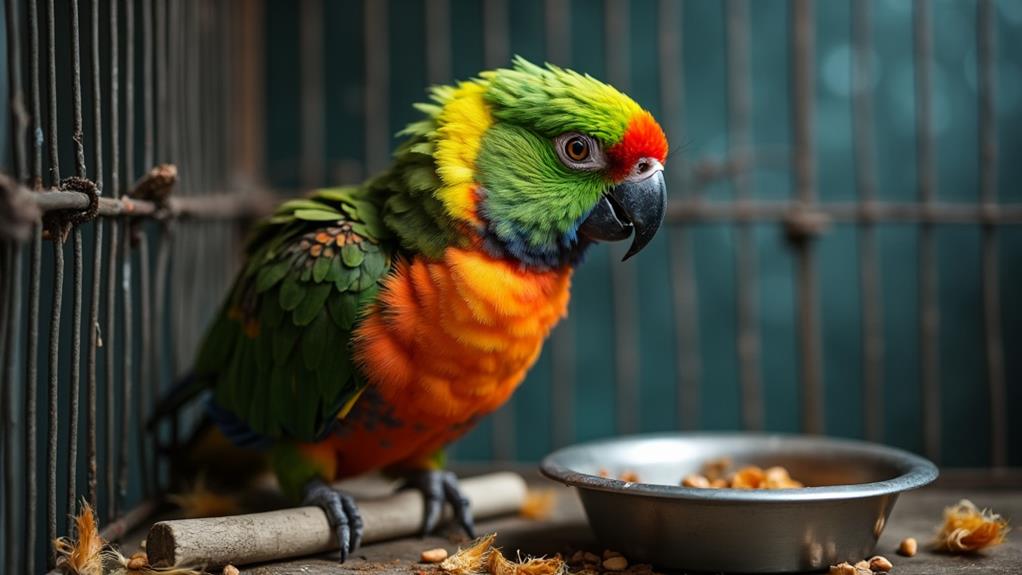
Recognizing anxiety indicators in birds is crucial for maintaining their well-being. One of the initial signs you might notice is restless behavior, such as pacing or frequent movement. This can indicate that your bird is feeling anxious and uncomfortable in its current environment. Over-grooming is another behavior to watch for, as it often leads to skin irritation and signifies stress. If you see your bird excessively plucking feathers, it's a clear cry for help.
Sudden aggression or biting can also be a sign of anxiety. If your normally friendly bird starts biting when approached, it might feel threatened or cornered. This change in behavior is worth noting for your bird's health. Loss of appetite is another red flag. An anxious bird might refuse to eat, leading to sudden weight loss, which can quickly become a health concern.
Repetitive behaviors like swinging or rocking are also common in anxious birds. These actions reflect their need for mental stimulation and a sense of security. By identifying these signs early, you can take steps to alleviate your bird's stress and improve its comprehensive well-being.
Environmental Stress Factors
A range of environmental stress factors can considerably affect your pet bird's mental well-being, leading to anxiety or aggression. Birds are sensitive creatures, and stress can arise from diverse sources. Loud noises, sudden changes in your home, or unfamiliar animals can disrupt their peace. Maintaining a consistent routine is vital, as disruptions in feeding schedules or light cycles may lead to distress and behavioral issues.
To guarantee your bird's comfort:
- Routine: Stick to a consistent daily schedule to minimize stress.
- Enriching environment: Provide ample space, suitable cage conditions, and activities to keep your bird mentally stimulated.
- Isolation: Avoid prolonged isolation; regular social interaction with you or other birds is fundamental.
- Safety: Create a secure, quiet environment to protect from the stress of wild animals outside.
Isolation and boredom can cause significant emotional distress. Birds need companionship and engagement to thrive. Regular social interaction prevents feelings of loneliness and improves mental well-being. Confirm your bird's environment is enriching, offering toys and activities that stimulate their curiosity. By addressing these environmental stress factors, you can help your feathered friend live a happier, healthier life.
Effects of Chronic Stress
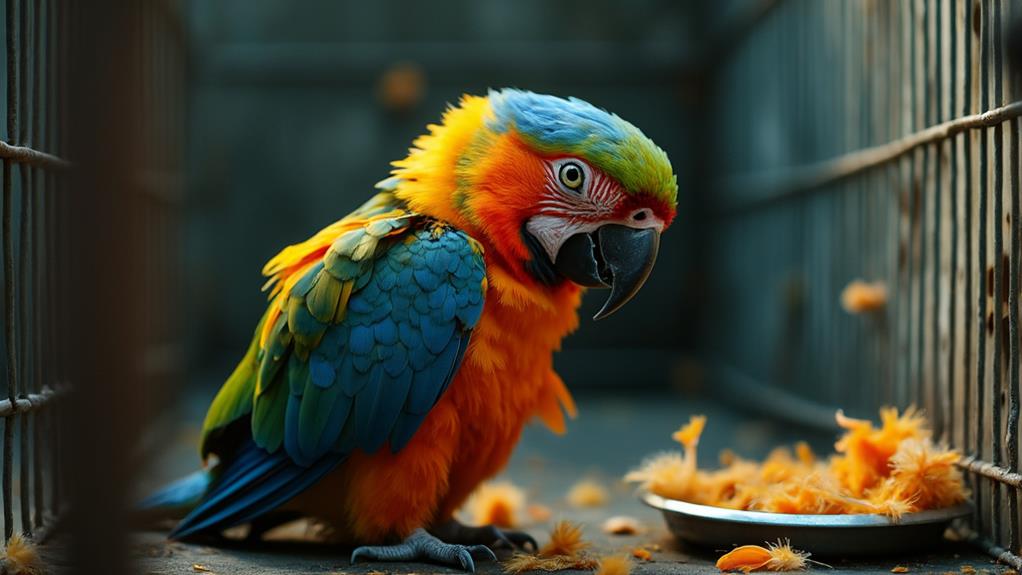
Chronic stress in birds doesn't just affect their behavior; it can severely impact their general health. You might notice your bird experiencing weight loss and nutritional deficiencies, which can weaken their immune system and make them more prone to infections and diseases. Behavioral changes are also important indicators of stress. Your bird could become more aggressive, withdraw from social interactions, or show a decline in activity levels, all signs that something's amiss.
Feather picking is another common consequence of chronic stress. This behavior can cause permanent damage to the follicles, preventing proper feather regrowth. You might also observe stress bars on your bird's feathers. These lines indicate periods of stress and are a clear sign that something in your bird's environment or care needs adjustment.
For female birds, chronic stress can lead to reproductive issues. They might struggle with laying eggs or become egg-bound, which requires immediate veterinary attention. If you notice any of these signs, it's essential to take action promptly. Identifying and addressing the root causes of chronic stress through environmental adjustments and improved care can greatly improve your bird's quality of life.
Helping Your Bird Cope
Your bird's happiness hinges on its environment and interactions, and there are several ways you can help it cope with stress. Providing enrichment through interactive toys and engaging activities can help keep your bird mentally stimulated and alleviate signs of stress. When birds work for their food through foraging toys, it mimics natural behaviors and reduces boredom. Regular social interaction is essential; spending time with your bird or confirming it has bird companions can greatly lower stress and fear.
Creating a peaceful environment also plays an important role in your bird's well-being. Verify their space is free from loud noises and disturbances, offering a comforting retreat from potential stressors. Introducing any changes in their routine, like new pets or rearranging their habitat, should be done gradually to prevent overwhelming them.
Here are some strategies to take into account:
- Enrichment activities: Provide toys that encourage foraging and play.
- Quiet environment: Keep your bird's space tranquil and secure.
- Social interaction: Engage with your bird regularly or offer bird companions.
- Consult a professional: Seek advice from an avian veterinarian for personalized guidance.
Behavioral Changes to Watch
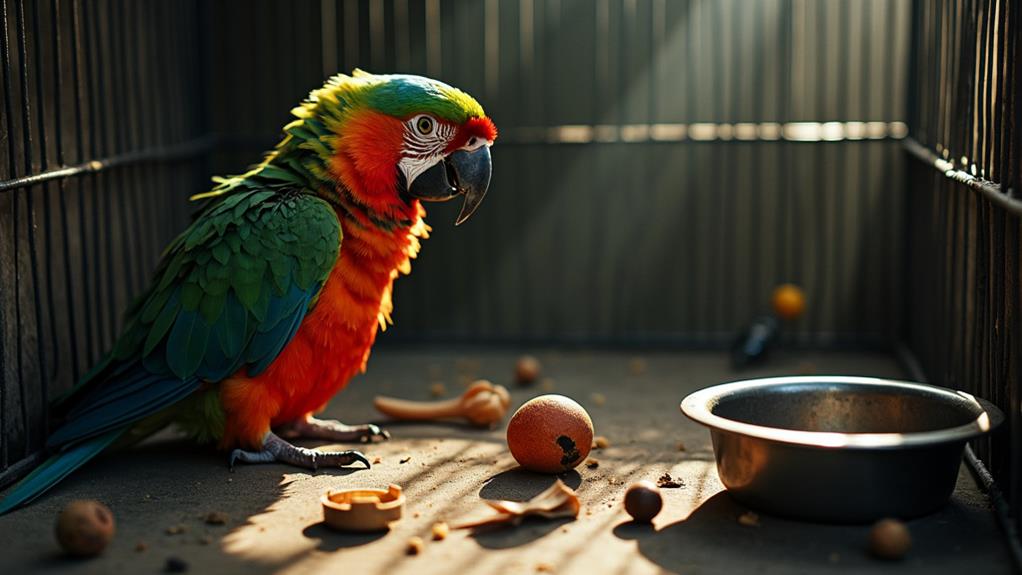
Noticing subtle shifts in behavior can be the initial clue that something's amiss with your feathered friend. Birds often express unhappiness through sudden aggression or biting, which could stem from stress or an unfamiliar change in their environment. Pay attention if your bird starts to bite more frequently, as this might be more than just a phase. Behavioral changes like decreased vocalization, such as less chirping or singing, can also be signs of distress, possibly indicating depression or a lack of stimulation.
Feather plucking is another significant indicator. If your bird begins plucking its feathers, it might be experiencing boredom or stress. This behavior requires immediate intervention to prevent further mental and physical health issues. Changes in appetite, such as eating less or refusing food, should be closely monitored as they can quickly lead to weight loss and signal emotional turmoil.
Additionally, if your bird withdraws from social interactions or playtime, it might be indicating its unhappiness. This withdrawal can highlight the need for more engagement and enrichment activities to guarantee your bird remains mentally stimulated and content. Monitoring these behaviors can help you address potential issues before they escalate.
Enhancing Bird Well-Being
To improve your pet bird's well-being, focus on creating a stimulating and nurturing environment. Pet birds thrive when you address potential stressors, regardless of whether they are nutritional or medical. Start by providing a varied diet filled with fresh fruits, vegetables, and high-quality pellets. This not only supports their physical health but also reduces the likelihood of your bird being unhappy. When you notice a change in behavior, it's important to reflect on these possible stressors.
Daily interaction of at least four hours is key to reducing undesirable behaviors such as feather picking and aggression. Engaging with your bird daily supports emotional health and builds trust. Mental stimulation is another significant component. Offering a range of toys and activities can prevent boredom and help avoid behavioral changes that indicate distress.
Reflect on these steps to improve your bird's well-being:
- Provide a varied diet: Include fresh fruits, vegetables, and quality pellets.
- Ensure daily interaction: Spend a minimum of four hours engaging with your bird.
- Offer mental stimulation: Rotate toys and introduce new activities regularly.
- Establish a quiet, safe environment: Maintain consistent routines for your bird.
Regular veterinary check-ups are fundamental for early detection of health issues, contributing to a happier, healthier pet bird.