How to Teach Your Dog Tricks: A Step-by-Step Guide
Teaching your dog tricks is a fulfilling way to elevate their mental sharpness and promote good behavior. Start with basic commands like sit, stay, and down to build a strong foundation. Use markers such as clickers for clarity and consistency. Lure your dog with treats to guide them into positions, slowly introducing verbal cues. As your dog masters these, gradually increase the complexity of the tasks to keep them engaged. Celebrate small achievements with special treats and outings to motivate continuous learning. Continue exploring to uncover how each method improves obedience and keeps training exciting for both you and your dog.
Importance of Dog Tricks
Teaching your dog tricks holds numerous benefits that improve both their mental and physical well-being. By engaging your dog mentally through amazing tricks, you can reveal their hidden talents, keeping them sharp and agile. Trick training isn't just about showing off; it's a crucial part of Dog Training that prevents boredom, reduces anxiety, and promotes general well-being. When dogs are mentally stimulated, they're less likely to engage in destructive behaviors and more likely to respond positively to you.
Incorporating amazing tricks into your routine not only improves your dog's fitness level but also strengthens the bond between you and your furry friend. As you teach them new tricks, you're fostering a deeper trust and communication channel. This connection makes training sessions enjoyable and productive for both of you. Plus, the physical activity involved in trick training keeps your dog healthy and fit.
Performing tricks also provides mental challenges that lead to improved behavior and obedience. Regular practice helps your dog relax and settle down more easily after sessions, demonstrating how trick training contributes to their restful behavior. So, immerse yourself in the world of Dog Training and uncover your dog's hidden talents today!
Establish Basic Commands
A solid foundation in basic commands like sit, down, and stay paves the way for a well-behaved and obedient dog. Teaching your dog these commands is fundamental for both safety and effective communication. Mastering basic commands not only makes learning advanced tricks easier but also strengthens the bond between you and your furry friend.
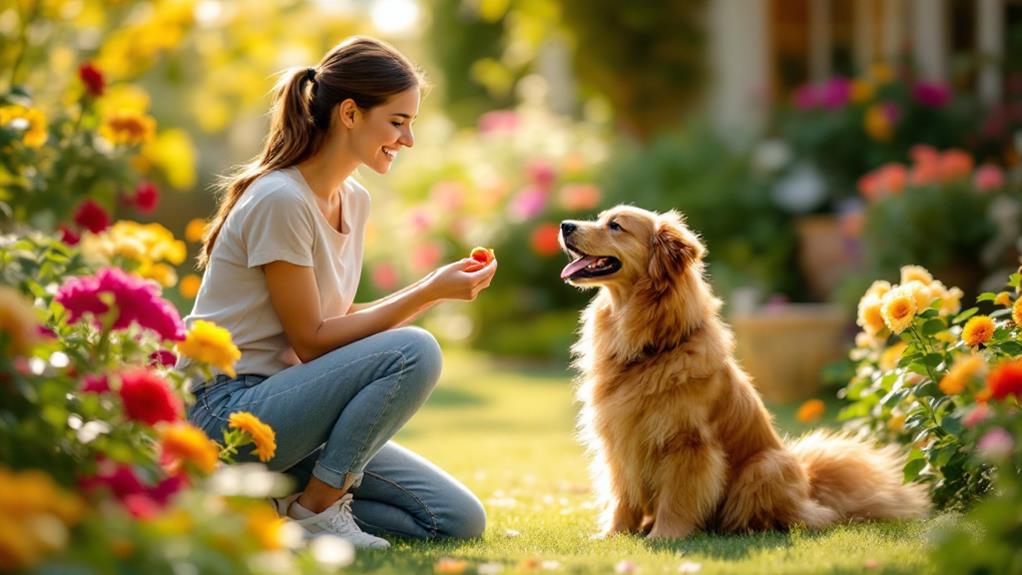
Start by introducing one command at a time, using step-by-step instructions to guarantee clarity. For instance, when teaching 'sit', hold a treat close to your dog's nose and move your hand upward, causing their bottom to lower. Once your dog sits, immediately reward your dog with praise and a treat. Consistency is key during this process, so practice regularly to reinforce understanding and build a dependable response.
Basic commands serve as a significant tool for maintaining your dog's mental stimulation and promoting good behavior. They also play an important role in securing your dog's safety in different situations. By establishing these commands, you're creating a strong communication channel that improves training effectiveness. Remember, patience and persistence are your allies in this process. Keep the training sessions short and engaging, and soon, you'll have a dog ready to learn even more impressive tricks!
Lure and Reward
Curious about how to make trick training more effective? The "Lure and Reward" method is a powerful technique to teach your dog new tricks. Start by using a treat to lure your dog into the desired position. For instance, if you're working on the spin trick, hold a treat near your dog's nose and move it in a circular motion. Your dog will naturally follow the treat, completing the spin.
When teaching the roll-over trick, begin with your dog lying down. Hold a treat near their nose and guide it toward their back. This movement encourages them to roll over naturally. For the shake trick, place a treat in a closed fist. Your dog will likely paw at your hand. When they do, click and reward them. Gradually, you can move to using an open palm.
To teach play dead, start with your dog in a lying position. Hold a treat and lure your dog to stay still. Pair this action with a verbal cue like "bang" for consistency. Remember, luring is most effective at the beginning of training, helping your dog understand the desired movement before introducing verbal cues.
Use Markers for Success
When training your dog, using markers like verbal cues or clickers can greatly boost your success. These tools effectively encourage desired behaviors by clearly indicating success, making the learning process smoother for your furry friend. To optimize effectiveness, focus on timing. The marker should be delivered immediately after the desired behavior to help your dog make the connection between the action and the reward. Here's how to use markers effectively:
- Consistency is Key: Use the same marker for specific behaviors to reinforce learning. This helps your dog understand which actions lead to rewards.
- Timing Matters: Deliver the marker instantly after the desired behavior to improve understanding. Quick feedback is vital for effective communication.
- Combine Markers and Rewards: Use verbal markers like "yes" along with physical rewards. This guarantees your dog receives immediate feedback, augmenting the learning experience.
- Strengthen Your Bond: Marking desired behaviors not only promotes quicker learning but also improves communication, fostering a stronger bond between you and your dog.
Introduce Verbal Cues
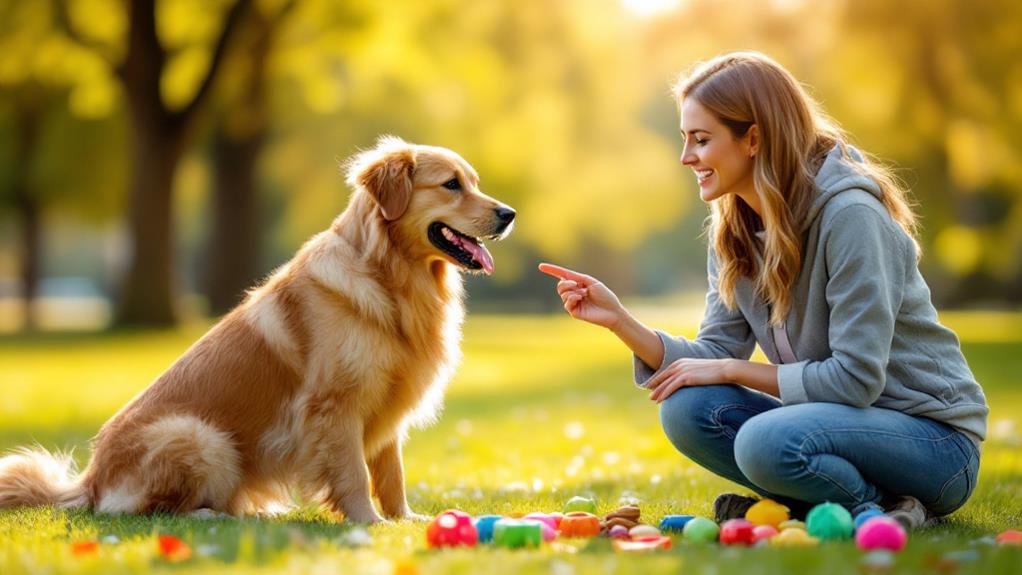
Often, the next step in teaching your dog tricks is to introduce verbal cues. Once your dog is comfortable performing a trick without them, it's time to add clear and distinct words or phrases for each action. This step-by-step guide will assist your dog in associating specific sounds with their actions.
Start by selecting a unique cue for every trick. Avoid using similar-sounding words that might confuse your dog. For instance, if you're teaching "sit" and "stay," make certain these cues sound distinct. Deliver the verbal cue just before your dog performs the action. This timing helps them link the word with the behavior.
Reinforce the verbal cue by immediately rewarding your dog when they respond correctly. This practice strengthens their understanding and makes the connection between the cue and action more robust. Remember, consistency is key. Regularly practicing the verbal cues will help your dog become more responsive over time.
If you're wondering how to teach my dog tricks effectively, following this structured approach guarantees success. By reinforcing verbal cues with positive reinforcement and consistent practice, you'll help your dog learn and perform tricks with confidence and enthusiasm.
Increase Complexity
As your dog masters basic tricks, it's time to increase complexity and add new challenges to their training routine. This next step guarantees they stay engaged and continue to develop their skills. To do this effectively, you'll want to gradually increase the difficulty of each trick by incorporating new elements and combining commands. For instance, if your dog has mastered "sit," you might shift to "sit" and "stay" before adding the "come" command.
Here are some ways to up the ante:
- Introduce Distractions: Train your dog to perform tricks even with distractions present, enhancing their focus and obedience.
- Extend Command Duration: Lengthen the time your dog must hold a command before rewarding them, which promotes patience and understanding.
- Advanced Variations: Once basic tricks are solid, teach advanced variations like "roll over" multiple times or "dance" on hind legs.
- Progressive Luring: Use lures initially to guide your dog, then phase them out as your dog's skill level increases for independent performance.
Celebrate Achievements
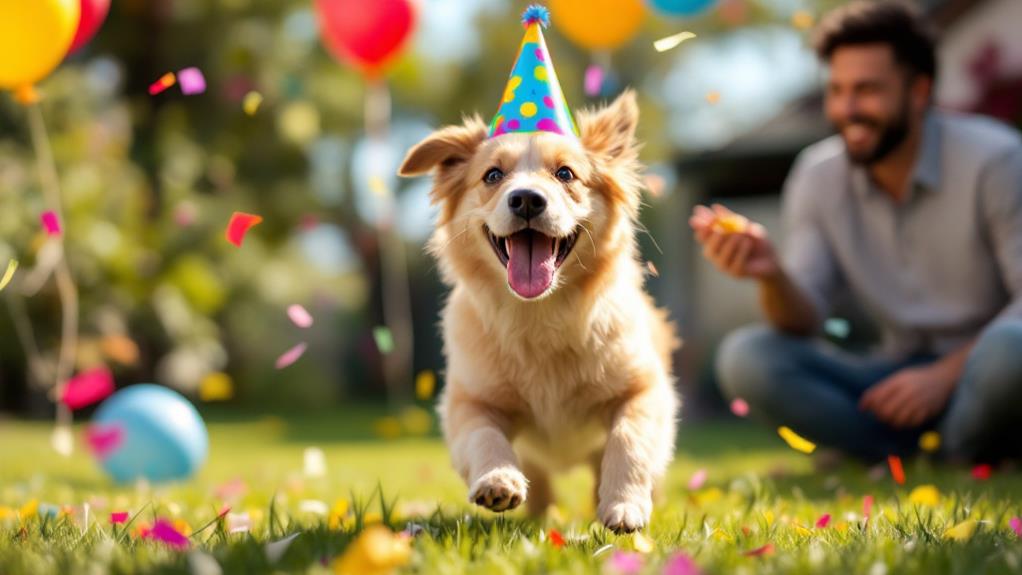
After ramping up the complexity of your dog's training routine, it's significant to take a moment to celebrate their achievements. Regularly acknowledging your dog's progress not only elevates their confidence but also encourages them to continue learning. Each small victory deserves recognition, and by doing so, you reinforce positive behavior and make the training more enjoyable for your furry friend.
One great way to celebrate achievements is by sharing your dog's successes with family and friends. This not only strengthens your bond with your dog but also creates a supportive environment that benefits their learning process. Consider keeping a training journal to track these rewarding milestones. Documenting your dog's progress serves as a motivational tool, reminding you both of how far you've come and setting the stage for future goals.
Rewarding milestones with special treats or outings further amplifies your dog's positive associations with training. Regardless of whether it's a tasty treat or a fun day at the park, these rewards make the learning experience more enjoyable. As your dog masters new tricks, setting new goals keeps the training engaging and encourages them to aim for further accomplishments, ensuring a fulfilling expedition for both of you.