How to Take Care of a Savannah Monitor: Essential Tips for Owners
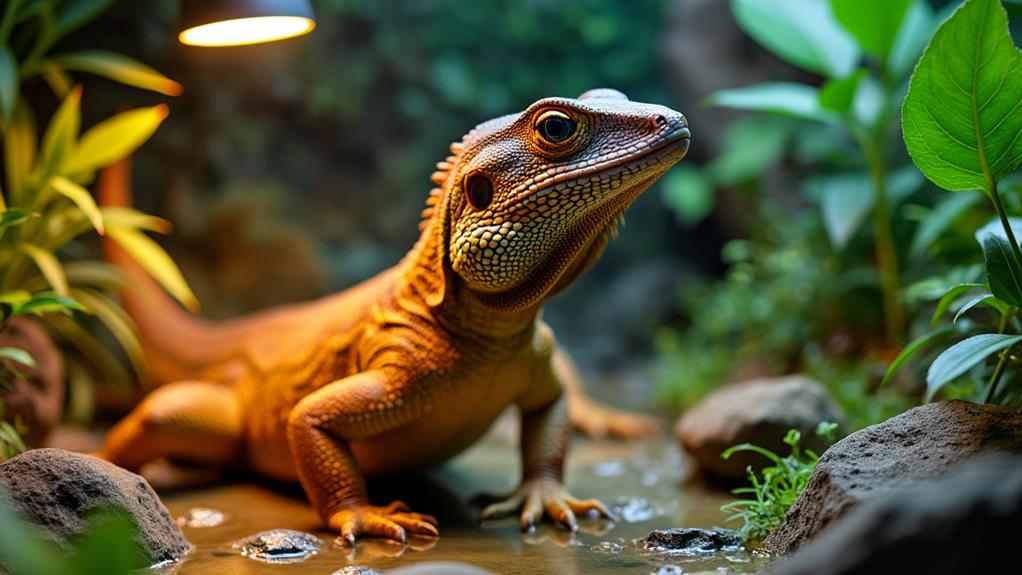
Caring for your Savannah Monitor means providing an enclosure that mimics its natural environment with dimensions of at least 6-8 feet long. Guarantee it has the right temperature gradient, with a basking spot reaching up to 150°F. Use a sand-soil mix for a substrate and maintain humidity between 60% and 85%. Offer a diet of gut-loaded insects and small rodents, supplementing with calcium. Regularly handle your Savannah Monitor to promote calmness and trust. Watch for signs of illness like lethargy and appetite loss. Interested in more? There's a wealth of information that goes deeper into each aspect.
Key Takeaways
- Provide an enclosure at least 6-8 feet long with a temperature gradient and secure locking doors.
- Maintain ambient temperatures between 80-85°F, with a basking spot up to 150°F for digestion.
- Feed a diet of gut-loaded insects, small rodents, and fruits, with calcium and multivitamin supplements.
- Ensure humidity levels between 60-85% using misting, a hygrometer, and possibly a humidifier.
- Handle regularly from a young age to reduce defensive behaviors and build trust through positive reinforcement.
Understanding Savannah Monitors
When you're getting to know Savannah monitors, it's essential to comprehend these fascinating creatures and their natural habitat. Native to the savannahs of sub-Saharan Africa, Savannah monitors (Varanus exanthematicus) are large lizards that typically measure between 3 to 4 feet in length. Their robust bodies and unique coloration, ranging from light brown to grey with yellow or white patterns, make them stand out. To guarantee you provide proper care and husbandry, it's significant to mimic their natural environment as closely as possible.
For a healthy monitor, establishing a temperature gradient in their enclosure is vital. Adult savannahs thrive with basking temperatures that can reach up to 100°F, allowing them to thermoregulate effectively. These lizards are primarily insectivorous, but in the wild, they also consume small mammals and carrion. If you're dealing with a wild-caught Savannah monitor, extra attention to their diet and environment is necessary to ease their adjustment to captivity.
Regular handling from a young stage helps prevent aggression and promotes tameness. Understanding these essentials guarantees that your Savannah monitor lives a long, healthy life, potentially reaching 20 years with the right care.
Ideal Enclosure Setup
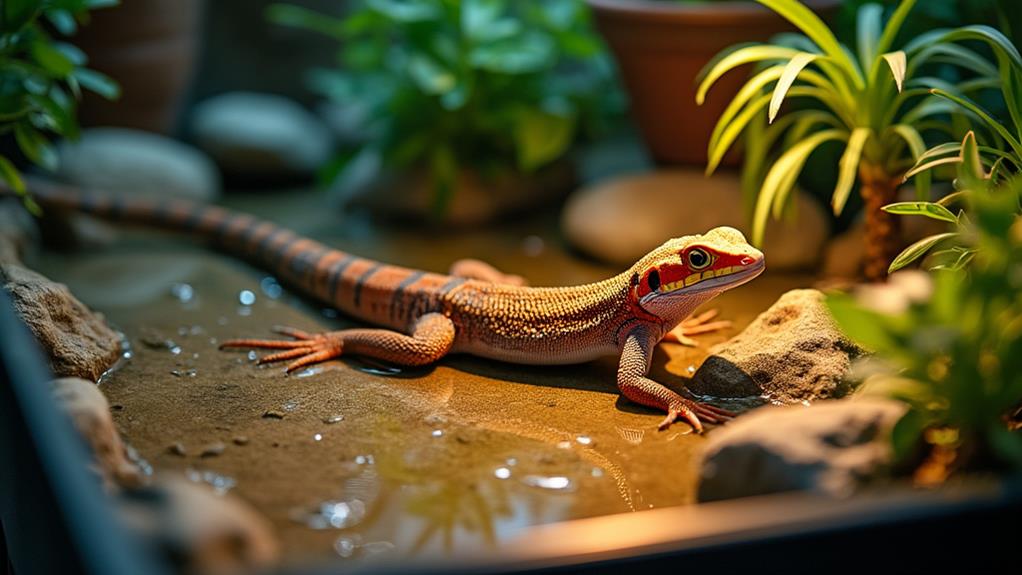
To properly care for your Savannah monitor, creating an ideal enclosure setup is a vital step. The ideal enclosure should measure at least 6-8 feet in length, 3-4 feet in width, and 2-3 feet in height. This size accommodates their growth and allows for natural behaviors, like roaming and exploring. Make sure your enclosure has a temperature gradient with ambient temperatures between 80°F and 85°F. A basking spot should reach between 95°F and 100°F, critical for thermoregulation and general health.
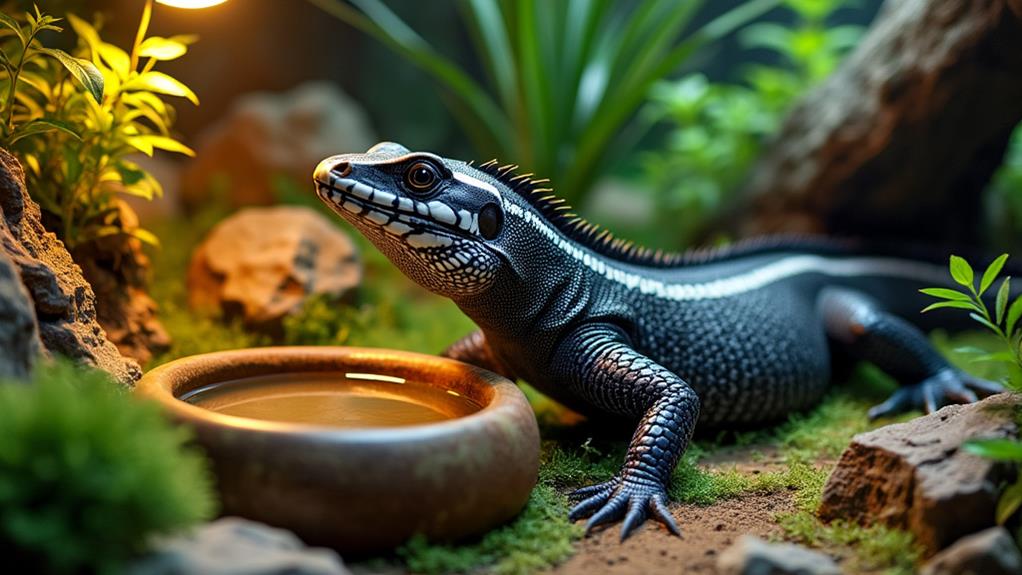
For substrate, aim for a depth of 18-24 inches. A mix of sand and soil will facilitate burrowing and help maintain humidity levels around 50-60%. A large water dish is vital, allowing your Savannah monitor to submerge fully. This not only aids in hydration but also lets them enjoy swimming.
Security is just as significant in Savannah Monitor Care. Use sturdy enclosure materials like glass or wood to prevent escapes. Make sure the enclosure has secure locking doors to keep your monitor safe and sound. By focusing on these elements, you'll provide a comfortable and secure habitat, contributing positively to your monitor's well-being.
Feeding and Nutrition
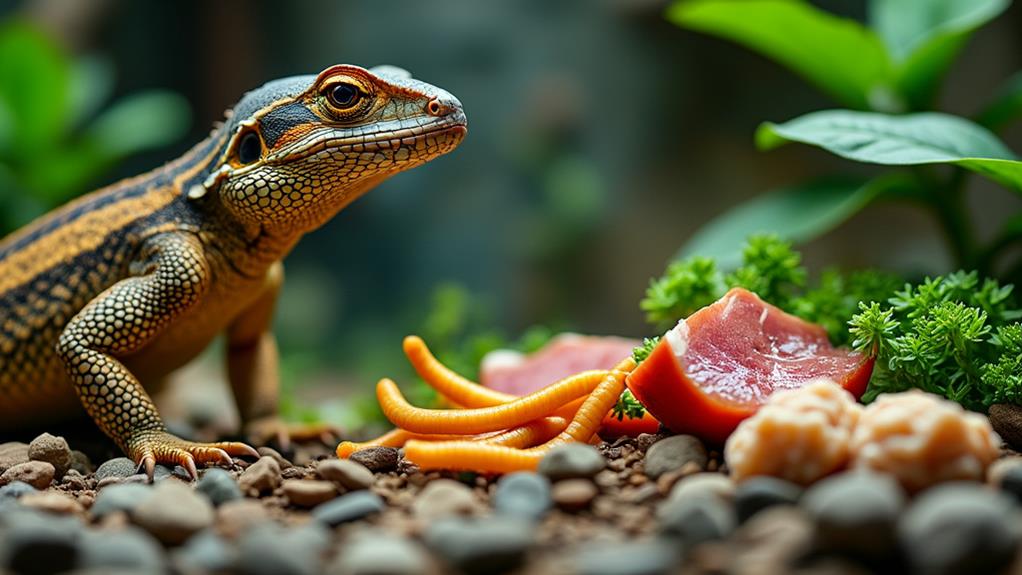
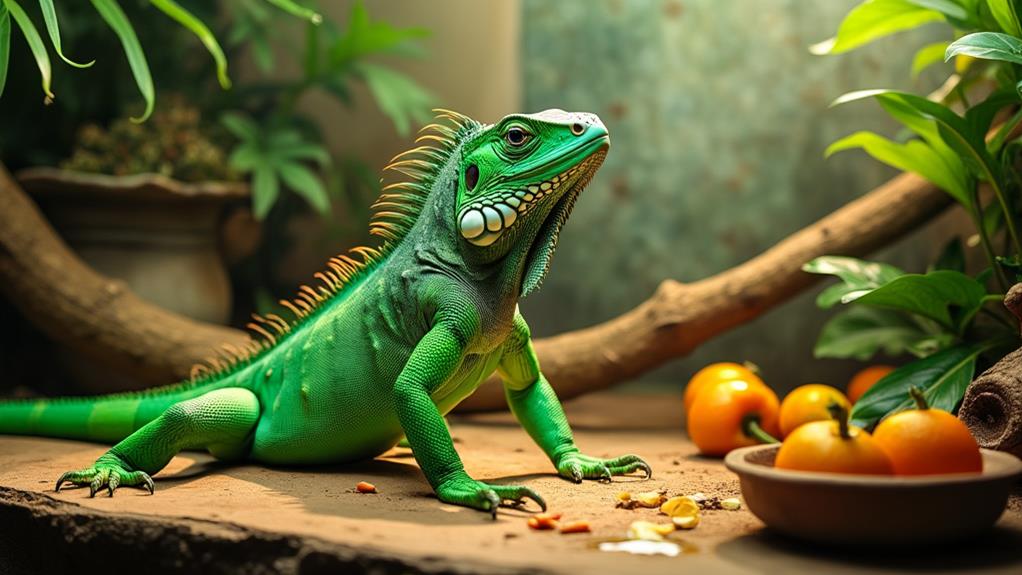
Feeding your Savannah monitor a balanced diet is vital for its health and well-being. Primarily, their diet should consist of gut-loaded feeder insects like crickets and mealworms, small rodents, and occasionally some fruits. For adult monitors, adjust feeding to 1-2 times per week. This keeps them healthy while preventing obesity. Monitor their body condition closely and adapt the feeding schedule as needed. Juveniles, however, require daily feeding to support their rapid growth.
To guarantee your monitor receives necessary vitamins and minerals, dust the feeder insects with calcium and multivitamin supplements regularly. This practice supports metabolic health and prevents deficiencies. Whole prey, like small rodents, should also be included occasionally to provide a more natural diet and supplementary nutrients.
Always provide fresh water daily, as hydration is vital to their general health. Remember, feeding should happen in a separate tank to avoid the ingestion of substrate, which can cause serious health issues. Regularly reassess the feeding frequency based on your monitor's maturity and size. By offering a varied and nutrient-rich diet, you'll help your Savannah monitor thrive and maintain peak health.
Temperature and Lighting
After establishing a healthy diet for your Savannah monitor, it's vital to focus on creating an appropriate environment through proper temperature and lighting. A well-maintained temperature gradient is important, allowing your monitor to thermoregulate by moving between warmer and cooler areas of the enclosure. Aim for an ambient temperature between 80°F and 85°F during the day, making sure it doesn't drop below 75°F at night. Your basking spot temperature should be between 125°F and 150°F, crucial for effective digestion and metabolism.
Use reliable heat sources like ceramic heat emitters or halogen bulbs to achieve these temperatures. To mimic the natural sunlight, provide overhead UVA/UVB lighting for 10-12 hours daily. This lighting is essential for supporting your monitor's metabolic processes and overall well-being.
Maintaining proper humidity levels is similarly significant. Aim for a humidity level between 60-85%, which can be monitored using a hygrometer. Regularly check and adjust these levels to keep your Savannah monitor healthy. In sum, attention to these environmental details will guarantee your Savannah monitor thrives, providing a comfortable and naturalistic habitat that supports its biological needs.
Substrate Choices
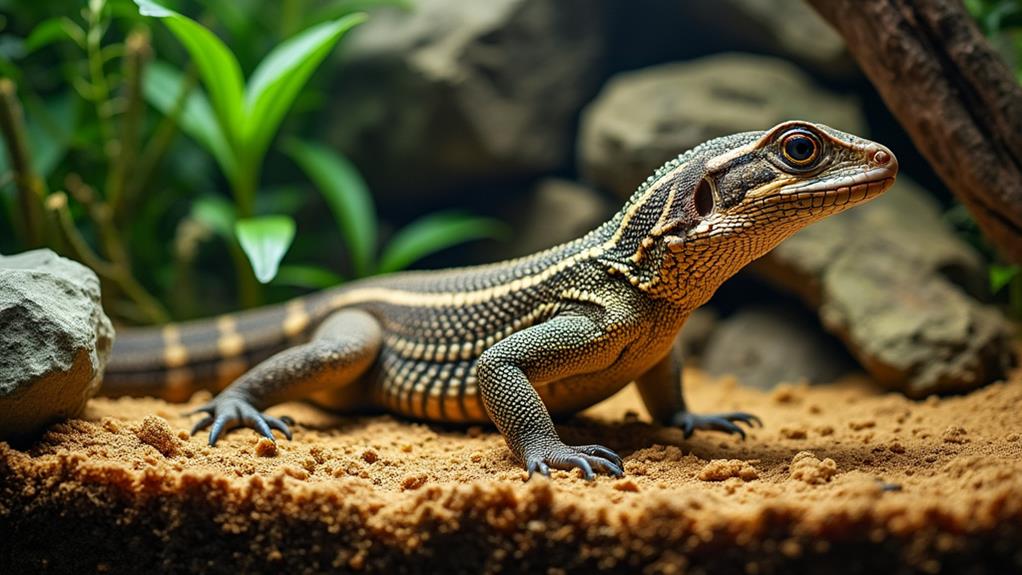
When setting up your Savannah monitor's enclosure, choosing the right substrate is vital for both its health and happiness. Not only does the substrate impact your monitor's comfort, but it also plays a significant role in maintaining proper humidity and hygiene. Cypress mulch, aspen shavings, and soil mixtures are excellent options, but steer clear of pine or cedar, as they can be toxic. Aim for a substrate depth of 18 to 24 inches for adults to encourage natural digging behavior, while juveniles can manage with about 3 inches.
To maintain a healthy environment, regular maintenance is necessary. Here are a few tips:
- Clean Regularly: Change the substrate every two weeks and do daily spot cleaning to maintain hygiene.
- Mix It Up: Combining indoor/outdoor carpet with top soil can provide both ease of cleaning and enrichment.
- Monitor Humidity: The right substrate helps regulate humidity, which should be around 60% for the best health.
- Watch for Toxins: Avoid using pine or cedar to prevent health risks.
Taking these steps guarantees your Savannah monitor thrives, staying both healthy and content in its enclosure. Proper substrate selection and maintenance are key to achieving this balance.
Maintaining Humidity
A significant aspect of caring for your Savannah monitor is maintaining the right humidity levels in its enclosure. Aim for humidity levels between 50-60% to guarantee your monitor's ideal health and comfort. Consistent humidity is imperative for aiding in shedding and preventing stress-related issues. To help maintain these levels, incorporate a large water dish that allows for full-body submersion. This not only provides your monitor with a means to cool down but also adds moisture to the enclosure.
Regularly misting the enclosure and hiding spots can further raise humidity levels, making the environment more suitable for your Savannah monitor. A hygrometer is an indispensable tool for accurately monitoring humidity levels. Check it frequently and adjust as necessary to keep the enclosure within the desired range. If you struggle to maintain the right levels, especially in drier environments, consider adding a humidifier to your setup.
Alternatively, you can place a water bowl near a heat source to enhance humidity naturally. By paying close attention to these details, you'll create a thriving habitat that supports your Savannah monitor's health and well-being, guaranteeing it lives a happy, stress-free life.
Handling and Socialization
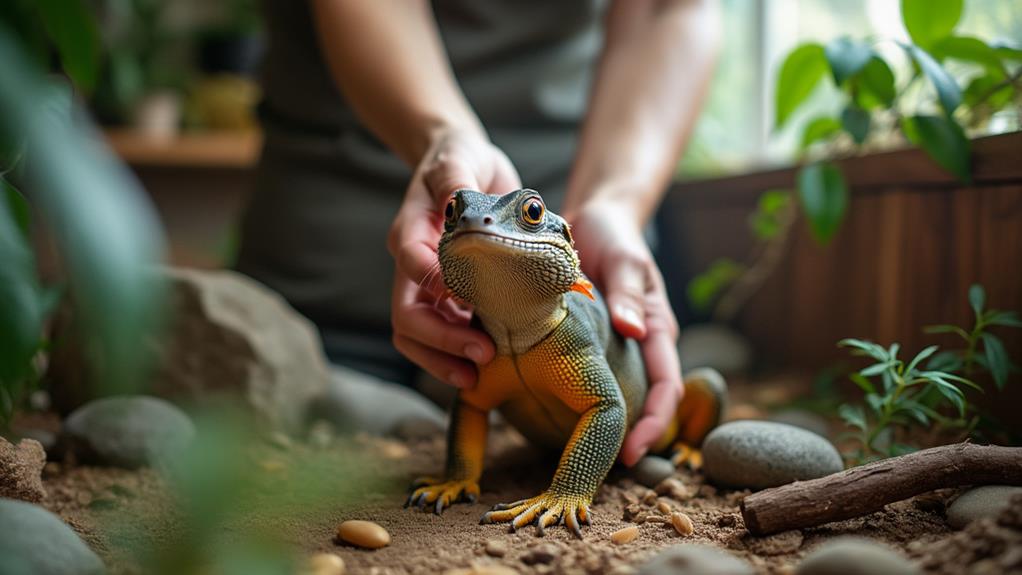
Handling and socializing your Savannah monitor is crucial for developing a calm and friendly pet. Start by regularly handling your monitor from a young stage. This approach helps reduce defensive behaviors and promotes a docile temperament. When you handle your monitor, be certain to support it from underneath to guarantee comfort and safety, especially with larger adults. Frequent and gentle interaction will help build trust, so gradually increase the handling time as your monitor becomes more accustomed to human contact.
Here are some crucial tips for effective handling and socialization:
- Support from Below: Always support your monitor from underneath to guarantee safety and comfort.
- Gradual Interaction: Increase the duration of handling sessions gradually to build trust.
- Two-Handed Approach: Use both hands to handle hatchlings carefully, preventing stress or injury.
- Experienced Handling: Adult monitors require more experience, so handle them with confidence and care.
Monitoring Health
Guaranteeing the health of your Savannah monitor goes hand in hand with proper handling and socialization. Regular veterinary check-ups are vital for monitoring your reptile's health. These visits can help detect issues like parasitic infections or metabolic disorders early on, guaranteeing prompt treatment. Pay close attention to signs of illness, such as lethargy, loss of appetite, abnormal feces, or irregular shedding. If you notice any of these symptoms, consult a veterinarian immediately.
Monitoring your monitor's weight is pivotal, as obesity can lead to severe health complications. Regularly assess their body condition and adjust feeding frequency as needed to maintain a healthy weight. Also, keep an eye on shedding patterns. Abnormal shedding can signal dehydration or improper humidity levels in their enclosure. Confirm the environment maintains adequate temperature and humidity to prevent stress and health problems.
Selecting Your Monitor
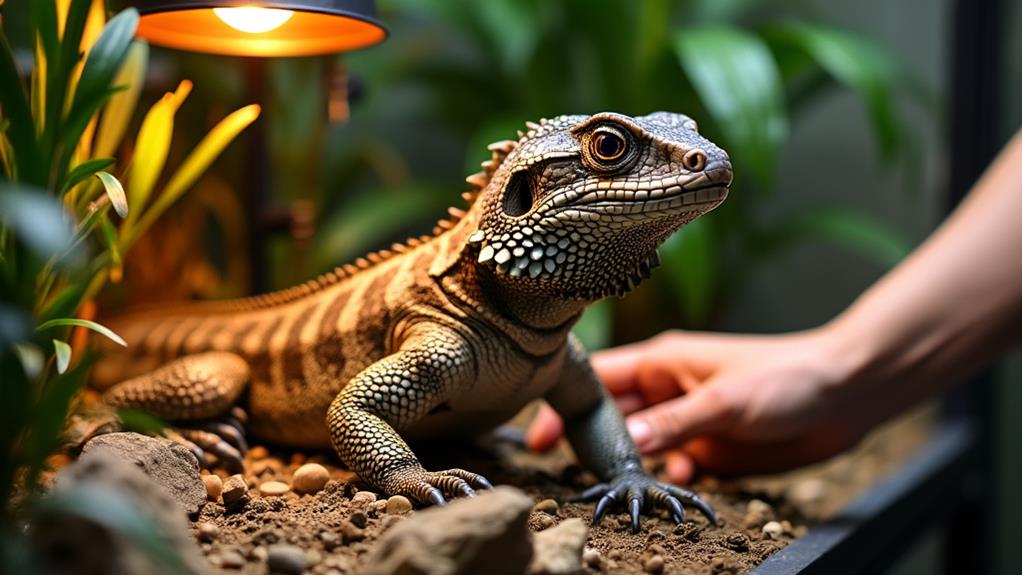
When you're ready to select a Savannah monitor, focus on finding one from reputable breeders or rescue organizations. This guarantees you get a healthy pet and avoid the potential health issues often seen in wild-caught specimens. The cost of a Savannah monitor can range from $25 to $100, depending on factors like the source, maturity, and coloration. It's essential to look for signs of a healthy monitor, which include:
- Smooth skin without any scars or lesions
- Clear and bright eyes, free from discharge
- A rounded body indicating good nutrition
- A strong and well-defined jawline
Hatchlings are typically available in the pet trade and start at sizes of about 4 inches, while adults can reach lengths of 3 to 4 feet. If you're considering an adult, verify it's been well-cared for and handled regularly. Early and consistent handling is key to promoting tameness and reducing aggression in your Savannah monitor. When you select your monitor, keep in mind that proper care and handling from a young stage are imperative for a happy, healthy pet. Always prioritize reputable sources to guarantee the best start for your new reptile companion.