How to Take Care of a Mexican Red-Knee Tarantula: A Step-by-Step Guide
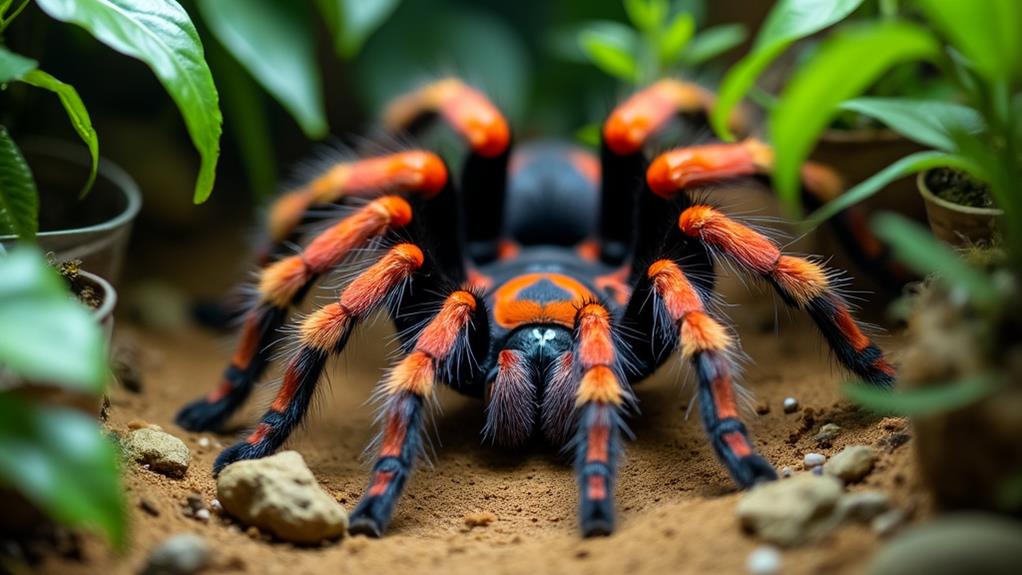
To care for a Mexican red-knee tarantula, start by setting up a spacious enclosure with a substrate of organic soil, coconut fiber, and sphagnum moss for burrowing. Maintain a temperature of 75-80°F and humidity between 60-70% using a heat mat and shallow water dish. Feed your tarantula live insects like crickets or mealworms weekly. Approach handling with care and limit sessions to 10 minutes to avoid stress. Monitor the enclosure for cleanliness and your tarantula's health regularly. By following these steps, you're on your way to providing a comfortable environment for your tarantula to thrive.
Key Takeaways
- Ensure a 60x45x30 cm enclosure with organic soil, coconut fiber, and sphagnum moss for substrate.
- Maintain humidity at 60-70% with a shallow water dish and occasional misting.
- Feed live crickets, roaches, or mealworms once or twice weekly, removing uneaten prey promptly.
- Use a heat mat to regulate temperature between 75-80°F, avoiding direct sunlight.
- Limit handling to 5-10 minutes, using a soft brush to encourage movement.
Understanding Your Tarantula
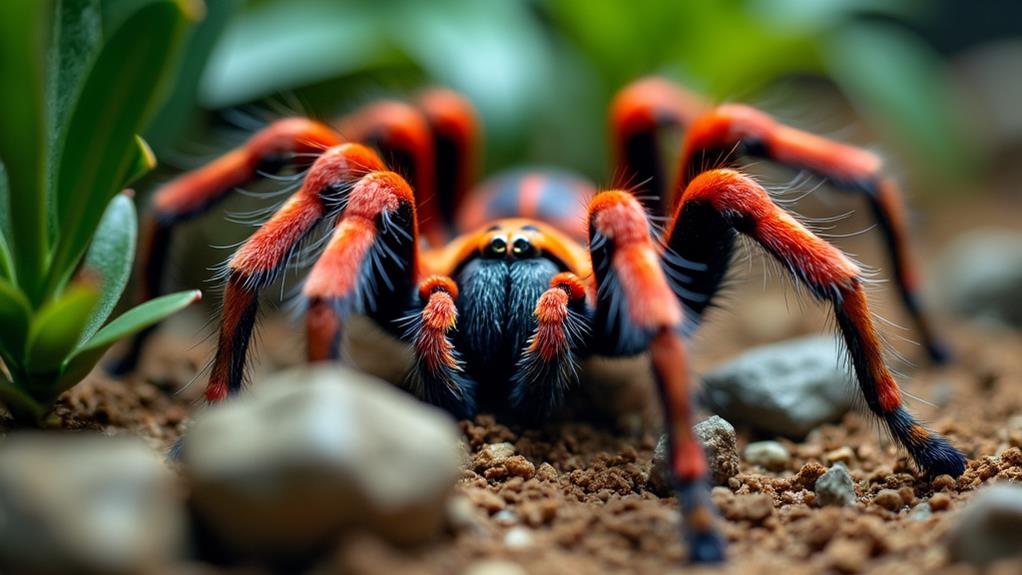
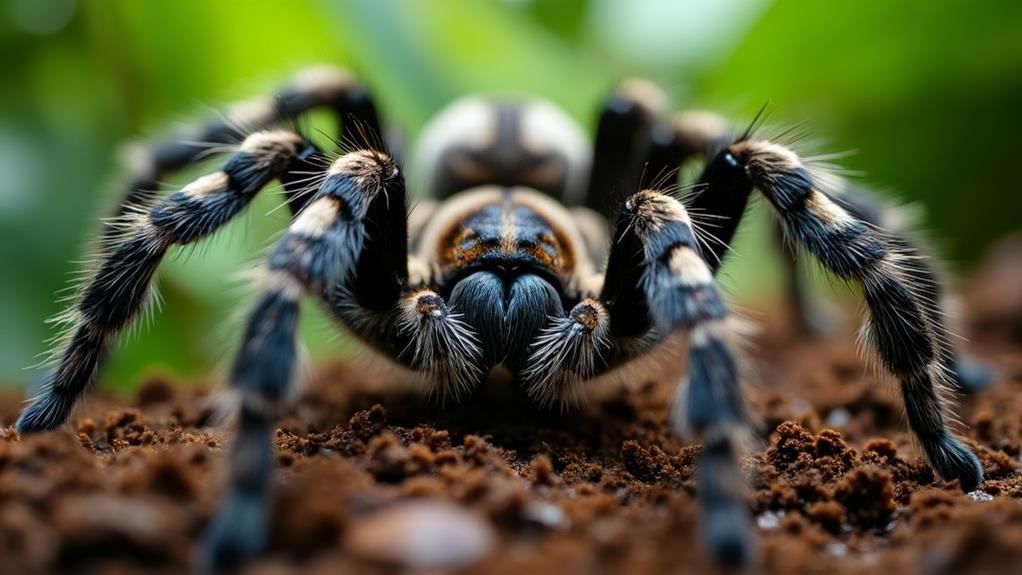
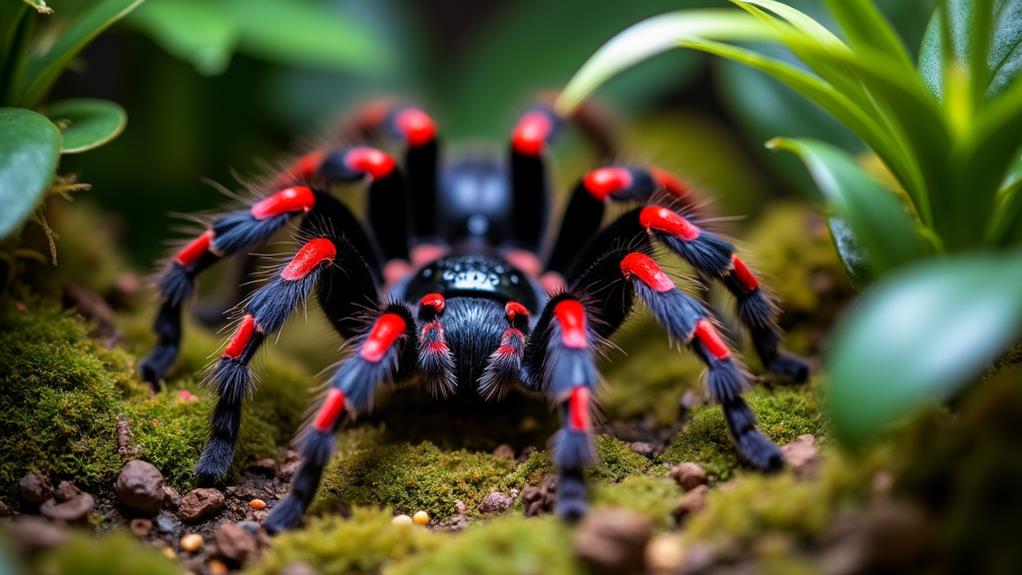
To truly understand your tarantula, it is crucial to recognize its unique characteristics and needs. The Mexican red-knee tarantula, known scientifically as Brachypelma hamorii, is a fascinating species with its bright orange-red knees and impressive leg span of about 5 inches. These tarantulas hail from Mexico's Pacific coast, thriving in scrublands, deserts, and forests. They naturally prefer sandy substrates, making burrowing a vital part of their behavior.
When it comes to care, these tarantulas are known for their docile temperament, which means they're rarely aggressive and are quite manageable as pets. As solitary creatures, they thrive best when housed alone, which helps minimize stress. You'll need to keep a close eye on the temperature and humidity of their environment. Ideal conditions are temperatures between 75-80°F and humidity levels around 60-70%.
It is significant to keep in mind that female Mexican red-knee tarantulas can live up to 25-30 years, while males typically live between 5-10 years. This long lifespan requires a commitment to their care over many years. Understanding these aspects will guarantee a healthy, happy life for your tarantula.
Ideal Enclosure Setup
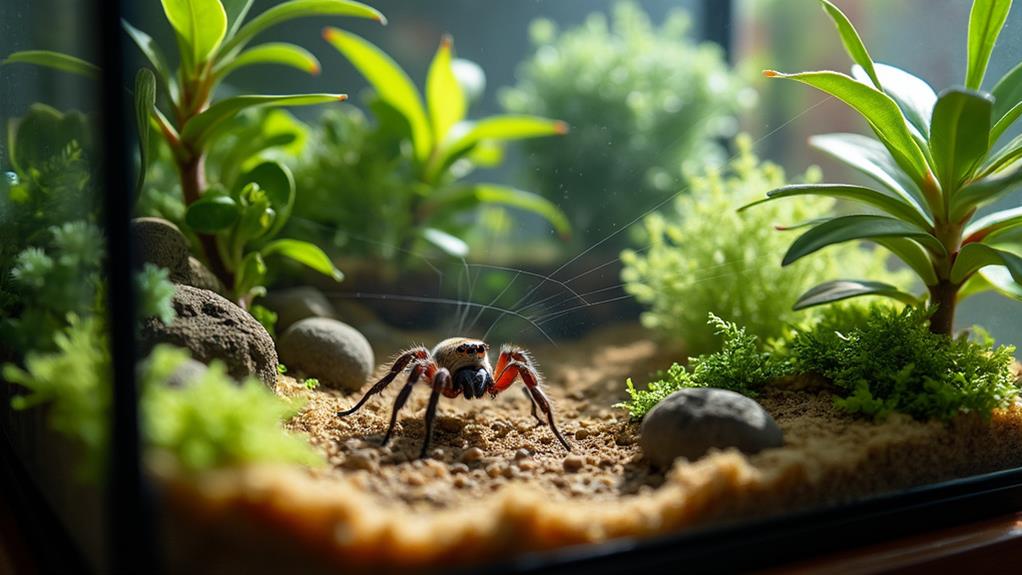
Creating the perfect home for your Mexican red-knee tarantula involves a few significant considerations. Start with an ideal enclosure, preferably a glass or plastic aquarium, measuring at least 60x45x30 cm. This size offers ample floor space and guarantees secure ventilation. To accommodate your tarantula's natural burrowing instincts, maintain a substrate depth of 4-6 inches. Use a blend of organic soil, coconut fiber, and sphagnum moss, which helps retain moisture and supports burrowing behavior.
Next, focus on providing vital hiding spots. Incorporate cork tubes, branches, or artificial vegetation, allowing your tarantula to feel secure and stress-free. For maintaining proper humidity levels, aim for a range between 60-70%. You can achieve this by placing a shallow water dish in the enclosure and occasionally misting the substrate to prevent it from drying out.
Consistent warmth is another priority. Use a heat source like a heat mat attached to the outside back wall of the enclosure to keep the temperature range between 24-27°C (75-80°F). This setup guarantees your Mexican red-knee tarantula thrives in a comfortable and natural environment, promoting general health and well-being.
Temperature and Lighting Needs
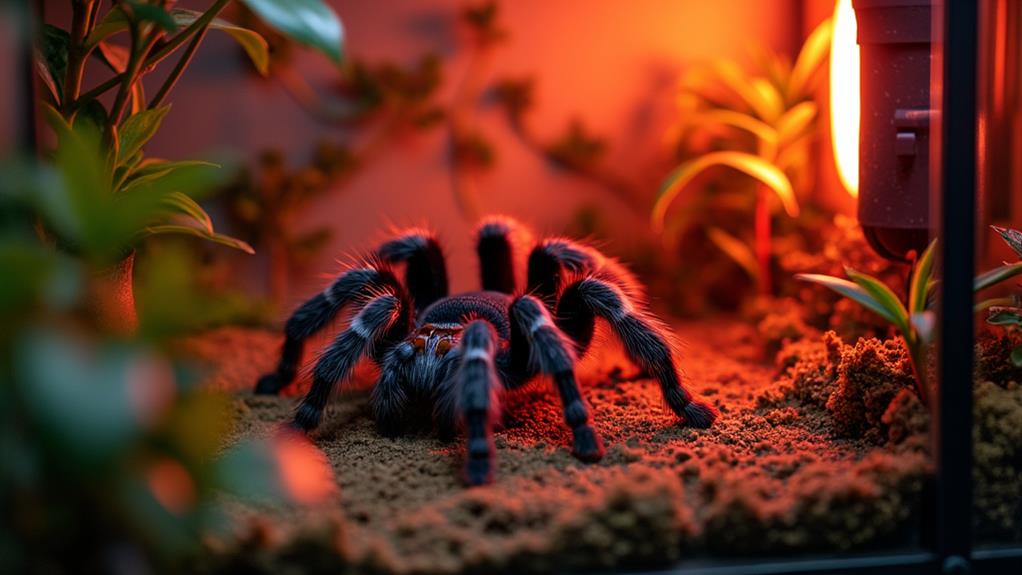
Maintaining the right temperature and lighting is vital for your tarantula's well-being. Start by establishing a temperature gradient in the enclosure. Set one side to a warm 75-80°F (24-27°C) and the other to a cooler 68°F (20°C). This allows your Mexican Red-Knee Tarantula to move freely and choose its preferred climate. A heat mat is a great tool for maintaining the warm side. Attach it to the outside back wall of the enclosure and regulate it with a thermostat to prevent overheating, guaranteeing a safe environment for your tarantula.
Regular temperature checks are important. Use a digital thermometer to monitor and verify the climate stays within the ideal range for your tarantula's health. Keep night temperatures around 59°F (15°C) or slightly higher, as it mimics their natural habitat. However, avoid exceeding 86°F (30°C) to prevent stress and health issues.
Lighting should be minimal; tarantulas don't need special lighting. Avoid direct sunlight, as it can heat the enclosure excessively. If you want to simulate a day/night cycle, a small LED light is sufficient. Proper temperature and lighting management are key aspects of effective tarantula care.
Maintaining Proper Humidity
Humidity plays an important role in the health of your Mexican Red-Knee Tarantula. Keeping the enclosure's humidity between 60-70% is significant, and using a digital hygrometer helps you monitor these levels accurately. Lightly mist the enclosure occasionally, making sure the substrate remains damp but not saturated to prevent mold growth.
For juvenile tarantulas, maintaining proper humidity is particularly important during the molting process. Keep half of the substrate damp during these periods to support their shedding. A shallow water dish, filled weekly, can also aid in humidity retention and provide your tarantula with access to fresh water. This simple enhancement can make a significant difference in maintaining the right environment.
Here's a quick checklist to help you:
- Monitor humidity: Use a digital hygrometer to make sure levels stay between 60-70%.
- Mist appropriately: Lightly mist to keep the substrate damp but avoid mold growth.
- Maintain water source: Make sure a shallow water dish is always filled for both humidity and hydration.
Regularly check for any visible mold and consider incorporating springtails, which can help maintain a clean environment by consuming excess organic material. By following these steps, you'll create a healthy, balanced habitat for your tarantula.
Feeding and Nutrition
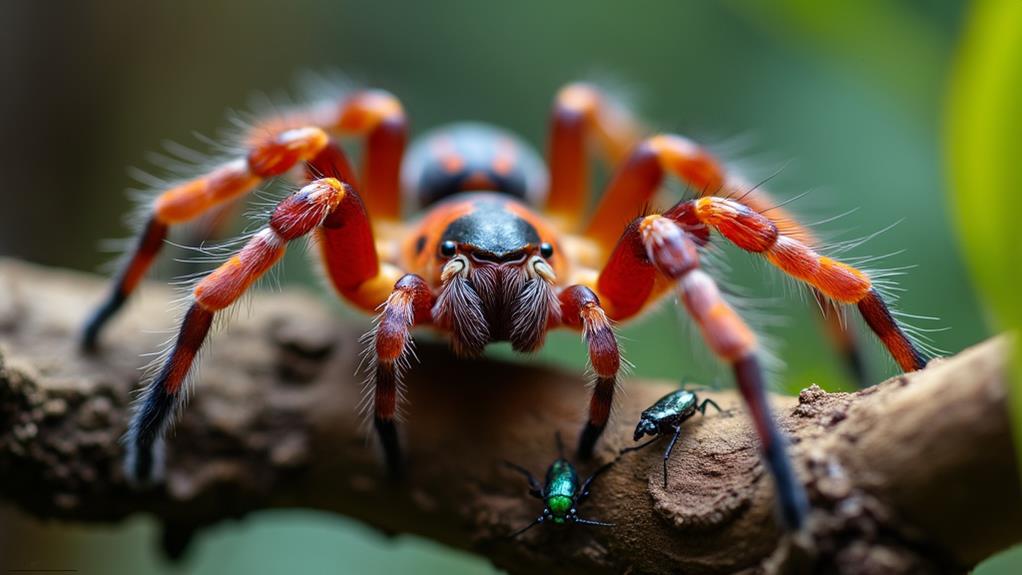
Feeding your Mexican Red-Knee Tarantula a balanced diet is crucial for its health and well-being. Mexican red knees thrive on a diet of live food, such as crickets, roaches, locusts, and mealworms. Occasionally, you can offer pinky mice or small lizards for extra protein, guaranteeing a varied diet. When selecting prey, it's significant to keep the size of the food to about half the tarantula's body length to avoid choking or injury.
Adult tarantulas should be fed once or twice a week, while juveniles may require more frequent feedings to support their rapid growth. Always provide fresh water in a shallow dish daily. This not only keeps your tarantula hydrated but also maintains the humidity levels in their enclosure, which Mexican red knees need to thrive.
After feeding, remove any uneaten live prey within 24 hours. Leaving uneaten food in the enclosure can stress your tarantula and lead to contamination. By following these guidelines, your tarantula can live a long and healthy life. It's significant to keep a close eye on your tarantula's eating habits and adjust their feeding schedule as needed to guarantee their nutritional needs are met.
Handling and Interaction
When handling your Mexican red-knee tarantula, approach it calmly to guarantee a stress-free interaction. Use a soft item like a paintbrush to gently encourage movement, ensuring you don't startle your spider. Always position your hand palm up, allowing the tarantula to walk onto your hand at its own pace. Avoid sudden movements that might cause stress or trigger defensive behavior.
Pay attention to signs of discomfort, such as the tarantula rearing up its front legs. If your spider appears agitated, be prepared to gently return it to its enclosure. Remember, handling should be limited to brief periods, ideally no longer than 5-10 minutes, to minimize stress. It's crucial to avoid handling during the molting phase when your tarantula is particularly vulnerable.
While the Mexican red-knee tarantula is generally docile, it can bite if it feels threatened. Its venom is mild, causing irritation akin to a bee sting, so always proceed with care. Here are some key tips to keep in mind:
- Maintain a calm demeanor to help keep your tarantula relaxed.
- Monitor for signs of discomfort and be ready to stop handling.
- Limit handling sessions to brief periods to reduce stress.
Health and Wellness Tips
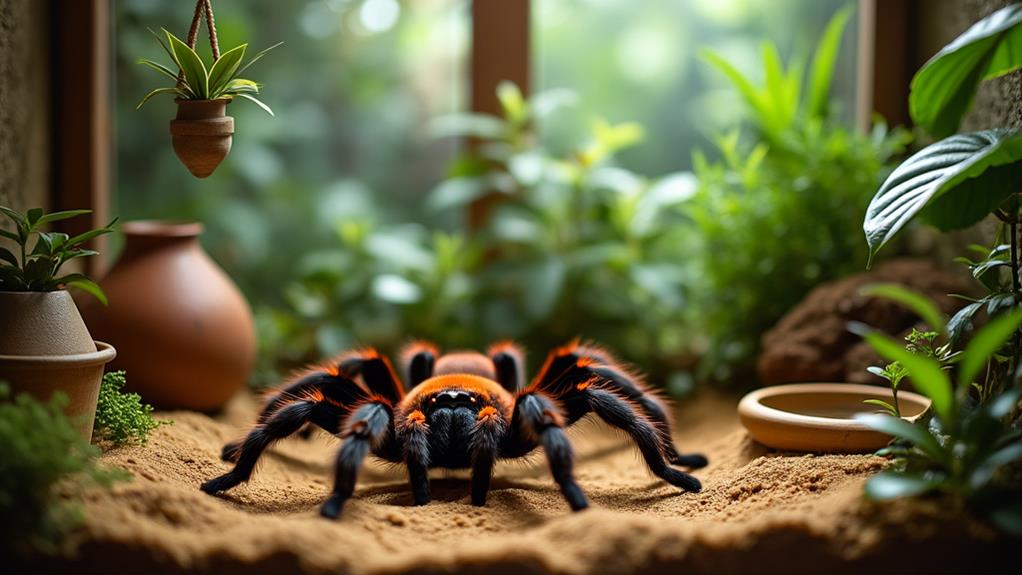
To guarantee your Mexican red-knee tarantula remains healthy, start by regularly monitoring its habitat's temperature and humidity. Keep the temperature between 75-80°F and maintain humidity levels at 60-70%. This provides a comfortable environment that promotes general health. For proper hydration, provide a shallow water dish, making certain it's always clean and accessible. Regularly remove uneaten prey within 24 hours to prevent stress and possible contamination.
During the molting process, your tarantula might become temporarily immobile. It's important not to handle it during this time to avoid stress and injury. Instead, observe quietly and make sure the habitat remains undisturbed. Be mindful of the enclosure's setup, guaranteeing it has secure ventilation and is free from sharp objects. Tarantulas are vulnerable to falls, so a safe environment is fundamental.
Regular vet checkups are significant for monitoring your tarantula's health. Choose a veterinarian experienced in exotic pets to identify and address any potential issues early on. A proactive approach to care helps keep your tarantula thriving. By maintaining the right conditions and monitoring health indicators, you'll make certain your Mexican red-knee tarantula leads a healthy and stress-free life.
Cost of Care
In conjunction with ensuring your Mexican red-knee tarantula's health, you'll want to reflect on the financial aspect of its care. The initial purchase price of these fascinating creatures typically ranges from $50 to $100, depending on maturity and sex. Once you've brought your new pet home, you'll need to take into account ongoing care costs, such as food items and substrate changes.
Monthly food expenses can vary between $5 and $10, based on the type and quantity of feeders you choose. It's significant to provide a balanced diet to keep your tarantula healthy. Moreover, substrate changes, which are crucial for maintaining a clean and comfortable environment, can cost between $10 and $20 every few months.
Don't forget about potential veterinary checkups and emergency care, which can be pricier due to the specialized nature of tarantula care. This is especially true since not all veterinarians treat tarantulas. However, even with these factors, Mexican red knee tarantulas are a budget-friendly option compared to other pets.
- Purchase price: $50 to $100
- Monthly food expenses: $5 to $10
- Substrate changes: $10 to $20
Choosing Your Tarantula
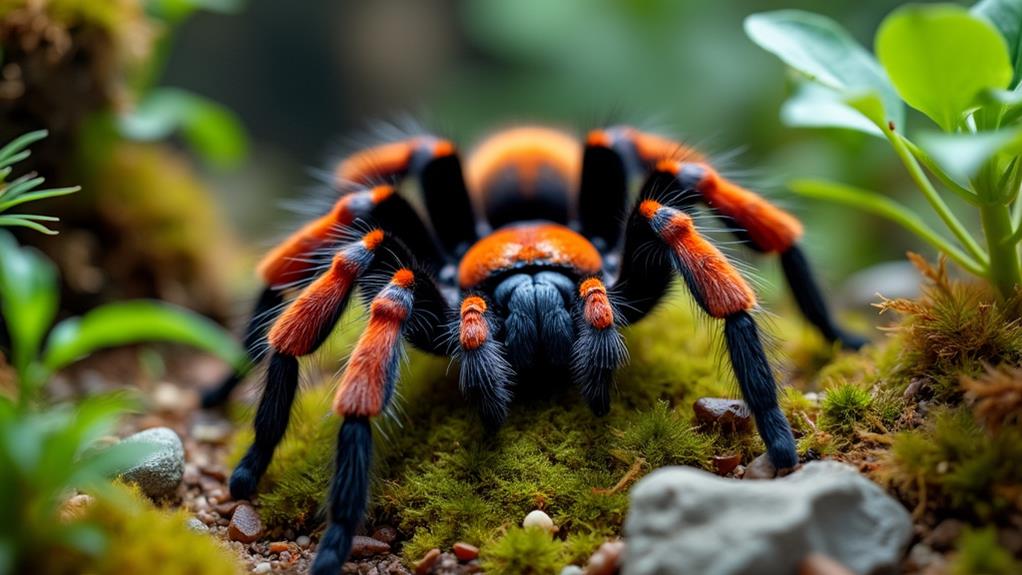
Selecting a Mexican red-knee tarantula means making a thoughtful decision about where to acquire your new pet. Opting for reputable breeders is vital because they provide detailed health and history information, guaranteeing you get a healthier specimen. Unlike pet shops, reputable breeders can give you insights into the spider's background and potential health issues, reducing the risk of surprises.
Consider the lifespan of your choice. Females are often preferred due to their impressive 25-30 year lifespan, offering a long-term companionship compared to males who live only 5-10 years. This choice requires commitment, so think about what you're ready to handle.
Pay attention to the tarantula's health by inspecting for signs like lethargy or visible injuries. These indicators can prevent future health issues and make sure you're bringing home a healthy pet. Also, factor in the tarantula's maturity. Spiderlings need different care and housing than adult tarantulas, which can influence your decision, especially if you're new to tarantula care.
Related posts