How to Set Up a Lizard Habitat: Tips for Creating the Perfect Environment
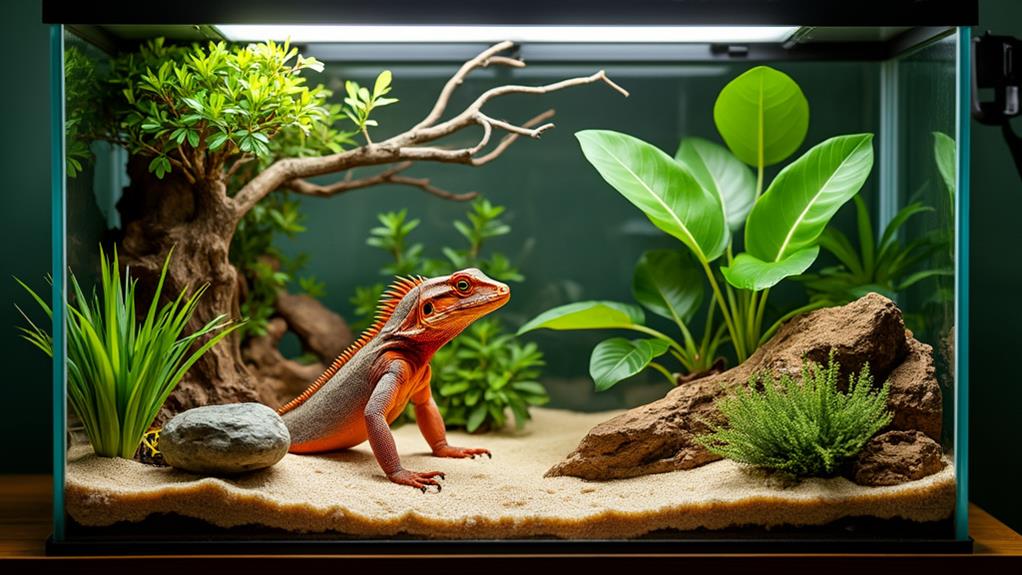
To set up a lizard habitat, start by choosing a spacious enclosure with good ventilation and a secure lid. Use glass or plastic for durability and visibility. Create a natural layout with climbing structures and hiding spots, and ascertain elements are stable. Add a heat source at one end for basking and a cooler area at the opposite end. Maintain proper humidity with misting and monitored water dishes. Provide UVB lighting for calcium metabolism and mimic natural light cycles. These steps will help you build a healthy and stimulating environment for your lizard, and there's more to uncover in creating a balanced habitat.
Choosing the Right Enclosure
Selecting the right enclosure for your lizard is fundamental to its health and happiness. You need to take into account both the enclosure size and the enclosure materials carefully. Initially, determine the appropriate size. Different lizards have varying space needs, so research your specific species. A general rule is to provide an enclosure that allows your lizard to move freely, with ample room to turn around and investigate. The bigger, the better, as long as it's manageable for you to maintain.
Next, focus on the materials. Glass and plastic are popular choices, each with its pros and cons. Glass enclosures offer excellent visibility and are easy to clean, but they can be heavy and fragile. Plastic enclosures are lighter and more durable but might not provide the same level of visibility. Think about ventilation too; proper air circulation is critical for your lizard's wellbeing.
It's essential to verify the enclosure has a secure lid to prevent escapes. Remember, the enclosure should mimic your lizard's natural habitat. By prioritizing enclosure size and materials, you create a safe and stimulating environment that promotes your lizard's comprehensive health and happiness.
Understanding Temperature Needs
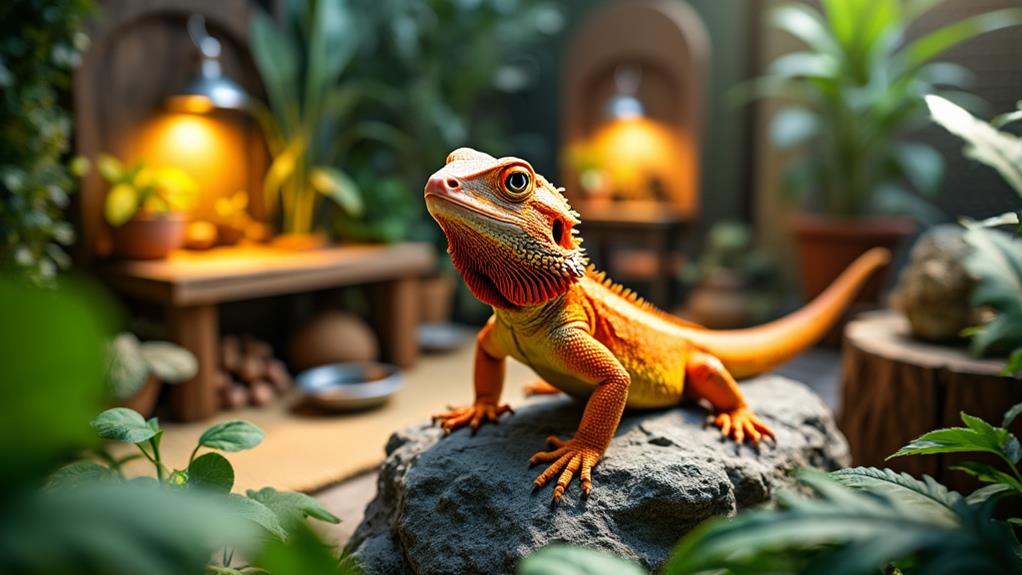
Meeting your lizard's temperature needs is fundamental for its survival and wellbeing. Lizards are ectothermic, meaning they rely on external heat sources to regulate their body temperature. Creating thermal gradients in the enclosure allows your lizard to move between different temperature zones, helping it maintain an ideal body temperature. To achieve this, position a heat source at one end of the enclosure to create a warmer area, known as a basking spot.
Basking spots are imperative as they provide your lizard with a place to soak up heat, aiding in digestion and general health. Use a heat lamp or ceramic heat emitter to maintain the appropriate basking temperature, which varies depending on your lizard species. Confirm the basking spot is accessible, and monitor it with a reliable thermometer to avoid overheating or underheating.
The opposite end of the enclosure should be cooler, allowing your lizard to escape the heat if needed. This cooler zone is part of the thermal gradient and is crucial for effective thermoregulation. By paying close attention to these temperature needs, you'll create a comfortable and healthy environment for your lizard to thrive.
Managing Humidity Levels
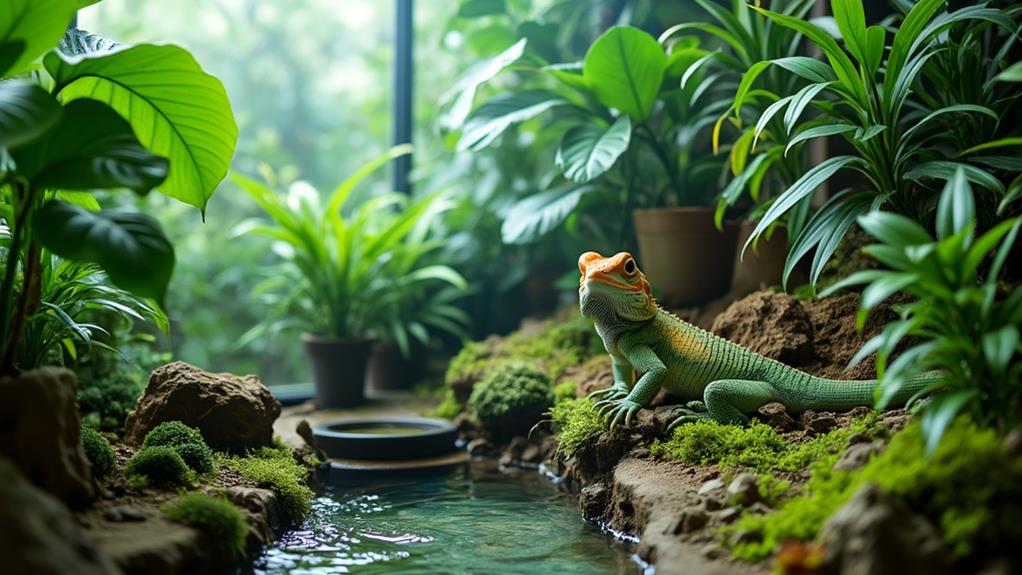
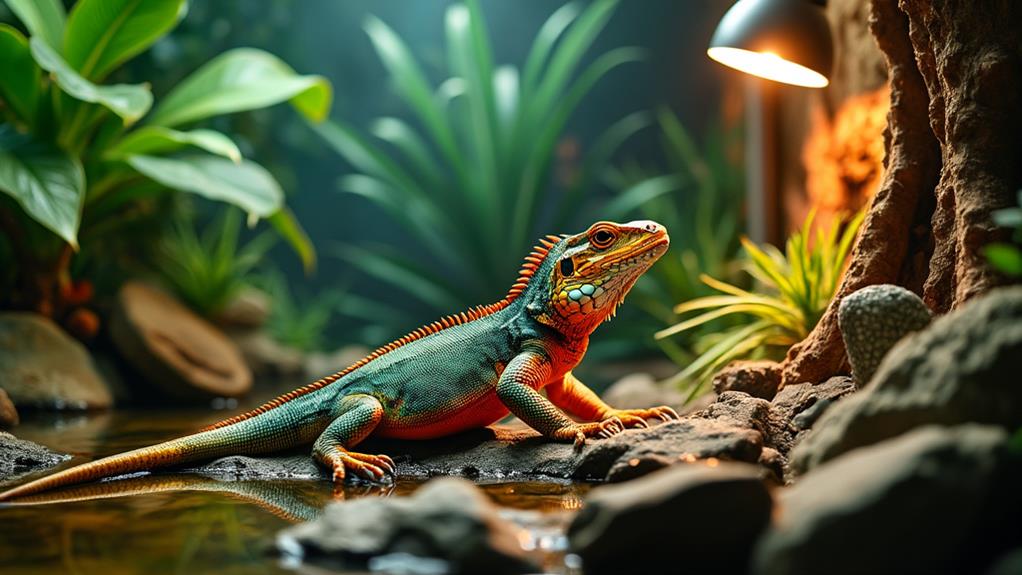
Maintaining the right humidity levels in your lizard's habitat is fundamental for its health and comfort. Different species have unique humidity requirements, so it's important to research your specific lizard's needs. Start by identifying appropriate humidity sources to create the right environment. A common method is using a water dish, which naturally increases humidity levels as the water evaporates. You can also mist the habitat regularly or use a substrate that retains moisture, such as coconut fiber or sphagnum moss.
Humidity monitoring is significant to guarantee you're maintaining the correct levels. Invest in a quality hygrometer to measure humidity accurately. Place it in a central location within the habitat to get the most reliable readings. Regularly check the hygrometer and adjust your humidity sources as needed, regardless of whether that means misting more frequently or incorporating a humidifier if the air is too dry.
Along with a hygrometer, observe your lizard's behavior for signs of improper humidity, such as shedding issues or lethargy. By staying vigilant about humidity monitoring and adjusting your approach as needed, you'll provide a safe and comfortable home for your lizard.
Providing Adequate Lighting
After managing the humidity levels, it's vital to focus on providing adequate lighting in your lizard's habitat. Proper lighting guarantees your lizard's health and well-being by mimicking their natural environment. Here's how you can do it:
- UVB Lighting: UVB lighting is fundamental for your lizard's calcium metabolism and general health. Choose a bulb type that provides the correct UVB levels for your specific species. Proper fixture placement is key; position the UVB light within 12-18 inches of the basking spots to guarantee effective exposure.
- Heat Sources: Lizards need heat sources to regulate their body temperature. Use bulbs with appropriate color temperature to create warm basking spots. Combine heat lamps with UVB lights to replicate natural sunlight. Monitor the temperature closely to avoid overheating.
- Light Cycles: Establish light cycles that mimic natural daylight hours. Photoperiod management helps regulate your lizard's biological clock. Generally, a 10-14 hour light period followed by darkness is recommended. Adjust the light cycle seasonally if your lizard is sensitive to daylight changes.
Selecting Suitable Substrate
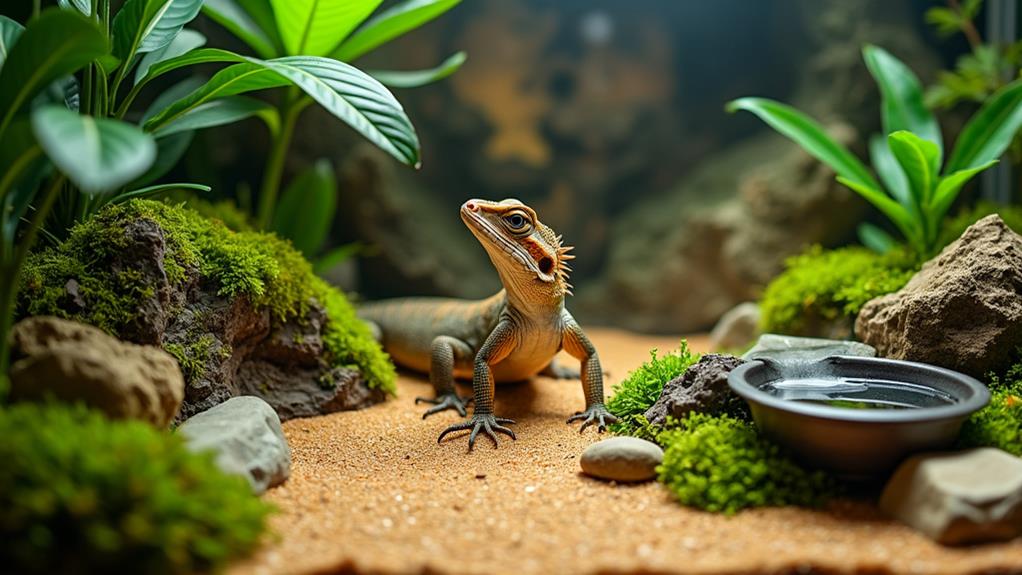
When setting up a lizard habitat, choosing the right substrate is vital for your pet's comfort and health. The substrate acts as the flooring of your lizard's enclosure and plays an imperative role in maintaining humidity, facilitating burrowing, and providing a safe surface. To begin, consider the different substrate types available. Options like reptile carpet, paper towels, and newspaper are easy to clean and ideal for beginners. For a more natural look, you might opt for coconut fiber, sand, or bark chips. Each of these offers varying benefits, so think about your lizard's specific needs and natural environment.
Next, focus on substrate depth. This is especially significant if your lizard species enjoys burrowing. For instance, bearded dragons and leopard geckos benefit from a substrate depth of about 1-2 inches, providing them enough material to dig into. On the other hand, larger lizards or those from more arid environments might require a different depth or type.
Incorporating Hiding Spots
To create a comfortable and secure environment for your lizard, incorporating hiding spots is essential. Lizards need places to retreat and feel safe, mimicking their natural habitat. You can create these havens using a variety of hiding materials and natural décor. Not only do these elements provide security, but they also add visual interest to the enclosure.
Here are some tips for incorporating hiding spots:
- Use Natural Décor: Incorporate rocks, branches, and logs. These elements offer excellent hiding places and help create a habitat that feels like your lizard's natural environment. Make sure all materials are securely placed to prevent accidents.
- Choose the Right Hiding Materials: Opt for materials like cork bark, coconut shells, or commercially available reptile hides. These items are not only practical but also improve the enclosure's aesthetic. Confirm they're appropriately sized for your lizard.
- Create Multiple Hiding Options: Place hides at different levels and areas of the enclosure. This approach allows your lizard to select its preferred spot based on temperature and light conditions. It also guarantees diversity, catering to your lizard's changing needs.
Adding Climbing Structures
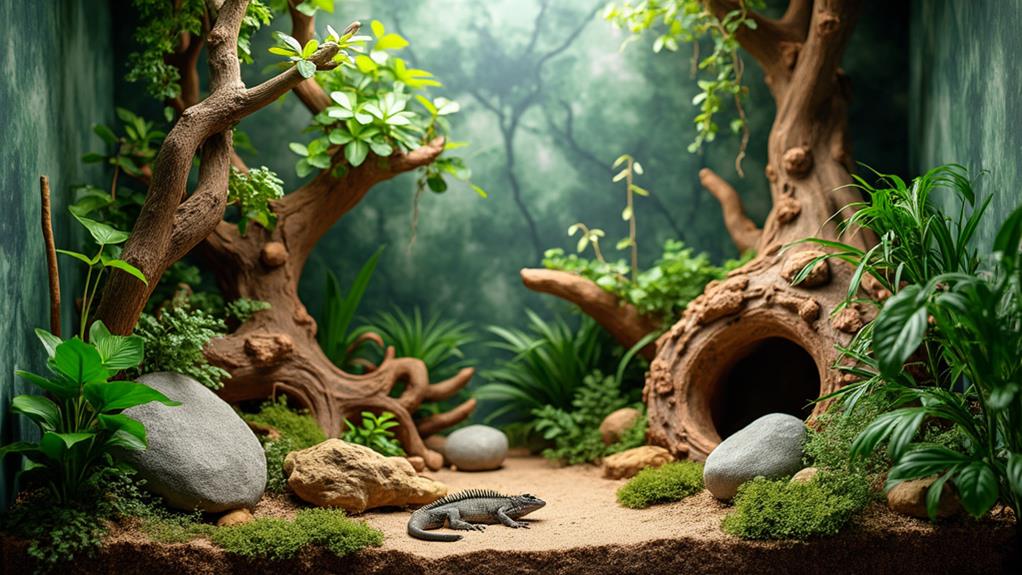
A significant aspect of setting up an enriching lizard habitat is adding climbing structures. Lizards thrive in environments that mimic their natural habitats, and providing them with opportunities to climb is fundamental for their physical and mental well-being. Start by considering the climbing materials you'll use; these could include branches, rocks, or specially designed reptile climbing accessories. Confirm that the materials are safe, sturdy, and free of any sharp edges that could harm your lizard.
Utilizing vertical space in the enclosure is essential. Lizards often enjoy exploring and basking in raised areas, so arrange the climbing structures to offer diverse heights and angles. This not only satisfies their natural climbing instincts but also helps them regulate their body temperature by moving closer or further from the heat source.
When you arrange these elements, verify that they're securely anchored, as stability prevents accidents. Moreover, think about the layout and how it can create a stimulating environment. You don't want a static habitat; rearranging the climbing structures occasionally can provide new challenges for your lizard, keeping them engaged. By thoughtfully incorporating these elements, you'll create a perfect home for your lizard.
Ensuring Proper Nutrition
Providing your lizard with proper nutrition is fundamental for its health and longevity. A well-balanced diet guarantees that your pet thrives in its habitat. Here are some significant tips to get started:
- Dietary Variety: Lizards need a diverse diet to meet their nutritional needs. Depending on the species, incorporate a mix of insects, vegetables, and fruits. For insectivorous lizards, offer crickets, mealworms, and roaches. Herbivorous species might prefer leafy greens, squash, and berries. Rotate foods to keep things interesting and nutritious.
- Supplemental Feeding: To guarantee your lizard receives all necessary vitamins and minerals, consider supplemental feeding. Dust their food with calcium powder and a multivitamin supplement. This is especially important for species prone to metabolic bone disease, such as bearded dragons. Be sure to follow the dosage instructions to avoid over-supplementation.
- Monitor Feeding Habits: Keep an eye on your lizard's eating habits. A sudden change could indicate health issues or environmental stress. Confirm they're getting the right amount of food based on their size and stage of development. Juvenile lizards often eat more frequently than adults.