
How to Remove Tartar in Dogs: Tips for Maintaining Dental Health
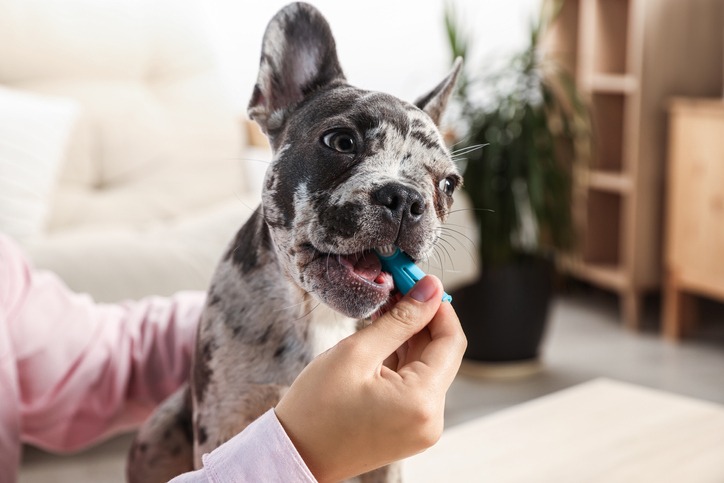
To keep your dog's teeth tartar-free, start with daily brushing using a dog-specific toothbrush and toothpaste. Incorporate dental chews and treats that naturally clean teeth. Adding water additives can also help freshen breath and reduce plaque. Provide crunchy fruits and veggies like raw carrots for a healthy snack that aids in cleaning. Schedule regular veterinary cleanings every 6-12 months for thorough inspections and deep cleaning. Watch for signs like bad breath or difficulty eating, which might indicate tartar or gum issues. Investigate more methods to guarantee your furry companion's dental health and general well-being.
Understanding Tartar Formation
Tartar formation in dogs is a common issue that many pet owners face. It starts when plaque, a sticky film of bacteria and food particles, accumulates on your dog's teeth. If not removed through regular tooth brushing, plaque hardens into tartar within 24 hours due to mineralization from saliva. This rough surface of tartar fosters further bacterial growth, escalating the risk of gum inflammation and potentially leading to periodontal disease.
You might notice tartar as a yellowish or brown discoloration along your dog's gumline, primarily affecting canines, fangs, and molars. Factors influencing tartar formation include inadequate dental care practices, such as infrequent tooth brushing, and dietary choices, particularly those high in sugar or soft foods. Your dog's maturity and breed also play roles; small breeds are usually more susceptible to plaque build-up.
Approximately 80% of dogs show signs of dental disease by maturity three, highlighting the critical need for understanding tartar formation. Consistent dental hygiene, including routine tooth brushing, is crucial for preventing tartar and maintaining your dog's dental health. Being aware of these factors can help you take proactive steps to reduce tartar build-up and protect your dog's oral well-being.
Importance of Regular Dental Care
In regard to your dog's health, regular dental care is of utmost significance. Without it, approximately 80% of dogs develop dental disease by three years old. This alarming statistic underscores the need for a consistent dental hygiene routine to prevent plaque and tartar buildup. By incorporating routine brushing with dog-safe toothpaste, you can markedly improve your dog's oral health. This simple practice helps maintain your dog's teeth and gums, reducing the risk of disease.
Scheduling professional dental cleanings at least once a year is another vital step. These cleanings keep tartar in check and allow for the early detection of any developing dental issues. Addressing these problems early can prevent more severe health issues down the line. Regular vet check-ups are similarly essential, providing opportunities for your vet to spot potential dental problems that you might miss at home.
Along with brushing and professional cleanings, dental chews and treats designed to reduce tartar can supplement your efforts. These products contribute to better overall dental hygiene, making it easier to maintain your dog's oral health. Remember, staying proactive with your dog's dental care guarantees a healthier, happier life for your furry friend.
Effective Products and Techniques
In addressing tartar buildup in your dog's mouth, effective products and techniques can make all the difference. As a pet parent, establishing a solid dog dental care routine is key to maintaining your dog's oral hygiene. Start with a daily brushing routine using a dog toothbrush and dog-safe toothpaste. This approach is the most effective way to remove tartar and control its buildup. Complement brushing with dental chews and treats that encourage chewing, which naturally helps in tartar control by removing plaque.
Consider incorporating these into your routine:
- Water additives: Mix these antibacterial solutions with your dog's drinking water to combat plaque and freshen breath.
- Oral gels and dental sprays: Apply these products after meals to dissolve plaque and aid in tartar prevention.
- Regular dental cleanings: Schedule veterinary dental cleanings every 6-12 months for deep cleaning and tartar removal.
At-Home Cleaning Methods
Your dog's dental hygiene can be effectively managed with a few at-home cleaning methods that are both practical and easy to implement. Start with daily brushing using dog-safe toothpaste, which is the most effective way to tackle tartar removal and prevent plaque buildup. It's best to begin this routine when your pup is around 6 months old.
Incorporate dental chews and toys into your dog's routine. These not only serve as a fun activity but also mechanically clean teeth, reducing plaque buildup through natural chewing action. Consider using water additives designed specifically for dogs to combat tartar; they can help dissolve plaque while your dog drinks, enhancing overall dental health.
Regularly offering crunchy fruits and vegetables like raw carrots and apples can also contribute to at-home cleaning. These snacks provide natural abrasion that helps clean teeth. Furthermore, baking soda can be used in moderation to neutralize acids and remove stains, augmenting your efforts in maintaining your dog's oral hygiene.
Recognizing Dental Issues
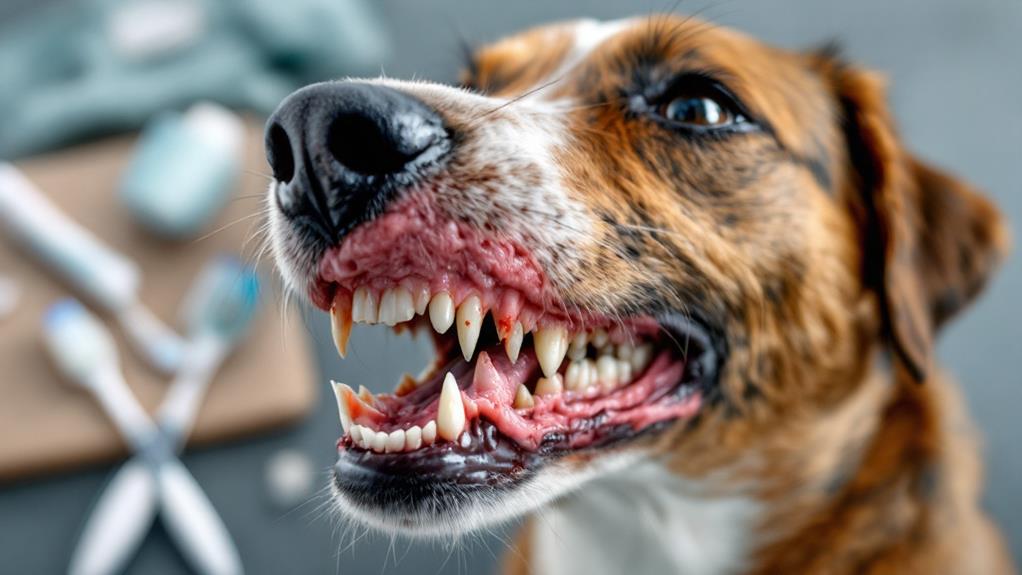
Spotting dental issues in your dog early on can save them from discomfort and prevent more severe health problems down the line. Recognizing dental issues is essential for maintaining your dog's total dental health. Pay attention to bad breath, excessive drooling, and difficulty eating, as these symptoms often indicate tartar buildup or gum disease. Visible tartar appears as a brownish-grey substance on the teeth, particularly around the gum line, and may be accompanied by swollen gums.
Behavioral changes can also signal dental problems. Your dog might show reluctance to chew or play with toys due to discomfort. Other signs include:
- Pawing at the mouth: This could indicate irritation or pain caused by tartar buildup and gum inflammation.
- Excessive licking: Constant licking can be a reaction to oral discomfort.
- Swollen or red gums: Often accompany visible plaque on the teeth.
Regular dental check-ups are significant to catch these issues early. With 80% of dogs experiencing dental disease by the age of 3, scheduling routine check-ups can help identify tartar buildup before it escalates into more serious health concerns. Don't wait until problems become severe; address them promptly to guarantee your dog's dental health.