How to Introduce Your Dog to Your New Baby: Essential Tips for a Smooth Transition
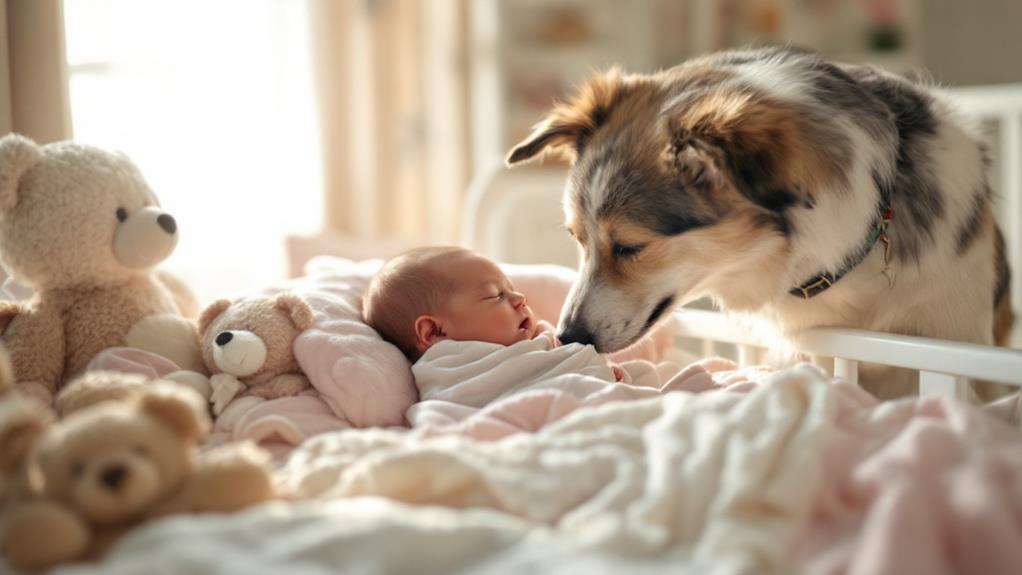
To smoothly introduce your dog to your new baby, start by preparing them weeks in advance. Get them used to baby items by introducing toys and furniture gradually. Establish a consistent daily routine to create stability. Use blankets or clothing to transfer the baby's scent, building positive associations. Playing baby sounds at low volumes helps your dog adjust. Make the initial meeting calm and controlled, letting the dog sniff the baby's feet initially while using treats for rewarding calm behavior. Monitoring your dog's reactions and behavior is essential. There's much more to investigate on ensuring a harmonious household.
Preparing Your Dog for Baby
Getting your dog ready for your new baby might seem challenging, but it doesn't have to be. Start by preparing your dog through gradual introductions to baby items like toys and furniture weeks before the baby arrives. This helps familiarize them with the new environment, promoting calm behavior. Establish a consistent daily routine involving walks, playtime, and feeding. This predictability helps your dog adjust to the impending changes in family dynamics, keeping them calm and secure.
Create positive associations with the baby by introducing scents. Let your dog sniff the baby's blanket or clothing, which can encourage gentle behavior around the new family member. Playing recordings of baby sounds at a low volume will also help acclimate your pet to the new noises they'll encounter, easing any potential anxiety.
Daily walks are vital in maintaining your dog's routine and energy levels. During this adjustment period, it is important to monitor your dog's reactions to environmental changes. Offering a calm atmosphere and observing their behavior will help reduce anxiety. By taking these steps, you're ensuring your dog feels included and prepared for the arrival of your baby, fostering a harmonious household.
Managing Attention and Behavior
Balancing attention between your dog and the new baby is crucial for a peaceful shift. When you bring the new baby home, it's significant to help your dog feel included while maintaining your dog's routine. Start by setting up short, random play and cuddle sessions leading up to the arrival, so your dog doesn't expect constant attention. This helps them adapt to the new family dynamics without feeling neglected or insecure.
To encourage calm and gentle behavior, reinforce basic obedience commands, especially around the baby. Use positive reinforcement to reward your dog for good behavior, like staying calm during the baby's crying spells or when visitors come over. Establish clear household rules, such as no begging or jumping on furniture, to help your dog know what's expected in this new environment.
Monitor your dog's behavior closely once the baby arrives. Look for signs of anxiety or depression, as these can indicate your dog feels left out. Incorporate quiet time into your daily routine, allowing your dog to relax and adjust. Avoid giving excessive attention, but continue to include your dog in family activities, reinforcing their role and significance in the household.
Familiarizing With Baby Items
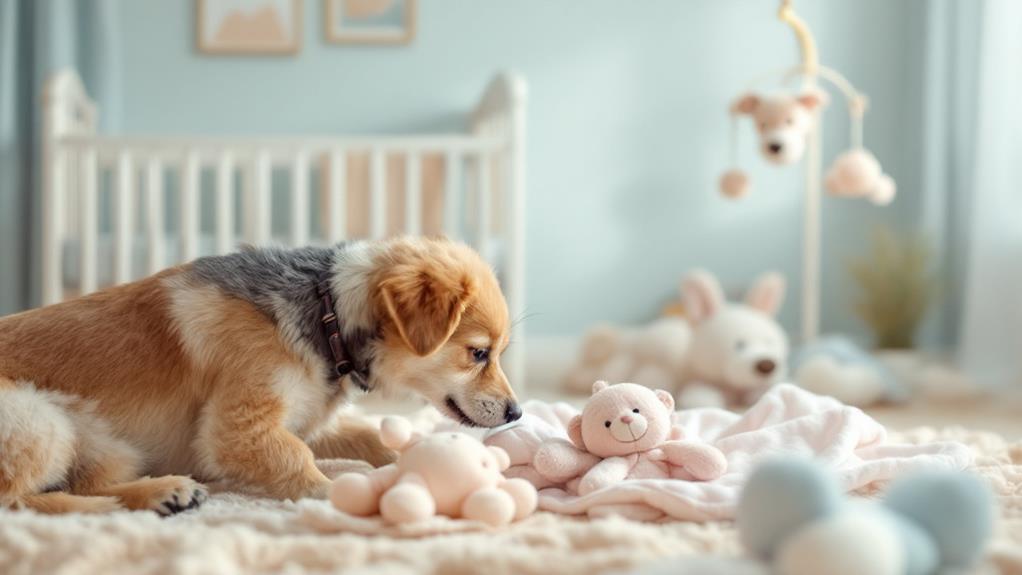
Introducing your dog to the different baby items before the baby's arrival can ease their adjustment into the new family dynamic. Gradually introduce your dog to baby items like cribs, strollers, and toys. Let them investigate these objects at their own pace to reduce surprise when the baby arrives. Familiarizing your dog with these items helps them form positive associations. Allow them to sniff baby lotions, powders, and blankets. This familiarizes them with the scents that will soon be part of your home.
To prepare your dog for the new sounds, use recordings of baby noises at a low volume. Reward calm behavior, and slowly increase the volume over time. This helps your dog adapt to the sounds they will soon hear daily. Introduce the car seat and high chair, so they associate these with positive experiences, not surprises.
Monitor your dog's reactions to these new items. Adjust their exposure as needed to guarantee the process remains positive and stress-free. Create a safe space where your dog can retreat if they feel overwhelmed. This careful adjustment will help your dog feel secure and ready for the changes ahead.
The First Meeting
Regarding the initial meeting between your dog and your new baby, setting the stage with a calm and relaxed atmosphere is crucial. Choose a quiet room free of distractions to minimize stress for both the dog and the baby. Keeping your dog on a leash helps you maintain control over its excitement and reactions during the introduction. Here's how to make the primary meeting successful:
- Gentle Introduction: Allow your dog to sniff the baby's feet first. This facilitates a gentle introduction and helps your dog become familiar with the new family member.
- Use Treats: Reward your dog for calm behavior throughout the introduction. This creates positive associations with your baby's presence and encourages relaxed behavior.
- Monitor Body Language: Watch for signs of stress or discomfort in both your dog and baby. Continue with a gradual interaction, increasing the time they spend together as comfort levels rise.
Ongoing Interaction and Boundaries
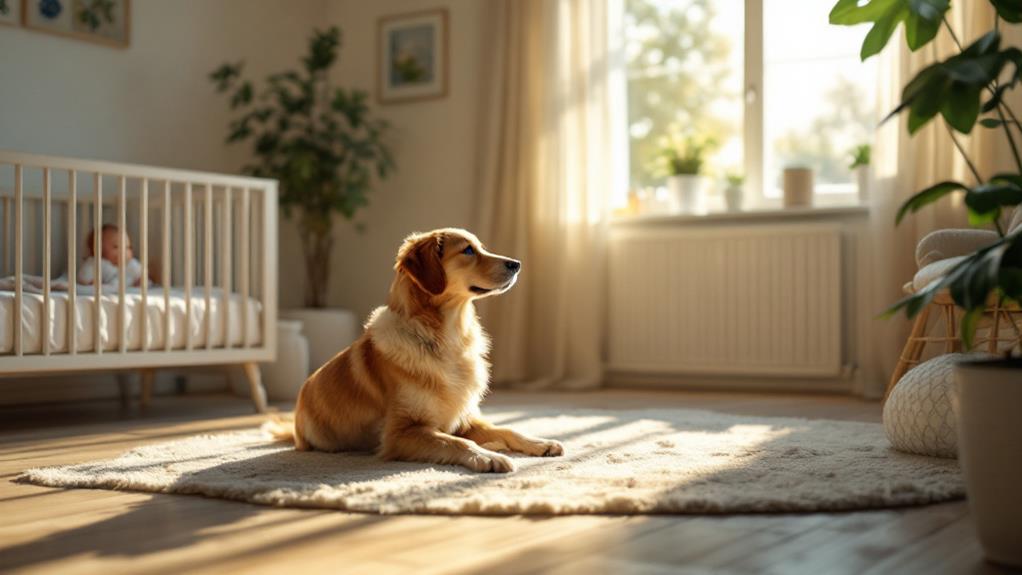
Establishing clear boundaries and ongoing interaction protocols with your dog is essential as your baby becomes a part of the household. When introducing your dog to your newborn baby, make certain that your dog understands they need an invitation to enter the baby's room. Use baby gates to effectively manage this space. Supervise all interactions between your dog and baby to guarantee safety and comfort. Never leave them alone together, as even the calmest dog needs monitoring.
To create a harmonious environment, reinforce positive associations. Reward your dog with treats and praise for staying calm and relaxed around the baby. This will help your dog associate the new family member with positive experiences, fostering security and acceptance. Maintain your dog's routine by scheduling quiet time during the baby's feeding sessions. This prevents feelings of neglect and helps your dog adjust comfortably.
Consistently monitor your dog's body language for signs of stress or discomfort. If needed, adjust interactions and boundaries to make sure everyone feels at ease. If challenges arise, don't hesitate to seek professional help to guide the process. With patience and care, you can guarantee a smooth adjustment for your growing family.