How to Help Your Dog If It Stops Drinking Water: Tips and Solutions
If your dog stops drinking water, act quickly to prevent dehydration. Start by offering fresh water in multiple bowls around the house. Improve the water's appeal with low-sodium broth or a splash of apple juice. Try giving ice cubes as treats, or mix water into their dry food. Watch for signs of dehydration, like dry gums or lethargy, and consult a vet if your dog hasn't drunk water in 24 hours. Remember, dental issues or environmental changes might be the cause. To guarantee your furry friend's hydration and well-being, uncover more strategies and solutions available.
Importance of Dog Hydration
Maintaining your dog's hydration is absolutely essential for their total health and well-being. As a responsible pet owner, you need to guarantee your dog drinks enough water daily. Generally, dogs require about 1 ounce of water per pound of body weight every day. This hydration is crucial because water helps regulate their body temperature, flush out toxins, and support kidney health. Without adequate water intake, your dog risks dehydration, which can become a serious issue if they lose more than 10% of their body water.
It's significant to recognize the signs of dehydration in your furry friend. Look for dry gums, lethargy, and sunken eyes as clear indicators that immediate attention and increased hydration efforts are necessary. Always provide access to fresh water, as this is a basic yet essential pet safety tip. Your dog's daily water needs might vary depending on their activity level, diet, and the environment they're in, so be mindful and adjust as needed. Prioritizing your dog's hydration not only guarantees their health but also prevents life-threatening conditions related to dehydration. Keep a watchful eye and make fresh water available at all times.
Reasons for Reduced Drinking
Understanding why your dog might not be drinking enough water is as important as knowing the benefits of proper hydration. There are several reasons dogs may show a lack of interest in water. For starters, if you've switched from dry kibble to canned food, the increased moisture content can naturally reduce your dog's thirst. However, if your dog is not drinking due to other factors, it's necessary to identify the underlying cause.
Health problems are a significant concern, as infections or chronic illnesses can diminish your dog's desire to drink. Dental problems or mouth injuries can also lead to discomfort when drinking, causing your dog to avoid water. In such cases, it's imperative to call your veterinarian for guidance.
Behavioral issues, such as anxiety or past negative experiences with water, might make your dog hesitant to drink. Environmental factors like sudden temperature changes or unfamiliar settings can also discourage water consumption. Dogs might instinctively avoid drinking in new or stressful situations to feel secure.
Monitoring these potential causes will help you address the issue effectively. By identifying the underlying cause, you can take the necessary steps to guarantee your dog stays properly hydrated.
Encouraging Water Consumption
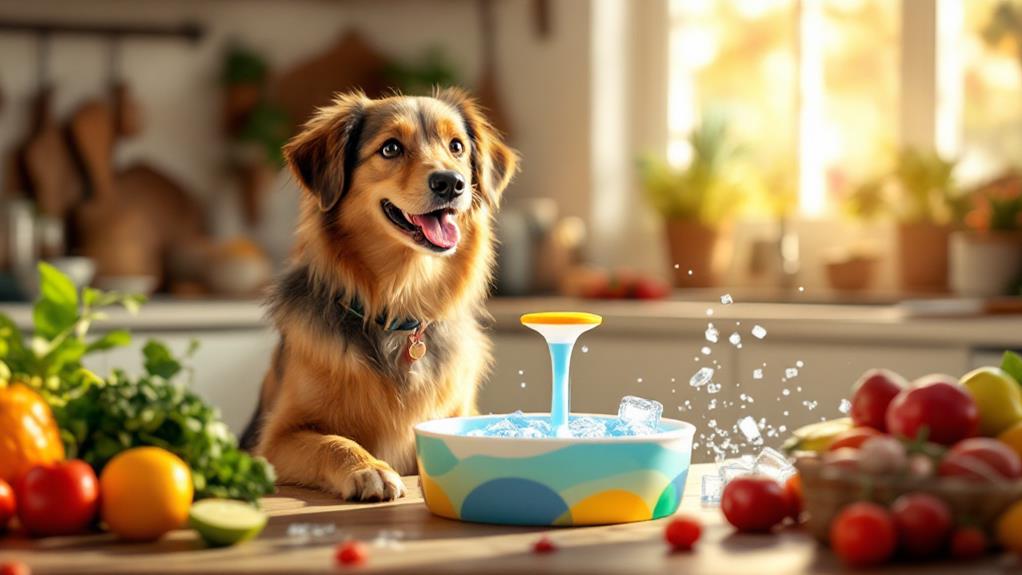
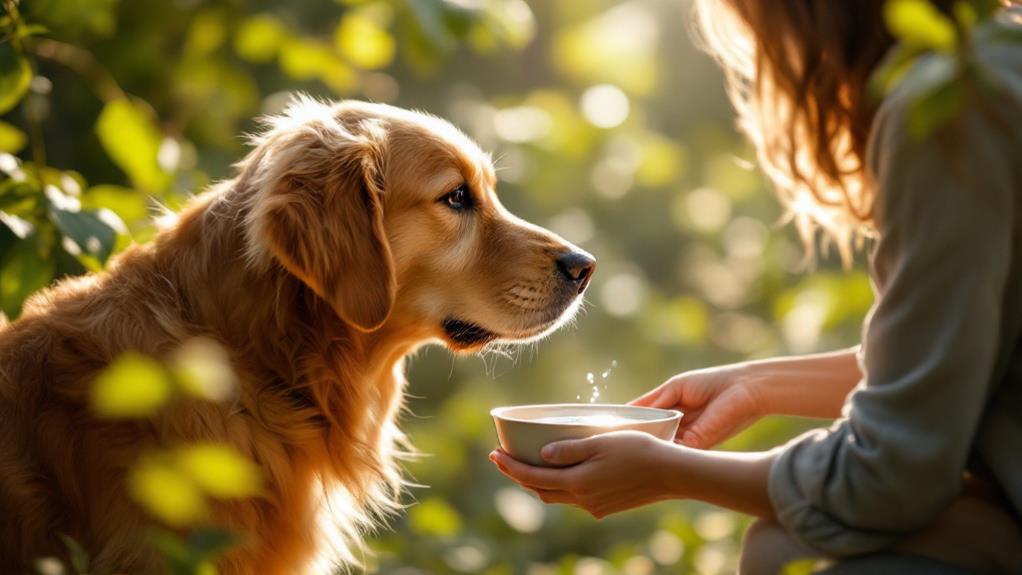
Hydration plays a crucial role in your dog's general health, and encouraging water consumption can be both simple and creative. One effective strategy is to offer fresh, clean water in multiple bowls throughout your home. This increases access and encourages your dog to drink more often. Make sure to experiment with different bowl types, like stainless steel or ceramic, since some dogs may prefer one material over another.
To improve the appeal of water, try adding a splash of low-sodium broth or apple juice. This can entice your dog to drink more, as the added flavors make the water more interesting. You can also provide ice cubes as a fun treat. Many dogs love chewing on them, and this can increase their water intake without them even realizing it.
Another way to elevate hydration is by mixing water into your dog's dry food. This increases moisture intake and effectively turns mealtime into a hydrating experience. By making these small adjustments, you can greatly encourage your dog's water consumption and support their overall well-being. Remember, keeping your dog hydrated is key to ensuring they're healthy and happy.
Recognizing Dehydration Signs
In relation to your dog's health, being aware of dehydration signs is fundamental. Spotting these signs early can make a big difference in maintaining their comprehensive health. Start by checking your dog's gums; dry gums are a clear indicator of dehydration. Also, pay attention to their activity level. If you notice lethargy or weakness, it could mean their hydration levels are low. A dog's urine color is another useful clue—dark yellow urine often signals dehydration, while pale yellow suggests adequate hydration.
Another significant aspect to observe is skin elasticity. You can perform a simple skin turgor test by gently pulling up the skin on the back of your dog's neck. If the skin doesn't snap back quickly, it may indicate dehydration. Sunken eyes can also be a vital symptom, often accompanying severe dehydration. Keep an eye on your dog's comprehensive demeanor—changes here are significant.
If any of these signs become evident, it's important to address them swiftly to prevent further complications. Dehydration can progress rapidly, so close monitoring and prompt action are essential to guarantee your dog's well-being and to avoid the need for immediate veterinary attention.
When to Consult a Vet
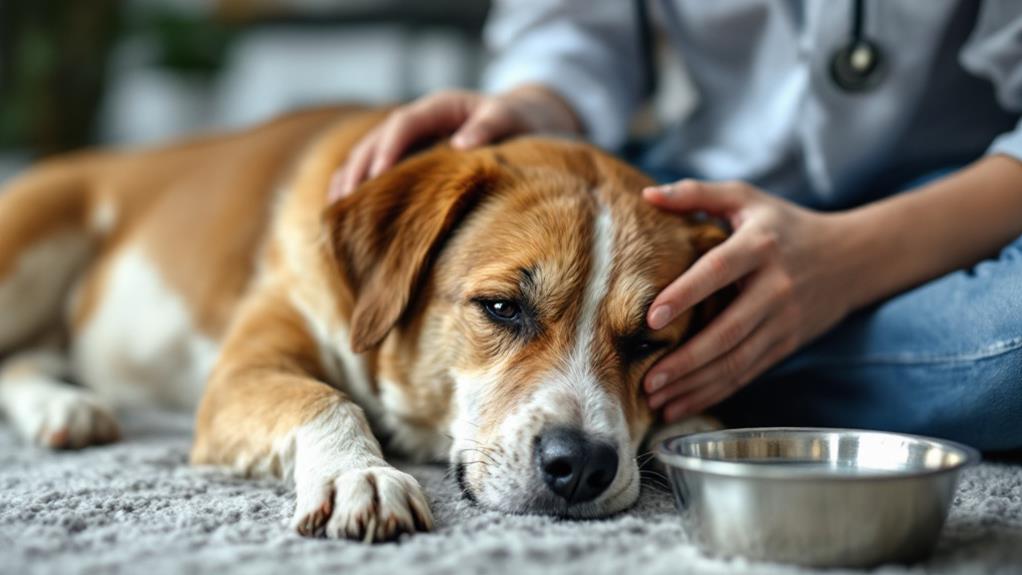
Timeliness can make all the difference when deciding to consult a vet about your dog's water intake issues. If your dog hasn't been drinking water for over 24 hours, it's imperative to contact your veterinarian immediately. This is especially significant to take seriously as decreased water intake might indicate underlying health issues. Older dogs or those with existing health problems are particularly at risk, so prompt action is critical.
Look for signs of dehydration like sunken eyes, dry gums, and lethargy. If these symptoms appear, it's time to see an emergency vet to prevent severe complications. Sudden changes in your dog's behavior, appetite, or water consumption warrant a vet visit. These could be possible causes of concern, and a professional evaluation will help address any potential underlying conditions.
If your dog experiences vomiting, diarrhea, or noticeable discomfort while drinking, don't hesitate to contact your veterinarian. Regular check-ups are fundamental for maintaining your dog's health and monitoring chronic issues that might affect hydration. Staying proactive about your dog's water intake will not only guarantee their well-being but also help catch any health issues early on.
Veterinary Treatment Options
What happens when your dog stops drinking water, and professional intervention becomes necessary? Initially, a veterinarian will perform a thorough physical exam to identify any underlying health issues such as infections or chronic diseases. This exam helps pinpoint possible reasons for your dog's decreased water intake. Diagnostic tests, including blood work and urinalysis, are vital in evaluating your dog's hydration levels and kidney function. These tests guide the veterinarian in forming an appropriate treatment plan.
If your dog suffers from severe dehydration, the veterinarian might administer intravenous (IV) fluids. This quick method restores hydration and balances electrolytes effectively. In some cases, dietary changes are recommended. You could incorporate wet food or add water to dry kibble to guarantee your dog's moisture intake increases. These modifications can encourage better hydration habits in your pet.
Follow-up care is necessary. Regular check-ups guarantee that your dog's water intake improves and any underlying health issues are managed effectively. Monitoring your dog's progress with the guidance of a veterinarian guarantees a swift return to health. Don't delay seeking professional help to address your pet's hydration needs promptly and thoroughly.