How to Handle Pet Lizards: Tips for Safe and Comfortable Interaction
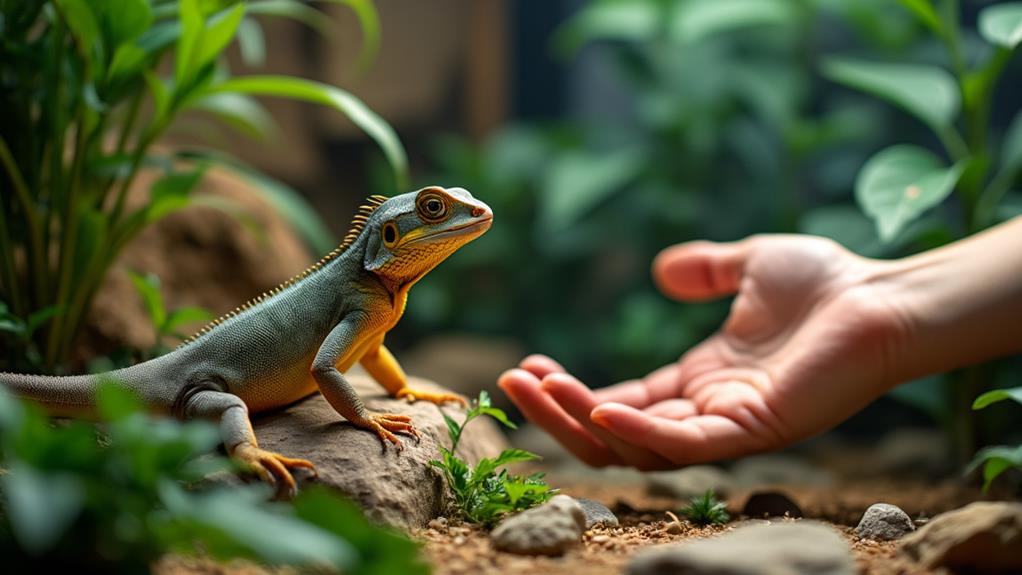
To handle pet lizards safely, start by choosing a beginner-friendly species like a leopard gecko. Prepare their habitat with the right temperature, humidity, and substrates. Approach your lizard calmly—avoid sudden movements and let it get used to your presence. Support its body gently with both hands, and always respect signs of stress like rapid breathing or tail whipping. Regular handling and offering treats can help build trust over time. Maintaining proper hygiene by washing your hands before and after interaction is essential. If you're keen on learning more, there are plenty of detailed aspects to investigate.
Choosing the Right Lizard
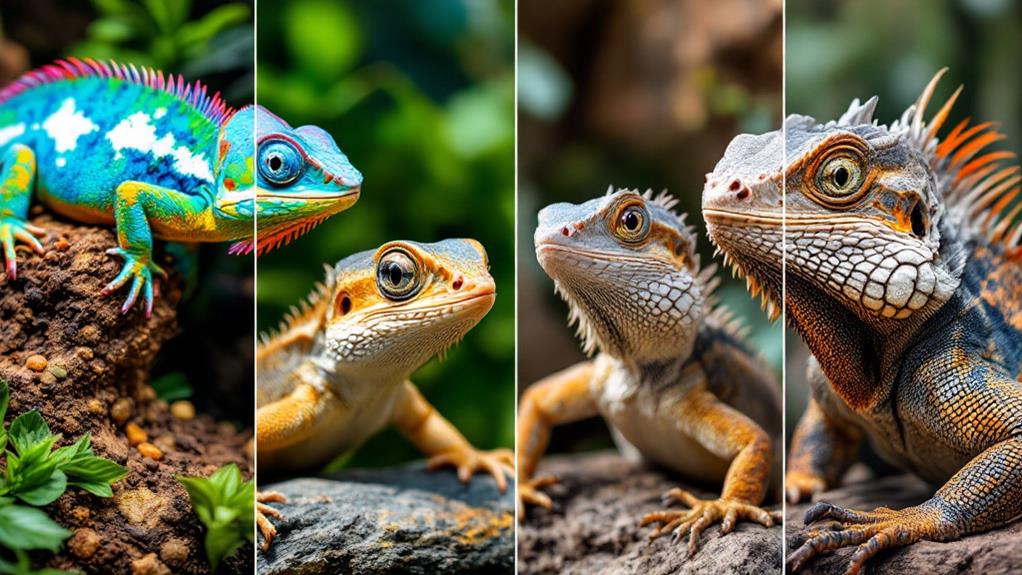
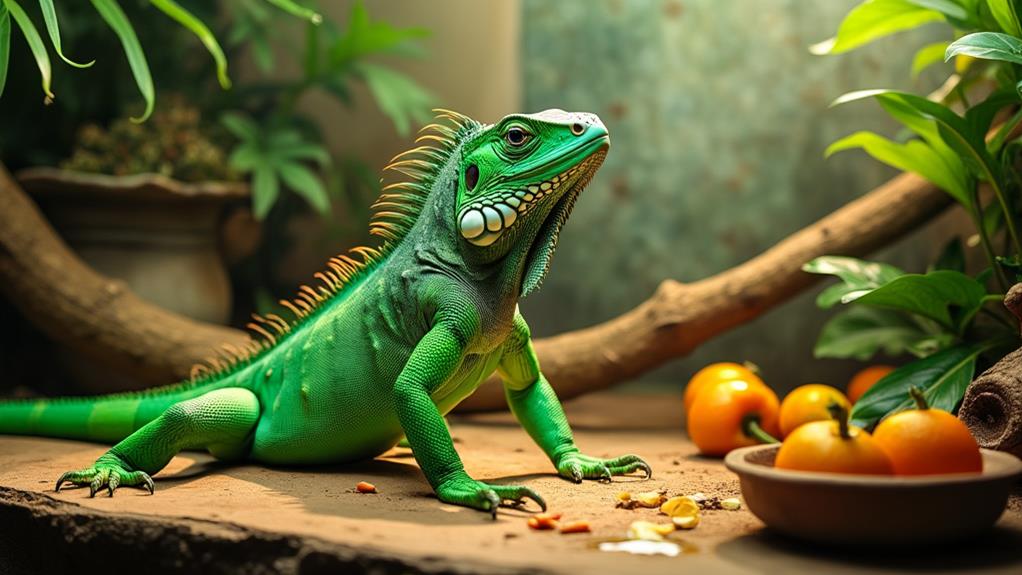
Selecting the perfect lizard for your home can be an exciting yet intimidating task. You need to contemplate diverse lizard species to find one that's a good fit for your lifestyle. Pet suitability is vital; some lizards are beginner-friendly, like leopard geckos, while others, such as iguanas, require more experience due to their size and care demands. Handling requirements vary, too—bearded dragons are generally easygoing and tolerate handling well, while chameleons prefer less interaction.
Temperament traits should also guide your decision. Some lizards are more docile and social, enhancing your pet experience, while others may be more skittish or solitary. Understanding their habitat needs is fundamental; confirm you can provide the correct environment, including temperature, humidity, and space.
Dietary preferences differ among species—some lizards thrive on insects, while others may require a diet rich in fruits and vegetables. Lifespan considerations are significant, too. Be prepared for a long-term commitment, as some lizards can live over a decade. Ultimately, reflect on the activity levels of your potential pet. Some lizards are more active and need stimulation, while others are content with a more relaxed lifestyle.
Understanding Lizard Behavior
While lizards may not vocalize like other pets, understanding their behavior is vital for building a healthy relationship. Lizards have unique ways of communicating. They use body language and color changes to express feelings like stress or contentment. Observing their social interactions helps you gauge if they prefer solitude or enjoy the company of other lizards.
Territorial behavior is common, especially among males. It's important to know if your lizard is territorial to prevent stress or aggression. Regarding feeding habits, lizards can be picky. Some prefer live prey, while others enjoy fruits or vegetables. Monitoring their diet guarantees they're healthy and happy.
Temperature preferences play a significant role in a lizard's life. They're ectothermic, meaning they rely on external heat sources to regulate their body temperature. Make certain you understand the ideal temperature range for your lizard.
Shedding cycles offer insight into their health and growth. Regular shedding indicates proper care, while irregular patterns might signal issues. Take note of their habitat preferences too, as a comfortable environment is key to their well-being. Finally, be aware of their breeding behaviors, which can influence their mood and interactions.
Preparing the Environment
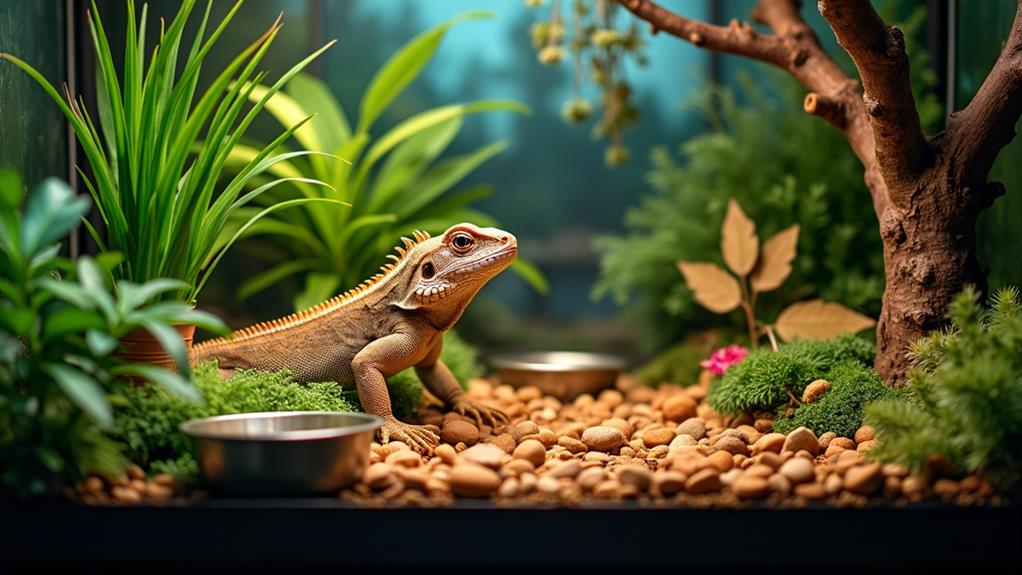
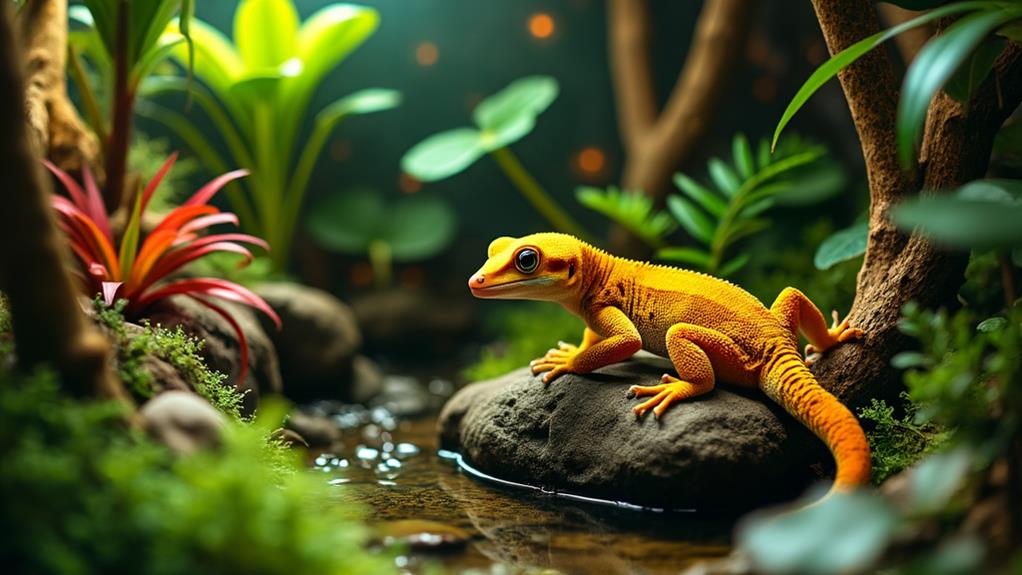
To create the ideal habitat for your pet lizard, start by carefully considering both the enclosure size and temperature requirements. The enclosure should be spacious enough for your lizard to move around comfortably, allowing for natural behaviors like climbing or burrowing. Research your lizard's specific needs to determine the appropriate size; a cramped space can cause stress and health issues.
Next, focus on substrate selection. The substrate serves as the flooring material inside the enclosure and can greatly impact your lizard's well-being. Choose a substrate that matches your lizard's natural environment—options include sand, soil, or reptile carpet. Avoid substrates like gravel or wood chips, which can cause impaction if ingested.
Temperature regulation is essential for maintaining your lizard's health. Lizards are ectothermic, meaning they rely on external heat sources to regulate their body temperature. Install a heat lamp or under-tank heater to create a temperature gradient within the enclosure. This allows your lizard to move between warmer and cooler areas as needed. Use thermometers to monitor the temperature and confirm it stays within the recommended range for your species. Regularly adjust the heat source to maintain this balance, promoting a thriving habitat.
Approaching Your Lizard
Having set up the perfect habitat, it's time to interact with your lizard in a way that builds trust and guarantees safety. Start by observing your lizard's body language to understand its mood. A relaxed lizard will have its limbs resting naturally and eyes alert yet calm. If your lizard seems tense or tries to hide, it might not be the best time for interaction. Patience is key to successful lizard socialization.
Approach your lizard slowly and calmly, avoiding sudden movements that might startle it. Speak softly to help your lizard recognize your voice as non-threatening. This familiarity can aid in building a trusting relationship over time. When you're near the enclosure, offer your hand for your lizard to smell or observe. This gesture lets it become accustomed to your presence without feeling threatened.
Pay attention to signs that your lizard is comfortable, such as slow, deliberate movements or even gentle tongue flicks. These indicate curiosity and an openness to socialization. If your lizard seems relaxed, you can continue interacting. However, if it displays discomfort, such as puffing up or tail flicking, give it some space and try again later.
Proper Handling Techniques
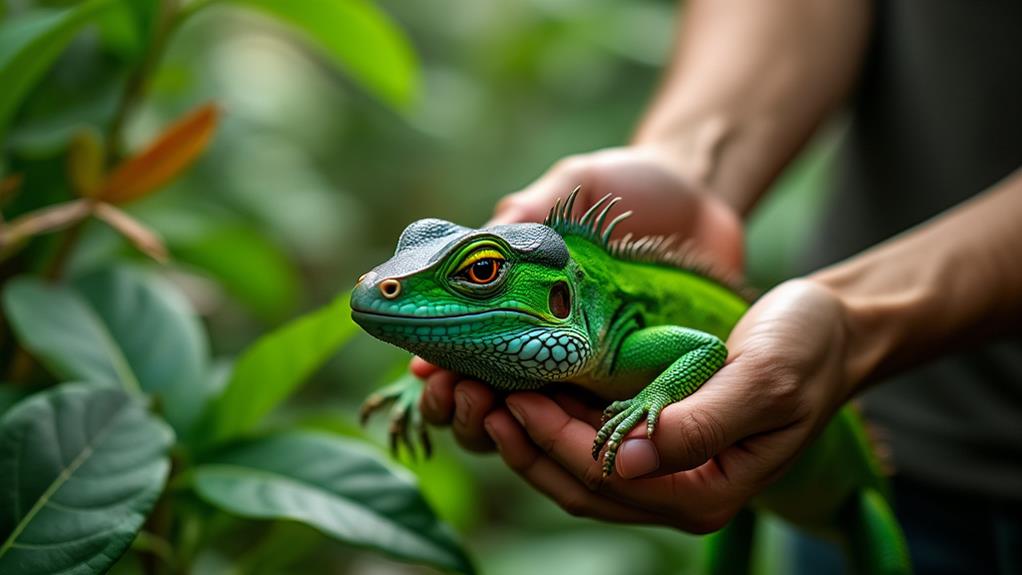
When you're ready to handle your lizard, guarantee you do so with care to prevent stress or injury. Understanding lizard anatomy is essential; their delicate bodies require gentle handling. Here are some techniques to guarantee safe interaction:
- Support the Body: Always support your lizard's entire body using both hands. Place one hand under the chest and front legs, while the other supports the tail and hind legs. This minimizes the risk of injury and makes your lizard feel secure.
- Use Appropriate Handling Tools: For larger or more skittish lizards, consider using handling tools like snake hooks or soft towels. These tools can reduce the risk of accidental bites and help you maintain a firm yet gentle hold. Confirm the tools are clean and appropriate for your lizard's size and temperament.
- Practice Patience: Approach handling with patience, allowing your lizard to get accustomed to your touch. Gradual interaction builds trust and makes each session more comfortable. Avoid sudden movements that might startle them.
Recognizing Stress Signals
Understanding stress signals in your lizard is vital for guaranteeing its well-being and comfort. Lizards communicate their stress through different body language cues that you can learn to recognize. When your lizard feels uneasy, it may display stress indicators such as rapid breathing, tail whipping, or excessive hiding. These signs suggest that your pet is uncomfortable and may need some space or a change in its environment.
Pay close attention to your lizard's body posture. A tense or stiff body can signal distress, while relaxed limbs typically indicate contentment. If your lizard suddenly becomes more aggressive or defensive, it might be experiencing stress. Changes in color can also be a stress indicator in some species. For instance, a lizard that darkens or pales unexpectedly might be trying to communicate discomfort.
It's important to observe your lizard's behavior patterns over time. This helps you distinguish between normal quirks and genuine stress signals. By being attentive to these stress indicators, you can make necessary adjustments to your handling methods or environment. This guarantees your lizard feels secure and at ease, promoting a healthier relationship between you and your scaly friend.
Health and Safety Precautions
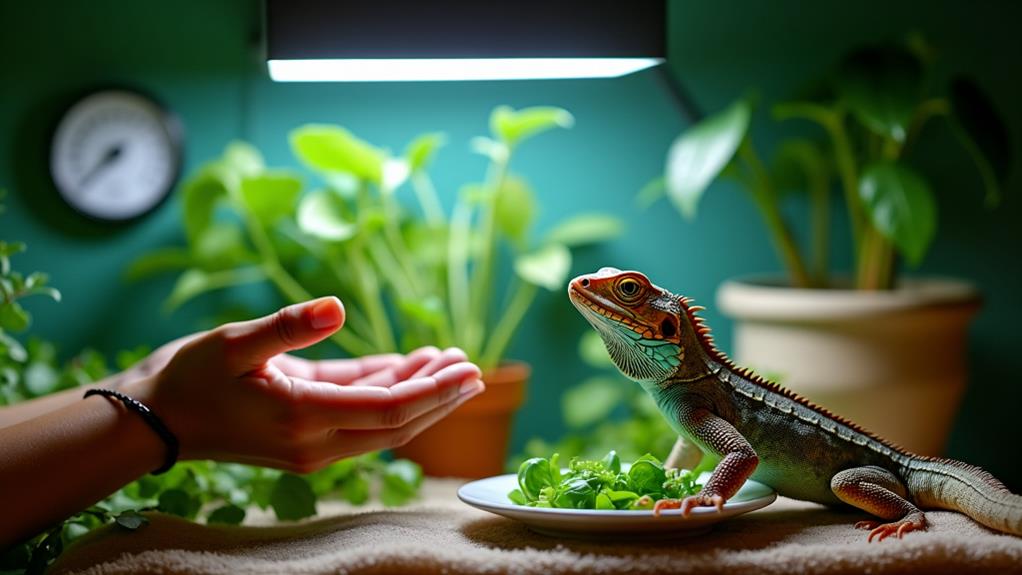
Recognizing stress signals is just one part of ensuring your lizard's well-being; taking proper health and safety precautions is likewise significant. To keep your pet healthy and safe, start by implementing effective hygiene practices. Always wash your hands before and after handling your lizard to prevent the spread of bacteria and potential diseases. Lizards can carry Salmonella, so maintaining cleanliness is vital for both your health and theirs.
Safety gear is another important component. When handling your pet, consider using gloves to protect your skin from scratches or bites, especially if your lizard is new or still acclimating to being handled. Gloves can also protect your pet from any residue on your hands.
Here are three key steps to follow:
- Maintain a clean habitat: Regularly clean your lizard's enclosure to prevent the buildup of harmful bacteria. This keeps your pet healthy and reduces odors.
- Use appropriate safety gear: Gloves and protective clothing can prevent accidents and help in handling your pet safely.
- Follow strict hygiene practices: Wash your hands thoroughly with soap and water both before and after handling your lizard to avoid cross-contamination.
Building Trust Over Time
Building trust with your pet lizard requires patience and consistency. Start by creating a calm environment. Keep your movements slow and deliberate, as sudden actions can stress your lizard. Approach the enclosure gently, speaking softly to acclimate them to your presence. Trust building exercises are vital, so consider offering small treats from your hand to associate your presence with positive experiences.
Gradual exposure is key. Initially, let your lizard observe you from a distance. Over time, reduce this distance, allowing them to become comfortable with your proximity. Once they're at ease, you can gently place your hand inside the enclosure without attempting to touch them. This should be done consistently, allowing your lizard to investigate your hand on their terms.
As your lizard becomes more comfortable, you can begin short handling sessions. Start by supporting their body fully, ensuring they feel secure. Keep these sessions brief, gradually increasing their duration as your lizard becomes more accustomed to being held. Always watch for signs of stress, like rapid breathing or attempts to escape. By using trust building exercises and gradual exposure, you'll nurture a strong bond with your pet lizard over time.
Enriching Your Lizard's Life
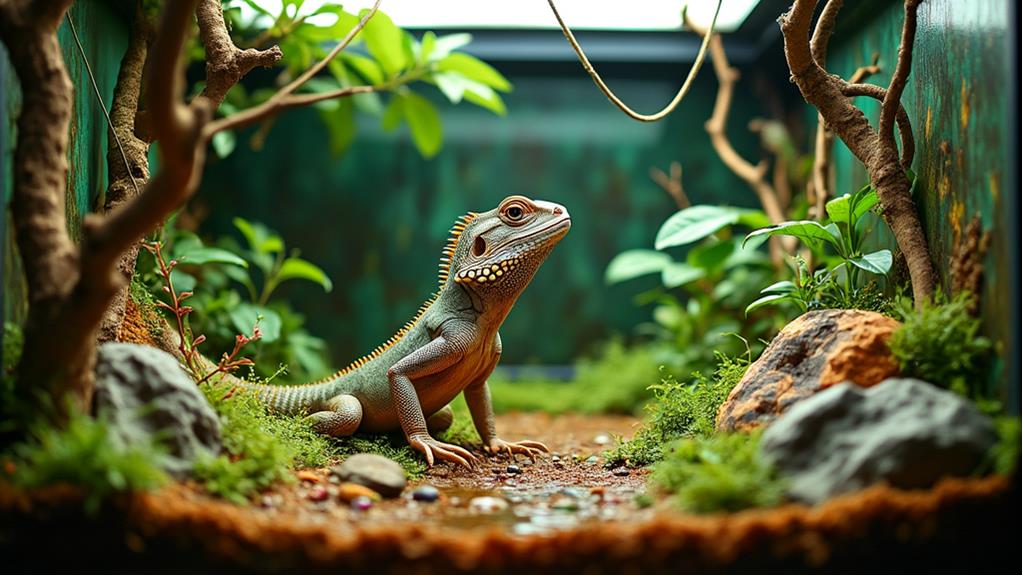
After building trust, you can focus on improving your lizard's life to keep them happy and healthy. Start by introducing diet diversity. Offer a range of insects, fruits, and vegetables that suit your lizard's species. This not only provides vital nutrients but also promotes natural foraging behavior.
Next, boost their habitat enrichment. Incorporate climbing branches, hiding spots, and textured surfaces to increase environmental complexity. Such enhancements offer sensory stimulation and encourage physical activity.
Consider these strategies to guarantee your lizard enjoys a fulfilling life:
- Temperature Variation: Install a heat lamp and a cooler area in their enclosure. This allows your lizard to regulate their body temperature, mimicking natural conditions.
- Social Interaction: If your lizard species thrives on company, introduce another compatible lizard. You can also spend more time handling and interacting with them to build a bond.
- Sensory Stimulation: Use different lighting and substrate types. Change these occasionally to keep your lizard curious and engaged.