How to Deal With Cats and Their Fear of Water: Tips for Bathing
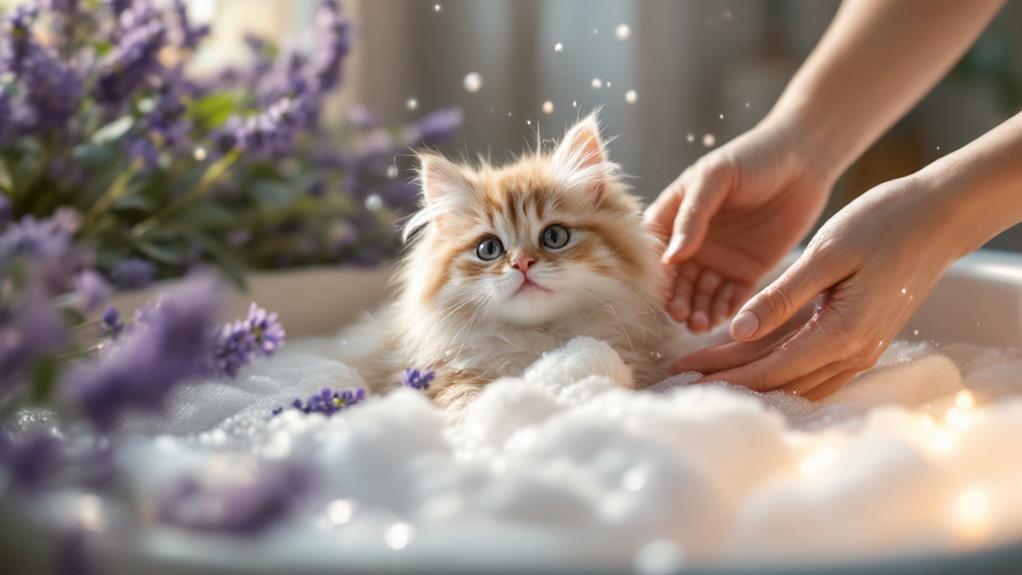
Dealing with a cat's fear of water requires patience and preparation. Trim your cat's nails and brush their fur a few days before the bath to reduce stress. Create a comfortable environment with a non-slip mat and use warm, not hot, water. Introduce the water gradually by wetting their paws initially. Maintain a calm tone and offer treats for positive reinforcement. Use a mild cat-friendly shampoo to avoid skin irritation. Post-bath, wrap them in a soft towel and provide a warm, draft-free space. If you investigate further, you'll uncover supplementary techniques and professional options to ease the process.
Understanding Cat Bathing Needs
Understanding a cat's bathing needs starts with recognizing their natural grooming habits. Cats are typically excellent self-groomers, which means they seldom need to be bathed. However, there are situations where bathing becomes necessary, such as when they've been exposed to harmful substances or have specific skin conditions. Long-haired breeds might benefit from a bath every few months to prevent matting, while hairless breeds like the Sphynx require more frequent baths, perhaps weekly, to manage oily skin. If you have a cat that hates water, it's essential to approach the process with patience and care.
Bathing can also help reduce the amount of hair loss and prevent hairballs, especially in cats that struggle with self-grooming due to obesity or maturity. When you do need to bathe a cat, make sure you use a mild, cat-friendly shampoo to maintain the health of their coat and avoid irritation. Pay attention to your cat's body language during the bath; if they seem distressed, take breaks and try using a calming diffuser to ease their anxiety. Gently handling your cat throughout the process can make the experience less stressful for both of you.
Preparing for the Bath
Before you start the bathing process, it's crucial to prepare a comfortable and secure environment for your cat. Begin by setting up a warm, safe space to make bathing your cat less stressful. Use a non-slip mat in the sink or tub to prevent slipping and make certain your cat feels stable. Verify that the water is warm but not too hot, as this will help keep your cat calm and more comfortable with water.
Next, gather all necessary supplies ahead of time to avoid interruptions. You'll need cat-friendly shampoo, towels, and a gentle source of warm water. Having everything within reach helps maintain a smooth process and reduces the chances of your cat getting anxious.
To further prepare, trim the cat's nails a few days before the bath. This reduces the risk of scratches and makes handling easier. Moreover, brush the cat's fur thoroughly to remove any tangles or mats that could cause discomfort during washing. If your cat tends to be particularly anxious or prone to escaping, consider using a cat harness for added control. By preparing thoroughly, you're setting the stage for a successful and less stressful bath.
Techniques for Calm Bathing
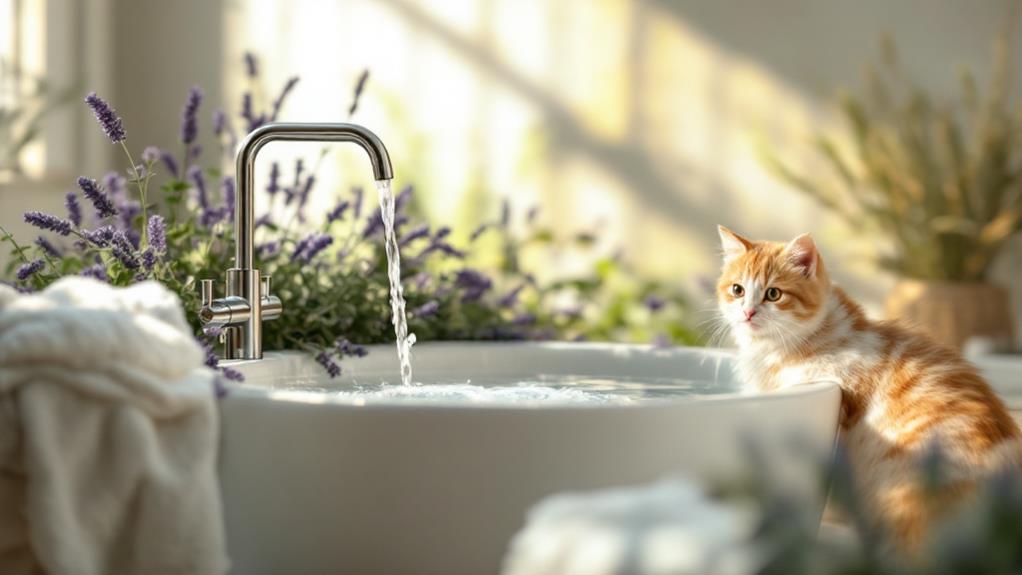
In regard to bathing your cat, employing techniques that promote calmness can make all the difference. Staying calm yourself is vital, as your demeanor can greatly influence your cat's anxiety levels. Speaking in soothing tones and maintaining a gentle touch can make the cat bath less stressful. It's significant to gradually acclimate your cat to water, perhaps by starting with just wetting the paws. This slow introduction can help to keep their fears at bay.
Using warm water at a comfortable temperature is another key to creating a relaxing bathing experience. The warmth can mimic the soothing sensation of professional grooming and make bathing cats a more pleasant activity. To encourage cooperation, offer treats and use positive reinforcement throughout the process. This not only rewards your cat's bravery but also builds a more positive association with bath time.
Creating a quiet environment is also vital. Minimize distractions and sudden noises to help both you and your cat stay focused and calm.
- Warm, gentle water streaming over fur
- Whispered reassurances echoing in the bathroom
- Treats enthusiastically accepted as a reward
- A peaceful, distraction-free setting
These techniques can make the entire cat bath experience less stressful and more enjoyable for both of you.
Managing Water Anxiety
Managing your cat's water anxiety begins by acknowledging their natural apprehension and taking thoughtful steps to ease their fears. Cats hate being submerged, so it's essential to introduce them to water gradually. Start by letting them investigate water with just their paws. This gradual exposure helps reduce the fear associated with bathing a cat. To create a soothing environment, use calming scents like lavender or chamomile in the bathing area. These scents can help your cat feel more relaxed and less anxious.
Maintaining a quiet atmosphere is also important, as loud noises can heighten water anxiety. Speak softly and avoid sudden movements to keep them calm. Offering treats and praise throughout the bathing process can reinforce positive associations with water, making future baths less stressful. You can also let your cat observe you during your own baths. This non-threatening exposure to the sound of running water can help them get used to it.
Post-Bath Care and Comfort
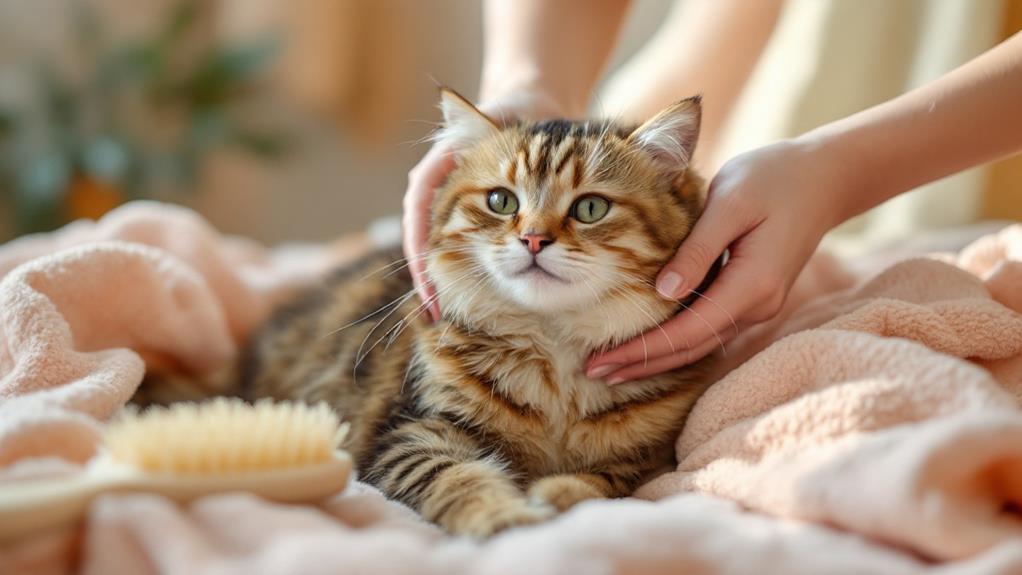
After bathing your cat, wrap them in a soft towel to gently blot away excess water while providing comfort and warmth. This post-bath care step is essential for helping your cat feel secure and reducing any lingering anxiety. As you wrap your cat, make sure the towel is snug but not too tight, allowing them to relax in this comforting cocoon. A warm, draft-free space is ideal for drying, promoting a sense of security and aiding in the drying process.
To reinforce positive behavior associated with bath time, offer treats and praise immediately after wrapping them. This helps create a positive association with the experience, making future baths less stressful for both of you. Pay close attention to your cat's body language, and let them retreat to a safe space if they seem anxious.
Here are a few things to keep in mind for effective post-bath care:
- Snug but gentle wrapping: Make sure the towel holds your cat securely without causing discomfort.
- Warm, safe environment: A cozy, draft-free spot is vital for relaxation.
- Positive reinforcement: Treats and praise can work wonders.
- Gentle grooming: For long-haired cats, gently comb out tangles to maintain coat health.
Professional Grooming Options
Professional grooming services offer a practical solution for cat owners seeking a stress-free bathing experience for their feline companions. By choosing professional grooming, you can guarantee that your cat's bath is handled with expertise and care. Groomers are skilled at managing anxious cats, employing calming methods and gentle handling to ease your pet's fears. These professionals use specialized techniques and equipment tailored specifically to cats, making the process as smooth as possible.
Additionally, many grooming facilities cater to specific cat breeds. This means they understand the unique needs of different coat types and can adjust their grooming methods accordingly. Regardless of whether you have a long-haired Maine Coon or a short-haired Siamese, professional grooming guarantees that your cat's coat is treated correctly. Furthermore, groomers can identify and address potential skin conditions, offering special treatments or medicated shampoos when necessary.
Client testimonials frequently highlight the transformation in their cat's bathing experience, turning a stressful ordeal into a manageable routine. If you've struggled with bathing your cat at home, seeking out professional grooming might be the solution you need. It provides peace of mind, knowing your furry friend is in capable hands.