How to Cat-Proof Your Home: Ensuring Your Cat’s Safety
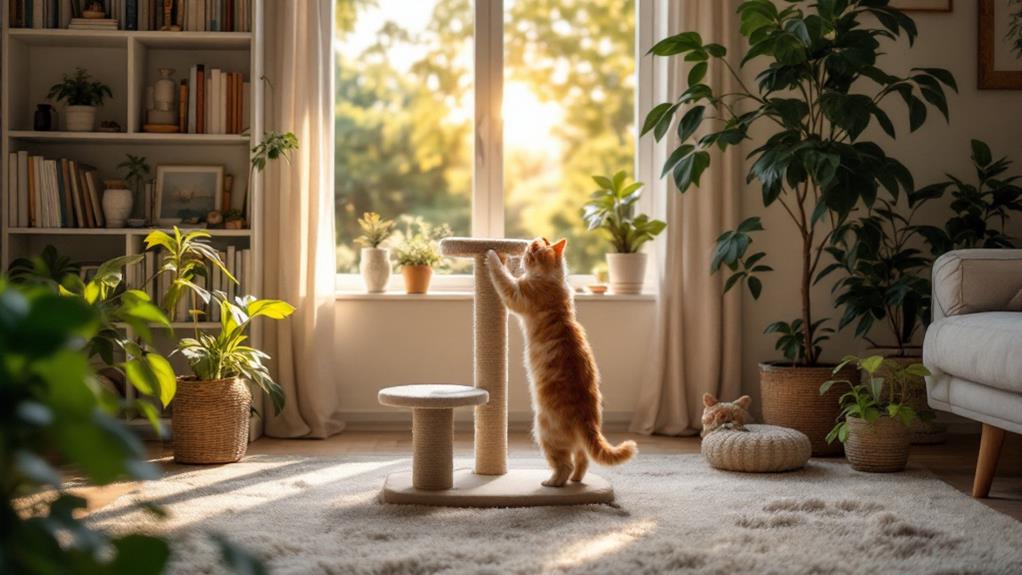
To cat-proof your home and keep your pet safe, start by securing hazardous materials. Store chemicals and small objects out of reach. Replace toxic plants with non-toxic ones, and be ready to recognize and respond to poisoning symptoms. Protect electrical cords with covers, and regularly check for damage. Anchor top-heavy furniture and use window locks to prevent accidents. Provide your cat with safe toys and play areas, ensuring they're free from hazards. Choose durable, cat-friendly furniture and maintain it regularly. Each step not only safeguards your feline friend but also improves their environment and your peace of mind, with more insights ahead.
Secure Hazardous Materials
To cat-proof your home effectively, you must safeguard hazardous materials to keep your feline friend safe. Start by storing all household chemicals and cleaning supplies in locked cabinets. Curious cats might investigate these areas, and many substances can be toxic to cats. Be diligent about securing these items after each use.
Next, regularly inspect your home for small objects that could become choking hazards. Items like rubber bands, thumbtacks, and beads often end up on floors or surfaces, posing a significant risk to your cat. Make it a habit to pick up and store such items in safe places.
You should also be mindful of any poisonous plants in your home. Certain plants, including lilies and sago palms, can be highly toxic to cats. Replace these with safer alternatives like orchids or African violets to create a non-toxic environment.
Additionally, verify trash cans are always closed and secure your compost bins with lids. Cats are natural scavengers and might ingest harmful materials if given access. Ultimately, educate everyone in your household about safe storage practices for hazardous materials to prevent any accidents. Consistency and vigilance are key to maintaining a safe space for your cat.
Protect Electrical Cords
Electrical cords can be a tempting target for curious cats, posing significant risks like electrocution. To protect your feline friend, consider using cord protectors to cover exposed electrical wires. This simple measure can prevent cats from chewing on them and reduce the risk of dangerous incidents. Furthermore, taping down loose cords with double-sided tape helps secure them to the floor. This makes them less appealing for cats to play with or chew on, keeping them out of reach and reducing potential hazards.
Regularly inspect cords for any signs of damage, such as fraying or exposed wires. If you find any damage, immediately replace the cords to guarantee your cat's safety. Chargers and other electrical accessories should be stored in secure locations when not in use, preventing your cat from accessing and chewing on them.
To further protect your home, bundle and tie up excess cord lengths using twist ties or cable organizers. This minimizes dangling wires that might attract playful cats, guaranteeing a safer environment. By taking these precautions, you're not only protecting your cords but also safeguarding your cat's safety and well-being in your home.
Stabilize Furniture
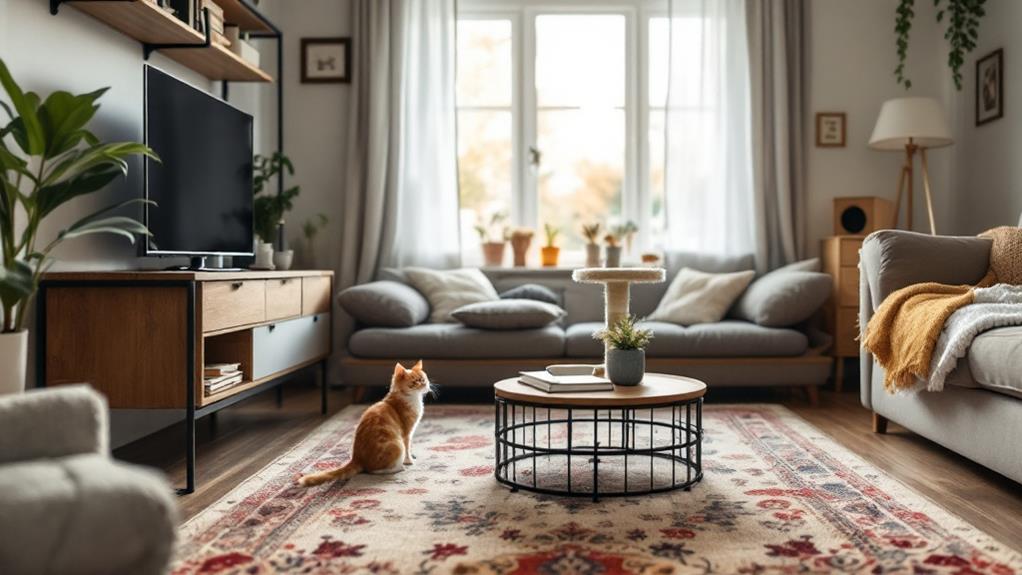
Guaranteeing your furniture is stable is vital when cat-proofing your home. Cats naturally love to climb, and without proper precautions, they might scale top-heavy furniture like bookshelves and dressers. To prevent accidents, anchor these items to the wall using anti-tip kits. This step improves stability, making it less likely for your curious feline to topple them over.
Flat-screen TVs can also pose a risk. Secure them using straps or brackets. This not only keeps your TV safe from damage but also protects your cat from potential injuries if it were to tip over. Avoid placing heavy items on unstable surfaces, as these can easily become hazardous if your cat decides to investigate or climb. Regularly inspect your furniture to verify everything is stable, and avoid placing items on edges where they might fall.
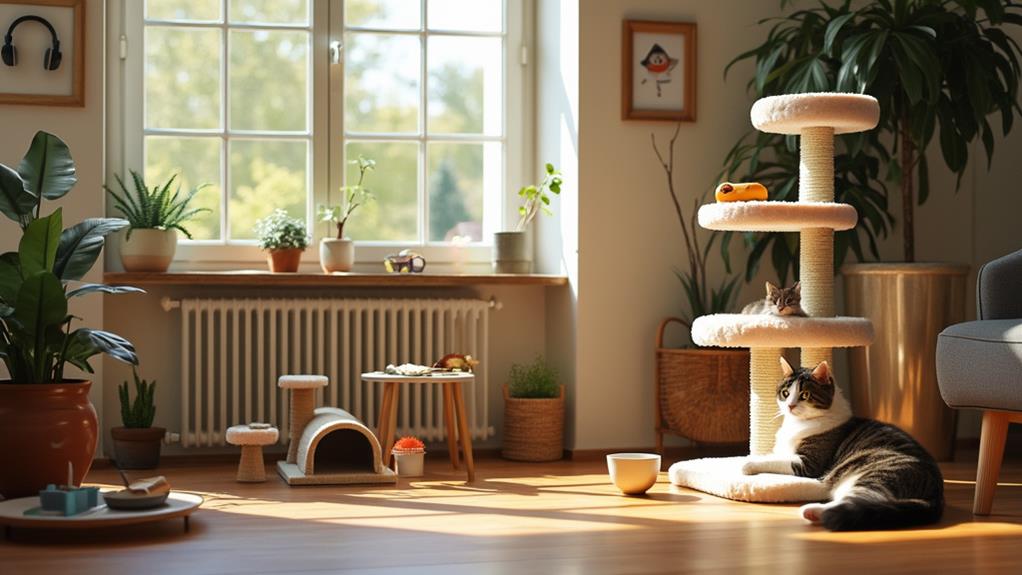
To provide a safe climbing environment, introduce designated cat trees or shelves. This reduces the temptation for your cat to climb precarious or unstable furniture. By taking these steps in cat proofing, you're creating a safer home for your pet, minimizing risks and allowing your cat to investigate with peace of mind.
Window and Door Safety
When cat-proofing your home, don't overlook the significance of window and door safety. Curious cats love to investigate, and an open window can be an invitation for them to escape. Verify all windows are equipped with secure screens that fit snugly to prevent your cat from falling out or slipping through. Regularly inspect these window screens for any wear and tear. In high-rise buildings, this is particularly vital, as a fall can be fatal.
Window locks add an extra layer of security. These locks guarantee your windows can't be easily opened by your adventurous feline. If you need to ventilate your home, avoid leaving windows open without secure screens.
Doors are another potential escape route. Install childproof latches to prevent your cat from pushing them open, especially when household members enter or leave. Make it a habit for everyone to keep doors closed promptly. Educate all household members about quickly closing doors after entering or exiting to reduce the risk of your cat slipping outside unnoticed.
Safe Toys and Play Areas
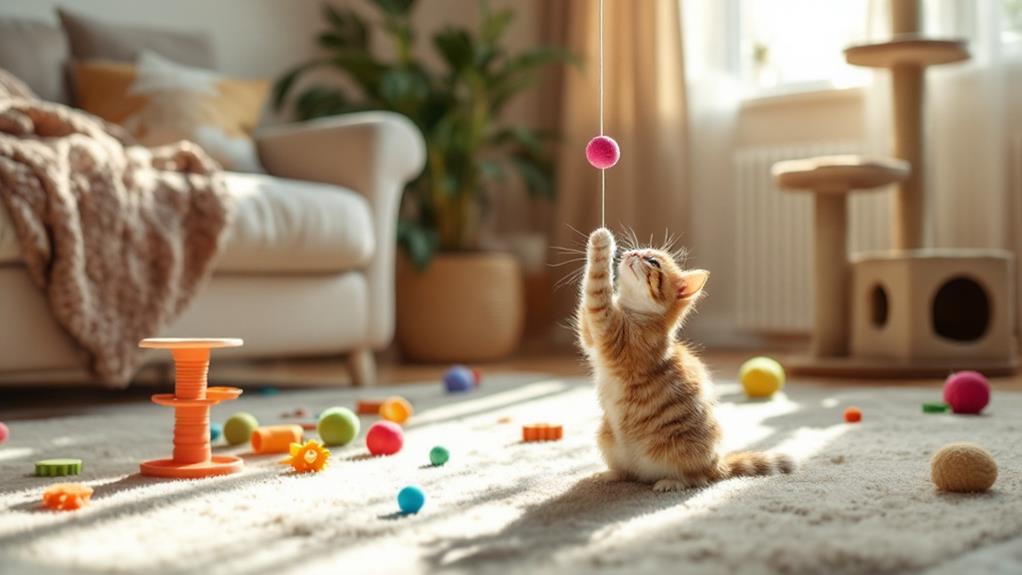
A bounty of safe toys can keep your feline friend entertained and healthy. Providing a variety of safe toys like wand toys, balls, and plush mice stimulates your cat's natural hunting instincts and promotes physical activity. Curious kitties thrive on interactive toys that engage their minds and bodies, helping prevent boredom and potential health issues. Regularly inspect these toys for wear and tear, discarding any damaged ones or those with small parts that could pose a choking hazard.
Creating designated play areas is crucial. Ascertain these spaces are free of small objects and hazardous materials like rubber bands and strings, which can be ingested, leading to serious health issues. Consider equipping play areas with climbing structures and scratching posts. These encourage safe exploration and exercise, offering your cat an outlet for their energy.
To keep your cat engaged, rotate their toys every few weeks. This prevents them from losing interest in toys that are always available. By maintaining a dynamic selection of safe toys and confirming secure play areas, you provide an environment that supports your cat's physical and mental well-being, making your home a safer place for your beloved pet.
Manage Toxic Plants
Frequently overlooked, managing toxic plants is essential for maintaining a safe environment for your cat. Many common plants like lilies, sago palms, and philodendrons are toxic and can cause severe health issues if your cat ingests them. Symptoms of poisoning include vomiting, diarrhea, lethargy, and difficulty breathing. These symptoms require immediate veterinary attention, so it's important to cat-proof your home by addressing this hidden danger.
Start by identifying any toxic plants or flowers you currently have and replace them with cat-friendly alternatives. Consider options like spider plants, Boston ferns, or African violets, which are not only attractive but also safe for your feline friend. Regularly inspect your home for any new plants, especially after hosting guests who might bring them along as gifts. Your attention to these details helps create a cat-safe environment.
Additionally, educate all household members about the risks associated with toxic plants. This knowledge is significant in preventing accidental exposure and ensuring everyone is on the same page about maintaining a safe space for your cat. By being proactive and informed, you'll protect your beloved pet from potential health issues related to toxic plants.
Cat-Friendly Furniture
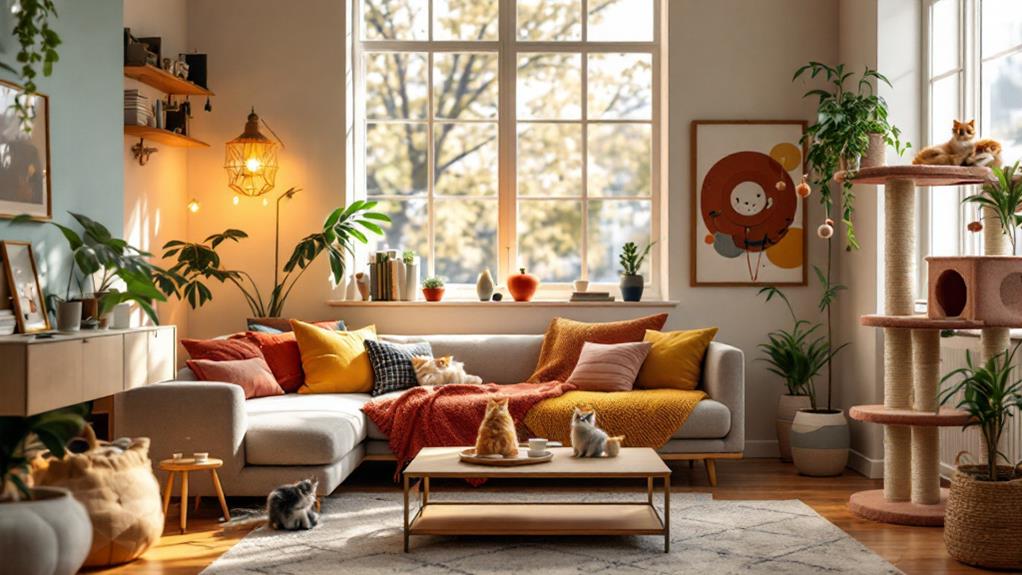
Creating a cat-friendly home involves choosing the right furniture, guaranteeing it complements both your lifestyle and your feline's needs. Start by selecting furniture made from durable materials like microfiber or leather. These materials are not only resistant to scratching but also easy to clean, helping you prevent furniture damage from your cat's natural behaviors. Opt for upholstery that withstands wear and tear from feline activities, avoiding delicate fabrics like silk or velvet.
Incorporating cat-friendly designs into your home can greatly improve your cat's environment. Consider furniture with built-in scratching posts or shelves your cat can climb and investigate. These features satisfy your cat's instinctual needs while safeguarding your other furniture. Rounded edges on furniture pieces can also minimize the risk of injury during playful antics or accidental bumps, making your home safer for both cats and humans.
Think about adding multi-functional furniture to your space. Items like ottomans that double as storage for cat toys or cat trees that blend seamlessly with your decor can create a harmonious living area. These choices guarantee your home remains stylish while catering to both your and your feline's needs.