
How to Care for Your Dog During Emergency Situations: Essential Tips

In an emergency, guarantee your dog's safety by having a pet disaster kit ready with food, water, and medications. Keep crucial documents like medical records and vaccinations included. Familiarize yourself with pet-friendly evacuation routes and accommodations. Equip a primary aid kit with gauze, antiseptic, and notable contact numbers, including your vet and a poison control hotline. During crises, monitor for injuries or symptoms like shock, and manage conditions calmly. Maintain a thermometer to check for heatstroke signs, and promptly seek veterinary help when necessary. Learning these key steps can greatly bolster your preparedness and your dog's safety in emergencies.
Emergency Preparedness for Dogs
In regard to emergency preparedness for dogs, having a solid plan in place can make all the difference. Start by mapping out clear evacuation routes and identifying pet-friendly accommodations where you can safely stay with your dog. It's essential to have contact information for local veterinarians and animal shelters handy, serving as a significant resource during a pet emergency. Assembling a pet disaster kit is another key step. Include necessities like food, water, medications, and initial-aid items. Don't forget copies of your dog's medical records and vaccination history—they're important if you need to seek emergency care.
Keep your pet emergency kit updated to reflect any changes in your dog's needs, such as new medications or dietary restrictions. Practicing evacuation procedures with your dog can help familiarize them with the process, reducing stress during an actual emergency. This guarantees both you and your pet know how to respond swiftly and calmly. Identification is essential; make sure your dog wears a collar with an ID tag and consider microchipping for added security. Quick identification can make a world of difference if separation occurs during a disaster. By being prepared, you safeguard your dog's well-being.
First Aid Kit Essentials
A well-stocked pet primary aid kit can be a lifesaver during emergencies. It's essential to have fundamental items like gauze rolls, nonstick bandages, adhesive tape, antiseptic wipes, and scissors handy. These tools will help treat wounds and stop bleeding effectively. Always include significant phone numbers, such as your veterinarian and the poison control hotline (888-426-4235), for quick access in an emergency.
A digital thermometer is another fundamental item, allowing you to monitor your dog's temperature, which should typically be between 100.5°F and 102.5°F. Having a muzzle, spare leash, and collar in your pet first aid kit guarantees you can manage your dog safely during stressful times. Remember, don't use a muzzle if your pet is vomiting.
It's crucial to regularly check and update your first aid kit to make certain all the supplies are current and meet your pet's specific needs. Doing so guarantees you're prepared to administer first aid when necessary. In any serious situation, always contact your veterinarian promptly. By maintaining a thorough pet first aid kit, you're better equipped to handle the unexpected and keep your dog safe.
Handling Injuries Safely

Dealing with canine injuries requires patience and composure. When your pet gets injured, the initial step is to calmly assess their condition and check for visible injuries. If there's bleeding, apply direct pressure with a clean cloth for at least three minutes. This first aid step can help control the bleeding until you can seek veterinary assistance. If your injured pet shows signs of aggression due to pain, consider using a muzzle to prevent bites, but only if the dog isn't vomiting.
For fractures, it's essential to stabilize the injured area. Use a makeshift splint, like a broom handle or rolled-up newspaper, to prevent further injury during transport to the vet. Remember to handle your pet gently to avoid causing additional distress or pain.
After administering first aid, monitor your dog for signs of shock. Look for a weak pulse or pale gums, and keep the dog warm and quiet until you can get professional help. Maintaining a warm and quiet environment can help reduce stress and stabilize their condition. By following these steps, you guarantee your pet receives the necessary care in an emergency situation.
Responding to Poisoning
When you suspect your dog has ingested something toxic, quick action is vital. Initially, immediately contact your veterinarian or the Pet Poison Helpline at 888-426-4235 for professional guidance. They'll need specific details, so gather information about your dog's species, breed, and any symptoms they're showing. If you know the toxic substance involved, such as cleaning products, antifreeze, chocolate, grapes, or certain plants, share this information as it can be significant in an emergency.
Don't attempt to induce vomiting unless explicitly directed by a veterinary professional. Inappropriate actions can worsen the situation, causing more harm to your pet. Your veterinarian will advise on the best initial aid steps to take based on the toxic substance involved.
If your dog has already vomited, preserve the material in a sealable bag. This can help the veterinarian identify the toxin and decide on the appropriate treatment. Remember, many household items pose severe risks to dogs, so always keep them out of reach. Stay calm and follow the instructions given by the professionals to guarantee your dog's safety during such emergencies.
Managing Breathing Issues
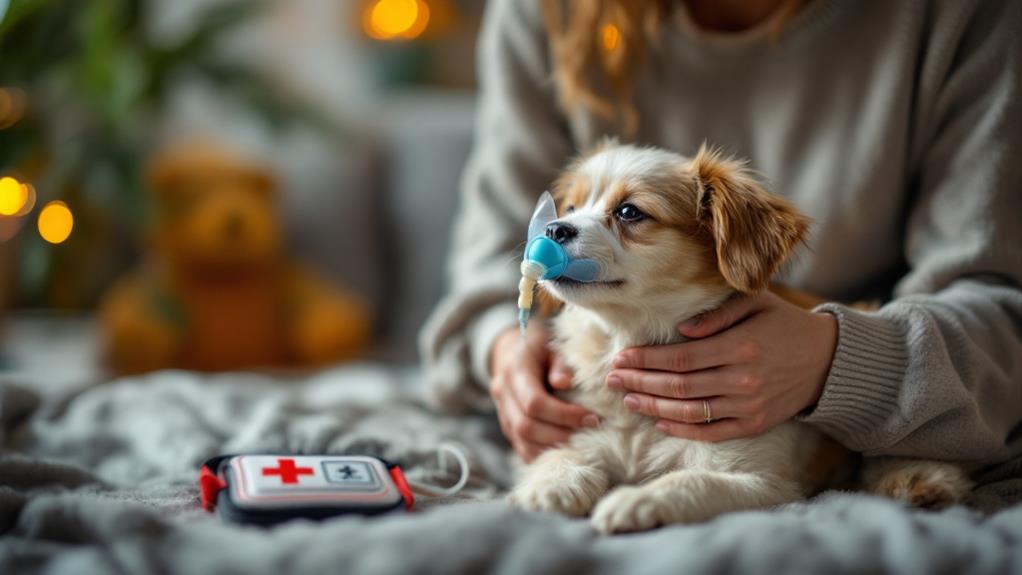
Breathing issues in dogs can be alarming and require immediate attention. As a pet owner, your initial aid response is vital. Start by checking your dog's mouth for any foreign objects or mucus causing obstructions. If it's safe, gently remove them. In cases of choking, you may need to perform the Heimlich maneuver. For smaller dogs, apply abdominal pressure, and for larger dogs, thrust upward just below the ribcage to dislodge the obstruction.
If your dog still struggles to breathe, close its mouth and cover the nostrils, then administer 3-4 gentle rescue breaths. Guarantee each breath is controlled to help restore normal breathing. Check for a heartbeat. If there's no pulse, position your dog correctly and begin to administer chest compressions at a rate of 100-120 compressions per minute.
Even if your intervention seems successful, seek immediate veterinary assistance. Breathing issues might indicate underlying health problems that require professional evaluation. Timely veterinary assistance guarantees your dog receives the necessary care. Remember, your calm and quick action can make a significant difference during such emergencies. Being prepared with these initial aid techniques helps safeguard your furry friend's well-being.
Identifying Shock and Heatstroke
Identifying shock and heatstroke in your dog is vital for guaranteeing its well-being during emergencies. Shock in dogs shows alarming signs like a rapid heart rate, pale gums, weak pulse, and shallow breathing. These symptoms indicate a serious medical emergency that needs immediate attention. You should keep your dog warm and quiet, treat any visible injuries, and transport it to a veterinarian as soon as possible. Temperature monitoring is key, as it helps you detect significant changes in your dog's condition.
Heatstroke, on the other hand, manifests through excessive panting, drooling, confusion, vomiting, and even collapse. It's significant to recognize these signs early, as a dog's body temperature above 104°F can lead to severe complications. Immediate intervention is necessary to cool your dog down and prevent further damage. Always guarantee your pet has access to shade and fresh water, especially during hot weather, to prevent heatstroke.
Both shock and heatstroke require prompt recognition and action to protect your dog's health. By understanding these symptoms and knowing how to respond, you can provide the necessary care and seek veterinary care when needed, guaranteeing your dog's safety during emergencies.
When to Seek Veterinary Help
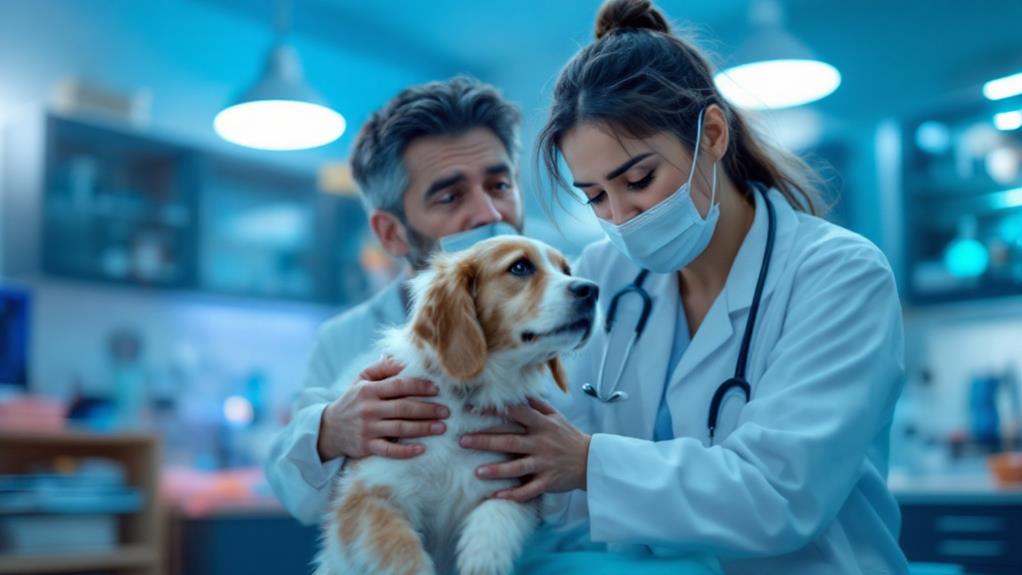
Recognizing the signs of shock and heatstroke is just the beginning of guaranteeing your dog's safety during emergencies. It's vital to know when to seek professional help. If your dog is experiencing severe bleeding, difficulty breathing, or loss of consciousness, don't hesitate to head to an emergency veterinary clinic. These situations can quickly become life-threatening and require immediate emergency care at a veterinary hospital.
If you notice your dog having a seizure lasting more than five minutes or multiple seizures in a short period, contact a veterinarian right away. Quick intervention can prevent serious complications. In cases of suspected poisoning, reach out immediately to an animal poison control hotline or your veterinarian, providing important details about the substance involved.
Additionally, be vigilant for signs of shock, such as a weak pulse, pale gums, or rapid breathing. These symptoms necessitate swift transport to a veterinary hospital. For severe injuries like deep wounds, fractures, or severe burns that don't improve with basic initial aid, a follow-up with a veterinarian is vital. Prompt professional attention guarantees your dog receives the necessary treatment for a successful recovery. Always prioritize your pet's health and act swiftly during emergencies.