How Often Should You Give Your Cat Treats? A Guide to Healthy Snacking
Giving your cat treats daily is fine, but they should only make up 10% of their daily caloric intake. Keep the other 90% for their regular, balanced meals. This helps avoid weight gain and any associated health issues. Choose low-calorie treats with natural ingredients for added benefits. Introducing new treats slowly allows you to spot any adverse reactions. Always adjust their meal portions when treats are added to the diet. Regular weight checks are essential to prevent obesity. Monitor their diet closely, and you'll maintain a healthy and happy cat. There's more to investigate about healthy cat snacking.
Importance of Treats
Giving your cat treats plays a crucial role in fostering a stronger bond between you and your feline friend. Treats aren't just a tasty snack; they're a tool for building trust and affection. When you offer your cat a treat, you're not only rewarding positive behavior but also providing mental stimulation. Cats thrive on enrichment, and treats can be a great way to engage their senses and keep them mentally sharp.
However, it's vital to keep in mind that not all treats are created equal. Choosing the right treat guarantees that your cat gets vital nutrients without packing on unnecessary calories. This means you should look for treats that complement your cat's main diet, offering a healthy balance that doesn't disrupt their nutritional intake. Moderation is key; overindulging can lead to unwanted weight gain or health issues.
Treats can also be strategically used during training sessions to reinforce desired behaviors. Regardless of whether you're teaching your cat to sit, come, or use a scratching post, treats can serve as a motivating reward. By using them wisely, you'll not only strengthen your bond but also help your cat learn new skills and behaviors effectively.
Nutritional Balance
While treats can be an enjoyable part of your cat's diet, maintaining nutritional balance is vital. Treats contain only a fraction of the nutrients your cat needs daily. To guarantee your furry friend stays healthy, treats should account for no more than 10% of their daily caloric intake. The other 90% ought to come from complete and balanced cat food designed to meet all nutritional requirements.
Calories from treats can add up quickly, and if you overindulge, it might interfere with your cat's appetite for regular meals. This can lead to nutritional deficiencies, as many commercial cat treats are incomplete and unbalanced compared to standard pet foods. It's significant to be mindful of how many treats you're giving and to adjust their regular meals accordingly to maintain balance.
Monitoring your cat's weight is another significant aspect of guaranteeing a healthy diet. Too many treats can easily lead to obesity, which can cause numerous health issues. Regular weigh-ins will help you notice any sudden changes that might indicate overfeeding. By keeping treats in check, you can make certain your cat enjoys them without compromising their total health.
Choosing Appropriate Treats
When selecting treats for your cat, it's essential to prioritize low-calorie options and scrutinize the packaging for detailed nutritional information. This guarantees the treats align with your cat's dietary needs and fit into their daily calorie intake. The best cat treats are those that complement your cat's regular diet without tipping the balance. Calculate 10% of your cat's daily calorie intake to establish a treat budget. This approach aids in preventing overindulgence and keeps your furry friend on track with a balanced diet.
When choosing appropriate treats, gradually introduce new ones to monitor any adverse reactions. Cats can be sensitive, so keep an eye out for digestive upset or allergic responses. It's also wise to be cautious with freeze-dried or dehydrated raw treats. Although popular, they may pose contamination risks and aren't suitable for all cats. Opt instead for high-quality treats containing wholesome ingredients.
Avoid treats with artificial preservatives and fillers, as these can negatively impact your cat's health. Instead, focus on natural ingredients that promote general well-being. By being mindful in your selection, you can guarantee your cat enjoys their treats safely and healthily.
Recommended Treat Allowance
Treats can be a delightful part of your cat's diet, but it's vital to keep them within a recommended allowance to maintain their health. Understanding the appropriate number of treats a day is significant. Treats should make up no more than 10% of your cat's daily caloric intake. This helps maintain a balanced diet and prevent obesity, guaranteeing your furry friend stays healthy. For example, if you're feeding your cat high-quality treats like DREAMIES™, which contain about 2 calories each, an adult cat can safely enjoy up to 20 treats per day.
When you decide to give your cat treats, remember to adjust their main meals accordingly. It's advisable to reduce the main meal quantity by around 10% to balance the added calories from the treats. This way, you avoid overindulgence, which can spoil their appetite for regular meals. Maintaining portion control is vital for a healthy feeding routine. Regularly monitoring your cat's weight is also significant to ascertain their treat allowance isn't leading to excessive calorie intake. By being mindful of these guidelines, you can keep treat time both delightful and healthy for your cat.
Frequency of Treats
Understanding the recommended treat allowance is just the start. To guarantee your cat stays healthy, you need to focus on how often you're giving them treats. While it's tempting to indulge your furry friend frequently, moderation is key. You can give treats daily, but they should make up no more than 10% of your cat's total daily calorie intake. This way, treats will complement rather than replace their regular meals.
Your cat's needs may vary, so you can either give one large treat a day or break it down into smaller portions throughout the day. Consistency is crucial; if you spoil your cat with more treats one day, reduce the quantity the next day to maintain balance. Monitoring your cat's weight regularly helps guarantee you're not overindulging them, which could lead to obesity or spoil their appetite for regular food.
Treats and Health Risks
Beyond the simple joy of giving your cat a treat, there's a responsibility to prevent potential health risks associated with overindulgence. One major concern is obesity, which can lead to diabetes, joint problems, and other serious health issues. To avoid this, make sure treats make up no more than 10% of your cat's daily caloric intake. It's vital to maintain a balanced diet so your cat doesn't miss out on important nutrients.
Overfeeding treats can also spoil your cat's appetite for their regular meals, resulting in nutritional imbalances. If your cat fills up on treats, they may not eat their complete, nutritious meals, leading to inadequate nutrient intake. Plus, giving too many treats at once or introducing them too quickly might upset your cat's stomach, causing diarrhea or vomiting.
To protect your cat's health, regular veterinary check-ups are important. These visits help monitor your cat's weight and general health, especially if treats are a frequent part of their diet. If you're unsure about how many treats are appropriate, check with your vet for personalized advice. Remember, responsible treat-giving supports your cat's long-term health and happiness.
Toxic Foods to Avoid
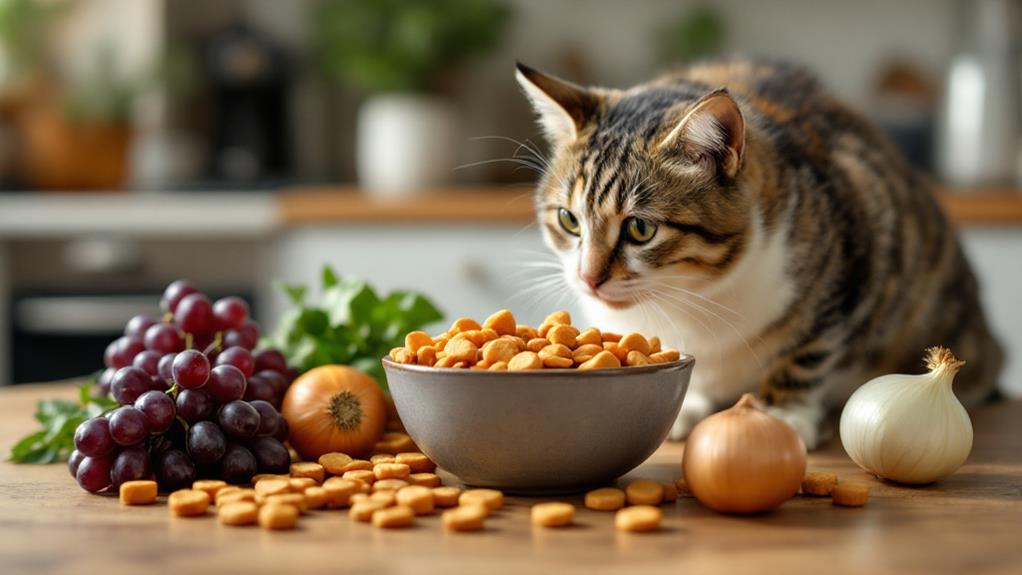
Cats are curious creatures, and their exploration can sometimes lead them to dangerous foods. As a responsible cat owner, it's important to know which toxic foods can pose serious threats to your feline friend. While cat treats are best for rewarding your pet, some common human foods should be strictly avoided.
- Chocolate: This popular treat is highly toxic to cats. Even small amounts can lead to symptoms like vomiting, diarrhea, and seizures. It's critical to keep chocolate far out of reach.
- Onions and Garlic: These ingredients can cause hemolytic anemia in cats by damaging their red blood cells. Be cautious with cooked foods, as these items can often be hidden in sauces and other dishes.
- Raisins and Grapes: Just a few can result in acute kidney failure in cats. It's imperative to prevent access to these fruits and contact a veterinarian immediately if ingestion is suspected.
Treats and Medical Conditions
For cats with medical conditions, choosing the right treats requires careful consideration and professional guidance. It's essential to consult with your veterinarian before introducing any treats into your cat's diet, especially if they have specific health issues. Some treats can exacerbate medical conditions, so getting veterinary advice is important to avoid complications.
Cats with food allergies might need tailored diets, making certain treats unsuitable. Introducing the wrong treat could trigger an allergic reaction, compromising your cat's health. That's why adhering to prescribed diets is crucial. When your cat is on a veterinary diet, adding non-prescribed treats might interfere with their nutritional balance and potentially cause health problems.
Your veterinarian might recommend prescription treats designed to meet specific dietary needs. These treats guarantee that your cat's health requirements are met without risking their well-being. Following veterinary advice is vital in managing your cat's medical conditions effectively. By choosing treats that align with their health needs, you help maintain their overall health.
Always prioritize your cat's health by consulting with professionals and selecting treats that support their medical needs. This guarantees that your feline friend stays happy and healthy while enjoying occasional snacks.
Enrichment Through Treats
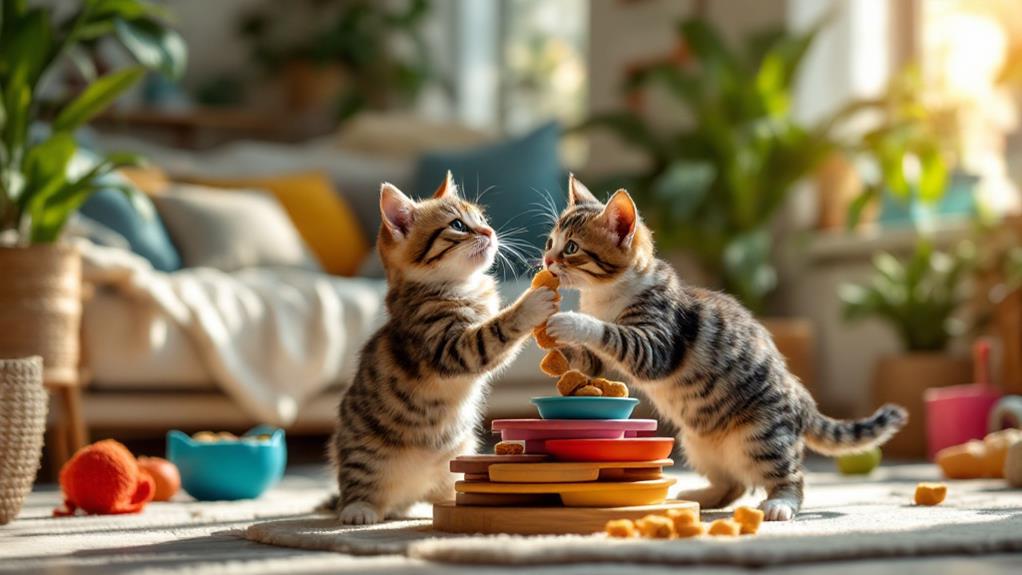
Many ways exist to enrich your cat's life through treats, transforming snack time into an engaging experience. Not only do they love a tasty treat, but using treats creatively also provides mental stimulation and keeps them entertained. Here are some effective methods:
- Snuffle Mats and Treat-Dispensing Toys: These tools encourage natural foraging behaviors, making your cat work for their snack. They're perfect for providing mental stimulation while ensuring your cat doesn't overeat. Opt for low-calorie treats to maintain a healthy balance.
- Freezing Treats: Extend playtime by freezing moist food or treats inside toys. This approach challenges your cat to work harder to access their snack, turning treat time into an engaging and rewarding activity.
- Food Puzzles: Incorporate these into your cat's routine to reward them while promoting problem-solving skills. They encourage your cat to think and work for a tasty treat, ensuring they stay mentally active and alert.
Treat Safety Tips
While enriching your cat's life with treats can be a fun and stimulating experience, guaranteeing their safety is just as significant. One of the fundamental treat safety tips is to introduce new treats gradually. Doing so allows you to monitor for any adverse reactions, such as stomach upset or diarrhea, which can occur with sudden dietary changes. If you notice these symptoms, review the treat's ingredients and consider consulting your veterinarian.
It's also essential to recognize signs of allergic reactions, which might manifest as sneezing, coughing, or skin rashes. Should these symptoms occur, seek professional advice to confirm your cat's health isn't compromised. Always provide your cat with fresh water alongside treats, especially if they're dry or high in calories, to maintain adequate hydration.
Another significant tip is to monitor the caloric content of treats. Treats should not exceed 10% of your cat's daily caloric intake, so you may need to adjust their regular meal portions accordingly. This balance helps maintain a healthy diet and prevents unwanted weight gain. By following these treat safety tips, you can provide your cat with enjoyable and safe snacking experiences.