How Much Hay Should a Horse Eat Per Day?
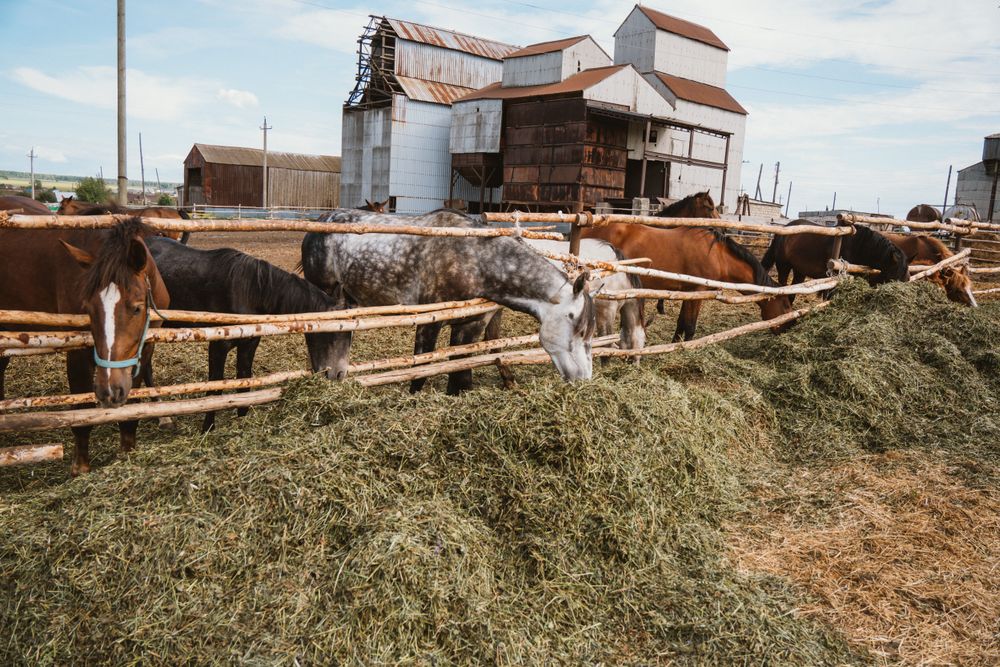
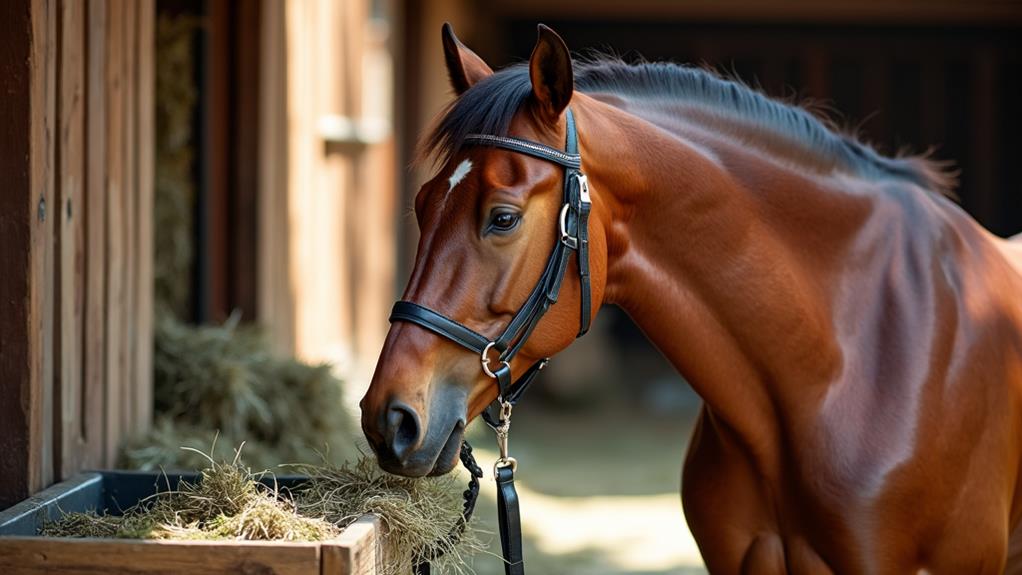
If you've ever stood in front of a hay bale wondering whether you're feeding too much or too little, you're not alone. Hay is the foundation of nearly every horse's diet, yet the "right" amount is one of the most common questions among horse owners. The short answer: most horses should eat 1.5% to 2.5% of their body weight in forage per day. For a typical 1,000-pound horse, that's 15 to 25 pounds of hay daily. But the ideal amount depends on your horse's weight, workload, metabolism, and access to pasture.
Equine nutritionists broadly agree that horses need at least 1.5% of their body weight in dry forage each day to keep their digestive system functioning properly, with 2% as the standard baseline for maintenance.
Here's what that looks like in practice:
Horse Weight | Minimum (1.5%) | Standard (2%) | Higher Needs (2.5%) |
800 lbs (pony) | 12 lbs | 16 lbs | 20 lbs |
1,000 lbs (average horse) | 15 lbs | 20 lbs | 25 lbs |
1,200 lbs (large horse) | 18 lbs | 24 lbs | 30 lbs |
Horses in heavy work, lactating mares, growing youngsters, and hard keepers often need the upper end of that range — or more. Easy keepers, ponies, and horses prone to obesity may do best closer to 1.5%, ideally fed from a slow feeder to stretch out eating time.
Why Horses Need So Much Forage
A horse's digestive system evolved for near-constant grazing — 14 to 17 hours a day in the wild. Their stomachs produce acid continuously, whether food is present or not. When a horse goes hours without forage, that acid can irritate the stomach lining, contributing to ulcers, and an empty hindgut raises the risk of colic.
Long-stem forage like hay also keeps the hindgut's microbial population healthy, supports steady body temperature in cold weather (fiber fermentation generates heat), and satisfies the horse's psychological need to chew. Horses deprived of adequate forage often develop stress behaviors like cribbing, wood chewing, or stall walking.
How to Weigh Your Horse's Hay
Eyeballing flakes doesn't work. Flake weight varies wildly depending on the type of hay and how the bale was pressed — a flake of grass hay might weigh 3 pounds while a flake of alfalfa weighs 6 or more.
Instead:
- Estimate your horse's body weight using a weight tape or the formula: (heart girth² × body length) ÷ 330.
- Calculate the target range — multiply body weight by 0.015 and 0.025.
- Weigh the hay with a hanging luggage scale or bathroom scale. Weigh a few flakes from your current batch to learn the average, then re-check whenever you start a new load.
Adjusting for Your Individual Horse
Workload: A trail horse ridden lightly on weekends does fine at 2%. A horse in consistent training may need 2.5% plus concentrated feed.
Pasture access: Horses on quality pasture for a full day may need little to no supplemental hay in the growing season. In winter or on dry lots, hay carries the entire forage load.
Age: Senior horses with worn teeth may struggle to chew long-stem hay and often need soaked hay cubes or chopped forage to maintain weight.
Body condition: Run your hands over the ribs monthly. If ribs are easily felt but not seen, you're likely in the right range. Adjust hay quantity gradually — sudden feed changes disrupt gut flora.
Hay Quality Feeds More Than Calories
The amount of hay matters, but so does what's in it. Fresh green forage is naturally rich in nutrients that fade as hay cures and stores — and that has real consequences for the skeleton, not just the waistline. Understanding how Vitamin K1 supports horse bone health explains why: K1 activates osteocalcin. This protein binds calcium into the bone matrix, and it's abundant in fresh pasture but declines significantly in stored hay. Horses on hay-only diets, especially performance horses and seniors, may benefit from targeted supplementation to fill that gap, along with attention to protein quality and mineral balance in their forage. Testing your hay — most extension offices offer affordable analysis — tells you exactly what your horse is getting and where the shortfalls are.
Common Hay Feeding Mistakes
- Feeding by flake instead of weight — the single most common error.
- Two large meals instead of spread-out feeding — long gaps between meals increase ulcer risk. Slow feeders and hay nets extend eating time.
- Ignoring waste — horses fed on the ground can trample 20% or more of their hay. Feeders reduce loss.
- Not adjusting seasonally — cold snaps increase forage needs; horses generate warmth by digesting fiber.
Start at 2% of body weight, weigh your hay, and let your horse's body condition guide adjustments from there. Feed as continuously as your setup allows, prioritize quality forage, and remember that hay alone can't always replicate everything fresh pasture provides. Get the forage foundation right, and most other pieces of your horse's nutrition fall into place.
This article is for informational purposes only and is not a substitute for veterinary care. Always consult your veterinarian about your horse's specific nutritional needs.