Home Pet Grooming Tips and Tools: How to Groom Your Pet Like a Pro
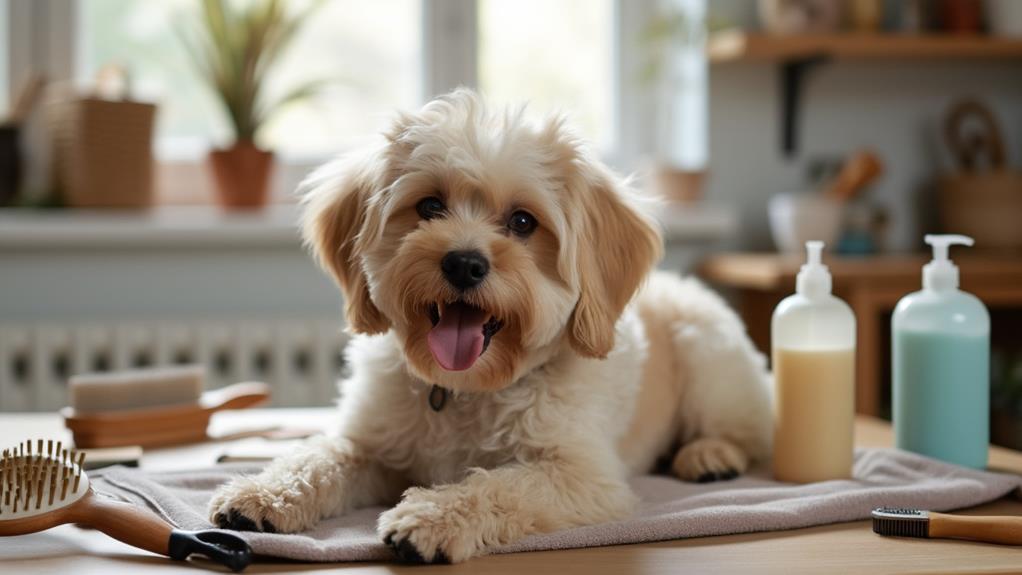
Grooming your pet at home like a pro starts with the right tools: slicker brushes for long-haired breeds and bristle brushes for short coats. Use dog-specific shampoos and microfiber towels for effective drying. Brush regularly—weekly for short-haired dogs and daily for long-haired ones—to keep their coats healthy. For nail care, invest in a Dremel grinder or clippers, and trim nails every 3-4 weeks. Bath your pet with lukewarm water, avoiding sensitive areas, and dry them properly. Consistent grooming helps detect health issues early. With these starting tips, there's a wealth of detailed guidance still to investigate.
Key Takeaways
- Choose grooming tools tailored to your pet's coat type for effective grooming.
- Brush your pet regularly to prevent tangles and stimulate skin health.
- Use dog-specific shampoos and lukewarm water for safe bathing.
- Trim nails every 3-4 weeks, avoiding the quick to prevent discomfort.
- Inspect and clean ears monthly to prevent infections and ensure ear health.
Essential Grooming Tools
In regards to grooming your pet, having the right tools is vital to making the process smooth and effective. To achieve a professional grooming experience at home, start by selecting grooming tools that match your pet's coat type. For long-haired breeds, a slicker brush is perfect for detangling and removing loose fur. If you have a short-haired dog, a bristle brush will work wonders in keeping their coat shiny and healthy.
Regular grooming also involves bathing your pet. Invest in high-quality, dog-specific shampoos with mild formulas to avoid skin irritation. This guarantees that your pet's skin stays healthy, even with frequent washes. Drying your pet efficiently is important, so keep several microfiber towels on hand. They absorb moisture quickly and help manage those inevitable splashes.
Nail care is another significant part of regular grooming. Use dog nail clippers or a Dremel grinder, making sure you've got a safety guard in place to prevent cutting too short. Finally, don't overlook ear hygiene. Regularly clean your pet's ears with a suitable cleaning solution and cotton balls, especially if your pet is prone to ear problems. These tools and tips will make grooming a breeze.
Optimal Brushing Frequency
Brushing frequency is vital for maintaining a healthy pet coat. For dogs with short, smooth, or wiry coats, a weekly brushing session using a rubber-bristled brush is sufficient. This routine helps maintain the coat's health and minimizes shedding. On the other hand, breeds with long, silky, or curly coats demand a bit more attention—daily brushing is required to prevent tangles and matting. Use a rubber-bristled or wire slicker brush for these dogs to guarantee their coat stays smooth and beautiful.
If you have a double-coated dog, set aside time for weekly de-shedding and regular brushing. This is important for managing seasonal shedding, keeping your home fur-free, and your pet comfortable. Always remember, regular brushing not only keeps the coat clean but also stimulates blood circulation and promotes skin health, making it a key part of any grooming routine.
To complement your home grooming efforts, consider professional grooming every 4-8 weeks for long-haired breeds. Short-haired dogs might only need a professional touch once a month, depending on how active they are and their coat's condition. This balance will keep your pet looking and feeling their best.
Bathing Techniques
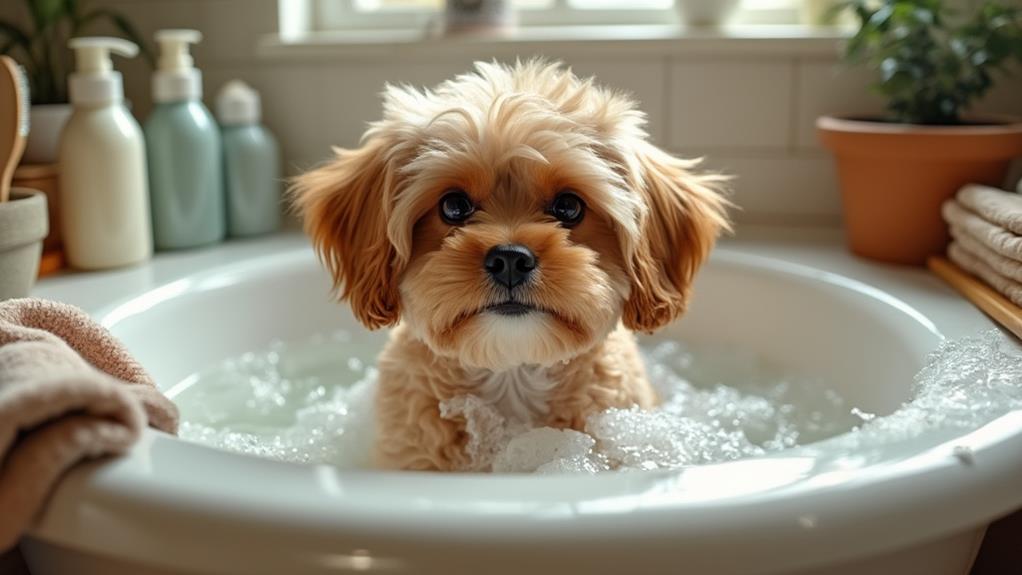
Regular brushing is just one part of keeping your pet's coat in top condition; the way you bathe your pet plays a likewise significant role. Start by using lukewarm water to wet your dog, beginning at the neck and moving backward. This approach helps your pet stay comfortable and avoids any shock from abrupt temperature changes. When it's time to wash, choose a mild, dog-specific shampoo. Lather it thoroughly but be cautious around sensitive areas like the face and ears to prevent irritation.
Next, focus on one of the most vital bathing techniques: rinse thoroughly. Shampoo residue left on your dog's coat can lead to skin irritation or allergic reactions, so take your time to confirm all product is washed away. Once rinsed, dry your dog using a microfiber towel. If you prefer to use a blow dryer, opt for a pet-specific model set to low heat to avoid overheating your dog's skin.
Fur Trimming Tips
Trimming your pet's fur is a significant part of grooming that helps maintain their appearance and comfort. To achieve professional results, there are some fundamental fur trimming tips and tools you'll need. Initially, start by thoroughly brushing your pet to remove tangles and mats. This step is critical as it guarantees a smoother cutting process and reduces stress on your furry friend. Here are some key pointers to guide you:
- Choose the right tools: Use blunt-ended shears or small clippers for sensitive areas like around the eyes and paws. This reduces the risk of accidental injuries and keeps your pet comfortable.
- Select appropriate blades: Opt for a number 10 blade for delicate areas and a number 4 blade for a complete trim. Keep a safe distance from your pet's skin to prevent cuts, just like a professional groomer would.
- Trim in the direction of hair growth: Always trim with the hair growth to avoid pulling, which can cause discomfort and anxiety.
- Check and adjust: After trimming, inspect for uneven spots. Make light adjustments gradually to achieve a neat appearance without overwhelming your pet.
With these tips and tools, you can groom your pet like a pro!
Nail Trimming Guide
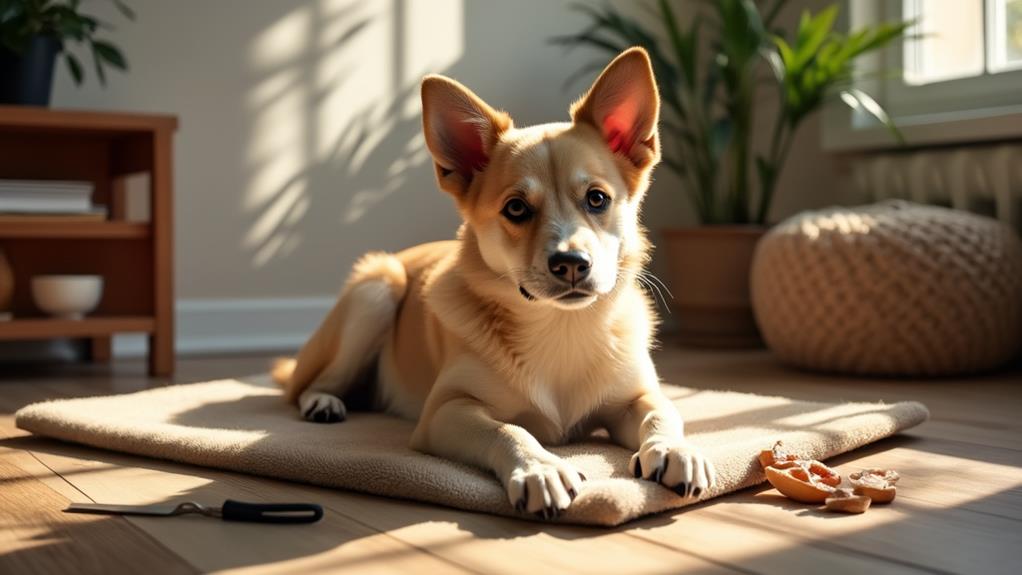
After mastering fur trimming, it's time to focus on another vital aspect of pet grooming: nail trimming. Regular nail trimming every 3-4 weeks is important to prevent discomfort and damage. If you hear your pet's nails clicking on hard surfaces, it's a sign they're too long. This nail trimming guide will help you trim safely and effectively.
Start by using dog nail clippers or a Dremel grinder. Acclimate your dog to these tools gradually with plenty of treats to ease any anxiety. When trimming, concentrate on the downward-facing part of the nail. Avoid cutting into the quick, which can cause pain and bleeding. If you accidentally cut the quick, apply styptic powder to stop the bleeding.
Dark nails can be tricky, so proceed with caution. Trim small amounts at a time until you see the quick to prevent injury. Always make nail trimming a positive experience for your dog. Praise and reward them with treats to help them associate the process with comfort and care. With patience and the right tools, you'll keep your pet's nails healthy and their grooming routine stress-free.
Dental Care Routine
Ensuring your pet's oral health is vital for their general well-being. Dental care is as important for pets as it is for humans, preventing painful dental issues and ensuring a happy, healthy life. To effectively manage your pet's dental health, you should establish a consistent routine.
- Brush your dog's teeth: Aim to do this at least twice a week, ideally every day. Use a soft-bristled toothbrush and dog-specific toothpaste. This practice helps prevent gum disease and plaque buildup. Remember, plaque can quickly turn into tartar.
- Watch for signs of dental issues: Keep an eye out for symptoms like bad breath, swollen gums, or difficulty eating. These can indicate serious dental problems that require professional attention.
- Utilize dental treats: While these can help reduce plaque and tartar, they shouldn't replace regular brushing. They serve as a supplementary tool in your pet's dental care routine.
- Schedule professional cleanings: Regular vet visits for dental cleanings are important, especially for small breeds prone to crowded teeth and dental issues. Your vet can address any concerns and prevent future complications.
Ear Cleaning Methods
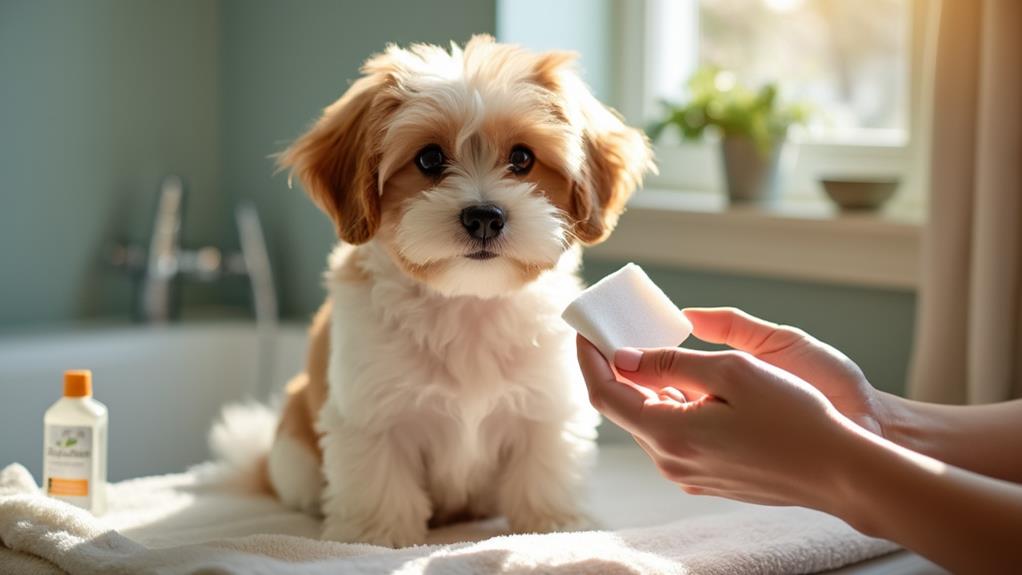
A crucial part of maintaining your dog's health is regular ear cleaning. It's significant to check your dog's ears monthly or even more often if they're prone to infections. To clean the outer ear, use a damp cloth or cotton balls soaked in mineral oil. This helps remove dirt and excess wax without irritating the sensitive ear area.
Never insert anything into the ear canal, as this could cause harm. If you're unsure how to proceed, consult a veterinarian for guidance on proper ear care techniques. While cleaning, keep an eye out for any signs of infection, like redness, swelling, discharge, or a bad odor. If you notice any of these symptoms, seek veterinary advice promptly.
After your dog has a bath or goes swimming, make sure you dry their ears thoroughly to avoid moisture buildup, which can lead to infections. For regular maintenance, use a dog-specific ear cleaning solution, applying it as directed to avoid irritation. Remember, keeping your dog's ears clean is crucial for their overall well-being. By following these ear cleaning tips, you can help prevent infections and make sure your pup's ears stay healthy and comfortable.
Eye Care Practices
In relation to keeping your dog's eyes healthy, regular care is essential. Consistent monitoring and gentle cleaning can prevent potential health issues before they become severe. Here's how you can keep your dog's eyes in top condition:
- Check for Signs: Regularly inspect your dog's eyes for any signs of irritation or discharge. Early detection can be a game-changer in preventing more serious health issues.
- Clean Gently: Use a soft, damp cloth or a dog-specific eye cleaning solution to carefully remove any discharge from the corners of the eyes. Always avoid using human products, as they may contain harmful ingredients to dogs.
- Monitor Symptoms: Keep an eye out for redness, swelling, or excessive tearing. These symptoms could indicate underlying health issues that require the attention of a veterinarian.
- Safety Priority: When cleaning around the eyes, be cautious not to apply pressure directly to the eyeball. Focus on the surrounding area to guarantee your dog remains comfortable and safe during the process.
Health and Safety Tips
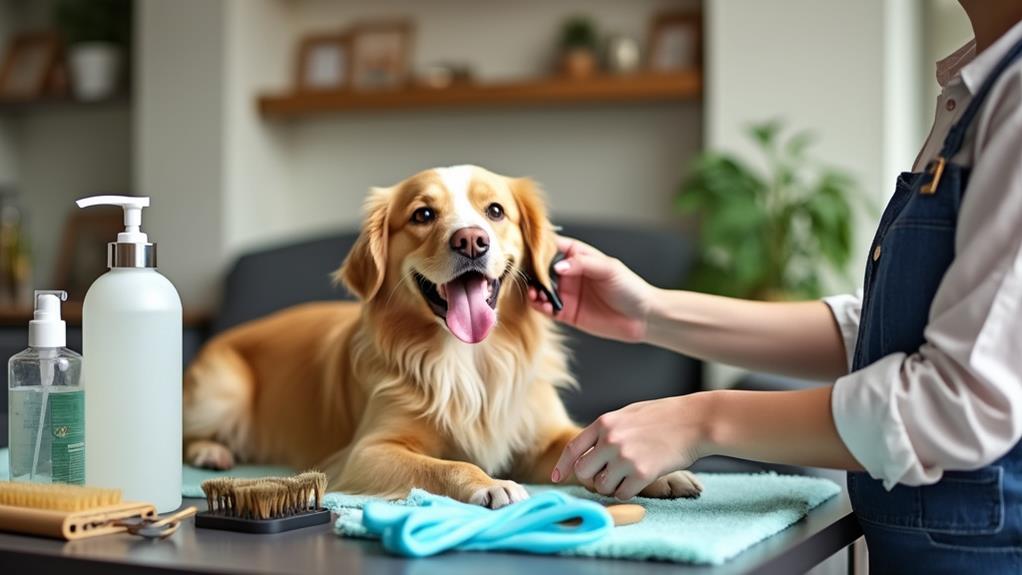
Grooming your pet isn't just about keeping them looking good; it's vital for their general health and safety too. During grooming sessions, take the opportunity to closely inspect your pet for any injuries, skin irritations, or parasites. Document anything unusual and share it with your veterinarian to guarantee their well-being. Keep your grooming tools sanitized and in good condition to prevent infections and avoid accidents that could harm your pet.
When it's time to get your pet's nails trimmed, be cautious. Cutting too close to the quick can cause pain and bleeding. Always have a styptic pencil on hand to manage any accidental cuts. Your pet's comfort is significant, so pay attention to their behavior during grooming. If they seem anxious or uncomfortable, take breaks and use positive reinforcement to create a calm and reassuring environment.
For specific tasks like ear cleaning or anal sac expression, consult your veterinarian. These procedures require proper techniques to avoid injuries or infections. By following these health and safety tips, you can guarantee that your pet's grooming sessions are not only effective but also safe and comfortable.
Grooming Area Cleanup
After each grooming session, it's crucial to tidy up the area to maintain a clean and healthy environment for both you and your pet. Following these grooming tips will help you keep everything in order and guarantee your pet's grooming area remains spotless. Here's a step-by-step guide to effective grooming area cleanup:
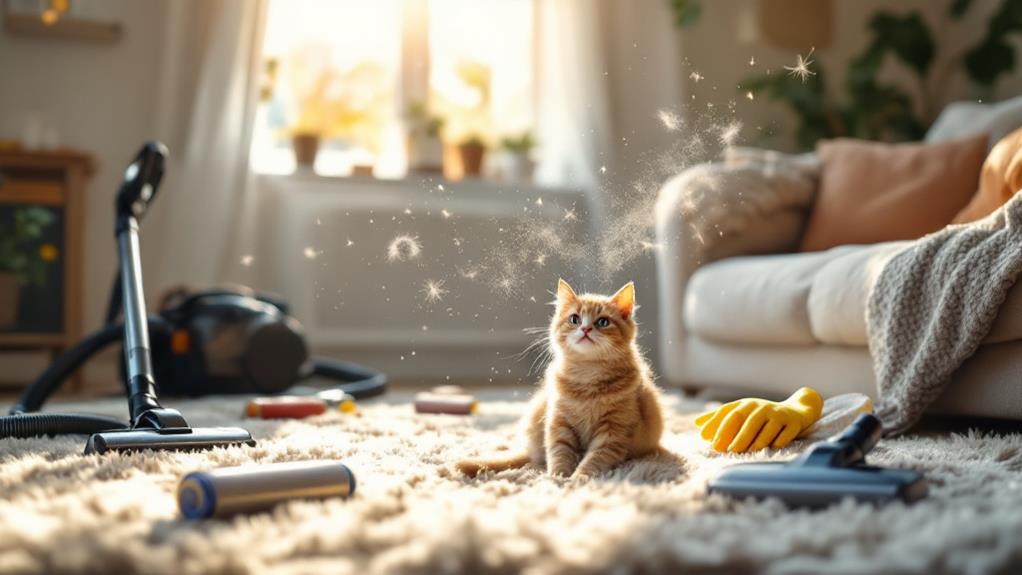
- Remove Loose Fur: Use a lint roller or a vacuum with a pet hair attachment. This helps maintain a clean environment by eliminating stray hair that can accumulate on floors and furniture.
- Sanitize Tools: Rinse and sanitize grooming tools like brushes and clippers. This step prevents bacteria buildup and keeps your equipment effective for future sessions.
- Clean the Bathing Area: Wipe down tubs or showers to remove soap residue and hair. This prevents slips and maintains good hygiene, assuring a safe grooming space for your pet.
- Dispose of Waste Properly: Trimmed pets' nails and collected fur should be sealed in a bag for disposal. This avoids clutter and potential contamination, keeping the grooming area tidy.
Remember to launder used towels and mats regularly. This practice reduces odors and bacteria, promoting a clean environment that safeguards your pet's health.