Hairless Cat Breeds You Should Know About: Unique and Hypoallergenic Cats
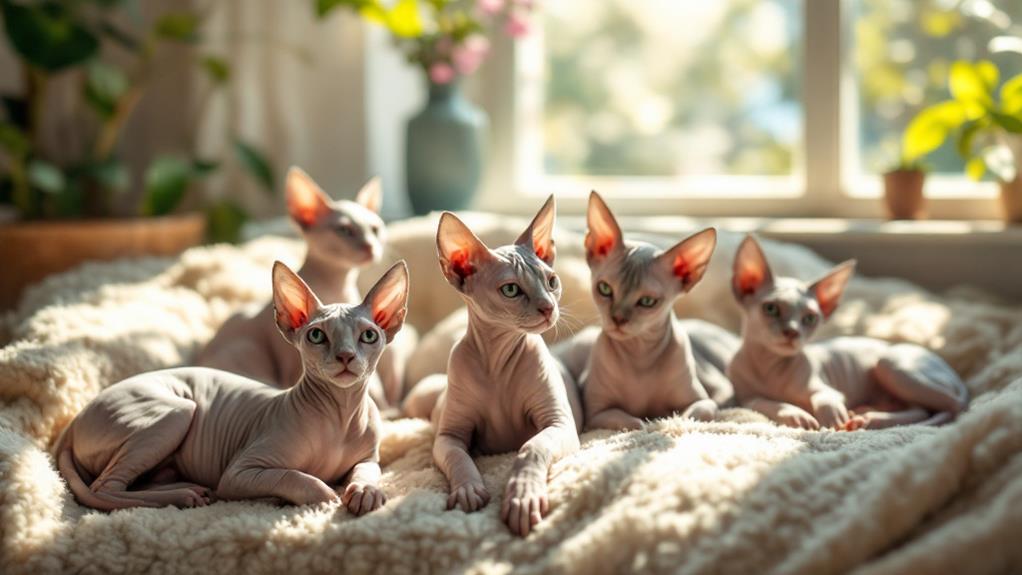
If you're curious about hairless cat breeds, there are a few unique ones to know: the playful Sphynx, the loyal Donskoy, the energetic Bambino, and the intelligent Peterbald. Despite their appearance, hairless cats aren't completely fur-free and can still cause allergies due to the Fel d 1 protein. These cats require regular baths to manage oily skin and attention to temperature changes since they lack the insulation fur provides. Caring for hairless cats involves specialized grooming and environmental control to guarantee skin health and comfort. For more on their personalities and care needs, there's plenty to uncover.
Understanding Hairless Cats
Hairless cats, like the Sphynx, Donskoy, and Bambino, are fascinating creatures that often surprise people with their unique appearance. You might expect these breeds to be completely devoid of fur, but many have fine, down-like hair or patches that improve their distinct look. This hairlessness results from genetic mutations, not health issues, giving the breed a velvet-like skin that's a tactile treat compared to traditional cats.
Despite being labeled as hypoallergenic cat breeds, these cats can still trigger allergic reactions because they produce allergens in their dander and saliva. However, their lack of a dense coat can reduce the spread of allergens around your home. Hairless cats are known for their affectionate nature, often enjoying close interaction with their owners.
One thing you can't overlook is their skin care. The absence of fur leads to oil build-up, making regular bathing a must. A weekly bath helps maintain skin health and prevents debris accumulation. Understanding these unique features and requirements of hairless cats can help you appreciate their charm and guarantee they stay healthy and happy in your home.
Are Hairless Cats Hypoallergenic?
The notion that hairless cats might be hypoallergenic is a common misconception. While these cats have no fur, they still produce allergens, mainly the Fel d 1 protein found in their saliva and skin. Many believe that hairless cats like Sphynx cats are better for allergy sufferers, but this isn't necessarily true. They can still trigger allergic reactions because they accumulate dander and saliva allergens in your home environment.
If you're considering adopting a hairless cat, it's important to understand that while they may shed less fur, your sensitivities can still be affected. Sphynx cats, often returned to shelters, highlight this reality due to severe allergies their owners experience. Regular cleaning and grooming can help minimize allergen exposure, but it's not a foolproof solution.
Allergy sufferers should proceed with caution when thinking about bringing a hairless cat into their lives. Investigate your sensitivities by spending time around hairless cats before making a commitment. Frequent grooming, cleaning your living space, and managing dander can reduce allergen levels. However, it's vital to gauge your own reaction to guarantee that adopting a hairless cat won't compromise your comfort and health.
Sphynx and Other Breeds
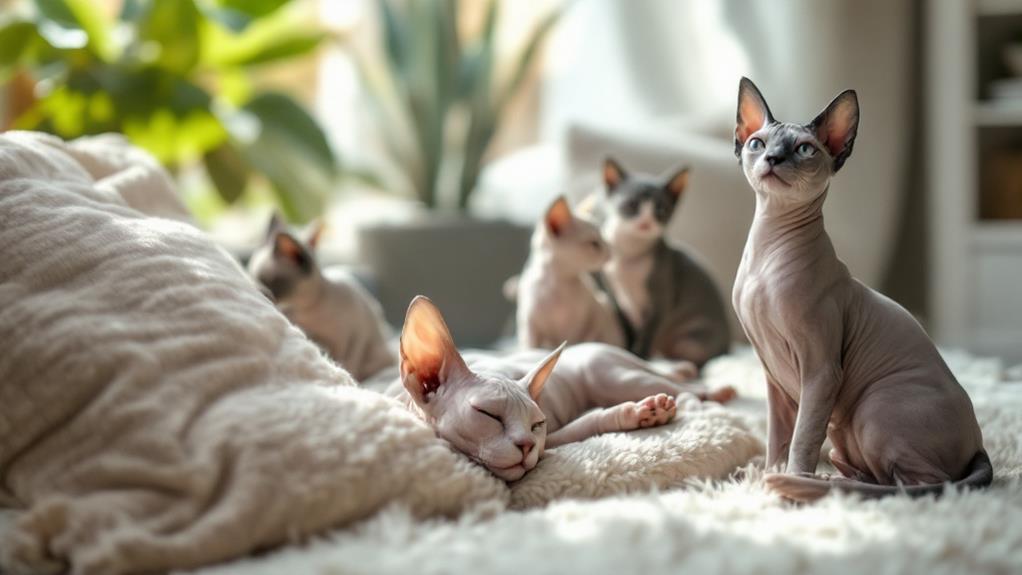
Plunge into the realm of hairless cat breeds, where the Sphynx reigns supreme with its deep-set, lemon-shaped eyes and playful personality. This breed is often likened to a dog due to its affectionate and sociable nature. Despite the misconception, Sphynx cats aren't hypoallergenic, as they still produce allergens that can trigger cat allergies. This genetic mutation results in their iconic hairless appearance, making them a standout choice for cat enthusiasts.
Explore other intriguing hairless breeds like the Donskoy, Bambino, Peterbald, and Minskin. Each brings its unique flair to the hairless cat family:
- Donskoy: Known for its wrinkly skin and sociable personality, this breed thrives on human interaction.
- Bambino: Combines the playful demeanor of the Sphynx and the short legs of the Munchkin, creating an adorable, energetic companion.
- Peterbald: Offers an assortment of coat types, from completely hairless to slight fuzz, and is celebrated for its intelligence and affectionate behavior.
- Minskin: Retains a kitten-like appearance with short legs and a playful nature, sometimes adorned with patches of fur.
These breeds, born from genetic mutations, provide a fascinating glimpse into the diverse world of hairless cats.
Hairless Cat Personalities
Regarding hairless cat personalities, prepare yourself for an engaging and lively experience. Sphynx cats, for instance, are renowned for their outgoing and affectionate nature. They love being the center of attention and often follow their pet parents around the house, craving constant companionship. This breed's social and interactive tendencies mean they thrive in environments where they can engage with their human family.
Similarly, Donskoy cats exhibit a loyal and playful temperament. They form strong bonds with their human companions and enjoy interactive playtime. Their affectionate nature makes them wonderful pets for those seeking a loving and playful enhancement to their home.
Peterbalds stand out for their intelligence and curiosity. They're incredibly playful, always enthusiastic for interactive games and mental stimulation. These cats keep pet parents on their toes with their inquisitive antics.
Despite their short stature, Bambino cats maintain a kitten-like demeanor throughout their lives. Their high energy levels and playful spirit guarantee they bring joy and excitement to any household.
Caring for Hairless Cats
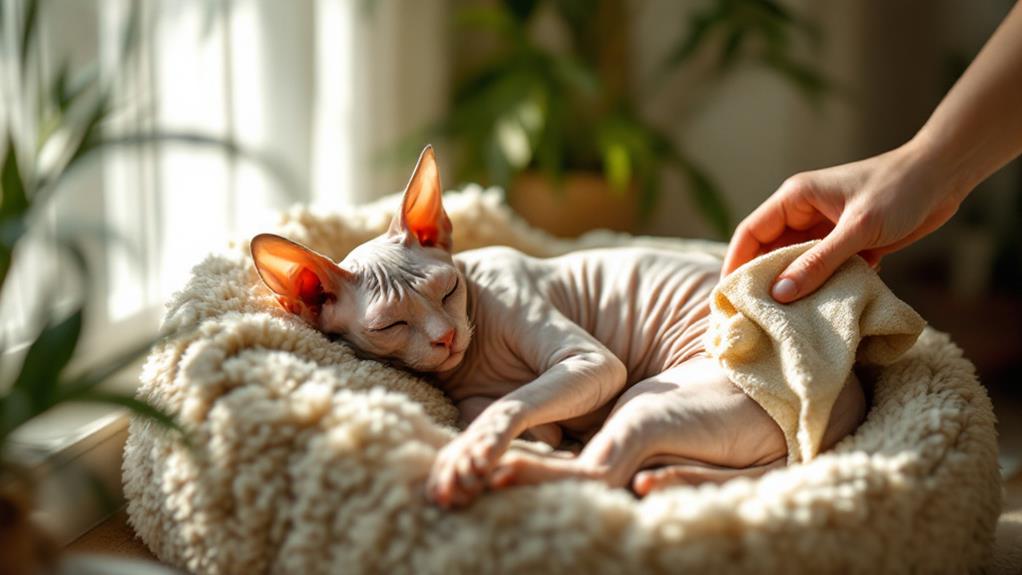
Caring for hairless cats involves understanding their unique needs and providing them with the extra attention they require. These affectionate and hypoallergenic companions need regular grooming to maintain their skin health. Hairless cats produce oils that, without fur, can build up on their skin, so regular bathing, typically once a week, is vital. Their skin is sensitive, so using a gentle cat shampoo will help keep them comfortable.
Additionally, these cats are sensitive to temperature changes. During colder months, make sure they stay warm with a cozy coat or jumper to help with temperature regulation. When they venture outdoors, applying cat-friendly sunscreen is imperative to protect their skin from sunburn, especially on exposed areas.
Key Care Tips:
- Regular Bathing: Prevent oil build-up and maintain skin health.
- Temperature Regulation: Use clothing to keep them warm in cooler weather.
- Sunscreen: Apply it when they're outside to prevent sunburn.
- Diet & Hydration: Provide a high-protein, low-carb diet and fresh water for their higher metabolism.
Adoption Considerations
Considering adopting a hairless cat requires a deep understanding of their unique needs and the commitment involved. Hairless cat breeds like the Sphynx and Donskoy aren't just about aesthetics; they come with specific grooming needs that include regular bathing to maintain skin health. Without fur, they need assistance with temperature management. Your home should be warm enough to keep them comfortable, and you'll need to provide cozy spots for them to snuggle into.
Adoption considerations for these hypoallergenic cats go beyond their appearance. If you've had prior cat experience, you're likely better prepared for their unique requirements, such as their dietary needs and need for social interaction. It's essential to research thoroughly and not be swayed by their rising popularity due to media portrayals, which can lead to impulse decisions.
Understand the long-term commitment involved and the potential health issues that may arise. Hairless breeds can require specialized veterinary care and regular check-ups to address their specific medical needs. Before adopting, make sure you're fully aware of the responsibilities and ready to meet the needs of these fascinating, but demanding, companions.
Allergen Myths and Facts
Many people believe hairless cats are hypoallergenic, but this is a common misconception. While these cats shed less fur, they still produce the Fel d 1 protein, a significant allergen found in their dander and saliva. This means that hairless cats, like the popular Sphynx breed, can still trigger allergic reactions. Allergens can accumulate in your home, so allergy sufferers need to be aware that hairless doesn't mean allergen-free.
To better manage allergen exposure, consider these points:
- Grooming: Regular grooming can help reduce dander and allergens on your hairless cat's skin.
- Cleaning: Frequent cleaning of your home, including vacuuming and wiping surfaces, is vital to minimize allergens.
- Misconceptions: Remember, it's not the absence of fur but the presence of proteins like Fel d 1 that causes allergies.
- Allergy Management: Some allergy sufferers experience fewer symptoms, but regular contact with hairless cats can still lead to reactions.
If you're considering a hairless cat, like a Sphynx, it's imperative to understand these facts. Proper grooming and cleaning can help, but it's important to approach adoption with realistic expectations regarding allergen exposure.