Guide to Potty Training Your Puppy: Tips for Success

To successfully potty train your puppy, establish a consistent schedule and take them outside every 1-2 hours, especially after eating or sleeping. Choose a specific spot for them to go and use a consistent command like "bathroom." Crate training can help; make sure the crate is the right size and gradually build a positive association with it. Reward them immediately after successful outdoor elimination with praise or treats. Be patient with accidents and clean them thoroughly. Monitor their behavior for signs they need to go. By following these techniques, you'll better understand the process and its nuances.
Understanding Potty Training Basics
Understanding the basics of potty training is vital for setting your puppy up for success. Start by establishing a consistent potty schedule. Take your puppy outside every one to two hours, especially after eating, playing, or waking up. This routine helps reinforce good habits and makes it easier for your puppy to learn when and where to eliminate. Choose a designated bathroom spot outdoors and use a consistent command like "bathroom" to create a clear association with elimination.
Pay attention to signs that your puppy needs to go outside, such as sniffing, circling, or whining. These behaviors are cues to prevent accidents indoors and guarantee timely outdoor potty breaks. Implementing a regular feeding schedule is also important, as it helps predict when your puppy will need to eliminate, making it easier to time those outdoor trips.
Effective Crate Training Strategies
Crate training can be a powerful tool in your puppy's potty training process, offering both structure and security. Start by ensuring the proper crate size; it should allow your puppy to stand, turn, and lie down comfortably without leaving extra space to use as an elimination area. This encourages your puppy to hold their bladder until potty breaks. As dog owners, it's essential to monitor your puppy's time in the crate, ensuring it's not longer than their bladder can manage—generally one hour per month of development plus one hour.
Introduce crate training gradually, helping your puppy see the crate as a safe haven. You can do this by providing treats and praise, reinforcing the idea that the crate isn't a punishment. Use positive reinforcement immediately after your puppy goes potty in the appropriate area outside. This solidifies the connection between exiting the crate and eliminating in the right spot.
If accidents happen in the crate, don't worry. Return to the basics of puppy potty training with consistent monitoring and routines. This consistency helps your puppy learn appropriate elimination habits, reducing the likelihood of future mishaps. Remember, patience and persistence are key.
Consistent Housetraining Schedule
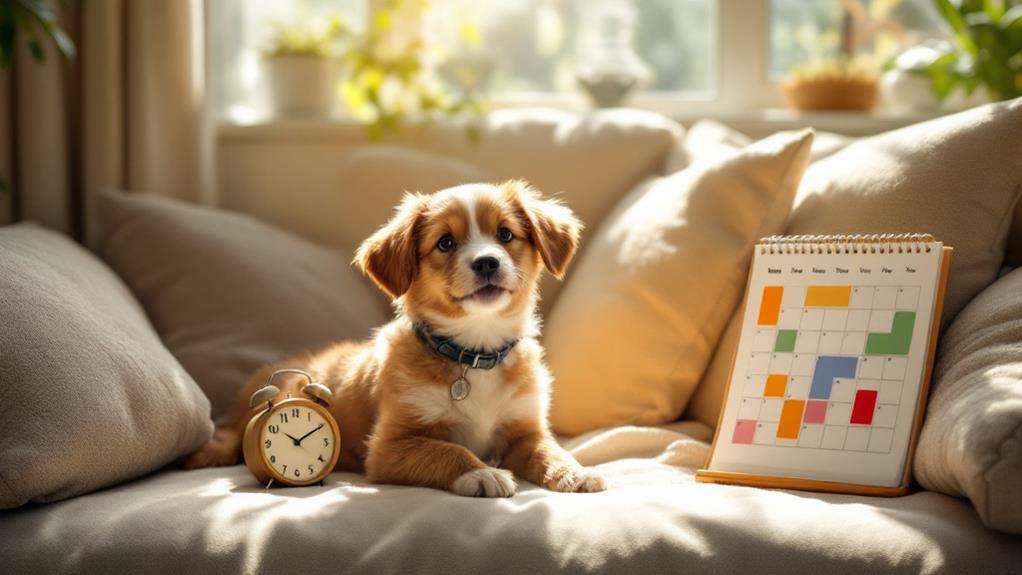
While crate training provides a solid foundation, establishing a consistent housetraining schedule is just as vital for your puppy's potty training success. Start by taking your puppy outside every two hours and immediately after activities like eating, playing, or waking up. Puppies can hold their bladder for about one hour per month of development plus one, so frequent trips outside are key to avoiding accidents and helping your puppy become potty trained.
Choose a designated bathroom spot and use a consistent command phrase to help your puppy associate the location with potty time. This structured routine not only reinforces good habits but also minimizes confusion. Monitor your puppy's habits closely to identify patterns and adjust the schedule as needed. It's imperative to align the frequent breaks with their activity levels and feeding times.
As your puppy matures and becomes more reliable, you can gradually increase their outdoor time. Always offer verbal praise promptly after each successful potty trip to reinforce the desired behavior. By maintaining a consistent potty schedule, you'll set your puppy up for success and create a positive environment that supports their development and housetraining goals.
Positive Reinforcement Techniques
The principle of positive reinforcement can be your best ally in potty training your puppy. By focusing on rewarding good behavior, you'll encourage your puppy to repeat those actions. When your puppy successfully eliminates outside, immediately offer praise or a treat. This helps them associate potty breaks with positive feedback, making it more likely they'll continue doing it.
To enhance the effectiveness of positive reinforcement, use a consistent command phrase during potty breaks. This helps your puppy understand that it's time to eliminate outside. Keep treats readily available so you can reward spontaneously whenever they succeed. The immediacy of the reward is vital—your puppy needs to connect the dots between their actions and your approval.
At nighttime, rewards should be low-energy to reinforce good behavior without overstimulating your puppy. A quiet "good job" and a gentle pet can suffice to acknowledge their success while allowing them to settle back to sleep easily.
Handling Accidents and Challenges
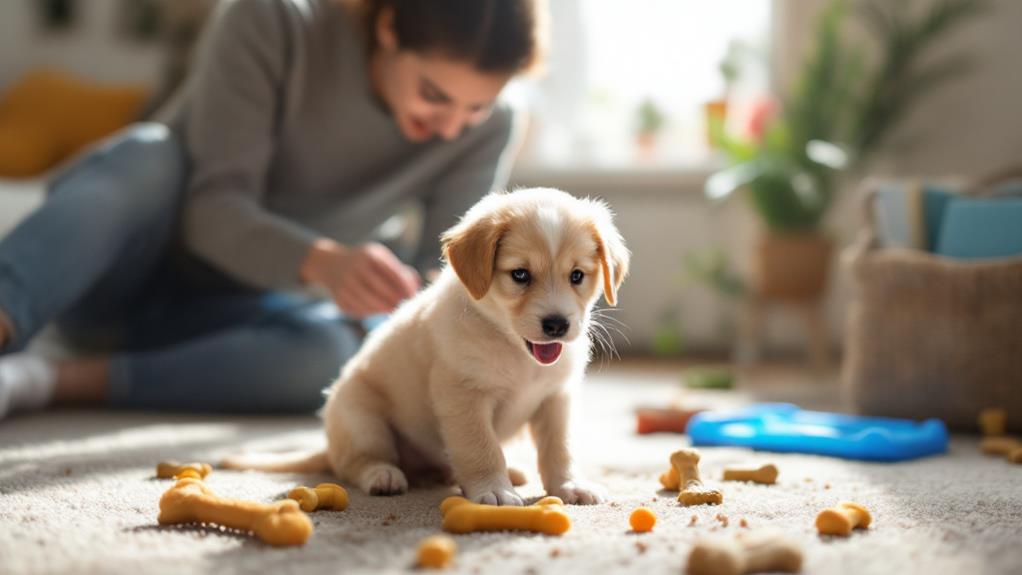
Despite your best efforts, accidents are bound to happen during potty training, and it's vital to handle them with patience and composure. Remember, a potty accident is a normal part of teaching your puppy the ropes. Responding calmly without creating drama helps your puppy learn without fear. When indoor accidents occur, clean the area thoroughly using pet stain enzymatic cleaners to eliminate odors. This step is important, as lingering smells can encourage your puppy to repeat the mistake in the same spot.
Supervising your puppy closely is key to reducing indoor accidents. Consistent supervision means watching for signs that your puppy needs to go, such as sniffing or circling. When you notice these behaviors, promptly take your puppy outside to reinforce appropriate elimination. If accidents persist, it might be time to revisit the training basics. Establishing a routine can help minimize confusion and guide your puppy toward better habits.
Sometimes, repeated accidents indicate underlying issues, and consulting an expert can provide insight. By maintaining patience and a structured approach, you'll help your puppy navigate these challenges and achieve potty training success.