Green Basilisk Care: How to Raise a Happy and Healthy Basilisk
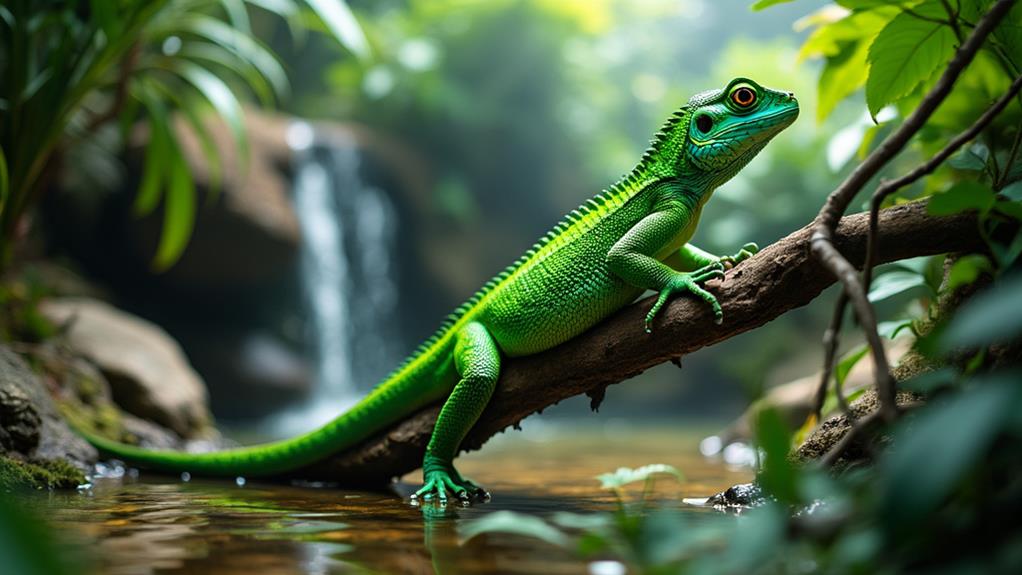
To raise a happy and healthy green basilisk, start by setting up a spacious enclosure, at least 6 feet long, filled with climbing branches and live plants. Keep the humidity at 60-70% and provide a temperature gradient with a basking area up to 95°F. Use UVB lighting for crucial vitamin D. Feed them a balanced diet of live insects and leafy greens, dusted with supplements. Handle your basilisk minimally to reduce stress, and guarantee regular health checks. By doing so, you'll create a thriving environment where your basilisk can truly flourish and enjoy all that life has to offer.
Key Takeaways
- Provide a spacious enclosure with climbing branches and plants to encourage natural activity and exploration.
- Maintain a temperature gradient with a basking area at 90-95°F and cooler areas at 75-80°F.
- Ensure humidity levels stay between 60-70% with misting systems and a water pool.
- Offer a balanced diet of live insects, leafy greens, and occasional fruits with supplements.
- Minimize handling to reduce stress and monitor behavior for early signs of health issues.
Habitat and Enclosure Setup
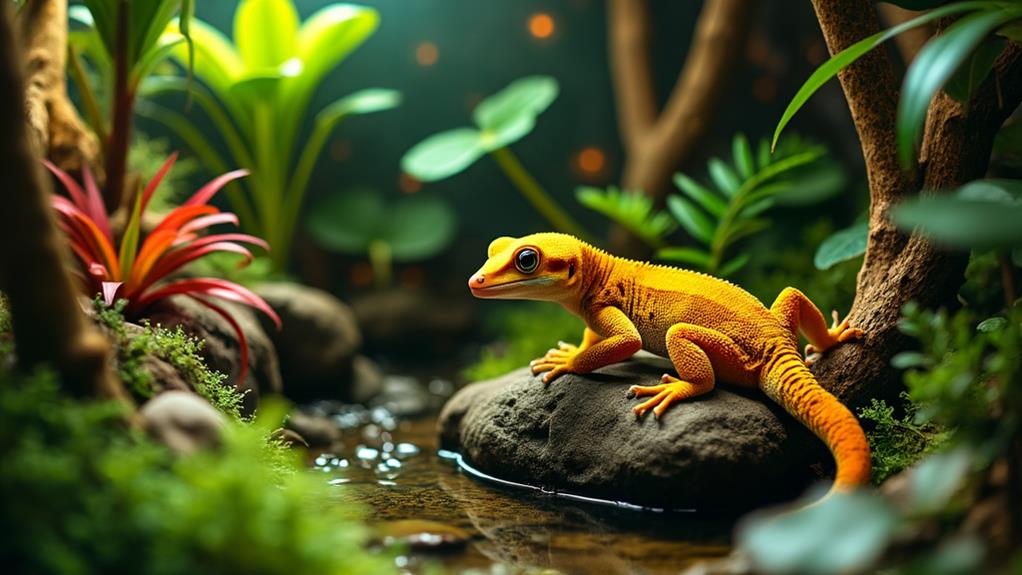
Creating the ideal habitat for a green basilisk involves thoughtful planning to guarantee their health and happiness. Start by ensuring the enclosure is at least 6 feet long, 2 feet wide, and 4 feet high, as their active nature demands ample space. The enclosure should mimic their natural environment with plenty of climbing branches and potted plants, encouraging exercise and exploration. To maintain proper humidity levels between 60-70%, incorporate misting systems and a large water pool that's at least 6 inches deep, offering both moisture and swimming opportunities.
Temperature control is crucial. Set up a basking area where the temperature reaches 90-95°F, allowing your basilisk to warm up. In contrast, cooler areas should range between 75-80°F to facilitate thermoregulation. This gradient helps your basilisk regulate its body temperature effectively.
For substrate, choose options like coconut fiber or soil, ensuring it's at least 4 inches deep. This depth retains moisture and permits natural burrowing behaviors, enhancing comfort. By carefully managing these elements, you create a habitat that supports your green basilisk's physical and psychological well-being, ensuring a lively and active life.
Lighting and Temperature Needs
When setting up your green basilisk's enclosure, focus on providing ideal lighting and temperature to guarantee their health and well-being. Start by establishing a proper temperature gradient. Maintain the basking area temperature at 90-95°F with a reliable heat source. The cooler side should range from 75-80°F. This gradient is necessary for regulating your basilisk's body temperature. Nighttime temperatures shouldn't drop below 75°F to keep them comfortable during rest.
Lighting needs are important too. Use UVB bulbs for green basilisks, like the Arcadia T5 HO Desert 12% or Zoo Med Reptisun T5 HO 10.0. Position them 13-15 inches above the enclosure using a mesh-mounted reflective fixture to improve UVB output. This is critical for vitamin D synthesis, promoting strong bones and general health. It's also beneficial to supplement with daylight-spectrum lighting to mimic natural sunlight.
Don't forget about proper humidity levels, which should be between 60-70%. You can achieve this by misting the enclosure daily and providing a large water source for drinking and bathing. These steps guarantee your basilisk thrives in an environment that closely resembles their natural habitat.
Diet and Nutrition
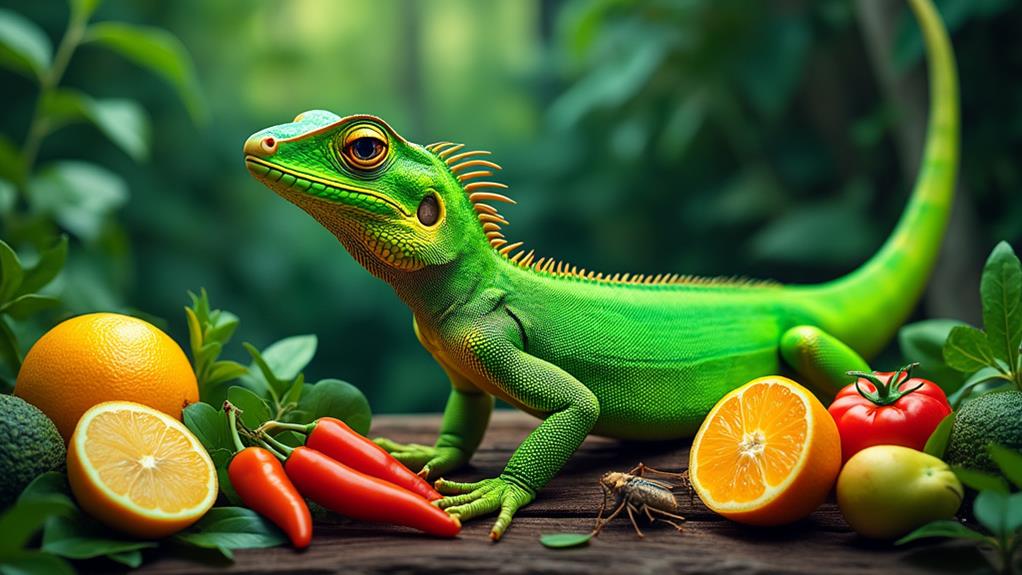
Green basilisks typically flourish on a well-balanced diet that combines both animal and plant-based foods, reflecting their omnivorous nature. For ideal nutrition, provide a variety of live insects like crickets, roaches, and worms. Don't forget to add leafy greens and occasional fruits to their feeding routine. Hatchlings need daily insect feedings, while juveniles should get insects and salads every other day. For subadults and adults, serve insects every 3-5 days with daily salads.
To guarantee your basilisk's health, follow these vital tips:
- Dust their food with calcium and vitamin supplements: This prevents nutritional deficiencies, especially in young basilisks who require daily supplementation.
- Gut-load feeder insects: Before feeding, improve their nutritional value by providing them with nutrient-rich foods.
- Maintain proper hydration: A large water bowl for drinking and bathing is critical. Also, mist the enclosure daily to support hydration.
These steps will help your basilisk stay healthy and lively. Remember, a well-planned diet and proper nutrition are key to their well-being. Keep their diet diverse and enriched with the necessary supplements to raise a thriving green basilisk.
Behavior and Handling
Understanding the behavior and handling needs of your green basilisk is crucial for fostering a healthy and stress-free environment. Basilisks are naturally shy and skittish creatures, so it's best to keep handling to a minimum. Excessive handling can lead to stress, which negatively affects their health. Instead, focus on creating an enriching environment that mimics their natural habitat. Provide vertical space with plenty of branches and plants to encourage climbing and exercise, which can reduce anxiety.
Socialization can be beneficial if you're considering housing more than one basilisk. Pairing them can work, but you must monitor their interactions closely, especially if males are involved, as they can become aggressive. Regular observation helps you catch any signs of stress or illness early. Changes in their activity levels or feeding habits can indicate potential issues.
To promote healthy behavior, enrich their environment with elements that stimulate their natural instincts. This not only improves their mental well-being but also supports their overall wellness. By understanding and respecting your basilisk's needs, you can create a nurturing environment that keeps them active, content, and thriving.
Health and Maintenance
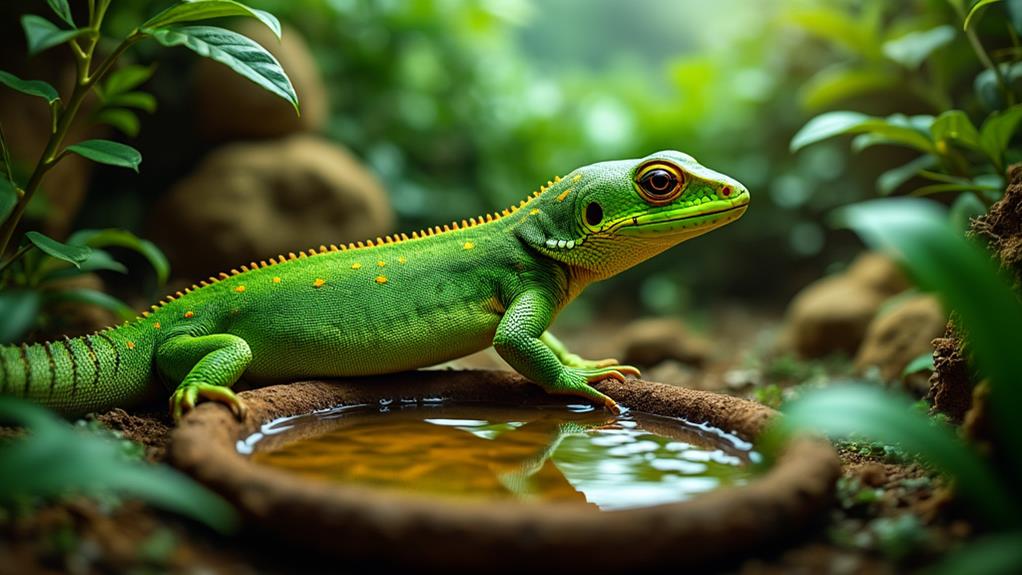
Your basilisk's health and maintenance are crucial components of their care routine. Regular health checks, including annual vet assessments, help catch issues like respiratory infections or parasites early. Look for symptoms such as lethargy and loss of appetite. A consistent cleaning schedule is important. Aim for daily spot cleaning and a thorough clean every four weeks using reptile-friendly disinfectants. This keeps their environment hygienic, especially as natural decorations are scrubbed with hot water.
Humidity levels should remain between 60-70% to guarantee proper hydration. Daily misting and providing a large water pool support this. Regarding diet, offer a balanced diet of live insects like crickets and locusts. Dust them with calcium and vitamin supplements. Young basilisks need daily feedings, while adults can be fed every 3-5 days.
Be vigilant for signs of aggression, particularly during the breeding season. Territorial disputes are common among males, so avoid cohabiting multiple green basilisks. These measures guarantee a happy, healthy pet. Remember:
- Regular health checks prevent common illnesses.
- Consistent cleaning schedules maintain a clean habitat.
- Balanced diet and hydration support growth and well-being.