Green Anole Care Guide: Everything You Need to Know
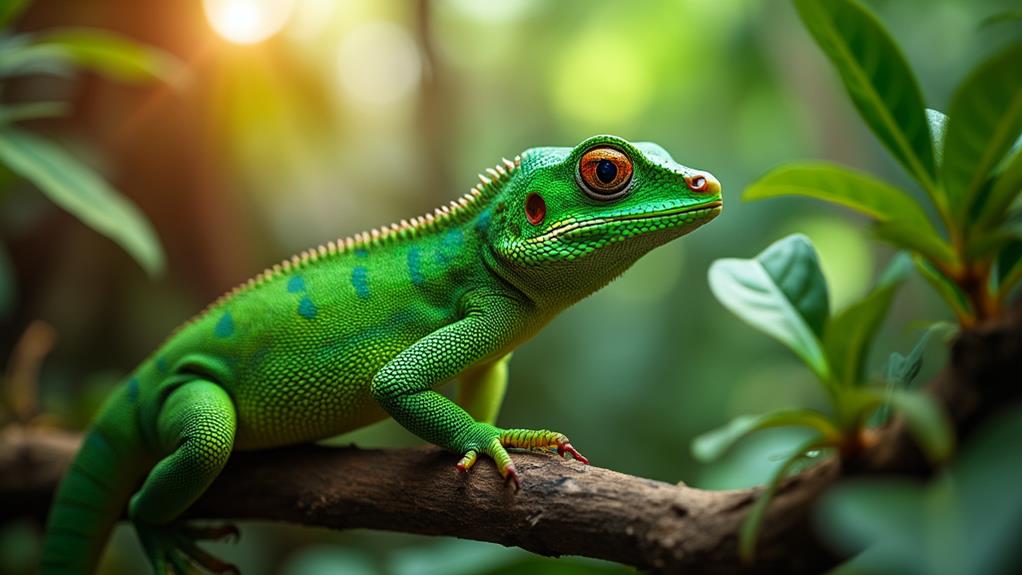
To care for a green anole, set up a spacious habitat with a 24x24x24 inch enclosure, using a mix of organic topsoil and coconut fiber as substrate. Maintain temperatures around 85-90°F for basking and 75-80°F on the cooler side, and verify humidity stays between 60-70% with regular misting. Provide full-spectrum UVA/UVB lighting daily. Feed them gut-loaded crickets and dust with calcium, offering insects like mealworms occasionally. Keep an eye on their health, watching for signs of stress or illness. With the right setup and attention, your green anole can live a long, healthy life. Explore more care tips ahead.
Key Takeaways
- Green anoles require a habitat with a minimum size of 24x24x24 inches and proper temperature and humidity control.
- Their diet includes gut-loaded crickets, mealworms, and calcium supplementation, with adults eating 2-5 crickets daily.
- Proper UVB lighting is essential for preventing metabolic bone disease in green anoles.
- Territorial behaviors, such as dewlap fanning, are common in males and indicate stress or environmental changes.
- Regular veterinary checkups are crucial to monitor for respiratory issues and infections like mouth rot.
Overview of Green Anoles
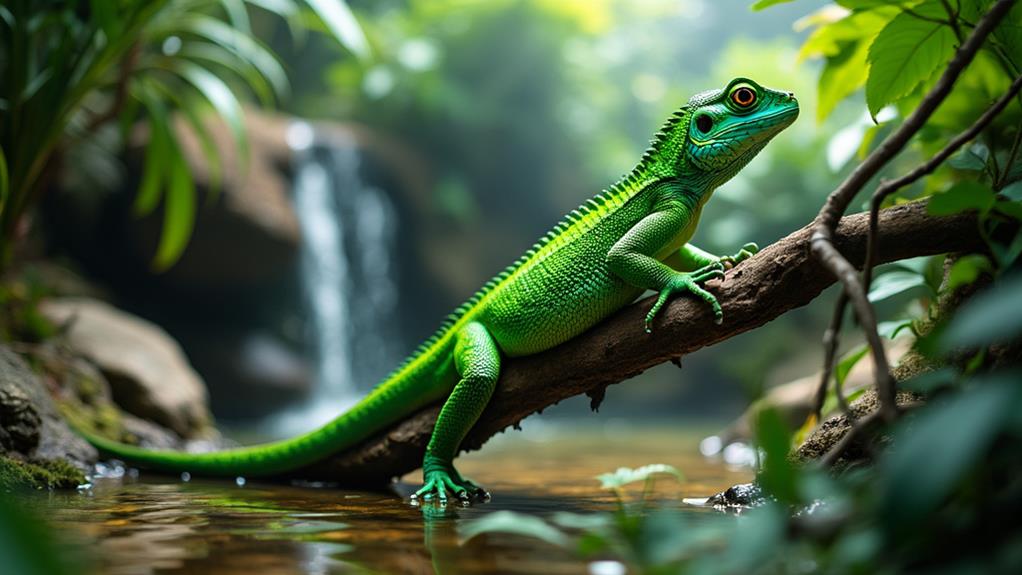
In the southeastern United States, you'll find the green anole, a small and agile lizard that's a charming pet for reptile enthusiasts. Known scientifically as Anolis carolinensis, these lizards are often dubbed "American chameleons" because of their ability to change color from green to brown. However, don't be fooled—they're not related to true chameleons. These adaptable reptiles thrive in multiple habitats, reflecting their native range.
In your care guide, it's important to know that green anoles are primarily insectivores. They require a diet rich in gut-loaded crickets, mealworms, and other small invertebrates to maintain their health. Males can grow up to 8 inches, while females typically measure 5-6 inches. Their territorial behavior is quite pronounced, especially among males. You'll notice displays such as dewlap fanning and head bobbing, which they use to establish dominance and attract mates.
Green anoles can live around 4-6 years in captivity, but with proper care, they can surpass 8 years. Understanding their needs and natural behaviors will help you provide the best habitat and care, ensuring your Anolis carolinensis thrives as a fascinating and active pet.
Enclosure and Habitat Setup
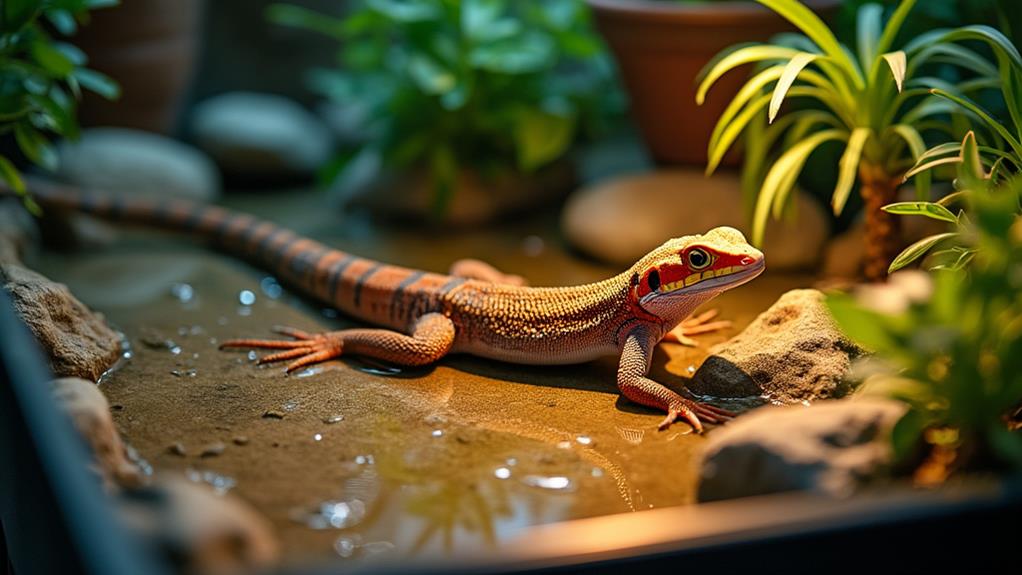
To create the ideal home for your green anole, focus on setting up a spacious and well-ventilated enclosure. A minimum size of 24L x 24W x 24H inches (60 x 60 x 60 cm) is recommended, with front-opening terrariums making maintenance a breeze. Start by using a substrate of 2 inches of a tropical mix—60% organic topsoil and 40% coconut fiber. This combination not only mimics their natural environment but also allows for burrowing.
Incorporating live plants like Dracaena and pothos will improve the enclosure's humidity and provide important hiding spots, contributing to your anole's mental well-being. Keeping humidity levels between 60%-70% is vital, so use a hygrometer to monitor moisture and mist daily to guarantee proper hydration.
Temperature management is another priority. Create a basking area reaching 85-90°F (29-32°C) while maintaining a cooler side at 75-80°F (24-27°C). At night, temperatures should drop to 65-75°F (18-24°C).
Key Enclosure Elements:
- Substrate: 60% organic topsoil, 40% coconut fiber
- Humidity: 60%-70%, maintained with a hygrometer
- Live Plants: Dracaena, pothos for hiding and humidity
Following these guidelines guarantees a comfortable and stimulating habitat for your green anole.
Temperature and Lighting Needs
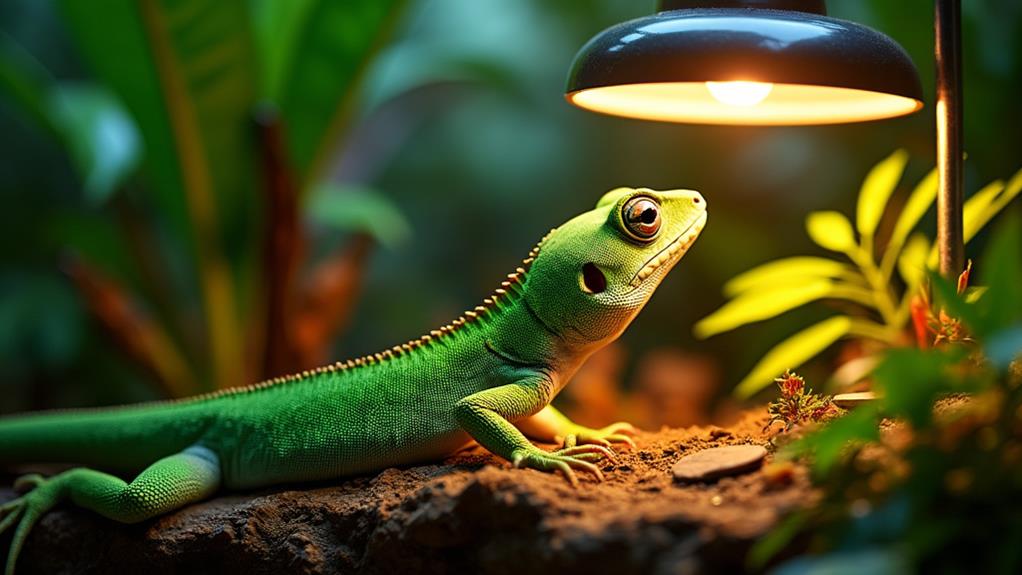
Your green anole's comfort hinges on maintaining the right temperature and lighting within its enclosure. Establishing a proper temperature gradient is vital. During the day, basking areas should be kept at 85-90°F (29-32°C) using heat lamps, while cooler zones should range from 75-80°F (24-27°C). This gradient allows your anole to regulate its body temperature effectively. At night, temperatures should drop to 65-75°F (18-24°C) to mimic natural conditions.
UV lighting is fundamental for your anole's health, preventing metabolic bone disease and supporting general well-being. Provide full-spectrum UVA/UVB lighting for 10-12 hours daily. Consider using UVB bulbs like the Arcadia ShadeDweller or ReptiSun 5.0, and remember to replace them every six months to guarantee they're effective.
Monitoring temperature and humidity levels is vital. Use digital thermometers and hygrometers to maintain a suitable environment. Although humidity levels will be discussed later, keeping them between 60-70% is ideal, as it influences their comfort. Pay close attention to your anole's behavior and adjust the setup as necessary to keep it healthy and thriving.
Humidity and Ventilation
Maintaining proper humidity and ventilation is fundamental for the well-being of your green anole. Aim for humidity levels between 60%-70%, which you can achieve through daily misting. A hygrometer is your best friend here, helping you monitor moisture levels accurately. At night, feel free to let the humidity rise a bit higher, replicating their natural environment and preventing dehydration.
Ventilation is similarly important. A well-ventilated enclosure discourages mold growth and guarantees adequate air circulation, crucial for your anole's health. Good air flow aids in managing humidity and supports respiratory health, preventing issues that could arise from stagnant air.
Incorporating live plants in your anole's habitat offers dual benefits. Not only do they help maintain humidity, but they also provide hiding spots and climbing opportunities, enhancing your anole's overall well-being.
Consider these key tips for maintaining ideal humidity and ventilation:
- Monitor moisture levels regularly with a reliable hygrometer.
- Make sure your enclosure is well-ventilated to prevent mold and support respiratory health.
- Incorporate live plants to help regulate humidity and enrich the habitat.
Diet and Feeding Practices
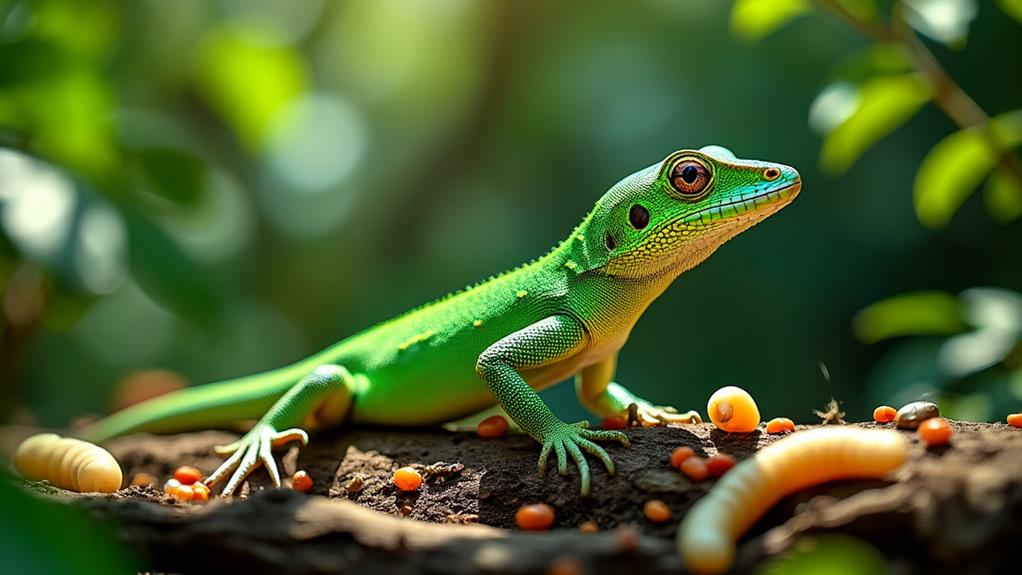
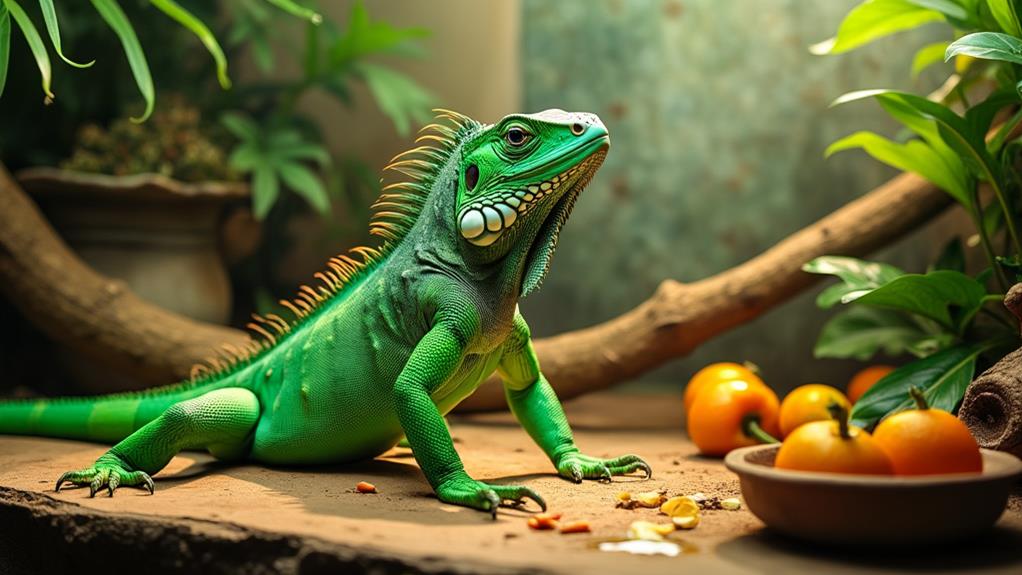
Feeding your green anole a well-balanced diet is fundamental for its health and vitality. The foundation of your anole's diet should be a variety of gut-loaded insects, with crickets being the staple. Adult green anoles thrive on 2-5 crickets daily, while juveniles require daily feedings. To provide dietary variety and stimulate interest, offer treats like mealworms and hornworms 1-2 times per week. However, avoid superworms and kingworms as they can injure your anole.
Dusting insects with calcium supplements is important to prevent nutritional deficiencies. Do this 2-3 times weekly and give multivitamins once a week. This guarantees your green anole receives all necessary nutrients for peak health.
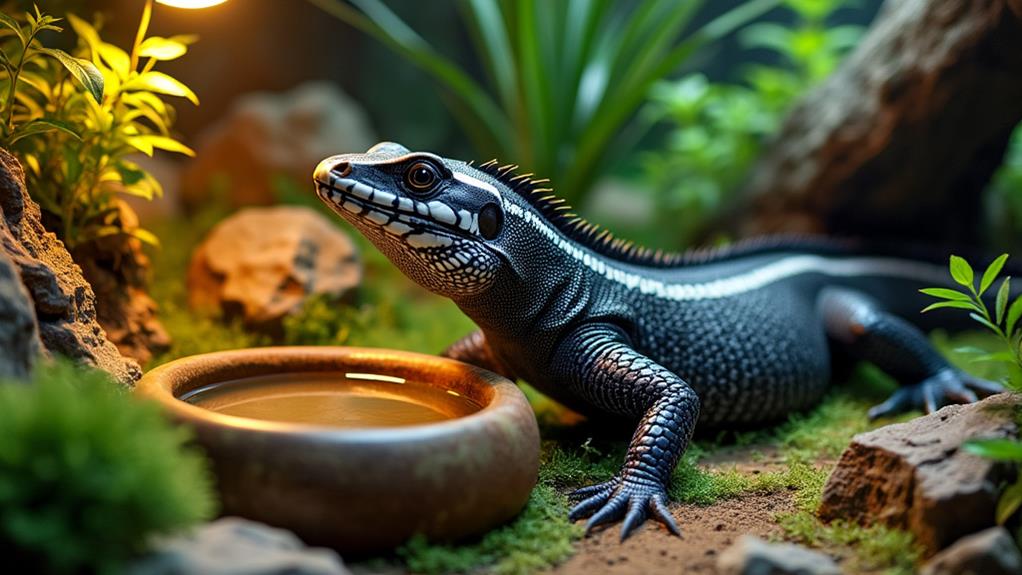
Hydration is another significant aspect of your anole's care. While fresh water should always be available in a shallow dish, misting the enclosure is the primary method of hydration. This mimics the natural drinking behavior of anoles, which drink droplets from leaves. Remember to verify all feeder insects are pesticide-free, especially if you catch them in the wild, to keep your anole safe and healthy. By following these feeding practices, you'll support your green anole's general well-being.
Health and Veterinary Care
Guaranteeing the health and longevity of your green anole involves recognizing and addressing common health issues early. You'll find that respiratory problems and metabolic bone disease are among the most prevalent concerns. These health issues often stem from inadequate nutrition or improper husbandry, such as unsuitable substrate or diet. Watch for symptoms like swollen joints, loss of appetite, weight loss, or difficulty breathing. These signs mean you should seek veterinary care promptly to prevent further complications.
Regular checkups with a reptile-savvy veterinarian are vital. They can catch potential issues and provide the correct diagnosis and treatment. Not all vets specialize in reptiles, so find one experienced with green anoles. Proper veterinary care guarantees your pet stays healthy and any concerns are managed effectively.
Stress factors, like environmental conditions or dietary missteps, often contribute to health problems. To mitigate these risks, maintain proper husbandry practices. This includes providing the right habitat settings and balanced nutrition.
If you suspect health issues, consider the following actions:
- Consult a vet: Schedule an appointment with a reptile-experienced veterinarian.
- Review husbandry: Confirm the enclosure meets your anole's needs.
- Monitor symptoms: Keep an eye out for changes in behavior or appearance.
Behavior and Socialization
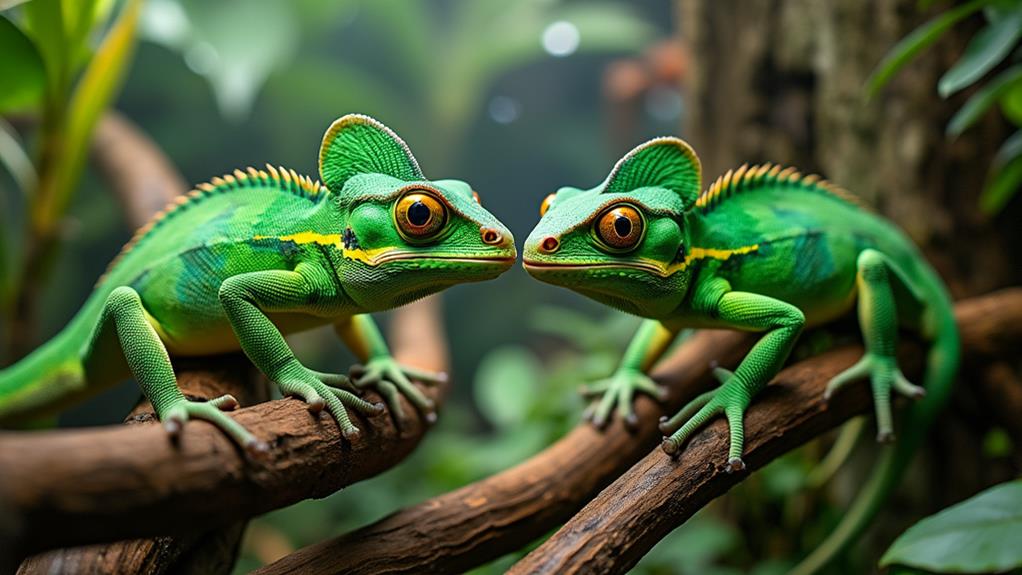
Understanding green anole behavior and socialization is key to ensuring their well-being. Green anoles, especially males, exhibit strong territorial behavior. You'll notice males establishing dominance with displays like dewlap fanning and head bobbing. They occupy larger breeding territories that overlap with smaller female territories, which reduces conflicts but allows for mating opportunities. During courtship, males use visual signals similar to those in territorial displays, making social interactions quite dynamic.
Color changes in your green anole are significant indicators of their emotional state. When they shift from green to brown or yellow, it often signals stress or territorial challenges. Keep an eye on these changes, as they help you understand what your anole might be experiencing.
Handling your green anole should be limited to prevent stress. They're sensitive creatures, and excessive handling can disrupt their acclimation process. When you initially bring home a green anole, allow a 2-3 week acclimation period before attempting any interaction. This time helps them settle into their new environment and reduces the likelihood of stress-related color changes. By respecting their natural behaviors and social cues, you'll create a more harmonious environment for your green anole.
Common Health Issues
Caring for green anoles means staying vigilant about their health. Common health issues, such as respiratory problems, can arise from poor ventilation or excessive humidity. You'll notice these issues if your anole is wheezing or having difficulty breathing. Providing a well-ventilated habitat with balanced humidity levels can help prevent these problems.
Metabolic bone disease (MBD) is another significant concern. This condition results from inadequate UVB exposure and insufficient dietary calcium, leading to weakened bones and deformities. Make sure your green anole receives proper UVB lighting and a calcium-rich diet to maintain strong bones.
Bacterial infections, like mouth rot, manifest as swelling and lesions in the mouth. These infections often stem from stress or an improper diet. Regularly check your anole for signs of mouth rot and consult a vet if needed.
To keep your green anole healthy, monitor their:
- Hydration: Confirm they have a constant supply of clean water.
- Environmental conditions: Maintain ideal temperature and humidity levels.
- Behavioral changes: Watch for signs like loss of appetite or increased hiding, indicating potential health issues.
Choosing Your Green Anole
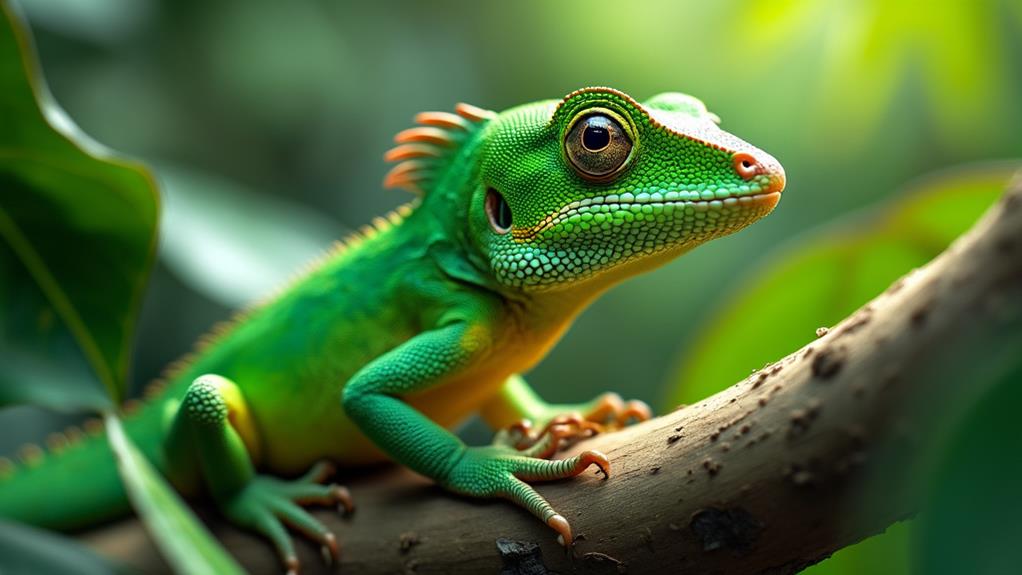
When it comes time to choose your green anole, focus on selecting individuals that are active and alert, with clear and bright eyes. These signs indicate good health and energy, crucial for your new pet to thrive. Pay attention to the size and gender; males can reach up to 8 inches, while females are usually 5-6 inches. Decide which fits best with your setup.
Inspect the dewlap, a key feature in males, which is larger and more colorful. A well-formed dewlap often signifies a healthy green anole. Choosing a male with a lively dewlap could add visual interest to your enclosure, but keep in mind that females also make charming pets.
Always acquire your green anole from a reputable source. Wild-caught specimens might carry parasites or diseases, compromising their health in captivity. Opting for a breeder or a trusted pet store helps guarantee your anole is in good condition. Plus, green anoles are affordable, often under $10, making them a popular choice for beginners and experienced reptile enthusiasts alike. By selecting carefully, you secure a healthy start for your green anole adventure.