Great Dane: The Mighty and Majestic Working Dog
You'll find that Great Danes are both mighty and majestic, with roots stretching back to ancient Germany, where they were bred to hunt wild boars. These "gentle giants" are one of the tallest dog breeds, known for their imposing yet graceful presence. They possess a calm temperament, earning them the endearing title of "Velcro dogs" due to their love for human companionship. Training and socialization from an early period are essential given their size and strength. Although they require specific care, including a balanced diet and regular exercise, their affectionate nature makes them loyal family companions. Uncover more about their fascinating traits and lifestyle.
Breed Origins and History
How did the majestic Great Dane come to be? You might be surprised to learn that this impressive breed, known today for its gentle nature, has its roots deeply planted in the rugged world of hunting. Originating from ancient Mastiff-type dogs, the Great Dane—first called Deutsche Dogge—was bred in Germany for hunting wild boars. The breed's origins are rich with tales of bravery and strength.
By the 18th century, the breed adopted the name Great Dane, thanks to a French naturalist's description. Recognized in Germany in 1876, the Great Dane quickly became a status symbol among the German nobility. You can find these elegant dogs depicted in art and literature alongside kings and queens, symbolizing power and prestige. Their ancestry includes infusions from Greyhounds and Irish Wolfhounds, contributing to their large stature and elegant appearance.
The Great Dane Club of America was founded in 1889, highlighting the breed's importance and popularity in the United States. This club remains dedicated to promoting and preserving the breed's history and noble characteristics. With such a storied past, the Great Dane truly stands as a majestic working dog.
Physical Characteristics
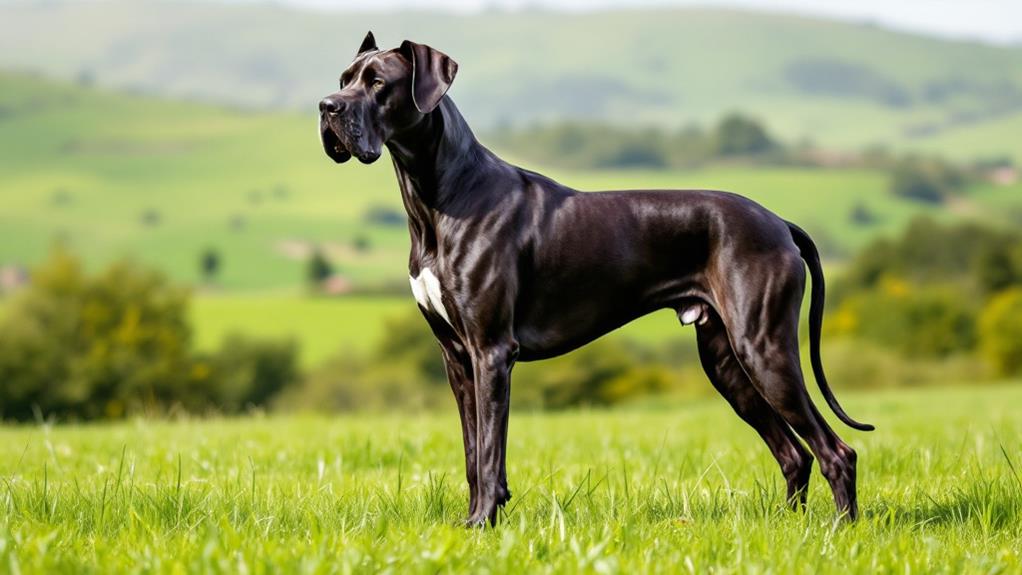
Awe-inspiring in stature, the Great Dane is renowned as one of the tallest dog breeds in the world. Males typically stand between 30-34 inches at the shoulder and weigh between 140-175 pounds. Their towering presence is complemented by a regal appearance that leaves a lasting impression. The Great Dane's distinctive physical characteristics include a long, rectangular head with a flat skull, broad muzzle, and strong jaw, improving their noble look.
You'll notice their short coat, which is sleek and comes in diverse colors such as brindle, fawn, blue, black, and harlequin. These color patterns add to the breed's unique charm. Beneath their coat lies a well-muscled build, with a deep chest that supports their powerful and elegant posture—traits that are essential to the Great Dane.
Their long, muscular neck seamlessly blends into their shoulders, forming an elegant line that improves their general balance and grace. This elegant posture is vital for their movement, giving them a stride that's both fluid and commanding. When you see a Great Dane, you can't help but admire the harmony of strength and elegance wrapped in their impressive frame.
Temperament and Behavior
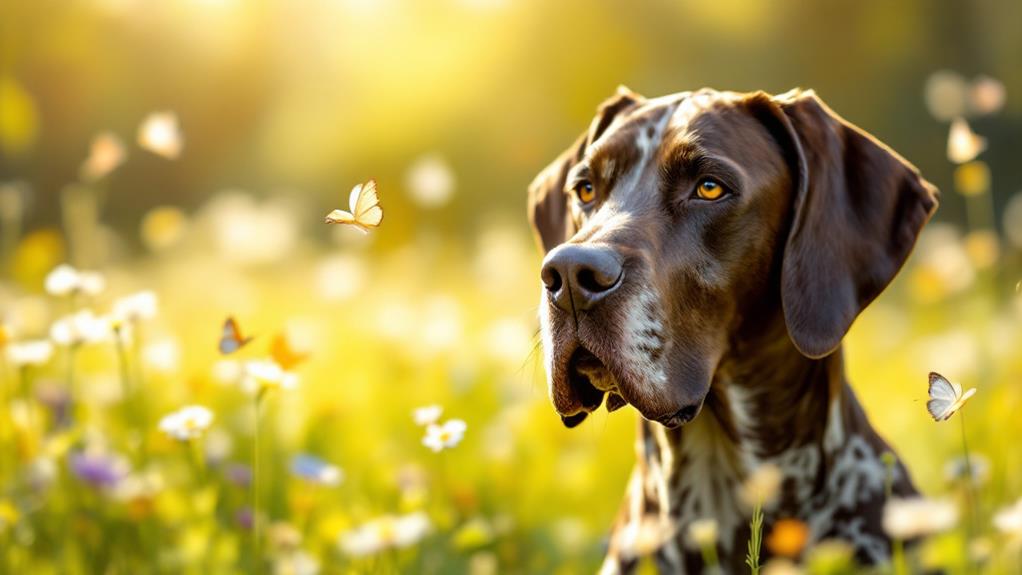
Beyond their impressive physical presence, Great Danes are also remarkable for their temperament and behavior. Known as "gentle giants," these dogs boast a calm demeanor, making them an excellent choice for families. Their affectionate nature shines as they interact lovingly with children and other pets, provided they've been properly socialized from a young stage. Great Danes typically exhibit non-aggressive behavior, which contributes to their popularity as family companions.
Their loyalty is unparalleled, earning them the nickname "Velcro dogs" because they love to stick close to their human companions. This strong bond means they thrive in environments where they can be near their families. Early training is essential to ensuring these dogs develop a well-rounded temperament, as it helps prevent fear-based behaviors and encourages them to be more confident.
While they can be reserved around strangers, Great Danes usually warm up with proper introductions and positive reinforcement. As you get to know your Great Dane, you'll appreciate the balance of their calm demeanor and their desire to please their loved ones. With love and patience, you'll find these gentle giants to be devoted and affectionate members of your family.
Training and Socialization
Training and socialization are vital for the development of a well-behaved and confident Great Dane. Start training your Great Dane early with basic commands like sit, stay, and come. These commands lay the foundation for effective communication and behavior management. Due to their large size, consistent and patient training is essential. It can be more challenging to handle and guarantee obedience compared to smaller breeds, so persistence is key.
Early socialization is similarly significant. Introduce your Great Dane to different environments, people, and other animals to build their confidence. This exposure reduces the likelihood of fear-based behaviors later in life. Positive reinforcement techniques, such as using rewards and praise, are particularly effective. They not only encourage good behavior but also strengthen the bond between you and your dog.
Great Danes are intelligent and enthusiastic to please, making them excellent candidates for obedience training. With the right training and socialization, they can excel in dog sports like agility and even take on roles in therapy work or as service dogs. By investing time and effort into their training and socialization, you guarantee a happy, well-adjusted companion.
Health and Care Needs
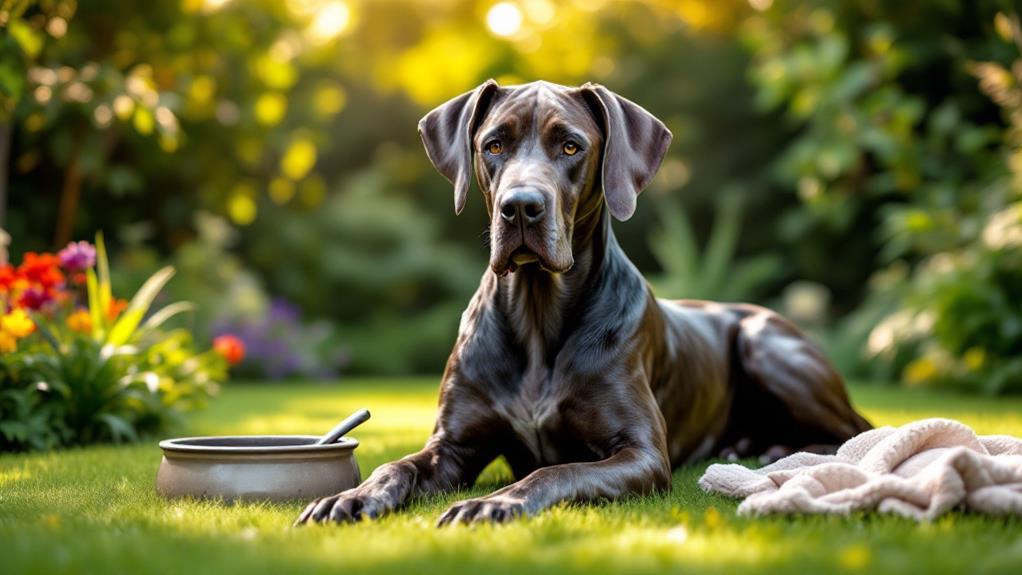
As you nurture your Great Dane's behavior through training and socialization, it's just as significant to focus on their health and care needs. Great Danes are prone to specific health problems like bloat, dilated cardiomyopathy, and hip dysplasia, which can affect their lifespan, typically ranging from 7 to 10 years. Ensuring regular veterinary check-ups is essential for early detection of these issues. Your vet can help monitor signs of discomfort or pain, particularly from joint problems.
A balanced diet is fundamental to support your Great Dane's rapid growth and maintain their general health. High-quality dog food designed specifically for large breeds can provide the necessary nutrients. Exercise needs are another key aspect of their care. Great Danes require daily exercise, ranging from 30 minutes to an hour, to prevent boredom and keep them physically fit.
Grooming should not be overlooked. Brush your Great Dane once or twice a week to manage shedding and maintain their coat health. Routine nail trims and ear checks are also part of their grooming regimen. By focusing on these aspects, you can help your Great Dane lead a healthy and fulfilling life.
Living With a Great Dane
Living with a Great Dane can be a rewarding experience, especially if you understand their unique needs. Their gentle and affectionate nature makes them excellent companions, often earning the nickname "Velcro dogs" because they love being near you. Despite their large size, Great Danes can adapt to apartment living, provided you commit to their daily exercise needs. At least 30 minutes to 1 hour of walking and playtime is vital to keep them healthy and prevent boredom.
Socialization from a young period is significant, helping them get along well with other pets and children. Proper introductions in neutral spaces can ease any new pet tensions, ensuring a harmonious multi-pet household. You'll find that Great Danes thrive on companionship, following you around the home and enjoying your presence.
Here's what your life with a Great Dane might look like:
- Heartwarming snuggles from a gentle giant
- Joyful playtime in the yard or nearby park
- Witnessing their delicate interactions with children and pets
- Experiencing their devotion and loyalty firsthand
- Sharing the comfort of companionship every day
Understanding these aspects makes living with a Great Dane truly special.