Gold Dust Day Gecko Care: Tips for Providing the Best Habitat
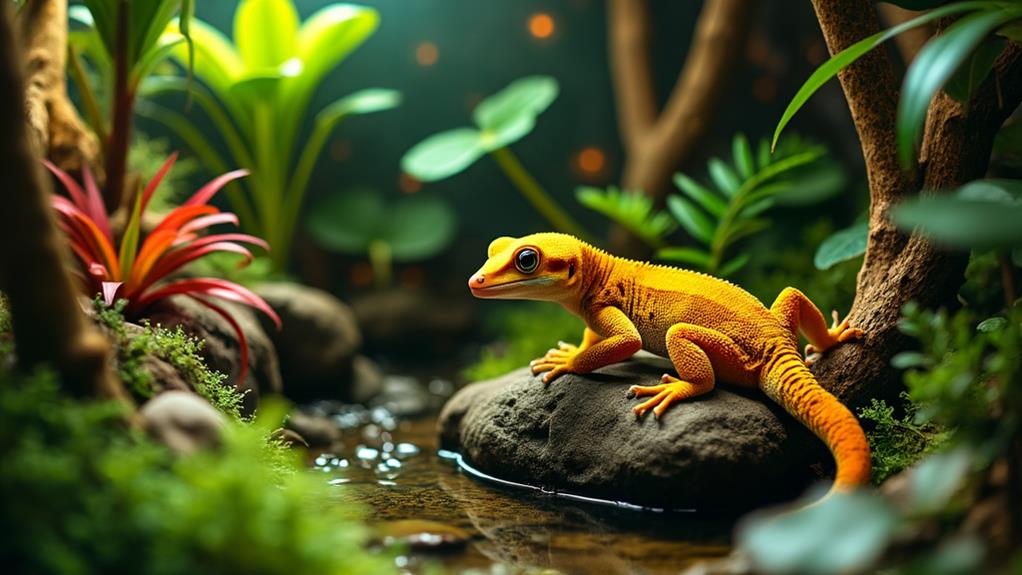
To provide the best habitat for your Gold Dust Day Gecko, focus on recreating its natural tropical environment. Start with a vertical enclosure that's at least 12x12x18 inches. Incorporate branches, vines, and live plants like pothos for climbing and hiding. Maintain humidity between 65-75%, misting twice daily, and use a digital hygrometer for precise monitoring. Guarantee a basking spot at 90°F and UVB lighting for health. Offer a 70% insect-based diet, supplementing with a complete gecko diet and multivitamins. Handle minimally to reduce stress. If you're keen to understand every detail, let's investigate further for complete guidance.
Key Takeaways
- Ensure enclosure size is at least 12L x 12W x 18H inches for sufficient space.
- Maintain humidity levels between 65-75%, with spikes of 80-90% during mornings and evenings.
- Provide a mix of climbing structures and live plants for natural behaviors and humidity control.
- Use a substrate mix of hydroton balls, Ecoearth, and moss for moisture retention.
- Install high-quality UVB lighting and maintain a basking temperature of 90°F (32°C).
Overview and Natural Habitat
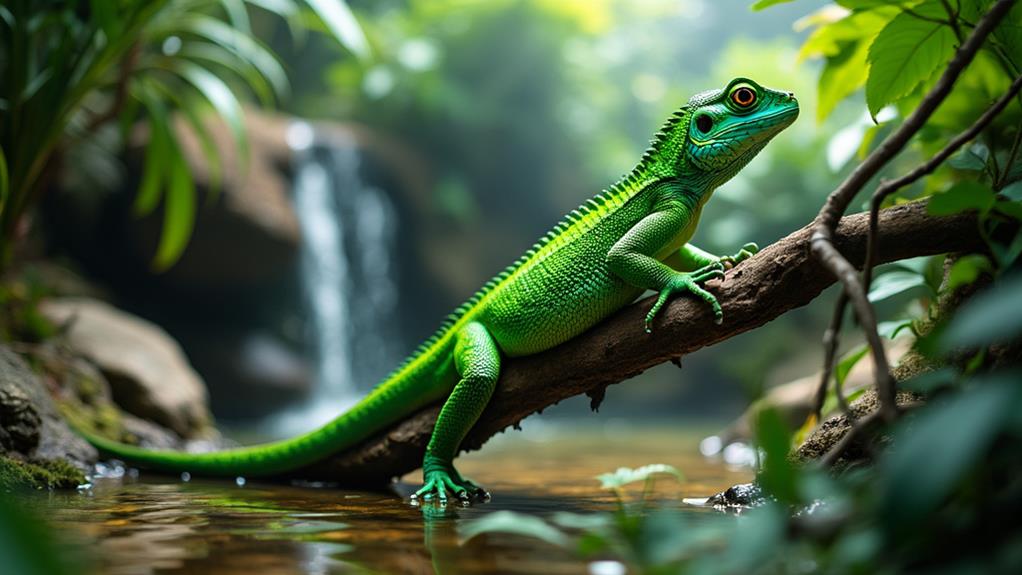
Gold Dust Day Geckos, often admired for their vivid appearance, originate from the lush tropical forests of Madagascar. If you're considering caring for these striking reptiles, understanding their natural habitat is essential. These geckos are native to Madagascar, where they thrive in the tropical forest habitats. They live an arboreal lifestyle, meaning they spend most of their time in trees, away from the ground. This is something you should replicate in their enclosure to guarantee their comfort and well-being.
Your gecko's bright green coloration and golden speckles are not just for show; they play a role in blending into the lush foliage of their native habitat. With proper care, captive-bred Gold Dust Day Geckos can enjoy a lifespan of up to 15 years, making them a long-term commitment for any pet owner.
In the wild, their natural diet is diverse, consisting of insects, flower nectar, and ripe fruits, reflecting their omnivorous feeding habits. To mimic this in captivity, provide a balanced diet that includes a mix of insects and fruit-based foods. By meeting these natural needs, you'll support a healthy and thriving gecko.
Appearance and Characteristics
As you admire these intriguing creatures in their natural habitat, you'll notice their striking appearance, which is just as enchanting in captivity. Gold Dust Day Geckos (Phelsuma laticauda) boast a lively green to yellow-green coloration that immediately catches the eye. Their bodies are adorned with distinctive gold speckles, contributing a touch of elegance to their already fascinating look. These geckos also feature reddish tail markings, which contrast beautifully with their complete color scheme.
In addition to their primary colors, some Gold Dust Day Geckos exhibit a hint of blue around their eyes and on their toes, enhancing their striking appearance even further. This vivid coloration isn't just for show—it serves as effective camouflage in their natural arboreal homes found in the tropical forests of Madagascar. Their size varies, typically reaching 3.9 to 5.1 inches (10-13 cm), with the Phelsuma laticauda laticauda being the larger subspecies.
With a lifespan of up to 15 years under proper captive care, these geckos can be a long-term companion. Their alluring appearance and adaptability make them a wonderful choice for enthusiasts who can recreate their tropical forest habitat in Madagascar.
Housing Requirements
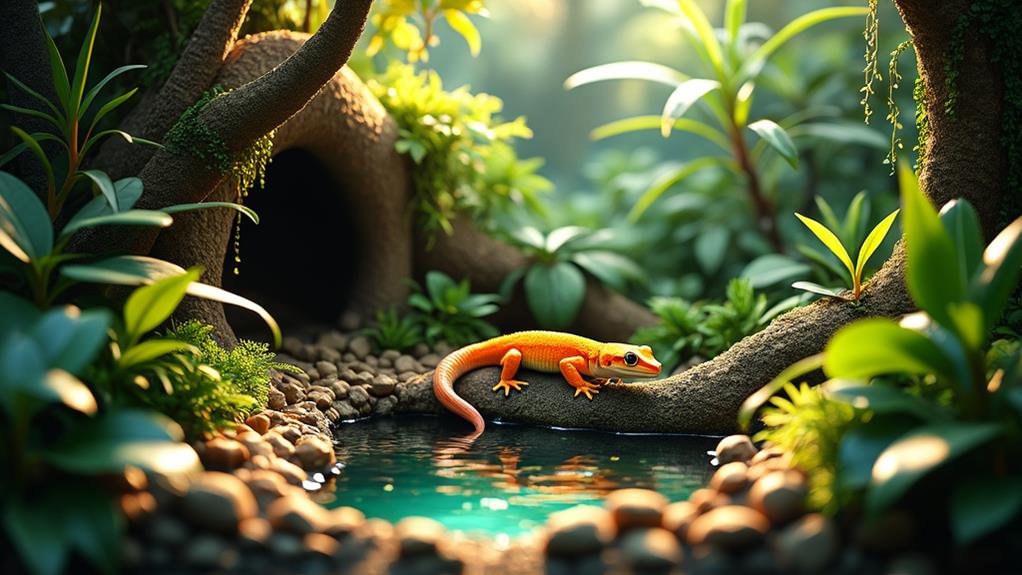
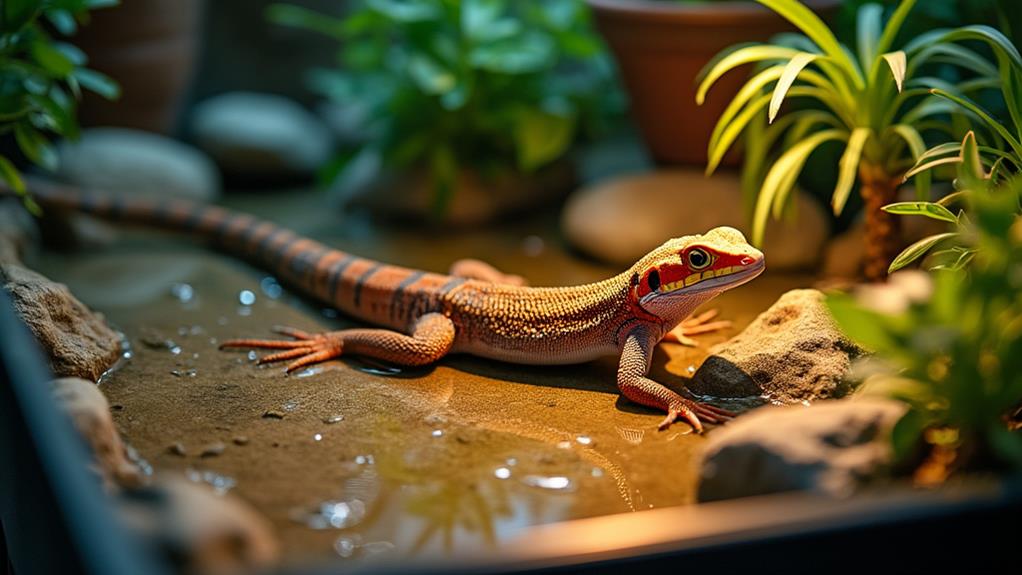
Creating the ideal habitat for your Gold Dust Day Gecko involves providing a spacious and vertical vivarium that mimics their natural arboreal environment. The minimum size for housing a single gecko is 12L x 12W x 18H inches (30 x 30 x 45 cm), but opting for a larger enclosure allows for better exploration and exercise. A vertical habitat is fundamental, as these geckos are natural climbers. Incorporate branches, cork hollows, and live plants to improve their living space and promote natural behaviors.
Confirm the vivarium includes raised hiding spots. These are critical for reducing stress and providing a secure retreat, as Gold Dust Day Geckos feel safest off the ground. Maintaining proper humidity levels is important, with a range of 65-75% during the day, and spikes to 80-90% in the mornings and evenings. You can achieve this with regular misting or a reptile fogger.
To prevent stress and territorial disputes, avoid cramped housing conditions. Verify there's enough room for each gecko to have its own space. Use moisture-retaining substrates like cypress mulch or coconut fibers to maintain the necessary humidity levels in the habitat.
Substrate Options
When selecting the right substrate for your Gold Dust Day Gecko, how can you confirm it provides both functionality and aesthetics? Start by considering a naturalistic vivarium setup. A mix of hydroton balls, Ecoearth, and moss serves as an excellent substrate. This combination retains vital moisture, promotes humidity, and supports plant growth, creating a lush environment for your gecko.
If you prefer an artificial setup, opt for moisture-retaining substrates like cypress mulch or orchid bark. These materials help maintain the humidity levels critical for your gecko's health. They also offer a visually appealing base that complements the lively colors of your pet.
To improve both humidity and aesthetics, add a layer of leaf litter on top of your substrate. This supplement not only enhances moisture retention but also mimics the gecko's natural habitat, offering a more enriching environment. Remember, effective drainage is key to preventing waterlogging, so confirm your substrate mix supports this.
Always verify that your chosen substrate is free from harmful chemicals or pesticides, as these can adversely affect your gecko's health. By experimenting with different bedding types, you can find the ideal balance of aesthetics and functionality for your Gold Dust Day Gecko.
Heating and Lighting Needs
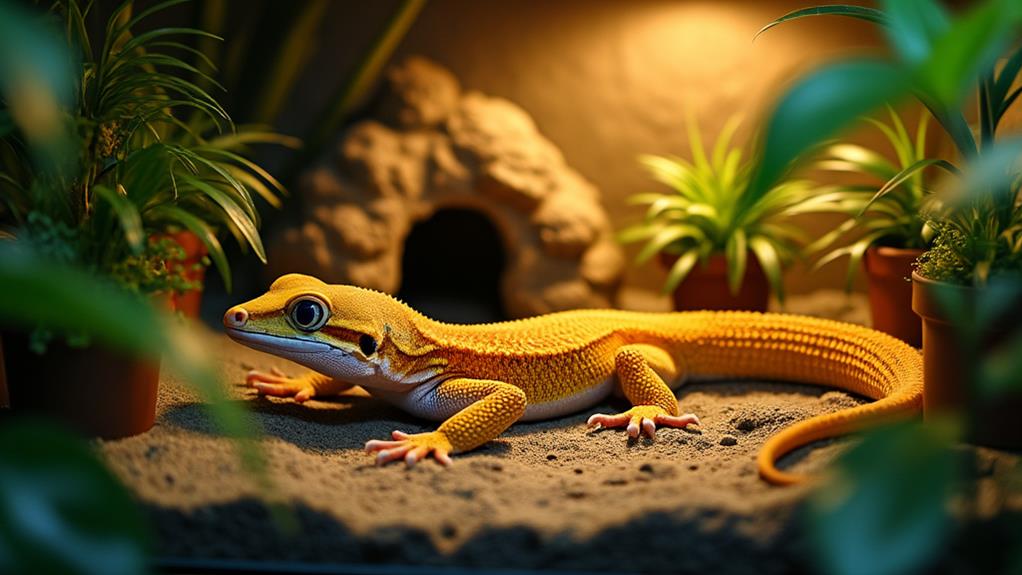
Understanding your Gold Dust Day Gecko's heating and lighting needs is important for its well-being. Proper care involves creating an environment that mimics their natural habitat. Initially, establish a basking area with a temperature of 90°F (32°C) while maintaining the cooler enclosure side between 70-80°F (21-27°C). This range allows for effective thermoregulation.
To provide the right lighting, guarantee your gecko gets 13 hours of daylight in summer and 11 hours in winter. High-quality UVB lamps, like the 26w Zoo Med Reptisun 5.0, are key for exposure to support hormonal cycling and general health. Use fluorescent strip lighting alongside basking bulbs to create a bright environment with a color temperature of 6500K, promoting activity and appetite.
For larger terrariums, mercury vapor bulbs can efficiently combine UVB and heat output, but you must monitor the temperature closely to prevent overheating. Remember to replace UVB bulbs every 6-12 months to maintain adequate exposure, which is critical for your gecko's lively coloration. By addressing these heating and lighting needs, you'll make certain your Gold Dust Day Gecko thrives in a comfortable and healthy environment.
Water and Humidity Control
In conjunction with temperature and lighting, maintaining proper water and humidity levels is crucial for your Gold Dust Day Gecko's health. Aim to keep the humidity between 40-70%, with occasional spikes to 80-90% during mornings and evenings. Misting the enclosure at least twice daily helps keep these levels stable and provides water droplets for your gecko to drink. Use a digital hygrometer to accurately monitor the humidity, confirming it remains within the recommended range.
Incorporating a terrarium fogger can also help maintain the required humidity naturally, creating a healthier environment for your gecko. This tool can simulate the gecko's natural habitat, making it more comfortable and promoting better health. Furthermore, always guarantee a clean water bowl filled with fresh water is accessible at all times. Change the water regularly to prevent contamination and keep your gecko hydrated.
Diet and Nutrition
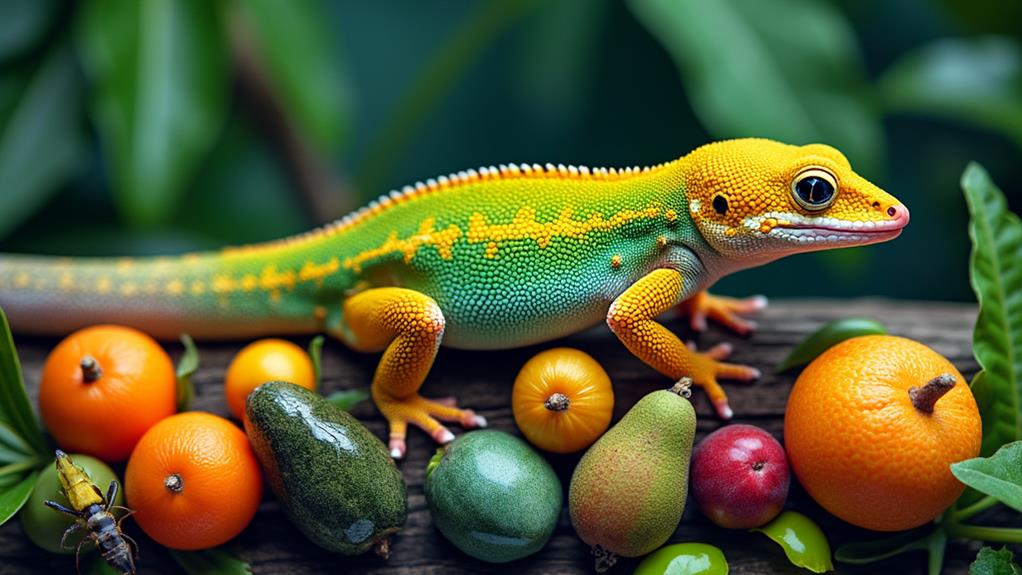
To keep your Gold Dust Day Gecko thriving, it is vital to provide a well-balanced diet that meets their nutritional needs. These geckos are omnivorous, requiring a diet of 70% live insects like crickets and roaches, and 20-30% complete gecko diet (CGD) products such as Repashy or Pangea. Juveniles need daily feeding with live insects and CGD every other day, while subadults and adults should be offered insects twice a week and CGD once a week.
Dusting feeder insects with calcium powder is significant, especially for egg-laying females who require calcium at every feeding to prevent deficiencies. For non-reproductive geckos, dusting with calcium every other feeding suffices. In addition to calcium, supplement their nutrition with high-quality reptile multivitamins weekly to guarantee your gecko gets all necessary nutrients.
Hydration is just as vital, so maintain a clean water bowl at all times and mist the habitat daily. This not only provides hydration but also supports their general health. By focusing on a balanced diet, proper calcium and vitamin supplementation, and regular hydration, you'll help your Gold Dust Day Gecko flourish in its environment.
Handling and Interaction
Regarding handling Gold Dust Day Geckos, it's vital to keep in mind that these creatures are highly sensitive and should be handled minimally to avoid stress and injury. Their delicate skin can tear easily, so it's important to handle them with the utmost care. To minimize stress, allow your gecko to acclimate for at least two weeks before attempting any interactions. During this time, prioritize observing their behaviors and ensuring they feel secure and comfortable in their environment.
When handling becomes necessary, always support their body gently. Avoid sudden movements, as these can trigger stress responses or even cause them to drop their tail—a natural defense mechanism. Over time, with patience and calm interactions, your gecko may become accustomed to your presence. This can lead to rewarding moments, like accepting food directly from your hand.
Health and Well-being
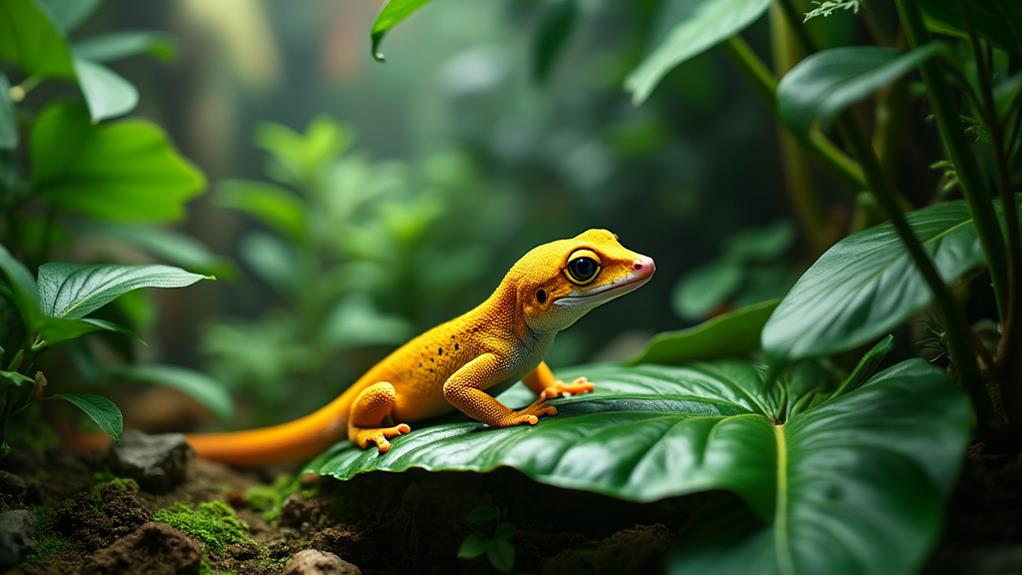
Caring for the health and well-being of Gold Dust Day Geckos is vital for their longevity and happiness. You'll need to maintain a balanced habitat to keep them thriving. Initially, focus on humidity levels. Keep it between 65-75%, and spike it to 80-90% during mornings and evenings. This prevents issues like dysecdysis, making certain your gecko can shed properly.
For proper nutrition, dust their feeder insects with calcium powder and offer high-quality reptile multivitamins. This helps prevent metabolic bone disease (MBD) and guarantees your gecko gets the nutrients it needs. Watch out for signs of nutritional deficiencies, like spine wave or jaw changes, which indicate dietary issues.
Hydration is another key aspect. Clean their water bowl frequently and provide fresh water daily. This prevents contamination and keeps your gecko well-hydrated, contributing to their general well-being.
Routine veterinary checks are necessary. Regular health assessments and fecal exams can detect parasitic infections early. Here's a quick checklist:
- Maintain proper humidity levels.
- Guarantee balanced nutrition with calcium and multivitamins.
- Schedule regular veterinary health checks.
Enclosure Enrichment and Decor
Your Gold Dust Day Gecko's enclosure should be a dynamic environment that encourages natural behaviors and promotes well-being. Start by ensuring the enclosure size is at least 12L x 12W x 18H inches for a single gecko, though larger spaces are always better. This allows for ample investigation and interaction with diverse features. Incorporate climbing structures such as branches, cork hollows, and vines to promote exercise and natural climbing behavior.
Live plants like dracaena, pothos, and bromelia are excellent additions. They not only improve the terrarium's aesthetic appeal but also offer vital hiding spots and assist with humidity regulation. Proper humidity is vital, and using a bioactive substrate or a drainage layer with moisture-retaining materials will help maintain it, contributing to a healthier living environment.
Decorative elements should be arranged to create vertical space, facilitating climbing while ensuring that hiding spots are available at different heights. This setup reduces stress by providing security and encourages your gecko to investigate multiple levels within its habitat. By thoughtfully designing your gecko's enclosure with these elements, you'll provide a stimulating and comfortable environment that supports its natural lifestyle.