Giant Schnauzer: The Gentle Giant and Protective Dog
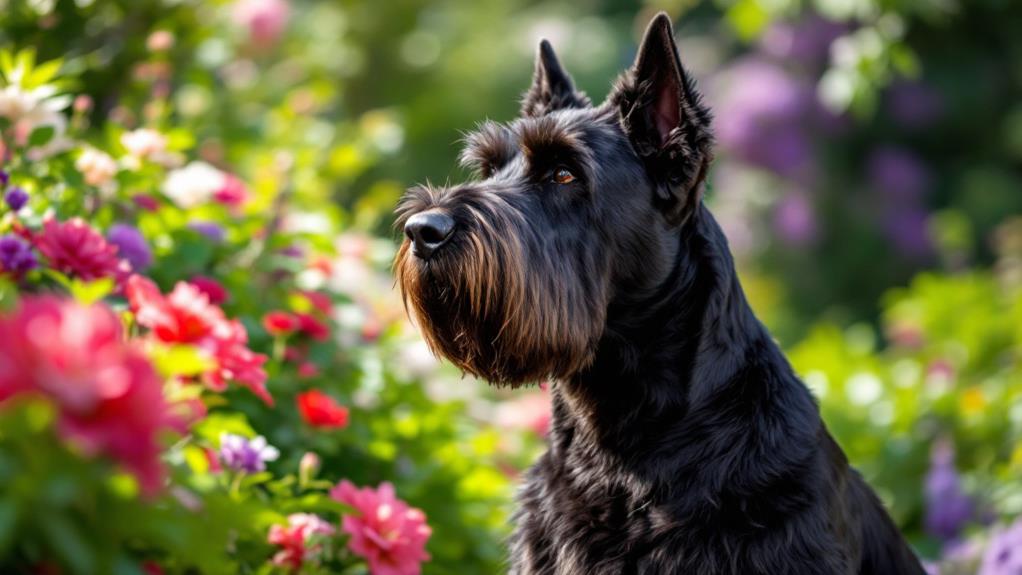
You'll love the Giant Schnauzer for its blend of gentle demeanor and protective nature. Standing up to 27.5 inches tall and weighing up to 95 pounds, their commanding presence pairs with a strong loyalty and intelligence. They're excellent guard dogs thanks to their natural protective instincts, yet gentle with family members, including children. With high energy levels, you'll need to provide several hours of vigorous exercise daily. Their hypoallergenic coats require regular grooming. Early socialization and consistent training help them thrive. Uncover more about how their history and caring for them can make them the ideal companion in your life.
Characteristics and Traits
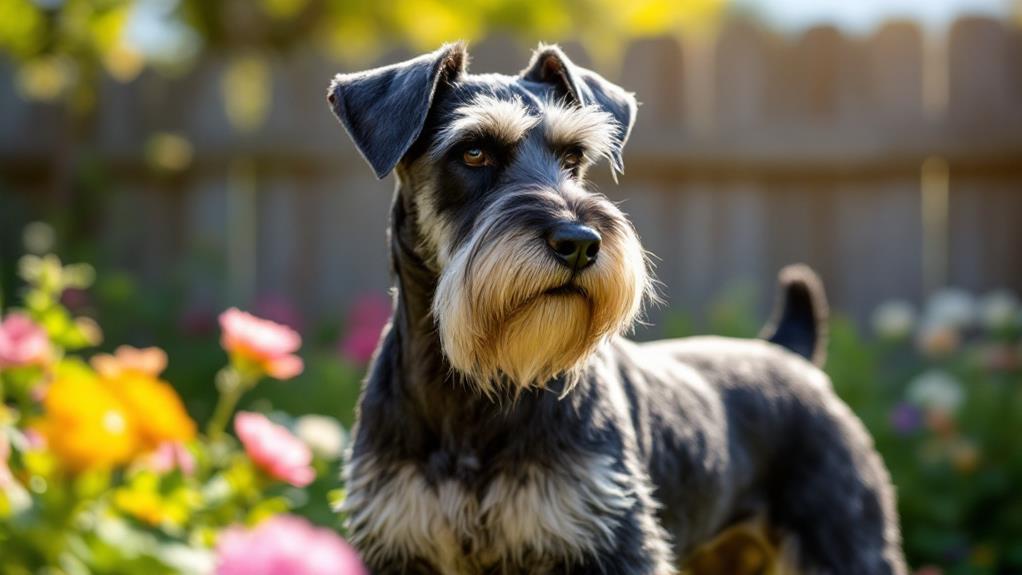
The Giant Schnauzer stands out with its impressive stature and distinctive features. Standing up to 27.5 inches tall at the shoulder and weighing as much as 95 pounds, these dogs have an imposing presence. Their powerful muscular build is complemented by a unique appearance, including a strong, blocky head shape, and prominent harsh beard and eyebrows. As a breed, Giant Schnauzers are classified as working dogs, renowned for their intelligence and unwavering loyalty to their families.
You'll find that these dogs have natural protective instincts, making them exceptional guard dogs. They're not just about strength and looks—Giant Schnauzers are also hypoallergenic. Their wiry outer coat and dense undercoat, often in solid black or salt and pepper colors, produce less dander and shedding, which is a relief for allergy sufferers. However, regular grooming is crucial to maintain their coat and manage any potential matting.
Their intelligence requires consistent training and mental stimulation to keep them engaged. A Giant Schnauzer isn't just a pet; it's a devoted companion, enthusiastic to serve and protect its family with unwavering dedication. They're truly a remarkable blend of power, loyalty, and intelligence.
History and Origins
Some breeds boast rich histories, and the Giant Schnauzer is no exception. Originally bred in the mid-1800s in the Bavarian Alps of Germany, these dogs were designed for herding cattle and guarding farms. They emerged from crossing the Standard Schnauzer with larger breeds like the Great Dane and Bouvier des Flandres, enhancing their size and working capabilities. Here's a quick snapshot of what makes their history fascinating:
- Adaptable Workers: Giant Schnauzers were initially used for herding cattle due to their strong build and protective nature.
- World War I Roles: During World War I, they gained recognition for their service as police dogs and military dogs, showcasing their loyalty and courage.
- AKC Recognition: Although their history stretches back further, the American Kennel Club officially recognized them as a distinct breed around 50 years ago.
- Rising Popularity: Since the 1960s, their intelligence and adaptability have heightened their popularity, despite remaining relatively rare.
Giant Schnauzers are truly remarkable for their versatility and unwavering loyalty. Their protective nature and ability to adapt to different roles make them an extraordinary breed with a rich past.
Personality and Behavior
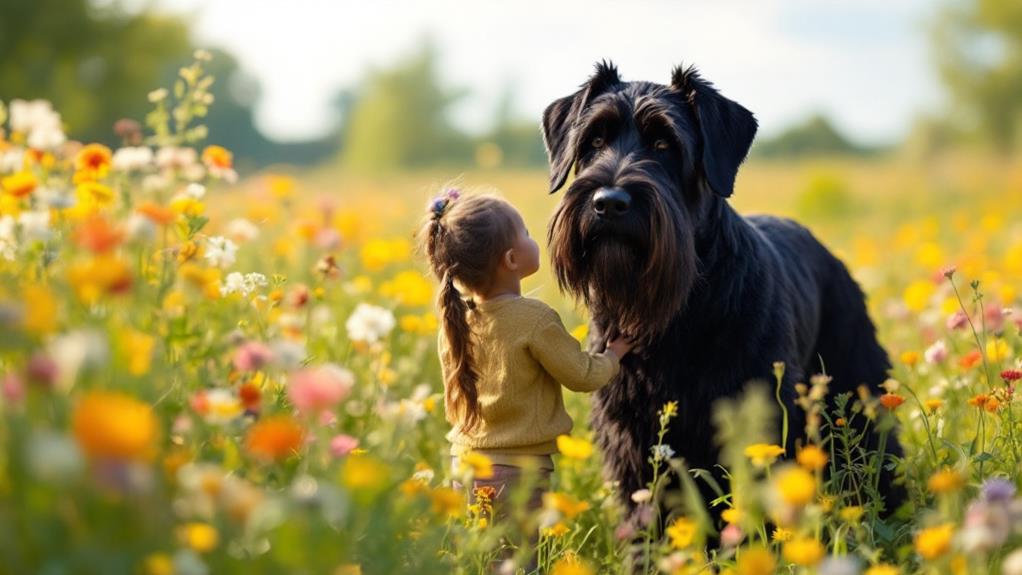
Giant Schnauzers possess an exceptional blend of loyalty and protectiveness, making them outstanding guard dogs that are still gentle with their families. They're naturally loving towards their family members, showcasing a protective nature that's second to none. However, they can be reserved or aloof around strangers, often barking to alert you of potential threats. This behavior makes them excellent watchdogs, but it also means early socialization is essential. Introducing them to a range of people, pets, and environments early on helps mitigate any dominant behavior and guarantees they're well-adjusted in different settings.
Their high energy levels demand several hours of vigorous exercise each day. Without proper engagement, Giant Schnauzers can become bored and exhibit destructive behaviors, making physical activity a critical part of their routine. Despite their robust nature, they remain gentle and patient with children. However, it's significant to supervise interactions to promote positive behavior and guarantee safety for everyone involved. Their capacity for patience doesn't mean they're pushovers; they're always on guard, ready to protect. With the right balance of training and attention, Giant Schnauzers prove to be both loving family members and formidable protectors.
Care and Maintenance
Regular care and maintenance are fundamental to keeping your Giant Schnauzer healthy and happy. These energetic dogs require attention to diverse aspects of their routine to thrive. Here's how you can guarantee your Giant Schnauzer stays in top form:
- Grooming: Giant Schnauzers have a wiry double coat that needs weekly brushing to prevent tangling. They also require routine clipping or stripping to keep their coat manageable.
- Exercise: Being energetic dogs, they need several hours of vigorous exercise daily. Activities like running, swimming, and engaging in dog sports are perfect to satisfy their high energy needs. Confirm you have a secure outdoor environment to prevent destructive behaviors when they're left alone.
- Diet: A balanced diet is critical. Feed them 4-5 cups of high-quality, age-appropriate dry dog food daily. Portion control is key to preventing obesity and maintaining their energy levels.
- Overall Care Routine: Regular ear checks and dental hygiene are important. Brush their teeth several times a week and trim their nails monthly to prevent infections and discomfort.
Training and Activities
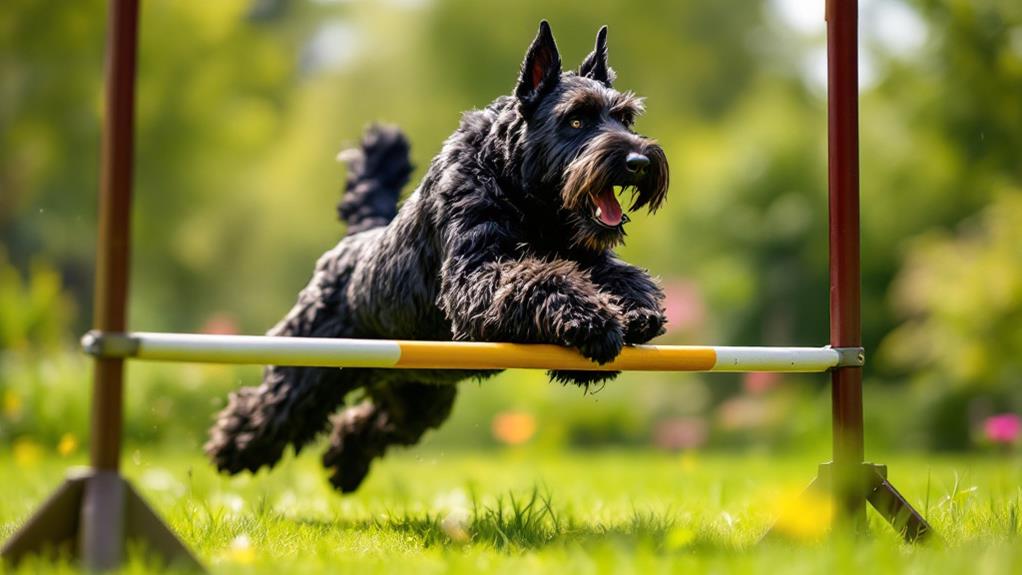
Training your Giant Schnauzer is essential to harness their strong-willed and protective nature. Early socialization lays the foundation for a well-adjusted pet, making sure they're comfortable around diverse people and environments. Use consistent, positive reinforcement training methods to guide their behavior effectively. Giant Schnauzers are intelligent and thrive on mental stimulation, so incorporating dog sports like obedience, agility, and tracking into their routine can be very beneficial. These activities not only provide the necessary mental challenges but also satisfy their need for vigorous exercise, preventing boredom and destructive behaviors.
Your Giant Schnauzer requires several hours of daily activity. This includes walks, playtime, and interactive games that engage both their body and mind. Training sessions should be frequent yet short, with tasks or jobs that give them a sense of purpose. If you find training challenging, investing in professional training is a wise choice. Though it can be costly, ranging from $30,000 to $37,000, it guarantees your Giant Schnauzer develops the skills necessary to be a well-behaved and effective guard dog. With the right training and activities, your Giant Schnauzer will be a loyal and protective companion.