Essential Tips for Feeding Your Pet Bird a Balanced Diet
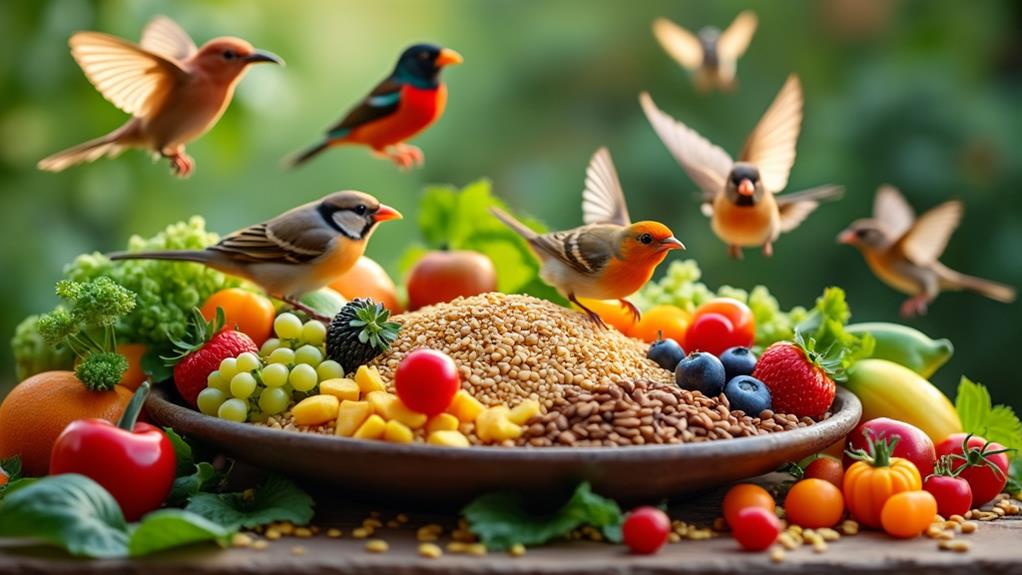
To feed your pet bird a balanced diet, focus on a nutritious mix of pellets, fresh produce, and safe protein sources. Verify 60-80% of meals come from high-quality pellets like Harrisons or Zupreem. Incorporate 20-40% fresh fruits and vegetables, especially dark greens and brightly colored ones. Introduce cooked eggs, tofu, or low-fat cheese sparingly for protein. Always remove toxins like avocado and seeds from apples or cherries. Avoid processed, high-sugar, and salty foods to prevent obesity and health issues. Pay attention to any dietary reactions, and adjust accordingly for your bird's ideal health. Investigate specific tips for tailored meal plans.
Key Takeaways
- Ensure 60-80% of your bird's diet consists of high-quality pellets for balanced nutrition.
- Incorporate fresh fruits and vegetables to provide essential vitamins and minerals.
- Offer safe protein sources like cooked eggs and tofu in moderation for growth.
- Avoid toxic foods such as avocado, caffeine, and chocolate to prevent health issues.
- Introduce new foods gradually and monitor your bird's acceptance and health.
Understanding Bird Nutritional Needs
Comprehending your bird's nutritional requirements is fundamental for its health and well-being. When you're feeding your bird, keep in mind that a pelleted diet should comprise 60-80% of its intake. This guarantees a balanced diet and prevents selective eating, which could lead to nutritional deficiencies. Fresh foods like fruits and vegetables are significant, too. Offer dark green and orange varieties daily to provide important vitamins and minerals, like calcium and phosphorus, that are crucial for your bird's health.
Along with fresh produce, your bird needs sufficient protein sources. Cooked eggs, tofu, and low-fat cheese are excellent options that support growth and maintenance. These protein-rich foods are necessary components in maintaining a balanced diet for your feathered friend.
Monitoring your bird's health is vital, as improper nutrition can lead to health issues. Keep an eye out for signs of illness, as 80-90% of bird diseases are linked to inadequate feeding practices. Adjusting your bird's diet promptly can prevent potential problems. By focusing on a varied and nutritious diet, you're making sure your bird lives a healthy and happy life, free from preventable health issues.
Choosing the Right Pellets
Now that you're familiar with your bird's nutritional needs, let's focus on choosing the right pellets to form the backbone of its diet. High-quality pellets should make up 60-80% of your bird's meals, providing a balanced diet that guarantees complete nutrition. Brands like Harrisons, Kaytee, and Zupreem offer excellent pelleted options, packed with vital vitamins and minerals like Omega fatty acids and vitamins A, D, E, and K to support general health.
It's important to choose organic pellets, such as those from Harrisons, which contain no preservatives. This choice supports a more natural diet, reducing the risk of health issues.
Transitioning your bird to pellets might require patience. Birds can be finicky eaters, so introduce new pellets when they're hungriest, like during the morning. Keep an eye on your bird's acceptance, and monitor their reaction to adjust your feeding strategy as needed. Reluctance might mean trying different brands or mixing pellets to guarantee they're getting the nutrition they need.
Here's a quick checklist to help you choose the right pellets:
- Opt for high-quality brands
- Aim for organic options
- Confirm vital vitamins are included
- Monitor your bird's acceptance
- Adjust feeding strategy as needed
Incorporating Fresh Produce
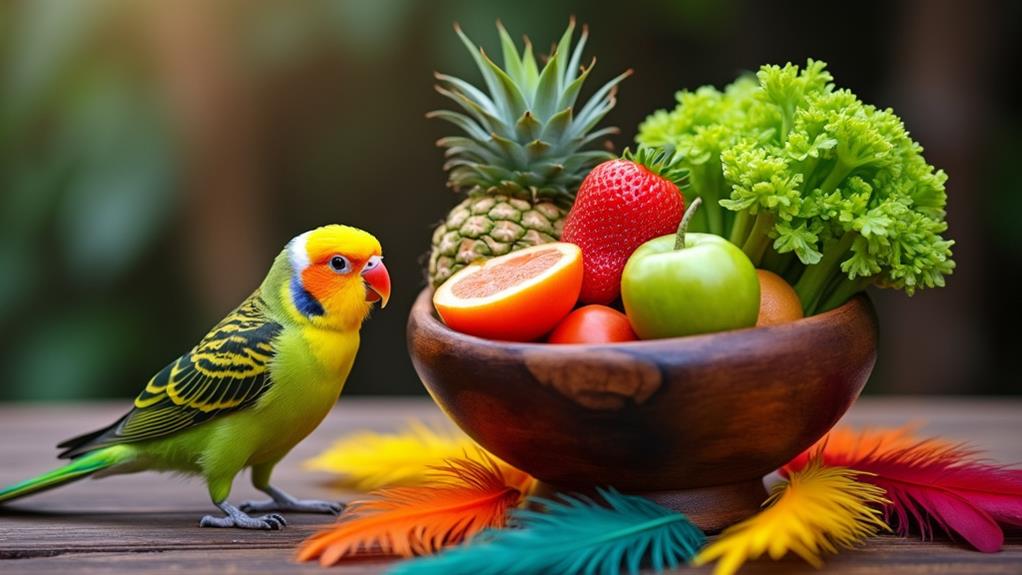
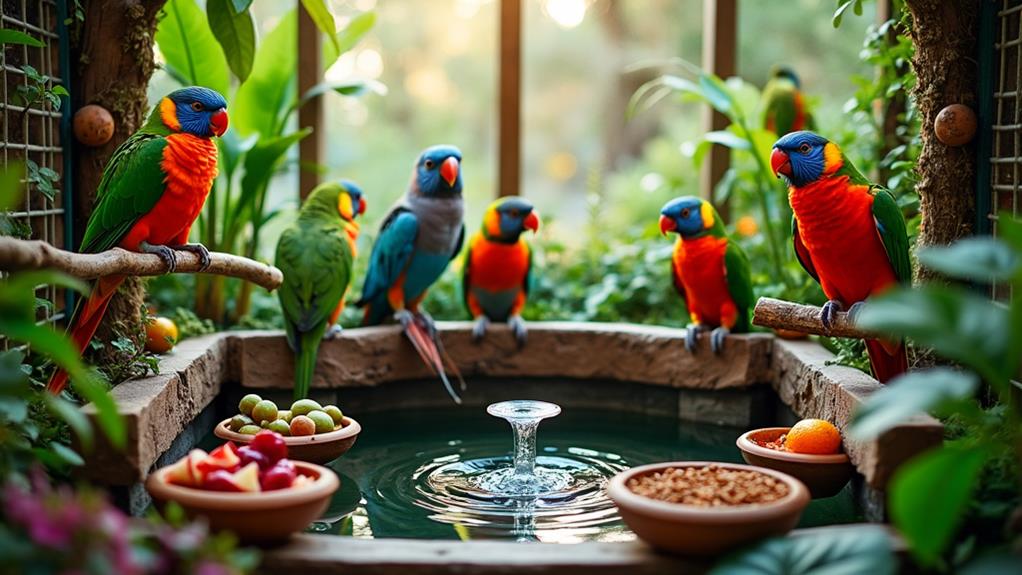
Fresh fruits and vegetables are essential for your bird's diet, making up about 20-40% of their meals. They provide important vitamins and minerals that pellets alone may not cover, ensuring a nutritionally balanced intake for your feathered friend. To enhance your bird's health, incorporate dark leafy greens like kale and spinach, and brightly colored vegetables such as carrots and bell peppers. These options are rich in nutrients, supporting your pet bird's general well-being.
Always wash fresh produce thoroughly to eliminate pesticides and harmful residues, and remember to remove any seeds from fruits, as they can be toxic. When you feed pet birds, introduce new fruits and vegetables gradually. Start with small amounts during their regular feeding times when they're hungriest. This approach prevents overwhelming them and encourages acceptance of new foods.
Be mindful of the high sugar content in some fruits. Moderation is key to maintaining a balanced bird diet. Also, replace uneaten fresh produce within a few hours to prevent spoilage. Spoiled food can lead to digestive issues, so keeping their eating area clean is critical for your bird's health.
Safe Protein Sources
While fresh produce enriches your bird's diet with crucial vitamins and minerals, protein is likewise significant for their general health and muscle development. Choosing safe protein sources guarantees your feathered friend receives the necessary amino acids for a balanced diet. Cooked eggs, for instance, are a fantastic choice. You can serve them scrambled or hard-boiled, providing vital nutrients your bird needs.
Tofu is another excellent option. As a plant-based protein, it's rich in calcium and suitable for diverse bird species. However, moderation is key, especially when introducing new foods. Low-fat cheese is also a viable protein source, but remember, it shouldn't be a staple due to its fat content.
Legumes like cooked lentils and beans offer protein and fiber. Confirm they're well-cooked and cooled before serving to avoid digestive issues. If your bird's primary diet consists of seeds, consider daily vitamin supplements. These supplements help fill nutritional gaps, providing the protein and nutrients seeds may lack.
Here are some safe protein sources you can offer:
- Cooked eggs
- Tofu
- Low-fat cheese
- Legumes (cooked lentils and beans)
- Daily vitamin supplements for seed-based diets
Avoiding Harmful Foods
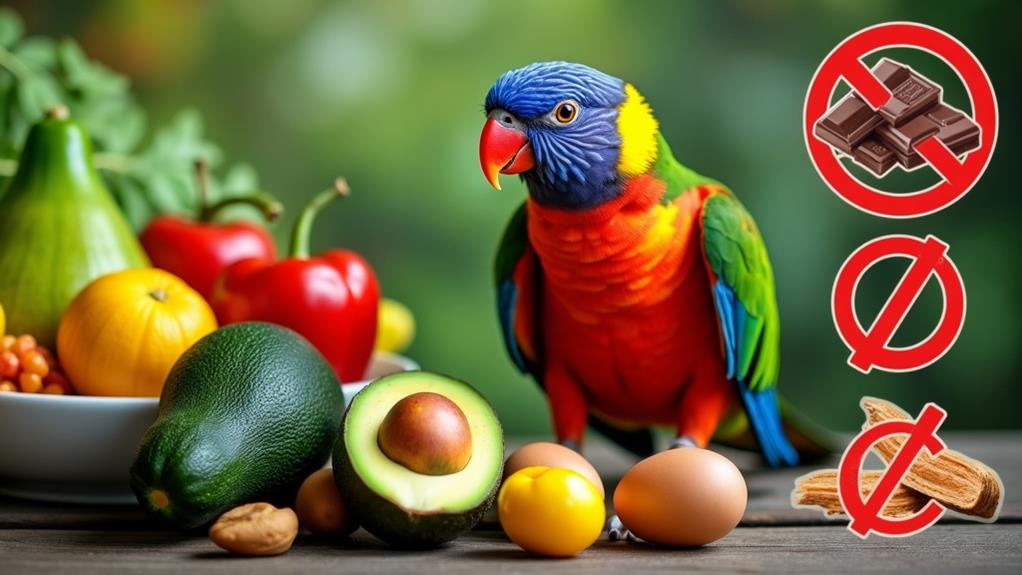
In relation to your bird's diet, steering clear of harmful foods is crucial for their health and well-being. Certain foods are highly toxic and should never be included in your pet bird's diet. Avocado is a prime example; it's toxic to birds and can cause severe respiratory distress or even death. When feeding birds fruits and veggies, always remove seeds and pits from apples and cherries, as they contain cyanide compounds that are harmful. Onions and garlic can damage red blood cells, leading to anemia, so avoid these entirely.
Chocolate, caffeine, and alcohol are also toxic and should be kept far from your bird's reach. Even a small amount can lead to serious health issues. A balanced diet for your pet bird means not just providing good nutrition but also avoiding foods high in salt and sugar. These can lead to obesity and other health problems. Always verify your bird has access to fresh water and stick to safe, nutrient-rich foods to maintain their well-being. By being mindful of these harmful foods, you can contribute considerably to your bird's health and happiness.