Dog Bathing Tips: How to Keep Your Dog Clean and Healthy
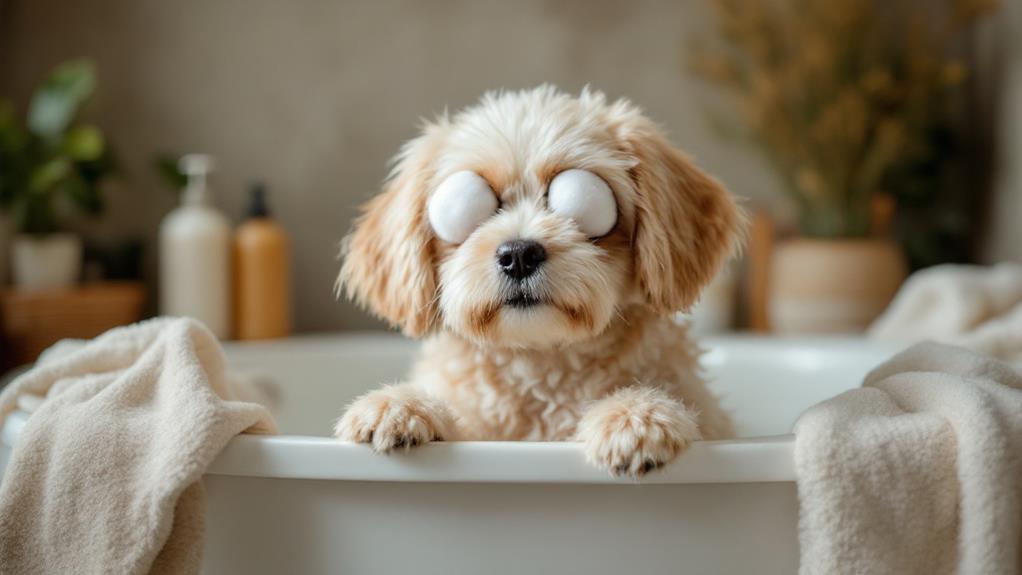
To keep your dog clean and healthy, start by understanding their ideal bathing frequency which depends on their breed and lifestyle. Use shampoos designed for dogs' skin pH and avoid human products. Gather supplies like towels, a dog-specific shampoo, and a brush for pre-bath grooming. Protect your dog's ears with cotton balls and their eyes with a damp washcloth. During the bath, use lukewarm water and a proper lathering technique, then guarantee thorough rinsing and drying. Manage anxiety with positive reinforcement. By honing these skills, you'll reveal the secrets to a happy, healthy bath time for your furry friend.
Determine Bathing Frequency
Determining how often to bathe your dog depends on several factors, including their breed, skin sensitivity, and lifestyle. Understanding these can help you set the right dog bathing frequency, ensuring your pet's comfort and coat health. For short-haired breeds, a few baths per year might suffice due to their low-maintenance coats. In contrast, medium to long-haired dogs typically need a bath every 4 to 6 weeks, as their fur is more prone to matting and dirt accumulation. Regular bathing for these breeds helps maintain a healthy coat and reduces shedding.
However, over-bathing can strip vital oils from the skin, leading to dryness and other coat issues. Therefore, it's important to tailor the bathing schedule to your individual dog's needs. Pay attention to any skin sensitivity or specific skin conditions your pet may have, as these may necessitate a different approach. Dogs with allergies or skin issues might require more frequent baths, but always consult your vet for recommendations tailored to your dog's health. By considering these factors, you can establish a bathing routine that keeps your dog clean and healthy without compromising their skin and coat health.
Choose the Right Products
After establishing the right bathing frequency, the next step is selecting the appropriate products for your dog's skin and coat. Using a dog shampoo is essential, as they're formulated to match canine pH levels, unlike human products that can irritate the skin. For puppies, choose puppy shampoos that are gentle and specifically designed for young dogs. This guarantees that their sensitive skin stays protected during bath time.
If your dog has sensitive skin or allergies, hypoallergenic shampoos are your best bet. They help prevent irritation and allergic reactions while maintaining your dog's natural oils. For long-haired breeds, consider using a conditioner (optional) after shampooing. It helps detangle their fur and adds moisture, making grooming easier and their coat healthier.
Consulting professional groomers or visiting a grooming salon can provide valuable insights into the best products for your dog's specific coat type and skin needs. Tailoring your choices to your dog's unique requirements can help prevent skin problems and keep their coat looking its best. Remember, finding the right products is vital to maintaining your dog's health and happiness, so take the time to choose wisely.
Prepare Bath Supplies
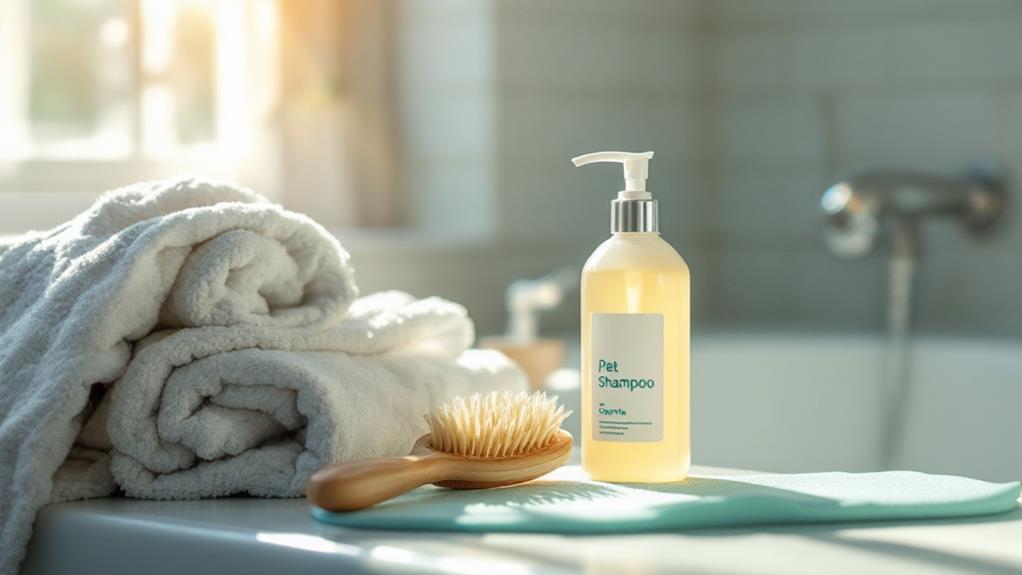
Gathering your bath supplies ahead of time guarantees a smooth and efficient dog bathing session. Start by selecting a dog-specific shampoo and conditioner that caters to your pup's skin and coat needs. Having a set of towels ready is vital for drying your dog post-bath and for managing any splashes. A brush is key for detangling and removing loose fur, ensuring a thorough clean.
Choose a designated bathing area such as a kitchen sink or bathtub, and make sure all your tools are within reach. A non-slip mat in the bathing area is a smart choice to prevent any slipping accidents during the bath. Keep some treats handy to reward your dog for good behavior and make the experience more positive for them.
Don't forget to have cotton balls available. Placing them in your dog's ears can help prevent moisture from causing infections. For cleaning your dog's face, use cleansing wipes or a gentle washcloth. If you have a long-haired breed, consider using a blow dryer on a low heat setting for post-bath drying. With everything prepared, you're ready for a stress-free bath time!
Brush Before Bathing
Now that you've got all your bath supplies ready, it's time to focus on brushing your dog before the bath. Pre-bath brushing plays a vital role in ensuring a smooth and effective grooming session. By taking the time to brush before bathing, you help to remove tangles and mats, which can otherwise become worse when wet. This step not only improves the bathing process but also makes it a more pleasant experience for both you and your dog.
Here's why pre-bath brushing is important:
- Eliminates loose dog hair: Reduces the risk of clogged drains and minimizes post-bath cleanup.
- Prevents tangles from worsening: Water can make tangles tighter, so remove them beforehand.
- Ensures effective grooming: Using the appropriate brush type for your dog's coat is key.
- Maintains coat health: Regular brushing extends the time between professional grooming appointments.
- Promotes comfort: A tangle-free coat minimizes discomfort during the bathing process.
Protect Ears and Eyes
Keeping your dog's ears and eyes safe during bath time can make all the difference in a stress-free experience. To protect ears, place cotton balls gently in your dog's ears. This simple step helps keep moisture out, reducing the risk of infections that can disrupt your pet's comfort and health. When it's time to wash around their face, avoid getting shampoo or conditioner near their eyes. Instead, opt for a damp washcloth to perform gentle cleaning, ensuring you steer clear of any irritation.
Using lukewarm water is essential. Always check the temperature to make sure it's just right—not too hot, not too cold. This helps your dog feel comfortable and prevents any stress during the bath. Choose dog-specific products over regular human shampoos. These are formulated to maintain a healthy coat and avoid any harsh chemicals that could irritate your dog's sensitive skin and eyes.
After bathing, the noise of blow dryers can be overwhelming for dogs. Consider using Happy Hoodies to muffle the sound and further protect ears. By taking these steps, you'll create a safe, calm environment that keeps your furry friend happy and clean.
Master the Soaking Process
Getting your dog thoroughly soaked is a crucial step in the bathing process. It guarantees effective cleaning and prepares the coat for lathering. Begin by using lukewarm water, which keeps your dog comfortable and helps with water penetration. This is especially significant for double-coated breeds like Golden Retrievers and Great Pyrenees. Their undercoat requires thorough soaking to allow shampoo to reach every layer, loosening dirt and debris trapped in the fur.
To master the soaking process:
- Use lukewarm water: It's comfortable for your dog and aids in water penetration.
- Focus on double-coated breeds: Ascertain water reaches the undercoat for effective cleaning.
- Spend extra time on long coats: More time is needed for water to saturate thick fur.
- Loosen dirt and debris: Proper soaking helps to lift away particles before shampooing.
- Check for thorough soaking: Verify the water reaches the skin for the best results.
Allow extra time if your dog has a long coat, as it may take longer for water to penetrate and saturate the fur. Mastering this step will make the entire bathing process more efficient and leave your dog cleaner and healthier.
Perfect Your Lather Technique
Have you ever wondered how to achieve the perfect lather when bathing your dog? Start the lathering process at your dog's neck, working your way down to their back and feet. This guarantees an even application, preventing you from having to re-wash already cleaned areas. Use a hypoallergenic dog-specific shampoo that matches canine pH levels to avoid skin irritation while guaranteeing effective cleaning. For double-coated breeds, make certain to get the shampoo deep into the undercoat. This will help remove trapped dirt and oils that can accumulate over time.
It's vital to dilute the shampoo with water before applying it to your dog's coat. Doing so creates better suds, making it easier to distribute the shampoo throughout their fur. This also helps guarantee that the shampoo reaches every part of their coat, which is fundamental for maintaining a healthy, clean dog. Remember, a thorough lather is key to effective cleaning, but make certain you don't leave any shampoo behind. While we'll discuss rinsing in detail next, it's fundamental to know that leaving shampoo residue can lead to skin irritation, making a good lathering technique even more significant.
Rinse Thoroughly
Once you've achieved a thorough lather, focus on rinsing your dog completely to prevent any leftover shampoo from irritating their skin. Rinse thoroughly to remove all traces of shampoo and conditioner, making sure your dog's skin stays comfortable and healthy. Use a hose attachment or sprayer for effective rinsing, as this helps with even water distribution across the entire coat. Pay special attention to double-coated breeds, as their dense undercoat can trap soap, leading to skin irritation if not rinsed properly.
Here's how to guarantee a thorough rinse:
- Rinse from the neck down: This prevents water from entering your dog's ears, reducing the risk of trapped moisture and infections.
- Use a sprayer: Even water distribution helps reach all areas, making sure no product is left behind.
- Focus on the undercoat: Especially for double-coated breeds, where soap can easily get trapped.
- Check the coat: Make sure it feels clean and free from slippery residue.
- Conduct a final check: Run your hands through the fur to make sure all shampoo and conditioner is gone.
After rinsing, make certain your dog's coat feels clean and free of any soapy residue to prevent irritation.
Dry Your Dog Completely
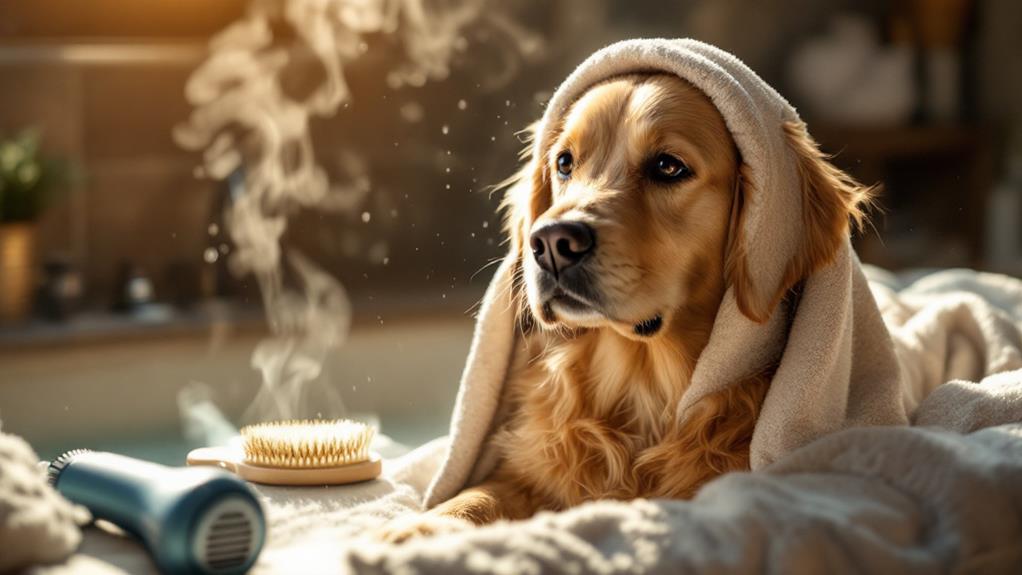
After rinsing your dog thoroughly, it's crucial to dry them completely to prevent itching and possible skin infections. Start by towel drying their face and head initially, as this allows the rest of their body to air dry comfortably. Use a soft towel to remove excess water, and make certain you dry out their skin without being too rough. For smooth-coated dogs, towel drying is usually sufficient. However, double-coated breeds might benefit more from blow drying on a low heat setting to guarantee they're completely dry.
Ascertain the drying area is warm and free from drafts to keep your dog comfortable. As they air dry, you can engage in post-bath brushing. Regularly brushing their coat during this time helps prevent tangles and mats from forming. This is especially significant for breeds with longer hair, as it keeps their coat healthy and manageable.
Manage Post-Bath Anxiety
Calmness is key when managing your dog's post-bath anxiety. If your dog often feels anxious during baths, you can take steps to make the experience more positive. Start by introducing dog bathing gradually, especially if your pet is a puppy, to build a positive association. During baths, employ distractions like a lick mat smeared with peanut butter to keep your dog occupied. This helps reduce anxiety and creates a more relaxed environment.
Your calm demeanor is essential. Dogs often pick up on your emotions, so staying calm will help your pet feel more at ease. Offer treats and praise throughout the bath to reinforce a positive experience. This not only rewards your dog but also helps them associate baths with good feelings.
Consider these tips:
- Use a gradual introduction: Start with short, positive bathing sessions.
- Employ distractions: A lick mat can keep your dog focused on treats rather than stressors.
- Maintain a calm demeanor: Your calmness encourages relaxation in your dog.
- Consult Fear Free Certified groomers: They specialize in reducing anxiety during baths.
- Provide treats and praise: Reinforce good behavior and positive experiences.