Dalmatian: The Dignified and Distinctive Spotted Companion
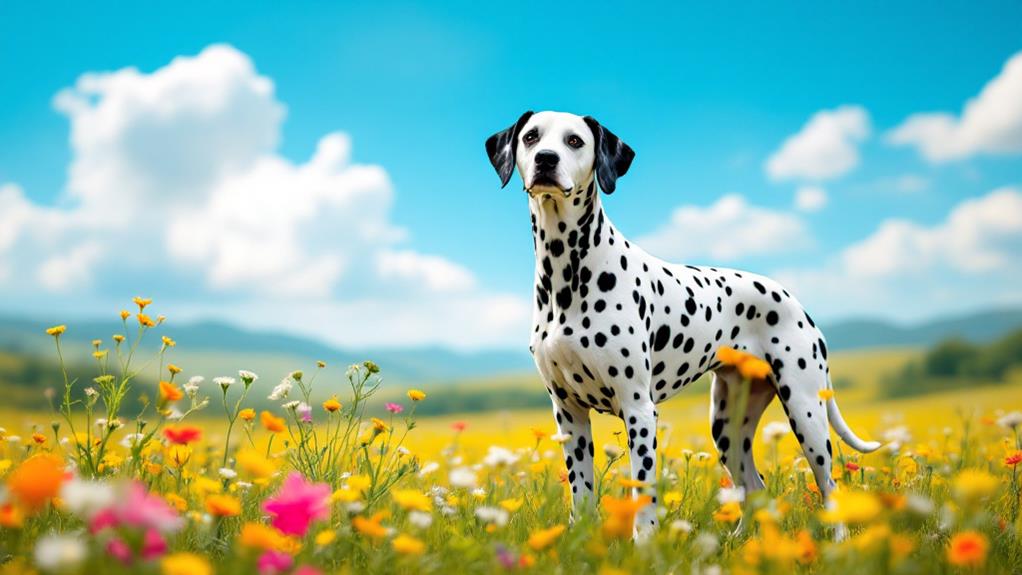
You're bound to be captivated by the Dalmatian's distinctive spotted coat and dignified demeanor. This loyal breed, with roots in Dalmatia, Croatia, excels as both a family companion and a charming watchdog. They weigh between 45-70 pounds and stand 19-24 inches tall. Energetic and intelligent, Dalmatians love daily exercise and need consistent training and socialization. Their grooming is straightforward, but their health requires regular vet visits, especially for hearing checks and diet monitoring. Owning a Dalmatian involves ongoing costs, but their companionship is priceless. As you investigate further, you'll uncover the unique characteristics that make them so remarkable.
Dalmatian Breed Overview
Few breeds capture attention quite like the Dalmatian, with its iconic coat of black or liver spots dotting a white canvas. This unique coat isn't just for show—it's part of the breed's charm and mystery. Dalmatians are medium-sized, standing 19 to 24 inches tall and weighing between 45 to 70 pounds. These athletic dogs are known for their energetic nature, so if you're considering one, be ready for a lively companion.
Their physical and mental needs are significant. Dalmatians thrive on activity, requiring at least 60 to 90 minutes of daily exercise to stay healthy and happy. Without this, they may become restless or develop behavioral issues. Their playful and spirited demeanor means they love engaging with their owners, making them excellent playmates for active families.
Despite their playful nature, Dalmatians are also affectionate and loyal. They often form strong bonds with their families, providing not just companionship but also protection. Their alertness and instincts are well-regarded, a reflection of their history as dependable coach dogs. With a life expectancy of 11 to 13 years, these spotted companions promise years of joy and loyalty.
Historical Significance
Throughout history, Dalmatians have etched their presence as both symbols of nobility and stalwarts of service. Their expedition begins in Dalmatia, Croatia, with records dating back to the 18th century. Known for their unique coat of striking black or liver spots on a white background, Dalmatians have always captured attention. But their historical significance runs deeper than just their appearance.
As carriage dogs, Dalmatians were indispensable to British nobility. They trotted alongside carriages, using their alertness and protective instincts to clear paths and guarantee safe passage. This role demonstrated their dedication and established them as trusted companions. But their service wasn't limited to the nobility. Firefighters also recognized their value, using them to lead horse-drawn fire wagons to emergencies. Their presence at firehouses became iconic, where they served as mascots and even alerted to unseen dangers.
Moreover, Dalmatians were known to travel with Romani caravans, underscoring their loyalty and adaptability. Their unique coat and historical roles have made them an enduring symbol of loyalty and service. Across generations, these spotted companions have maintained their iconic status, celebrated for their rich history and unwavering dedication.
Physical Characteristics
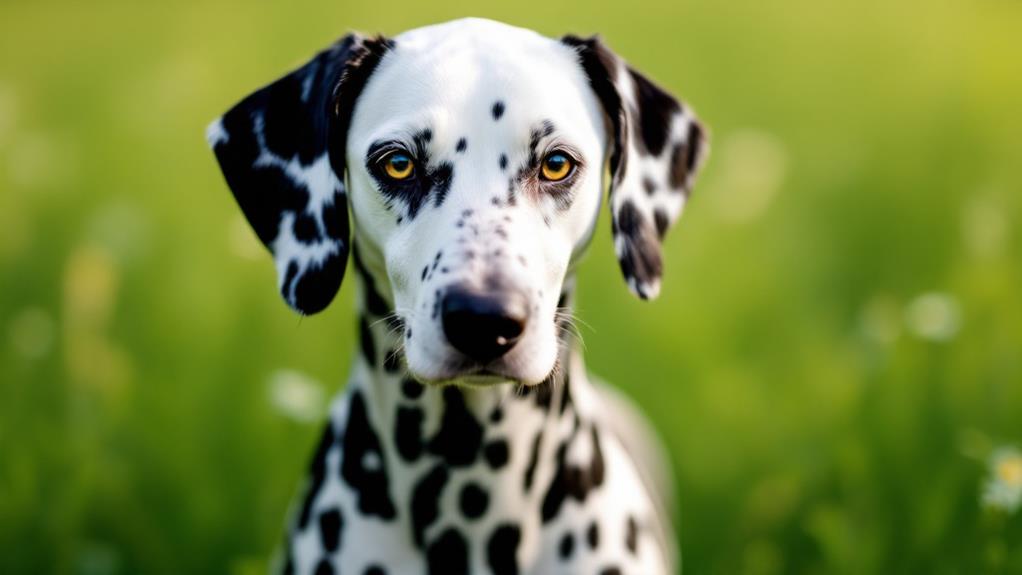
With their distinctive appearance, Dalmatians are easily recognizable by their short, dense coat adorned with unique black or liver spots on a primarily white background. When you initially meet a Dalmatian puppy, you might be surprised to see its solid white coat, as these iconic spots develop as they mature. This unique job of their coat makes each Dalmatian truly one-of-a-kind.
In terms of size, Dalmatians are moderate, with adult males typically weighing between 55 to 70 pounds and standing 22 to 24 inches tall at the shoulder. Females are slightly smaller, usually weighing 45 to 60 pounds and measuring around 20 to 22 inches in height. Their balanced body structure, with a deep chest, well-sprung ribs, and a level back, gives them an athletic appearance and considerable agility.
When you look at a Dalmatian's face, you'll notice their refined head, flat skull, and expressive eyes, which can be brown or blue. Their high-set, slightly rounded ears add to their alert and intelligent expression. Be mindful of their health, as Dalmatians are prone to issues like urinary stones and deafness, requiring regular veterinary care.
Personality and Temperament
Brimming with energy and playfulness, Dalmatians are lively companions that thrive on daily activities to keep them content and engaged. Their energetic nature demands consistent attention, making them perfect for active families or individuals. As highly intelligent creatures, they love mental challenges and excel in training when you provide them with the right guidance. Early socialization is key, as it helps prevent potential stubbornness and fear aggression, allowing their true affectionate nature to shine through.
You'll find that Dalmatians are incredibly loyal and devoted, often seeking your attention and companionship. They form strong bonds with their family members, which makes them reliable and dependable pets. Their sociable demeanor extends to being excellent watchdogs, as they remain alert and watchful, ready to protect their loved ones.
Although they may initially be aloof with strangers, their dignified temperament and protective instincts make them trustworthy guardians. Welcome the affectionate, intelligent, and energetic personality of a Dalmatian, and you'll have a delightful companion that offers endless joy and loyalty. With the right balance of mental stimulation and loving interaction, your Dalmatian will be a valued member of your family.
Exercise Requirements

Dalmatians consistently need 60 to 90 minutes of exercise each day to stay healthy and happy. Their high energy levels mean they thrive on activities like fetch, jogging, or hiking in safe, enclosed areas. Meeting their exercise needs not only maintains their physical health but also their mental well-being. With regular exercise to stay content, you'll find that your Dalmatian is less likely to develop destructive behaviors due to boredom.
To keep your Dalmatian engaged, consider these activities:
- Dog Sports: Participate in agility, obedience, or flyball. These sports provide both physical exercise and mental stimulation, catering to their energetic nature.
- Interactive Play: Regular playdates or visits to dog parks improve socialization skills and offer opportunities for interactive play with other dogs, preventing loneliness.
- Vary Routines: Introduce new trails, toys, and games to prevent monotony. This variation keeps your Dalmatian mentally stimulated and physically active.
- Structured Activities: Engage in structured activities that allow them to run and burn off energy efficiently. Regardless of whether it's a game of fetch or a brisk jog, structured routines can help manage their high energy.
Training and Socialization
Although training and socialization are vital components of raising a well-adjusted Dalmatian, starting early sets the foundation for success. Initiate training during puppyhood by focusing on positive reinforcement techniques like treats and praise. Dalmatians thrive on positivity, so rewarding good behavior encourages them to repeat it. Consistency is key; confirm your commands and rewards remain predictable, as this helps your Dalmatian understand what's expected. This consistency is fundamental in teaching basic commands such as "sit," "stay," and "come," which improve communication and strengthen your bond.
Socialization is similarly significant and should begin as soon as possible. Expose your Dalmatian to a variety of environments, people, and other animals. This early exposure builds confidence and reduces the likelihood of fear aggression. A well-socialized Dalmatian is more adaptable and less anxious in new situations, making them a more delightful companion.
Beyond basic training, providing mental stimulation is vital to keep your Dalmatian engaged. Utilize puzzle toys, scent games, and other engaging activities to occupy their active minds. This not only prevents boredom-related mischief but also channels their energy in positive directions, making training and socialization efforts even more effective.
Grooming and Care
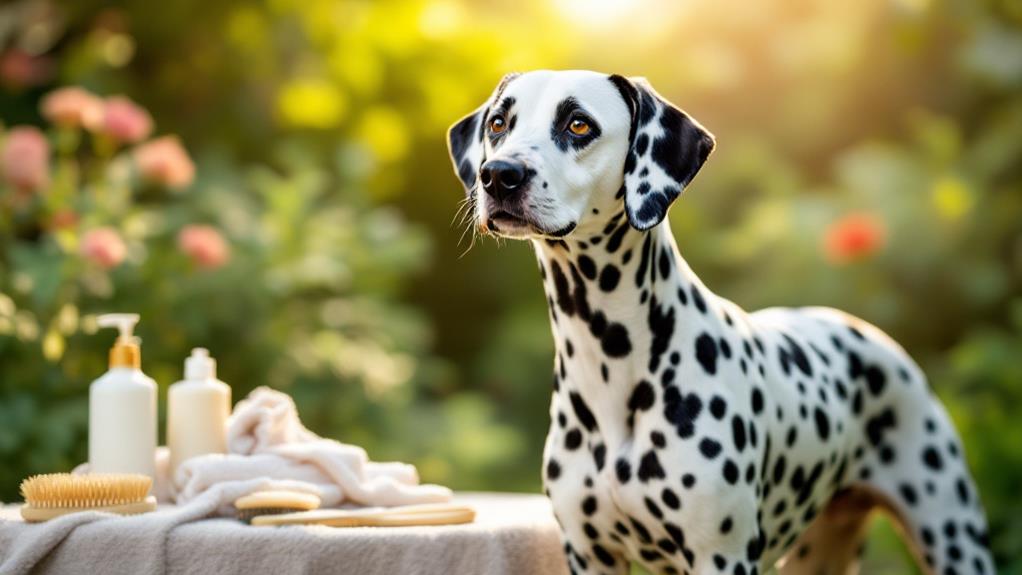
Often overlooked but significant, grooming and care are fundamental aspects of maintaining your Dalmatian's health and happiness. Their short, dense coat requires regular attention to keep it looking its best. Weekly brushing is vital, especially during their two annual shedding periods, to manage shedding and maintain coat health. This routine not only keeps their coat shiny but also reduces the amount of hair you'll find around your home.
In addition to brushing, bathing your Dalmatian every few months with a mild shampoo helps preserve their natural oils and prevents skin dryness. Don't forget about their ears and eyes; regular checks and cleanings can prevent infections and staining. Since Dalmatians have floppy ears that can trap moisture, this step is essential for their general health.
Nail care is just as significant. Trim your Dalmatian's nails monthly to guarantee they're comfortable and maintain a proper gait. This is especially significant for their active lifestyle. Establishing a grooming routine early on is key. It helps your Dalmatian get used to being handled, making grooming sessions more enjoyable for both of you.
Here's a quick grooming checklist:
- Weekly brushing
- Bathing every few months
- Regular ear and eye checks
- Monthly nail trimming
Health Considerations
While grooming keeps your Dalmatian looking and feeling good, paying attention to their health considerations is just as important. Dalmatians face specific health concerns, and understanding these can help you provide the best care. One of the primary issues is deafness, affecting 30% to 40% of the breed. Regular hearing checks are necessary throughout their lives to manage this condition effectively.
Another common concern is the formation of urinary stones due to high uric acid levels. To prevent this, a low-purine diet and adequate hydration are critical. Make certain your Dalmatian has access to plenty of water and feeds on a diet that supports their urinary health. Regular veterinary check-ups are significant to monitor for other health concerns like hip dysplasia, skin allergies, and hypothyroidism. Early detection through thyroid function tests can greatly improve their quality of life.
Proper nutrition plays a key role in maintaining your Dalmatian's health. High-quality dog food, tailored to their stage of life and activity level, helps prevent obesity and promotes general well-being. With a life expectancy of 10 to 13 years, consistent veterinary care and preventive measures guarantee your Dalmatian leads a healthy, happy life.
Ownership Costs

When reflecting on a Dalmatian as your pet, it's important to understand the different ownership costs involved. Initially, purchasing a Dalmatian from reputable breeders typically ranges from $800 to $1,200. However, the expenses don't stop there. You'll need to budget for supplementary costs that can quickly add up and even surpass the initial purchase price.
Here's what to take into account:
- Veterinary Care: Routine check-ups, vaccinations, and preventive treatments are necessary. Dalmatians are prone to health issues like hip dysplasia and urinary stones, requiring proactive veterinary care and possible treatments.
- Training and Socialization: Proper socialization and training are significant, often needing professional classes or consultations to guarantee your Dalmatian is well-behaved and happy.
- Exercise and Activities: Dalmatians need regular exercise and mental stimulation. Costs may include dog sports, daycare services, or other activities to keep them active and engaged.
- Daily Needs: Don't forget about food, grooming supplies, and any other daily necessities your Dalmatian will need. These are ongoing expenses that can impact your budget.
Financial planning is essential to effectively manage these ownership costs while making sure your spotted companion remains healthy and happy.