Creating a Bird-Friendly Environment: Tips for Happy and Healthy Birds
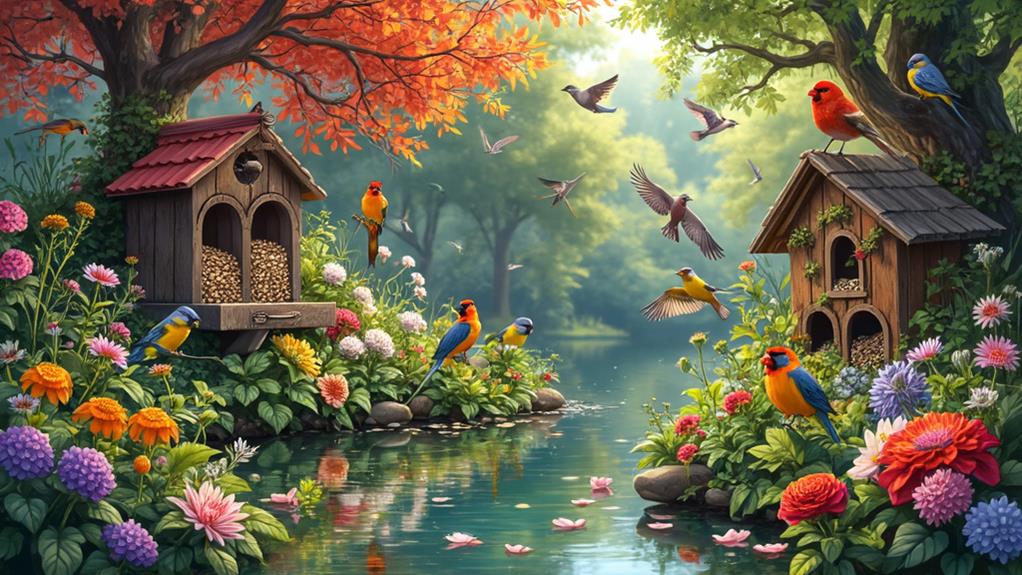
To create a bird-friendly environment, start by offering a variety of seeds like sunflower and safflower to attract different species. Install feeders at varying heights to accommodate diverse feeding habits and keep them clean to prevent disease. Guarantee fresh water access with a shallow birdbath, changing the water regularly. Provide shelters with natural wood birdhouses and nearby nesting materials. Protect birds from predators with barriers and properly positioned birdhouses. Incorporate native plants to offer natural food and shelter. By nurturing these foundational elements, you'll support a healthy and lively avian community that promises to enrich your outdoor space even more.
Provide Essential Food Sources
To create a bird-friendly environment, it's essential to provide significant food sources. You can start by offering a range of seeds to attract different bird species. Seed diversity is critical because it caters to the preferences of various birds, ensuring that your yard becomes a lively haven for avian visitors. Consider including sunflower seeds, millet, safflower, and nyjer in your selection. Each type attracts different birds, from cardinals and finches to sparrows and chickadees. This diversity not only supports a wide range of species but also promotes a balanced ecosystem in your garden.
Next, establishing well-placed feeding stations is vital. Position them at different heights and locations to cater to the feeding habits of various birds. Some birds prefer raised feeders, while others may feel safer consuming food closer to the ground. By providing multiple feeding stations, you'll encourage more birds to visit, while also reducing competition for food. Remember to keep these stations clean and stocked, as hygiene is essential for preventing disease. Regularly check for moldy or spoiled seeds, and replace them as needed. By focusing on seed diversity and strategic feeding stations, your environment will surely flourish with lively bird life.
Ensure Access to Fresh Water
Amidst your efforts to attract birds, don't overlook the significance of providing access to fresh water. Birds need water for drinking and bathing, which helps them keep their feathers clean and healthy. Installing a birdbath in your yard is a simple way to meet this need. Make certain the birdbath is shallow and has a rough surface to prevent slipping. It's important to position it in a quiet area so birds feel safe while using it.
Regular birdbaths maintenance is fundamental to guarantee the water remains clean and inviting. Change the water every few days to prevent stagnation and algae growth. Scrub the birdbath with a brush and mild detergent to remove any dirt or residue, then rinse thoroughly. Maintaining high water quality is crucial for the birds' health, and clean water will attract more visitors to your garden.
Alongside traditional birdbaths, consider incorporating a drip system or fountain to keep the water fresh and moving. The sound of trickling water can attract more birds and adds a delightful ambiance to your garden. Remember, clean and accessible water is a key component of a bird-friendly environment.
Offer Safe Shelter Options
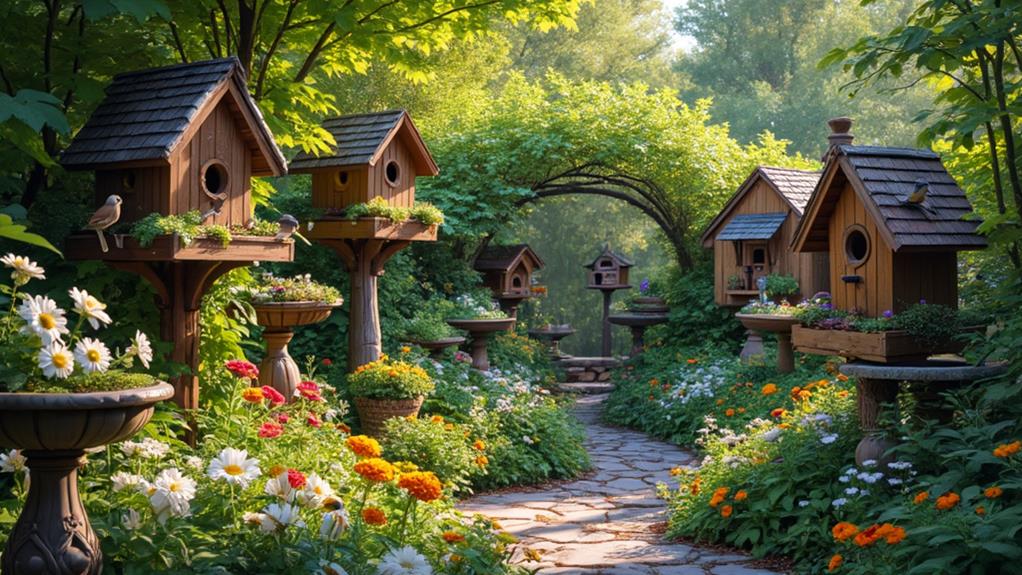
While providing fresh water is fundamental for attracting birds, offering safe shelter is just as significant. To begin, consider incorporating diverse birdhouse designs into your backyard. Different species have distinct preferences, so variety is key. For instance, bluebirds prefer open-front boxes, while chickadees thrive in small, enclosed spaces. Research the types of birds you'd like to attract, and select birdhouses that cater to their specific needs.
In addition to choosing suitable birdhouse designs, pay close attention to the materials you use. Opt for natural, untreated wood as it provides insulation and is non-toxic. Avoid materials that could overheat or harm the birds, like metal or plastic. Proper ventilation and drainage are also critical in ensuring that the birdhouses remain dry and comfortable.
Offering nesting materials is another way to create a bird-friendly environment. Provide items like twigs, grass, and feathers, which birds can use to build their nests. Place these materials in a safe, accessible location near the birdhouses. Doing so will not only help birds feel secure but also encourage them to return to your yard year after year, creating a thriving avian community.
Create a Secure Environment
Establishing a secure environment for birds is essential to guarantee their safety and well-being. You want to make sure that your feathered visitors are protected from threats and have a peaceful place to nest. One of the primary concerns is predator protection. You'll need to be proactive in keeping potential threats like cats, raccoons, and hawks at bay. Consider installing barriers or using deterrents to keep these predators away from your garden.
To further improve security, focus on creating safe nesting sites. Position birdhouses and nests in places that are hard for predators to reach, such as high branches or specially designed poles. This not only keeps the nests safe but also gives birds a sense of security.
Here are some tips to create a secure environment:
- Install bird feeders with baffles: These are designed to prevent predators from accessing birds while they feed.
- Use decoys or reflective objects: They can deter larger predatory birds from entering the area.
- Make sure there's a water source nearby: It provides additional safety as birds can quickly hydrate without leaving the protected area.
Plant Native Vegetation
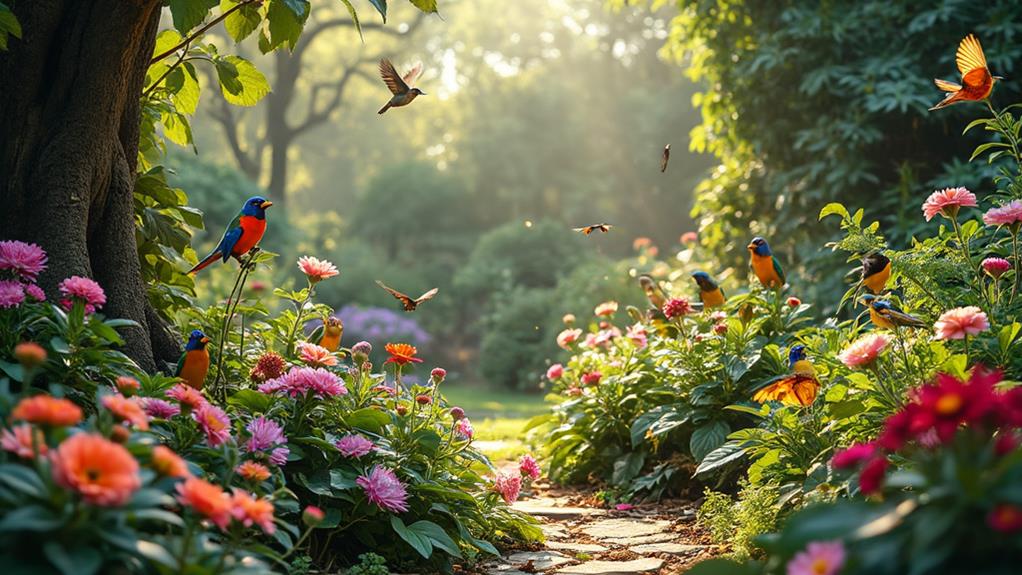
Alongside ensuring a secure habitat, enhancing your garden with native vegetation plays a significant role in attracting and supporting local bird populations. By planting native plants, you're providing vital resources that diverse bird species need, such as food, shelter, and nesting sites. Native plants have evolved alongside local wildlife, making them perfect for creating a thriving ecosystem right in your backyard.
To start, research which plants are native to your area. These plants will require less maintenance since they're already adapted to your local climate and soil conditions. When you plant a variety of native trees, shrubs, and flowers, you not only add beauty to your garden but also increase habitat diversity. This diversity attracts a wide range of bird species, each finding something unique in your garden to meet their needs.
Consider incorporating layers of vegetation, like tall trees for perching, mid-sized shrubs for nesting, and ground cover for foraging. This layered approach mimics natural habitats and supports an array of bird species. By thoughtfully planting native vegetation, you're taking an important step towards fostering a bird-friendly environment that's sustainable and beneficial for both birds and your garden.