Crating Your New Puppy: Tips for Comfort and Safety
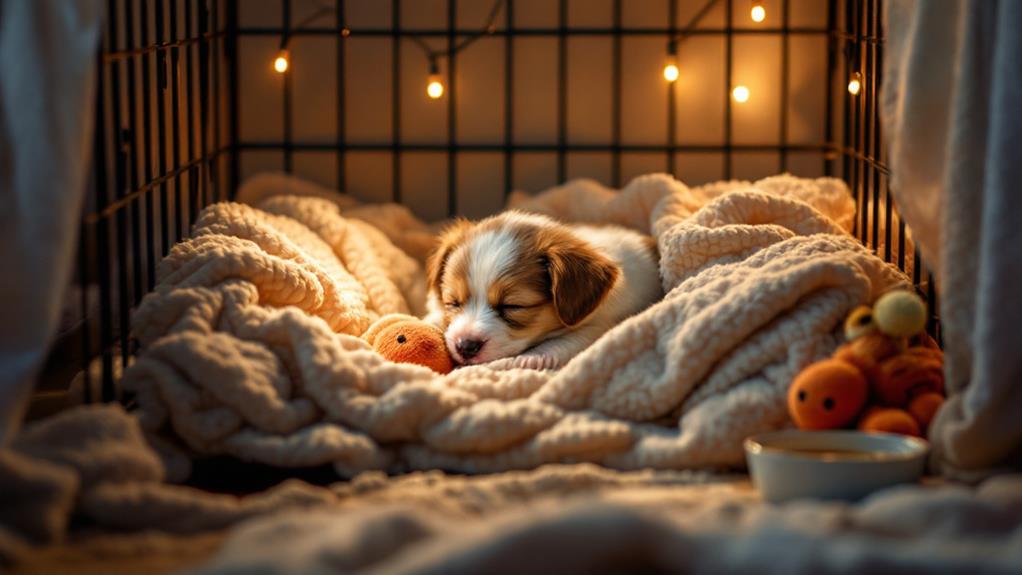
Crating your new puppy can provide a comforting and safe environment that mirrors a natural den. Choose a crate that's durable and spacious enough for your puppy to stand, turn, and lie down with ease. Place it in a busy area to alleviate separation anxiety and use soft bedding with familiar items inside. Introduce the crate gradually using treats and keep the door open initially. Avoid using it as punishment to maintain positive associations. As your puppy grows, adjust the crate size and guarantee regular crate inclusion in daily life. Exploring these steps will help improve your puppy's comfort and happiness.
Benefits of Crate Training
Crate training offers numerous advantages for your puppy's development and well-being. By engaging in the crate training process, you provide your puppy with a safe space that mimics a natural den, enhancing their sense of comfort. This comfortable environment becomes a refuge, where positive associations help prevent separation anxiety. When you use positive reinforcement, your puppy learns to see the crate as a haven rather than a punishment, reducing anxiety and stress during overwhelming situations or when they're left alone.
The crate also plays an essential role in housetraining. Puppies instinctively avoid soiling their sleeping area, so regular use encourages them to control their bladder, making housetraining more effective. Furthermore, a crate helps reduce destructive behaviors by keeping your puppy safely contained when you can't supervise them. This not only protects your home from damage but also keeps your puppy safe from potential hazards.
In emergency situations, crate training guarantees your puppy can be transported safely and comfortably, regardless of whether you're traveling or evacuating. The familiarity of the crate provides a sense of security, making changes smoother and less stressful for both you and your puppy.
Selecting the Right Crate
After understanding the benefits of crate training, it is vital to focus on selecting the right crate for your puppy. Choosing the perfect crate guarantees a safe and comfortable environment, which is important for successful training. Initially, consider the size. Your puppy should be able to stand, turn around, and lie down without feeling cramped, yet without so much space that bathroom accidents become more likely.
Durability is key, especially if your puppy is a chewer. Opt for crates made from metal or heavy-duty plastic to withstand any destructive tendencies and keep your puppy safe. An adjustable crate is a wise investment as it can grow with your puppy. Using dividers, you can create a snug, comforting environment that adapts as they mature.
Hygiene is another significant factor. Look for crates with removable trays or washable covers to make cleaning easy and maintain a healthy space for your puppy. This helps guarantee that both you and your puppy enjoy the crate training process.
- Choose a crate that allows your puppy to stand, turn, and lie down comfortably.
- Opt for durable materials like metal or heavy-duty plastic.
- Consider adjustable crates to accommodate growth.
- Prioritize easy-to-clean features for better hygiene.
Setting Up the Crate
When setting up the crate, start by positioning it in a common area of your home where your puppy can see and hear family activities. This helps your puppy feel included and part of the family, which is essential for their comfort. Choose a crate size that allows your puppy to stand, turn around, and lie down comfortably. A sturdy wire crate is ideal because it offers proper airflow and visibility.
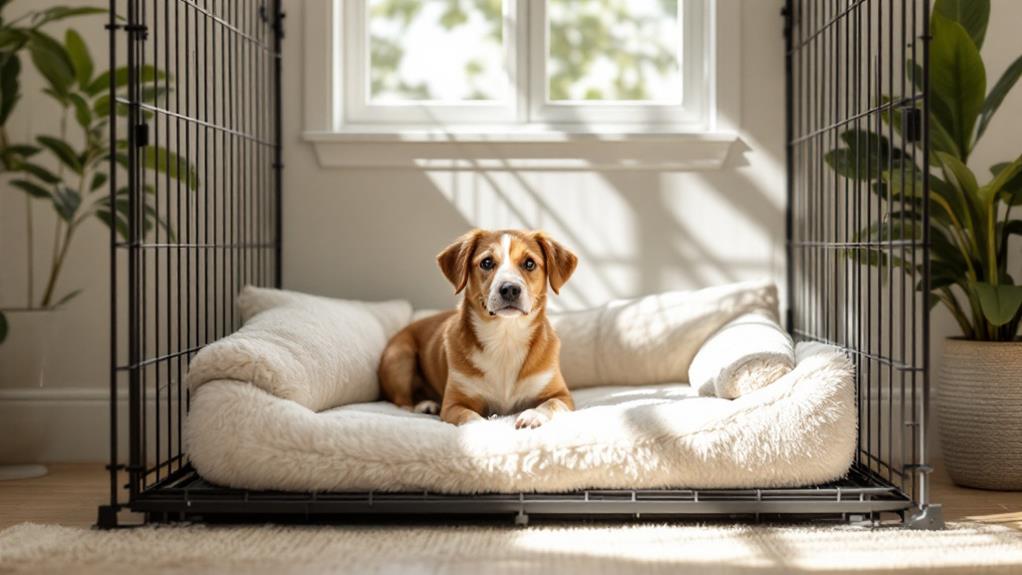
Inside the crate, create a comfortable environment by adding soft bedding like a blanket or dog bed. Introduce familiar items such as toys or a piece of your clothing to make the space feel secure and inviting. Remember, the less intimidating the crate feels, the more likely your puppy will enjoy spending time there.
As your puppy grows, you can adjust the space within the crate using dividers. This prevents them from using one part of the crate as a bathroom. Minimizing distractions is key, so consider covering the crate with a light sheet or blanket to create a den-like atmosphere. However, make certain there's still proper airflow so your puppy remains comfortable and cool.
Introducing the Crate
Getting your puppy comfortable with their new crate can be a rewarding experience for both of you. Start by placing the crate in a commonly used area of your home. This encourages your puppy to investigate and feel at ease in their new environment. To build a positive association with the crate, use treats to entice your puppy to enter voluntarily. By doing so, you create a welcoming atmosphere that invites curiosity and playfulness.
Consider these steps to help your puppy acclimate:
- Place the crate: Choose a spot where your puppy can feel part of the family activities.
- Use treats: Encourage your puppy to enter the crate with tasty rewards.
- Close the door gradually: During feeding times, gently close the crate door to help your puppy get used to being inside with it secured.
- Start with short periods: Limit initial crating sessions to short periods to help prevent anxiety and stress.
As you introduce the crate, monitor your puppy's reactions closely. Adjust your approach based on their comfort levels to guarantee a positive experience. By following these tips, your puppy will gradually acclimate to their new space, feeling safe and secure.
Positive Reinforcement Techniques
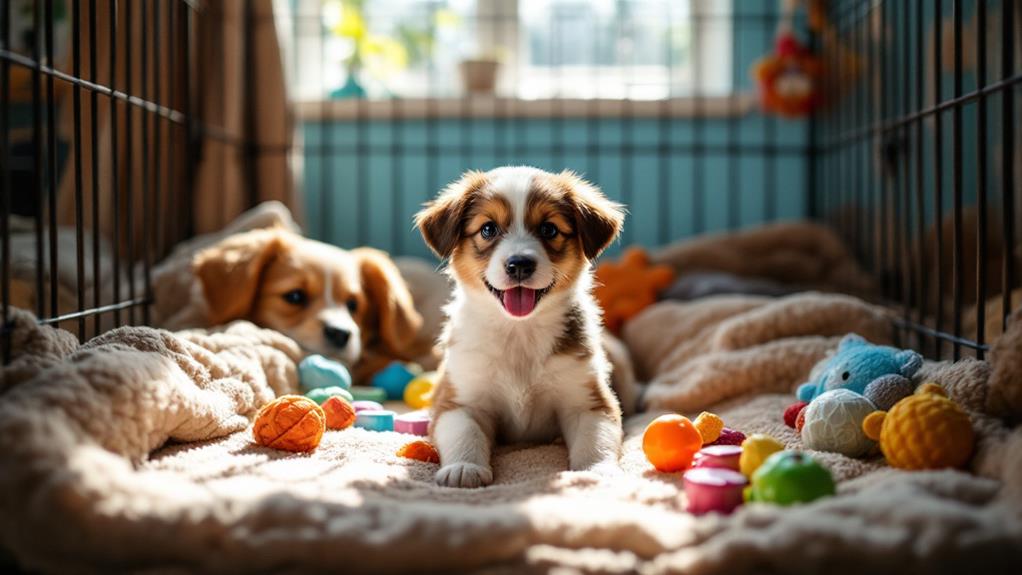
Incorporating positive reinforcement techniques into your puppy's training can transform the crate into a haven of comfort and security. Start by using high-value treats to encourage your puppy to associate the crate with positive experiences. When your puppy enters the crate voluntarily, use a consistent marker word like "yes" and immediately follow it with a treat. This reinforces the desired behavior and builds a positive association with the crate.
During feeding sessions, gradually increase the time the crate door stays closed. Reward your puppy for calm behavior during this period to foster a sense of comfort and security. Consistently rewarding calmness helps your puppy feel more at ease inside the crate.
To improve engagement and make the crate a more enjoyable space, include interactive toys or long-lasting chew items. These items keep your puppy entertained and content, reinforcing the idea that the crate is a safe and enjoyable place. Encourage exploration of the crate by placing treats or toys inside, promoting further positive associations.
Managing Puppy Anxiety
Some puppies may experience anxiety, but with the right strategies, you can help them feel more secure and at ease. Crate training your puppy should be a positive experience, promoting comfort and safety. To manage puppy anxiety effectively, consider the following tips:
- Monitoring for signs: Keep an eye out for excessive barking or pacing. These behaviors can indicate distress and should guide you to adjust your approach.
- Gradually increasing alone time: Start with short periods of time in the crate, then slowly extend them. This helps your puppy build confidence and eases separation anxiety.
- Maintain a calm demeanor: Your reactions during departures and arrivals influence your puppy's anxiety levels. Staying calm reassures them and reduces stress.
- Positioning the crate: Place the crate in family activity areas during the day. This inclusion minimizes feelings of isolation and fosters a sense of security.
It's vital to avoid using the crate as a form of punishment. Doing so can create negative associations, worsening anxiety and potentially leading to behavioral issues. By following these strategies, you can guarantee that crate training is a comforting and safe process for your puppy.
Long-Term Crate Use Strategies
Once you've successfully managed your puppy's initial anxiety, it's time to focus on long-term crate use strategies that guarantee comfort and security as your puppy grows. Initially, adjust the crate size gradually. Your puppy should be able to stand, turn, and lie down comfortably, but avoid too much space to prevent them from designating a bathroom area inside the crate.
Next, closely monitor the crating schedule as your puppy matures. Puppies need different crating durations based on maturity and energy. Younger pups require more frequent potty breaks and playtime, while older dogs can handle longer periods. Consistency is key; incorporate regular feeding, potty breaks, and playtime to build positive associations with the crate.
Overnight crating should be comfortable, with appropriate bedding and familiar items to create a secure space. Make certain your puppy feels safe during nighttime rest. Also, as your puppy becomes comfortable in their crate, relocate it to different areas of your home. This helps them adapt to different environments, reinforcing that the crate is a secure retreat. By following these strategies, you'll guarantee your puppy's crate is a positive and comforting space throughout their life.