Chinese Water Dragon Care: Essential Tips for Beginners
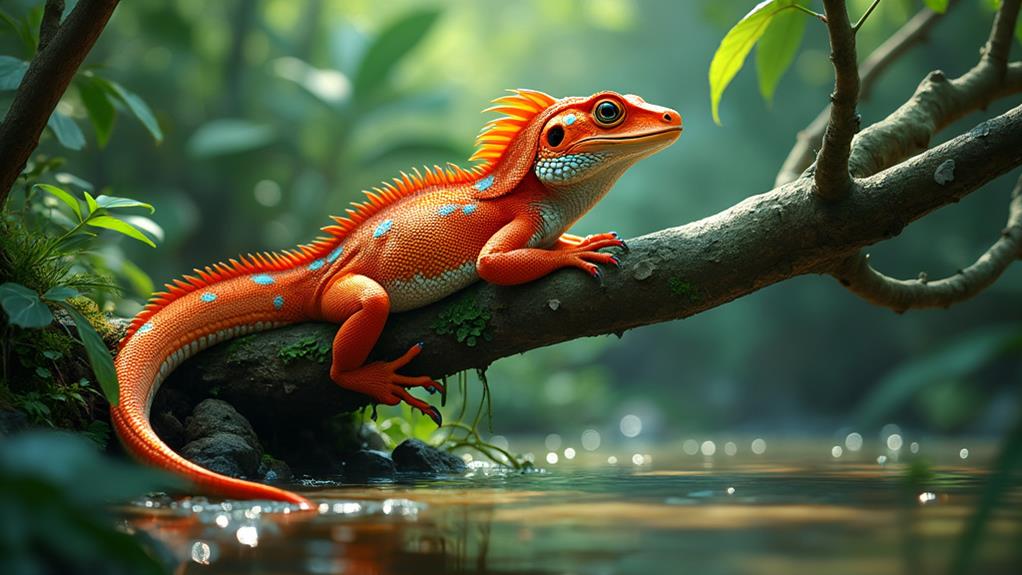
Caring for a Chinese Water Dragon means setting up a spacious, vertically-oriented habitat, ideally 5-6 feet tall, to mimic their tropical rainforest home. Maintain humidity between 70-80% with regular misting and a hygrometer. Provide a basking area at 90-95°F and cooler spots at 77-86°F. Ensuring UVB lighting is crucial for calcium metabolism. Their diet should be 85-90% insects and 10-15% fruits and vegetables. Handle your dragon gently to build trust and keep stress low. Regular health checks, a balanced diet, and a clean environment are key. There's more to uncover about keeping your dragon thriving and happy.
Key Takeaways
- Provide a spacious enclosure that is at least 5 feet long, 2-3 feet deep, and 5-6 feet tall.
- Maintain humidity levels between 70-80% using a hygrometer and regular misting.
- Ensure a diet of 85-90% insects and 10-15% fruits and vegetables with proper supplementation.
- Use full-spectrum UVB lighting for 10-12 hours daily for optimal health.
- Include climbing branches, live plants, and hiding spots for enrichment and stress reduction.
Understanding the Chinese Water Dragon
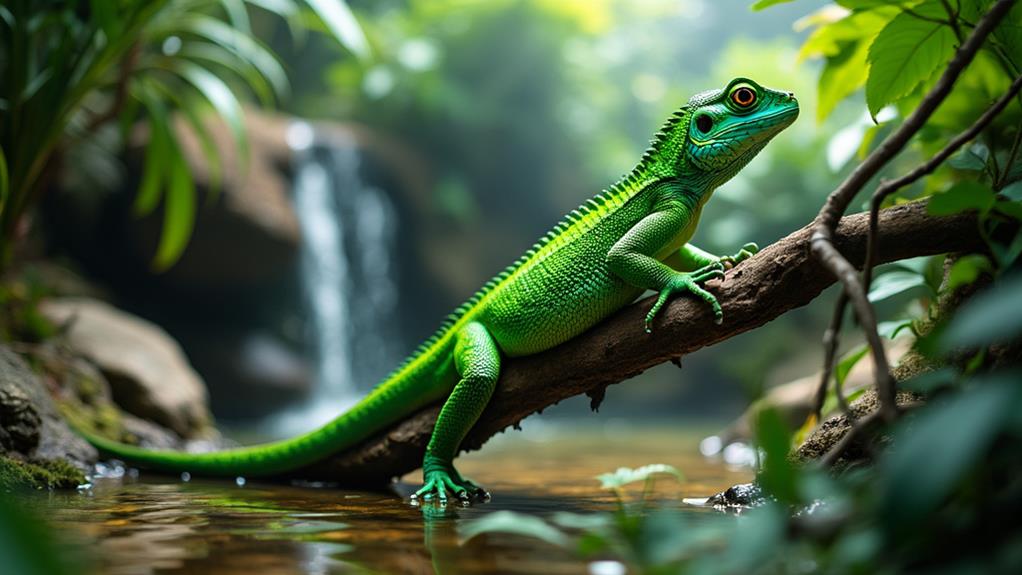
In regard to understanding the Chinese Water Dragon, you'll find that these enthralling reptiles boast unique characteristics and care needs. Known scientifically as Physignathus cocincinus, these lizards are native to the tropical rainforests of southern China and Southeast Asia. Their striking green coloration changes with environmental conditions, adding to their appeal. Males can grow up to 36 inches and have larger heads with prominent crests, while females tend to be smaller and less colorful.
Chinese Water Dragons have an average lifespan of 10 to 15 years in captivity, making habitat maintenance vital for their long-term health. They're omnivorous, primarily eating insects (85-90%), but also enjoy fruits and vegetables (10-15%). It's significant to guarantee their diet includes gut-loaded insects with nutrient-rich supplements.
These lizards are known for their friendly dispositions and thrive in environments that cater to their natural behaviors. An enclosure setup that provides opportunities for climbing and hiding is fundamental. Environmental enrichment will keep them engaged and healthy. Understanding these needs is key to providing a fulfilling life for your Chinese Water Dragon, making sure they remain lively and friendly companions.
Setting Up a Suitable Habitat
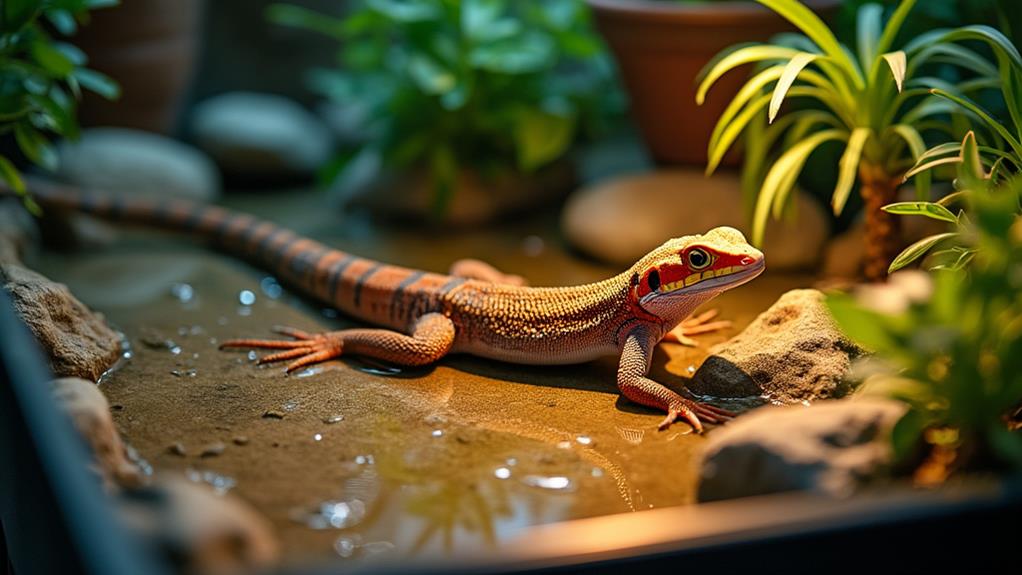
To guarantee your Chinese Water Dragon thrives, a well-planned habitat is fundamental. Start by confirming the enclosure size is at least 5-6 feet long, 2-3 feet deep, and 5-6 feet tall. This gives your dragon ample space for climbing and movement. Maintaining proper humidity levels is critical; aim for 70-80%. Use a substrate like moistened coconut fiber or sphagnum moss to help retain moisture and provide cushioning.
Incorporate sturdy climbing branches and live plants such as Dracaena or pothos to mimic their natural environment. These elements not only enrich the habitat but also offer necessary hiding and climbing opportunities. Designate a basking area with temperatures ranging from 90-95°F (32-35°C) and confirm a cooler side between 77-86°F (25-30°C) to create a temperature gradient, facilitating necessary thermoregulation.
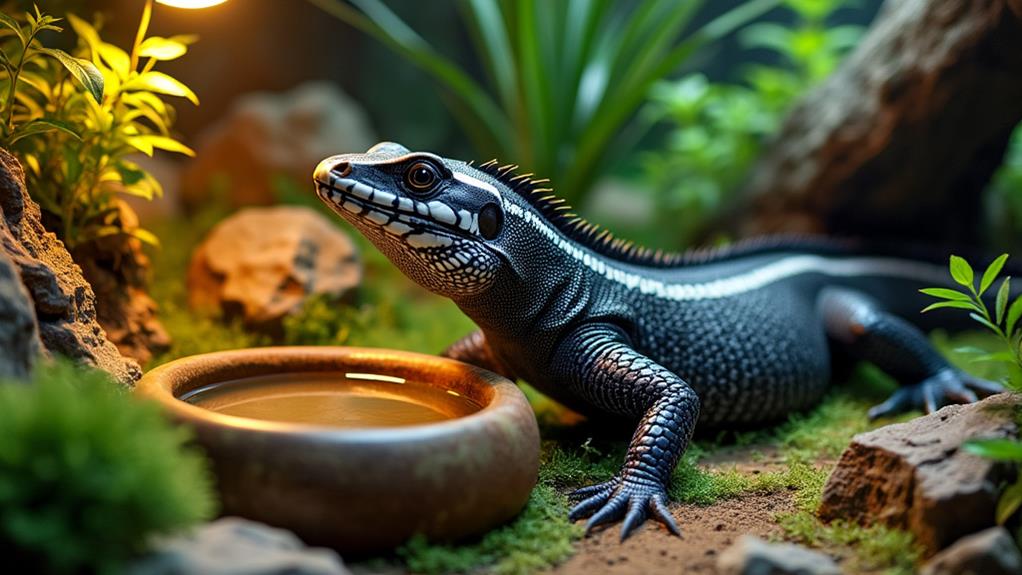
A large, shallow water feature is significant for swimming and hydration. Its presence, combined with daily misting, helps maintain the required humidity levels. By carefully setting up these components, you'll create a suitable and stimulating habitat for your Chinese Water Dragon, promoting health and well-being.
Temperature and Lighting Needs
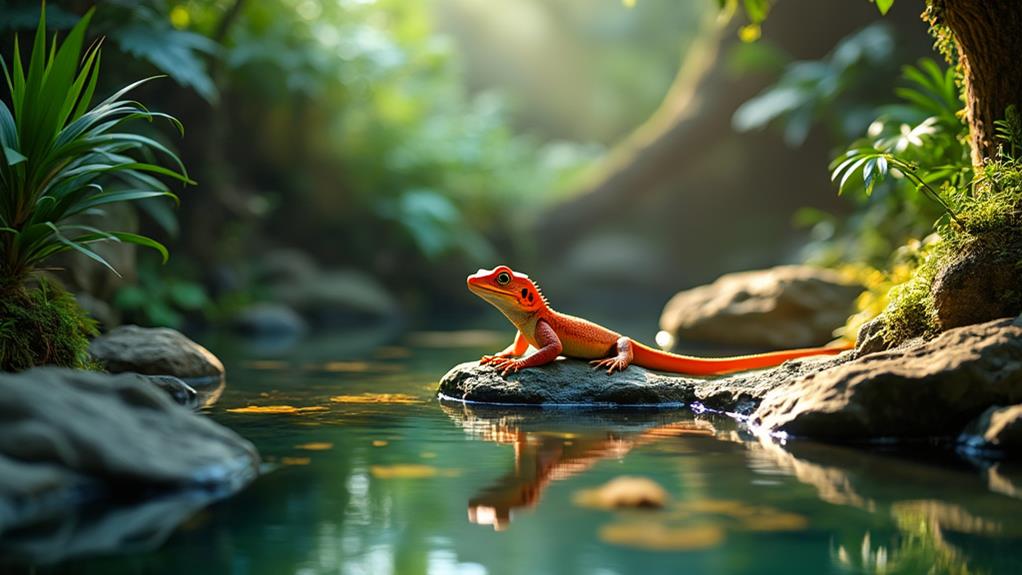
Proper temperature and lighting are vital for your Chinese Water Dragon's well-being. To guarantee their health and metabolism, maintain a basking area temperature between 90-95°F (32-35°C). Create a temperature gradient in the enclosure with a cooler side ranging from 77-86°F (25-30°C) so your dragon can thermoregulate effectively. At night, make certain the temperatures don't fall below 75°F (24°C) to keep your dragon comfortable and stress-free.
Lighting is just as significant. Provide full-spectrum UV lighting for 10-12 hours daily to support vitamin D production and promote calcium absorption. This helps prevent metabolic bone disease, which can be common in reptiles. Position UVB bulbs 12-18 inches above the basking area to guarantee your dragon gets the best UVB exposure. Use a Solarmeter 6.5 to measure UV levels accurately and adjust as needed.
While setting up your dragon's environment, keep in mind that maintaining appropriate humidity levels is also necessary, though we'll investigate that in more depth in the next section. By focusing on the correct temperature and lighting, you'll create a healthy and thriving habitat for your Chinese Water Dragon.
Managing Humidity Levels
A essential aspect of creating a healthy environment for your Chinese Water Dragon is managing humidity levels. Guaranteeing the enclosure maintains humidity between 70-80% is critical for the dragon's hydration and respiratory health. One way to monitor humidity levels accurately is by using a hygrometer. This device helps you keep track of any fluctuations that might impact your dragon's well-being. Regularly checking the hygrometer will make certain you stay within the ideal humidity range.
To achieve and maintain these levels, make a habit of misting the habitat daily. Be sure to focus on the walls and plants as this helps create a more humid microclimate suitable for your dragon. Including a large water bowl in the enclosure not only offers a place for soaking and swimming but also helps increase humidity levels naturally.
If you live in a drier climate or want to simplify your routine, consider installing an automatic misting system. This system can provide consistent humidity management, guaranteeing your dragon's environment remains best without constant manual adjustments. By following these steps, you'll create a comfortable, healthy habitat for your Chinese Water Dragon.
Feeding and Nutrition Guidelines
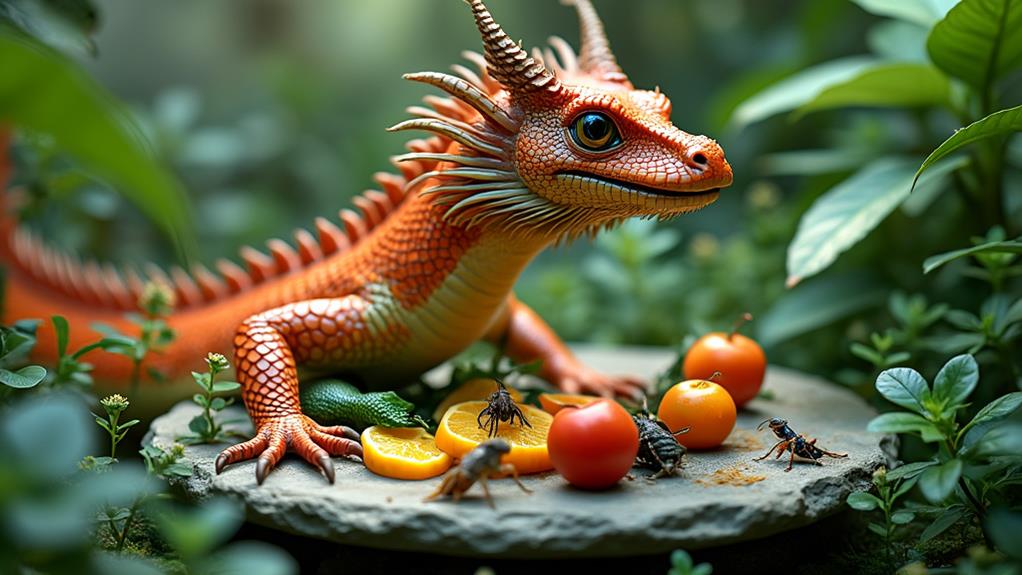
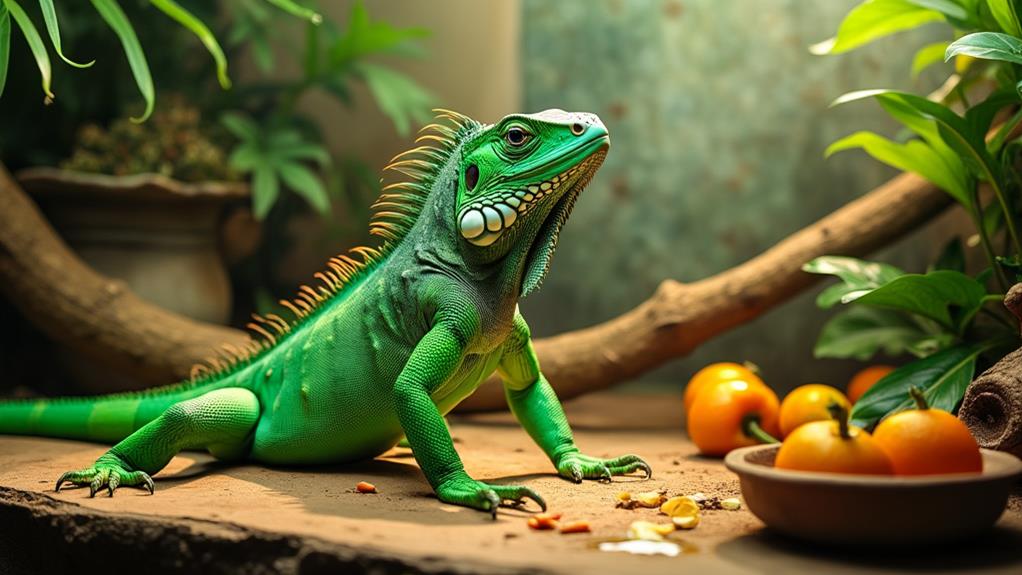
Feeding your Chinese Water Dragon right is fundamental for its health and longevity. Chinese water dragons need a diet primarily consisting of live insects, making up 85-90% of their intake. Use feeding tongs to offer crickets, worms, and grasshoppers. For juveniles, daily feeding is significant, while adults need feeding every 2-3 days. As they reach adult size, make certain their meals are balanced with insects and a small portion of fruits and vegetables, which should only make up 10-15% of their diet. Suitable fruits and vegetables include chopped collard greens, strawberries, and mangoes.
It's imperative to gut-load live insects with nutrient-dense supplements before feeding them to your dragon. Products like FLUKERS and Zilla supplements can improve the nutritional value of the insects. Furthermore, a calcium supplement and a vitamin supplement should be dusted over the insects occasionally to support bone health and general vitality.
For dietary variety, you can offer occasional treats such as frozen mice or small goldfish to adult dragons, but limit this to no more than twice a week. With the right diet and feeding practices, your Chinese Water Dragon will thrive.
Handling and Behavior Tips
While nourishing your Chinese Water Dragon is crucial for its health, understanding their behavior and how to handle them is likewise significant. These dragons are generally friendly and enjoy handling, which helps foster trust and sociability if introduced early. However, they're easily startled, so minimize loud noises and sudden movements to avoid stress and defensive behaviors like biting or tail whipping.
Here are some tips to help you handle your Chinese Water Dragon effectively:
- Begin Early: Introduce handling when they're young. Start with short sessions and gradually increase the time as trust builds.
- Be Observant: Pay attention to their body language. Signs like flattening their bodies or rapid movements can indicate stress, requiring you to provide a more secure environment.
- Maintain Humidity: Confirm there's a humid hide with moistened sphagnum moss to aid in shedding, which occurs every 4-6 weeks, more frequently for juveniles.
- Create a Routine: Consistent handling can prevent aggression and promote a friendly demeanor. Regular interaction develops a bond and helps them feel more comfortable.
Health Monitoring and Veterinary Care
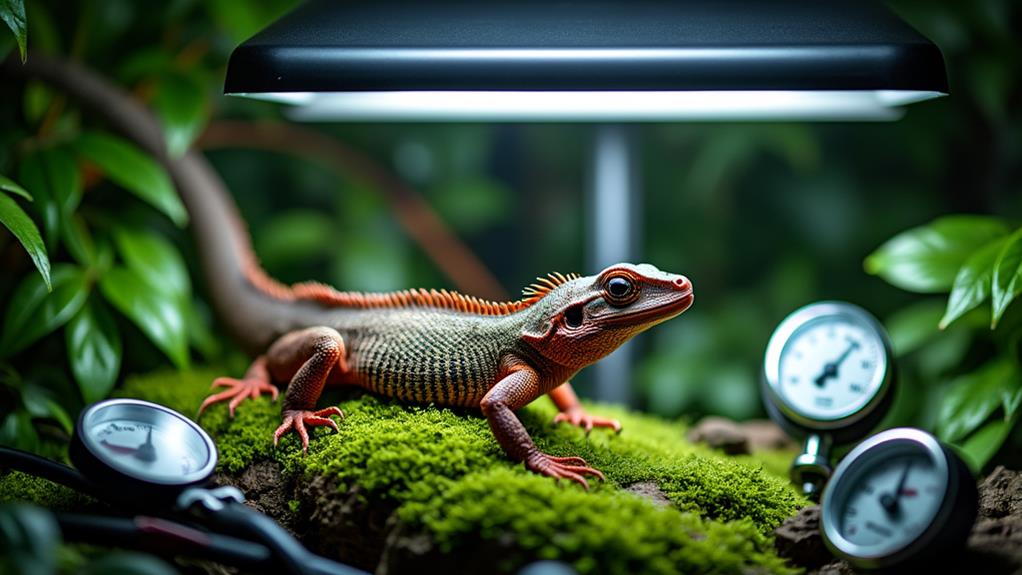
In regard to guaranteeing your Chinese Water Dragon's well-being, regular health monitoring is vital. Pay attention to clear eyes, a good appetite, and active behavior as these are signs your dragon is thriving. You should schedule annual veterinary check-ups to assess their general health. During these visits, document details about their enclosure, diet, and care so your reptile veterinarian can provide the best advice.
Watch for common health issues like dehydration, impaction, and metabolic bone disease. These can often be prevented with proper UVB exposure and calcium supplementation. If you notice any signs of illness such as lethargy, weight loss, or discharge, consult a certified reptile veterinarian immediately. Early intervention is key to addressing health concerns effectively.
Maintaining a clean habitat and providing the right environmental conditions are fundamental to prevent health problems. Verify the tank's humidity and temperature are suitable, and always offer a balanced diet. This proactive approach will help minimize the risk of illness and contribute to your dragon's long-term health. By observing these practices, you'll help your Chinese Water Dragon lead a healthy and lively life.
Cleaning and Maintenance Routine
Regular health monitoring isn't just about observing your Chinese Water Dragon; it's also about guaranteeing their environment supports their well-being. A consistent cleaning and maintenance routine is essential for a healthy habitat. Start by performing daily spot-cleaning to remove soiled materials and replace water bowls to secure proper hydration. This daily task helps maintain cleanliness and prevents harmful bacteria from developing.
Here's a simple guide to keep your dragon's habitat in top shape:
- Daily Spot-Cleaning: Remove waste and replace water bowls to promote a clean environment.
- Weekly Thorough Cleaning: Replace the substrate and disinfect surfaces with reptile-friendly cleaners to guarantee a safe habitat.
- Monitor Humidity Levels: Use a hygrometer to monitor and maintain humidity between 70-80%. Regularly mist the enclosure to help achieve this.
- Bioactive Setup Maintenance: Regularly check waste levels and remove excess to sustain a balanced ecosystem.
Don't forget to wash your hands before and after handling your dragon to prevent the spread of bacteria or pathogens. Maintaining these cleaning and maintenance routines guarantees your Chinese Water Dragon thrives in a healthy and welcoming habitat.
Essential Supplies Checklist
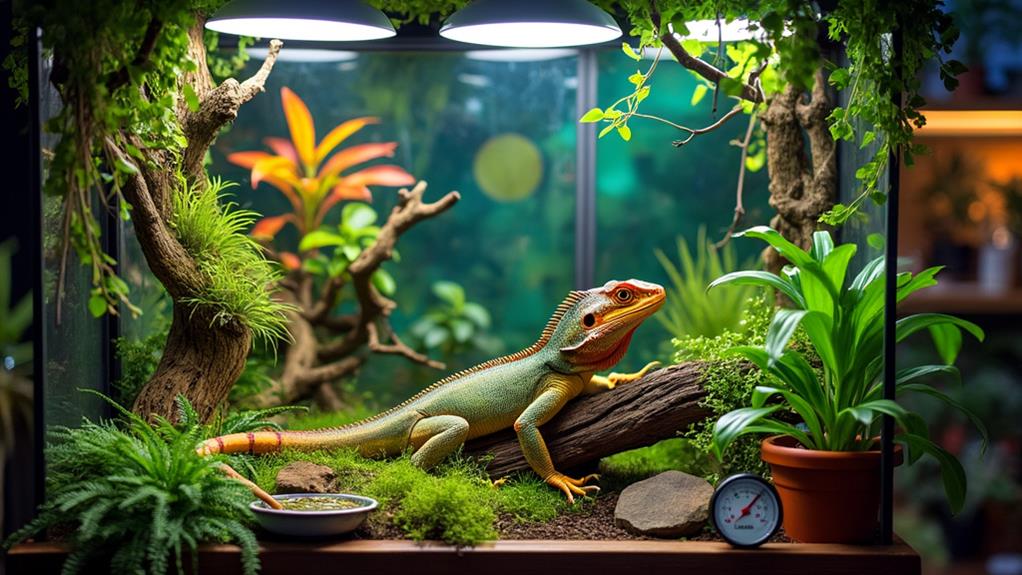
To guarantee your Chinese Water Dragon thrives, you'll need a well-equipped habitat that caters to their specific needs. Start with a spacious enclosure—at least 5 feet long, 2-3 feet deep, and 5-6 feet tall, ensuring there's ample room for climbing and proper ventilation. A basking lamp is essential to maintain temperatures between 90-95°F (32-35°C), while a UVB light is crucial for healthy calcium metabolism.
Monitoring and maintaining the right humidity level is vital, so use a hygrometer to keep it between 60-80%. A large water bowl or small swimming pool is necessary for hydration and bathing, contributing to the humidity as well. Your dragon's diet should primarily consist of insects like crickets and mealworms, sprinkled with calcium and vitamin powders. Don't forget to offer occasional fruits and vegetables for a balanced diet.
Enhance the enclosure with natural decorations such as branches, plants, and caves. These decorations are not just for aesthetics; they provide climbing opportunities and hiding spots, mimicking their natural habitat. By ensuring the right temperature, humidity, and enrichment, you'll create a thriving environment for your Chinese Water Dragon.