Chilean Rose Tarantula: Is This the Right Pet for You?
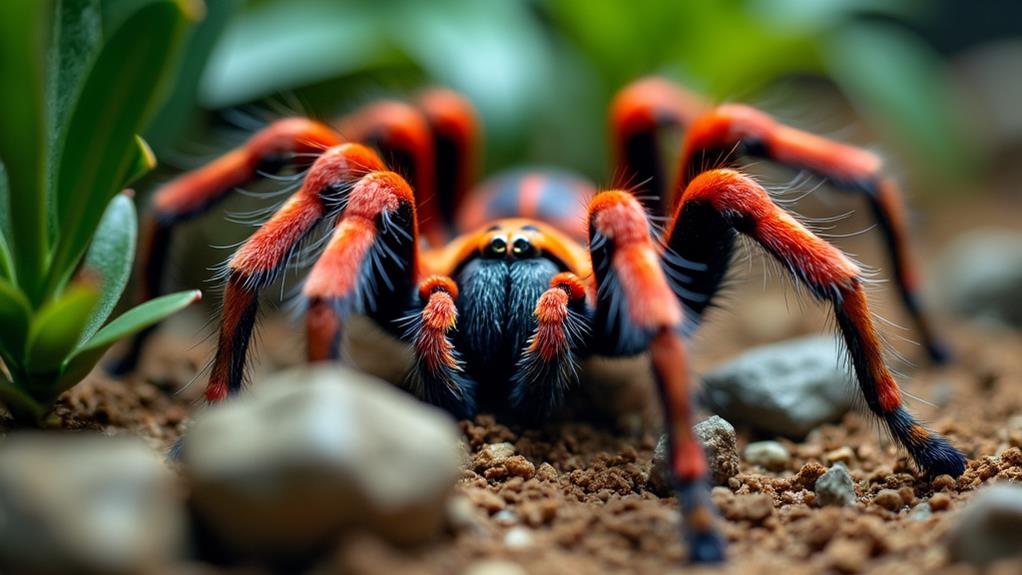
Thinking about getting a Chilean Rose Tarantula? They're generally docile and can live up to 20 years if female, offering a long-term companion. You'll need a 10-gallon terrarium with proper humidity and hiding spots. Feeding is straightforward; they eat live prey like crickets. Handle them minimally to avoid stress and potential bites, although bites are rare and akin to bee stings. Be prepared for challenges like fasting and mood swings post-molt. Maintaining the right environment is essential. If you're up for the commitment of their unique needs and behaviors, uncovering more about their care could help you decide.
Key Takeaways
- Females can live up to 20 years, requiring a long-term commitment.
- They are generally docile but can exhibit stress through mood swings and urticating hairs.
- A 10-gallon terrarium with proper humidity and hiding spots is necessary.
- Feeding involves live prey, with strict hygiene practices to prevent stress.
- Handling should be minimal to avoid causing the tarantula stress or injury.
Species Traits and Longevity
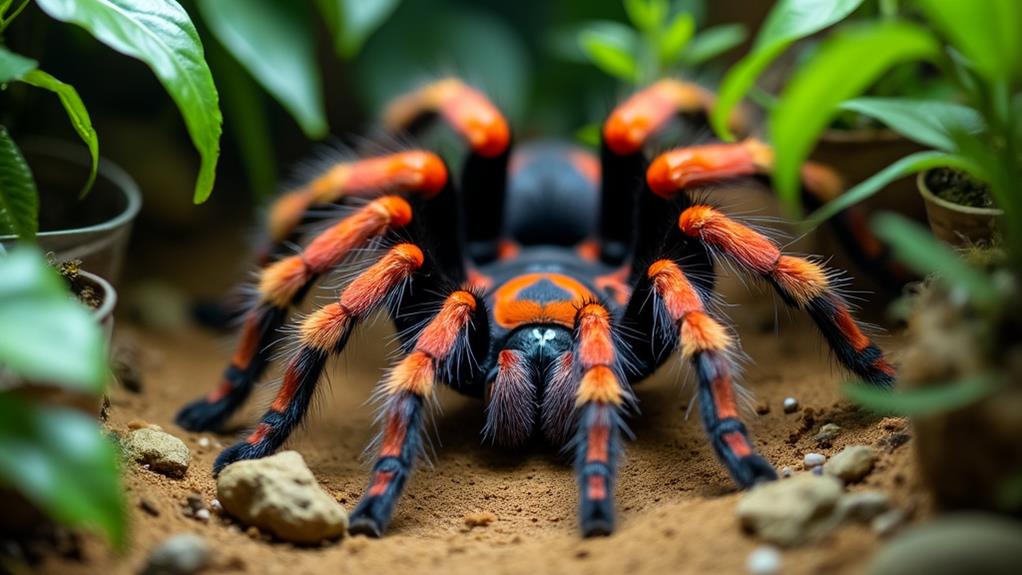
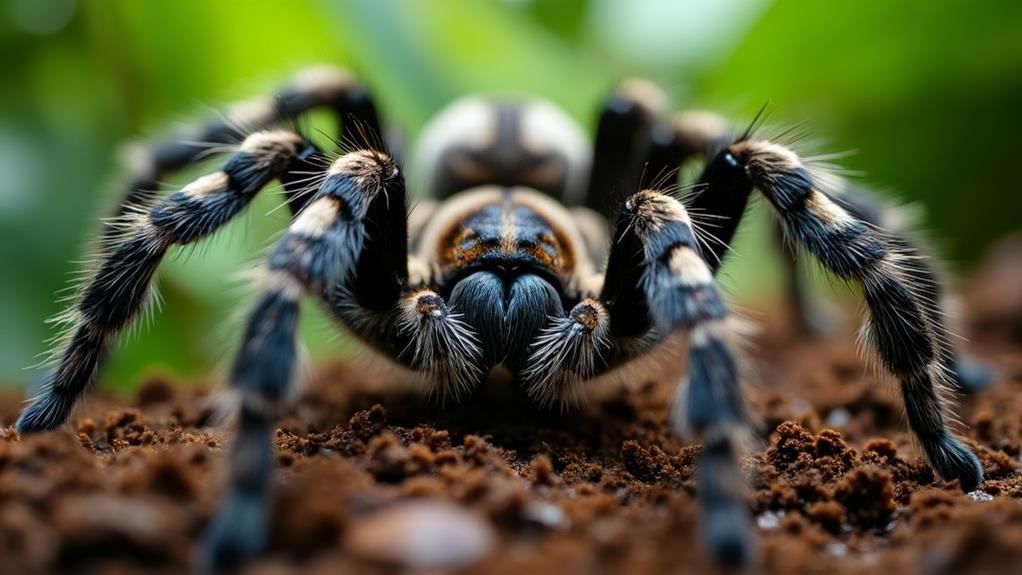
When considering a Chilean rose hair tarantula as a pet, you'll find that their species traits and longevity make them a unique choice. These tarantulas, scientifically known as Grammostola rosea, are recommended for beginners due to their generally docile nature. They typically grow to an adult leg span of 4.5 to 5.5 inches, making them manageable for novice enthusiasts. Their coloration varies from black to brown, adorned with striking red and orange hairs, which adds to their allure.
One of the most fascinating aspects of the Chilean rose hair tarantula is its lifespan. Females can live up to 20 years, with some reports indicating they can even reach 30 to 40 years. This long lifespan allows you to form a lasting bond with your arachnid companion. In contrast, males have a much shorter lifespan, generally living only 2 to 5 years.
Temperament-wise, these tarantulas can show some variability. While many are calm and docile, some may display mood swings, especially after molting or when hungry. Understanding and respecting their occasional unpredictability is key to successfully keeping a Chilean rose hair tarantula as a pet.
Ideal Habitat Requirements
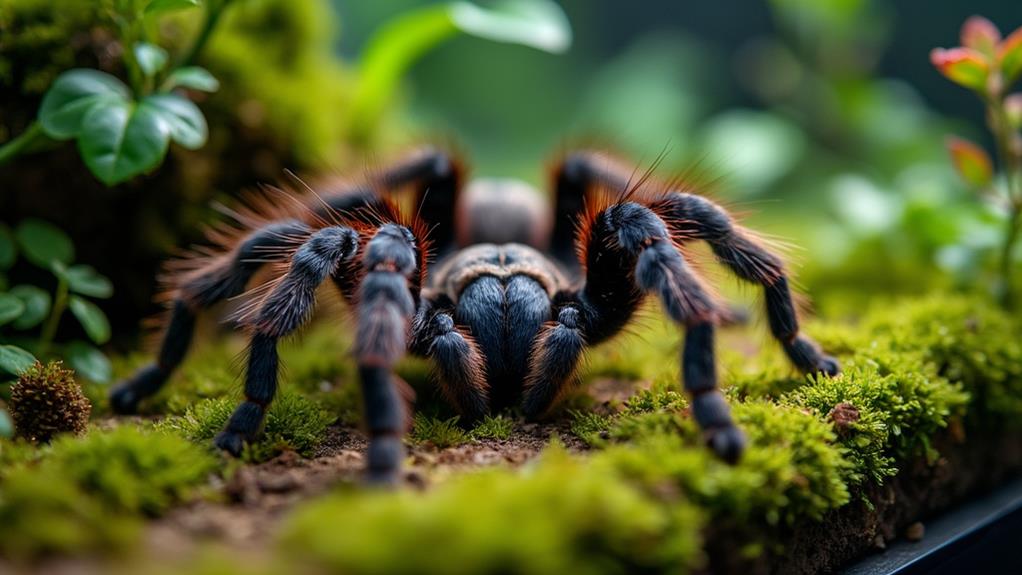
To provide the ideal habitat for a Chilean Rose Tarantula, you'll need a 10-gallon glass terrarium for adult spiders, guaranteeing it's at least three times their leg span for adequate roaming space. The terrarium should have a secure, escape-proof top and proper ventilation to keep the environment healthy. Maintaining appropriate humidity is essential, so a thick substrate layer of 2-3 inches is necessary. Use coconut mulch or organic soil as your substrate to help hold humidity at a minimum of 65%.
Creating hiding spots is important for the tarantula's comfort and security. You can use decorations like cork bark or coconut shells to craft these cozy retreats. Position these hiding spots thoughtfully within the habitat, allowing your Chilean rose tarantula to feel safe and secure.
Don't forget a shallow water dish, placed opposite the hide area, filled with de-chlorinated water. This helps guarantee your tarantula stays hydrated. Regularly check the substrate's moisture levels by observing its color—dark indicates there's enough moisture to maintain the needed humidity. By setting up the habitat with these elements, you'll create a comfortable and secure home for your tarantula to thrive.
Feeding and Nutrition
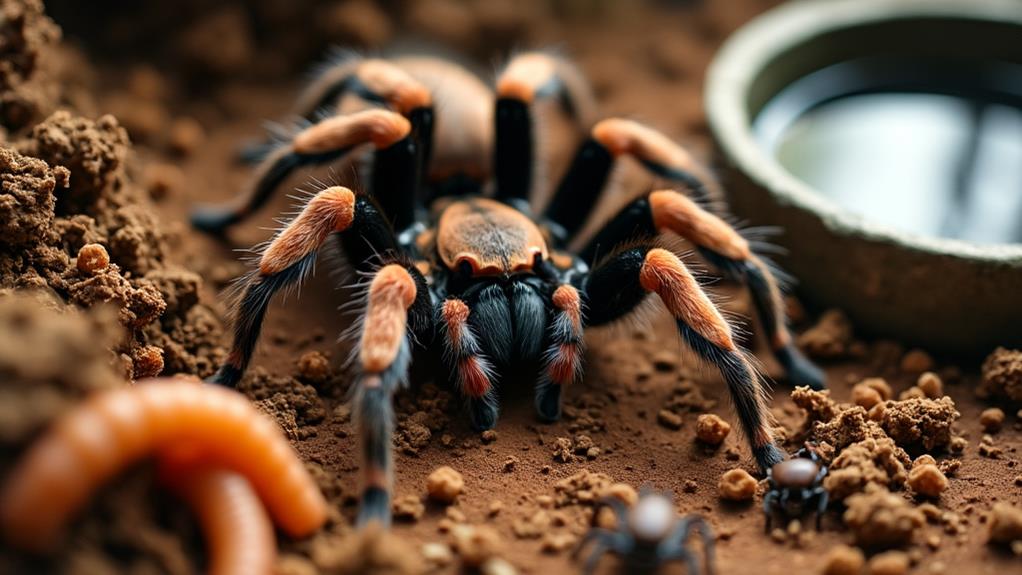
Feeding your Chilean rose tarantula involves understanding the intricacies of its dietary needs. These fascinating creatures are easy to care for, but their feeding habits deserve your attention. As a responsible owner, you'll need to provide live prey like crickets, making certain the size matches or is smaller than your tarantula's abdomen. For adult rose hair tarantulas, a diet of 3-5 crickets per week is ideal. It's also significant to offer variety:
- Dubia roaches
- Mealworms
- Waxworms
- Hornworms
- Phoenix worms
Remember to allow your tarantula a week to settle into its new environment before feeding, and avoid offering food for 5-7 days after molting. This period is fundamental for their recovery. Fresh water should always be available in a shallow dish with de-chlorinated water. Maintaining high humidity in the enclosure can be achieved by keeping the substrate slightly moist.
It's important to remove any uneaten prey after 24 hours. Leaving them in the enclosure can cause stress and hygiene issues for your tarantula. By following these guidelines, you'll guarantee your rose hair tarantula remains healthy and content, making the experience rewarding for both you and your pet.
Handling and Interaction
Caring for your Chilean rose tarantula involves more than just feeding; understanding how to handle and interact with your pet is just as crucial. This great species is generally docile and tolerant of handling, making it a popular choice for your initial tarantula. However, excessive handling can cause stress, so keep it to a minimum. During the molting period, avoid handling altogether to prevent injury and added stress to your tarantula.
When you do handle your Chilean Rose Hair, always use gentle movements. Never blow air on them, as this can startle them and lead to defensive behavior. Be aware of stress indicators, such as when your tarantula assumes a threat pose or begins kicking urticating hairs. These are clear signs to stop handling immediately and let your pet calm down.
Although bites are rare, keep in mind that a bite from a Chilean rose hair tarantula, while not venomous, can cause pain similar to a bee sting, along with itching and burning sensations. Being mindful of these factors will guarantee a positive interaction experience for both you and your tarantula, making it a rewarding pet for years to come.
Common Challenges and Solutions
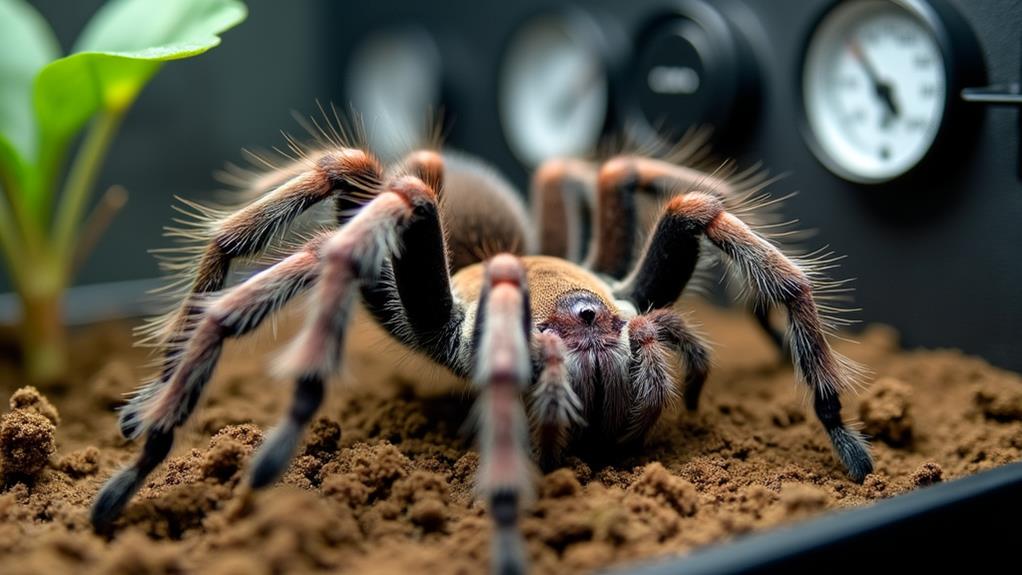
When caring for a Chilean rose tarantula, one common challenge you might encounter is their unpredictable fasting behavior. This can last over a year, so understanding this is key to avoiding unnecessary stress. Their individual behavior, like mood swings post-molt or when they're hungry, requires close observation. Here's how you can tackle some of these common challenges:
- Fasting: Accept and understand that prolonged fasting is normal and not a sign of ill health.
- Behavioral Changes: Monitor their mood swings, especially after molting, to better predict and manage their reactions.
- Urticating Hairs: Learn to recognize warning signs to prevent them from kicking these irritating hairs, which can cause discomfort.
- Humidity Control: Maintain humidity levels at a minimum of 65% using a reliable humidity gauge to guarantee a comfortable environment.
- Tank Maintenance: Regularly clean the tank, removing uneaten prey within 24 hours to prevent stress and maintain a healthy habitat.
Related posts