Chameleon Care Guide: How to Keep Your Chameleon Healthy
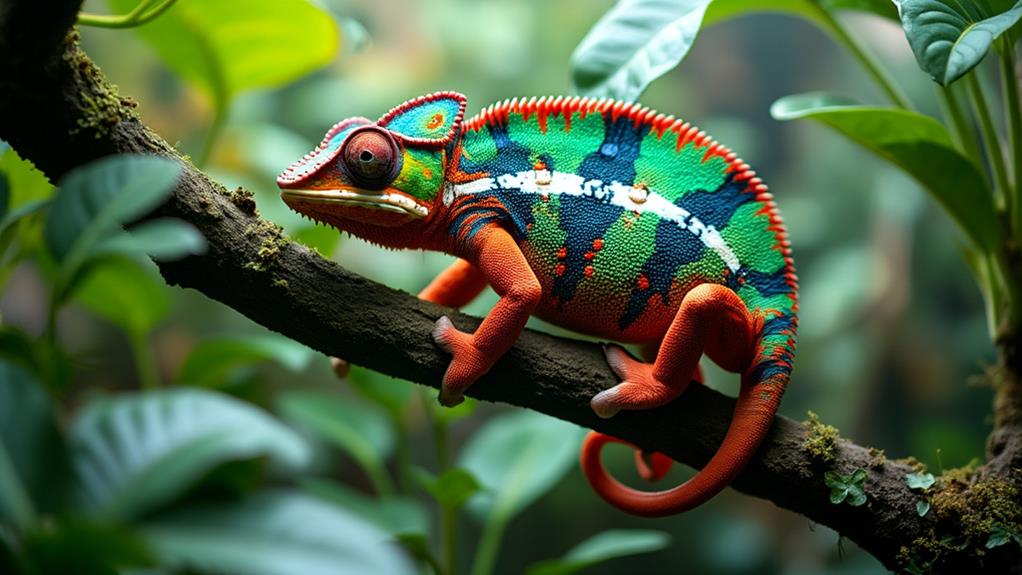
To keep your chameleon healthy, set up an enclosure that mimics its natural habitat with plenty of branches and live plants. Make certain temperatures range from 80-95°F for basking and 70-80°F in cooler areas, dropping to between 65-70°F at night. Use UVB lighting for 12 hours daily, and guarantee proper ventilation. Maintain humidity levels around 50%-80% for Jackson's or 40%-70% for Veiled chameleons through regular misting. Offer a diet of gut-loaded insects, with supplements for calcium and vitamins. Handle your chameleon sparingly to avoid stress. Monitor for health issues like lethargy or color changes, and find further tips.
Key Takeaways
- Ensure a habitat with appropriate temperature gradients and humidity levels to mimic natural conditions.
- Provide a diet of live insects, supplemented with calcium and vitamins, and offer leafy greens for veiled chameleons.
- Limit handling to brief interactions and observe for any stress signals like dark coloration or reduced appetite.
- Use UVB lighting for 12 hours daily to support calcium absorption and replace bulbs every 6-12 months.
- Regularly observe for health issues such as lethargy, color changes, or symptoms of metabolic bone disease.
Essential Chameleon Habitat Setup
When creating the ideal home for your chameleon, you'll need to focus on providing a spacious and well-ventilated enclosure. An enclosure at least 16 x 16 x 30 inches, ideally 2 feet wide and 4 feet tall, is necessary to satisfy their climbing instincts and guarantee proper airflow. Your chameleon's habitat should mimic its natural environment, incorporating live plants, branches, and hiding spots to reduce stress and promote comfort.
Maintaining the right temperatures and humidity levels is vital. A temperature gradient with basking spots ranging from 80-95°F and cooler areas between 70-80°F will suit your chameleon's needs. Nighttime temperatures should drop to 65-70°F. Humidity levels must be kept between 50%-80%. Use regular misting or automated misting systems to guarantee your chameleon stays hydrated and to prevent respiratory issues.
Lighting is another important aspect. Confirm your setup includes UVB lights, vital for calcium absorption and general health. These should be on for at least 12 hours daily and replaced every 6-12 months. By focusing on these elements, you'll craft a thriving environment tailored to your chameleon's needs.
Temperature and Lighting Needs
Your chameleon's comfort relies heavily on maintaining appropriate temperature and lighting conditions. Creating a proper temperature gradient in their habitat is essential. Make sure there's a cooler area between 70-80°F and a warm basking spot ranging from 80-95°F, depending on the species. At night, let temperatures fall to 65-70°F to simulate natural nighttime conditions, supporting their well-being. A consistent 12-hour light/dark cycle is critical for chameleons' health.
UVB lighting plays a significant role in calcium absorption and preventing metabolic bone disease. Place UVB bulbs 6-12 inches above the basking area, avoiding obstructions like glass or plastic, which can filter out important UV rays. Remember, UVB bulbs need replacing every 6-12 months to maintain ongoing effectiveness.
Monitoring light sources and temperatures with reliable thermometers is key to maintaining a stable environment. Regular checks help make sure your chameleon experiences ideal conditions for health and comfort. By providing the right balance of heat and light, you're actively supporting your chameleon's complete health, preventing potential issues, and mimicking their natural habitat as closely as possible.
Managing Humidity Levels
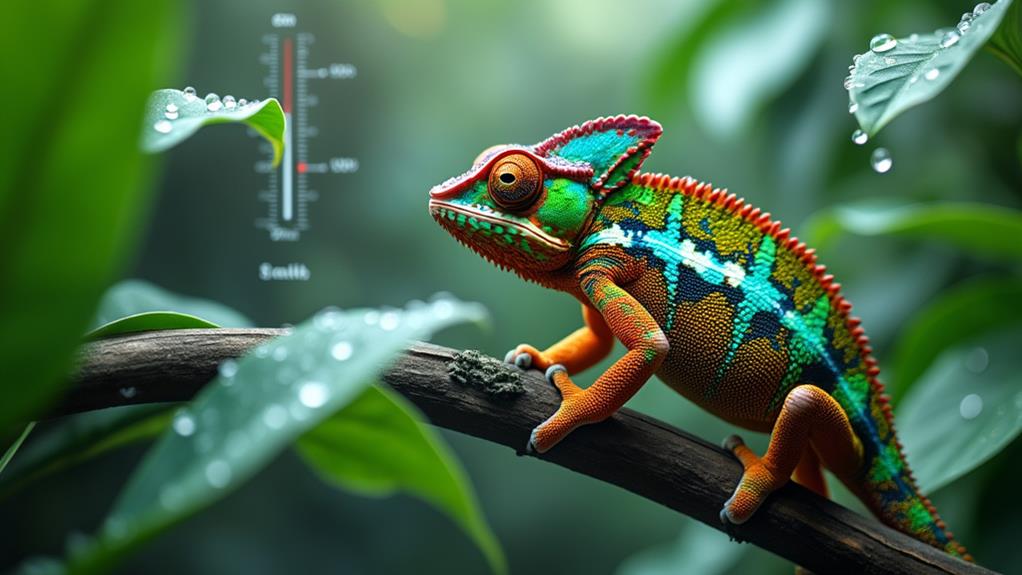
Humidity is a vital component of chameleon care, guaranteeing their health and comfort. For Jackson's chameleons, aim to maintain humidity levels between 50%-80%, while Veiled chameleons thrive at 40%-70%. Regular misting, 1-3 times daily, helps replicate their natural environment, but you can also consider an automatic misting system for consistency. This will keep your chameleons adequately hydrated and comfortable.
To effectively monitor humidity levels, use a hygrometer. This tool helps confirm the environment stays within the ideal range. Adjust misting frequency based on readings and the specific needs of your chameleon. Pay attention to their behavior—if you notice them licking surfaces, it might be time to increase humidity to prevent dehydration.
Besides misting, implement a drip system. Chameleons prefer drinking from droplets instead of standing water, and a drip system mimics this natural drinking method. By offering this, you're encouraging proper hydration. Remember, consistent hydration is important, not only for their comfort but also to prevent dehydration and related health issues. By diligently managing humidity levels, you're creating a healthier, more natural environment for your chameleons to thrive in.
Chameleon Dietary Requirements
A nutritious diet is fundamental for maintaining a chameleon's health and vitality. At the core of a chameleon's diet are live insects like gut-loaded crickets, dubia roaches, and hornworms. These insects should be gut-loaded with nutritious foods to guarantee your chameleon receives the necessary nutrients. It's imperative to regularly dust these insects with calcium and vitamin supplements to prevent nutritional deficiencies and help avoid metabolic bone disease. This practice supports your chameleon's overall well-being and keeps them thriving.
Juvenile chameleons require daily feeding to support their rapid growth, while adults can be fed every few days, depending on their size and activity level. Always confirm that the insects are healthy and avoid wild-caught ones because they might have been exposed to pesticides. For veiled chameleons, adding leafy greens such as kale or collards into their diet can be beneficial. These greens can be offered daily, while fresh fruits can be given occasionally for variety and enrichment.
Safe Handling Practices
Handling a chameleon requires patience and care to guarantee both the handler and the reptile remain stress-free. Chameleon care involves understanding their natural instincts and practicing safe handling practices. Chameleons thrive with minimal human contact, so limit handling sessions to brief interactions. This approach respects their need for space and helps build trust over time.
When handling your chameleon, always support their entire body to avoid injury. Allow them to crawl onto your hand instead of forcing them out of their enclosure. This gentle method is crucial for meeting chameleon needs and making certain they're comfortable.
Be observant of signs of stress, such as dark coloration, excessive hiding, or a reduced appetite. These indicators suggest it's time to reduce handling. Approach your chameleon slowly and calmly to avoid startling them with sudden movements.
Here's a quick guide to safe handling:
- Limit sessions: Stick to brief interactions to minimize stress.
- Support their body: Make sure they feel secure by supporting their entire body.
- Watch for stress: Look for signs like dark colors or hiding to adjust your approach.
- Approach calmly: Move slowly to build trust and avoid startling them.
Recognizing Health Issues
In regards to recognizing health issues in your chameleon, staying vigilant can make all the difference. Regularly observe your chameleon's behavior and physical condition. Common signs of health issues include lethargy, excessive hiding, and runny droppings. If you notice any of these symptoms, seek veterinary advice immediately. Color changes are vital indicators—darker shades often mean stress or discomfort, while pale colors might suggest illness.
Pay attention to your chameleon's feeding habits. A reduced appetite or refusal to eat can signal underlying health problems. Metabolic Bone Disease (MBD) is a serious condition caused by calcium and vitamin D3 deficiencies. Symptoms of MBD include lethargy, weakness, and bone deformities. Making sure your chameleon receives adequate nutrition can prevent this disease.
Additionally, be on the lookout for mouth rot, which presents as redness and excessive saliva around the mouth. Early detection is key, so any signs of oral issues should prompt a visit to the veterinarian. By closely monitoring your chameleon's health and recognizing these warning signs, you can guarantee they lead a happy and healthy life.
Choosing the Right Chameleon
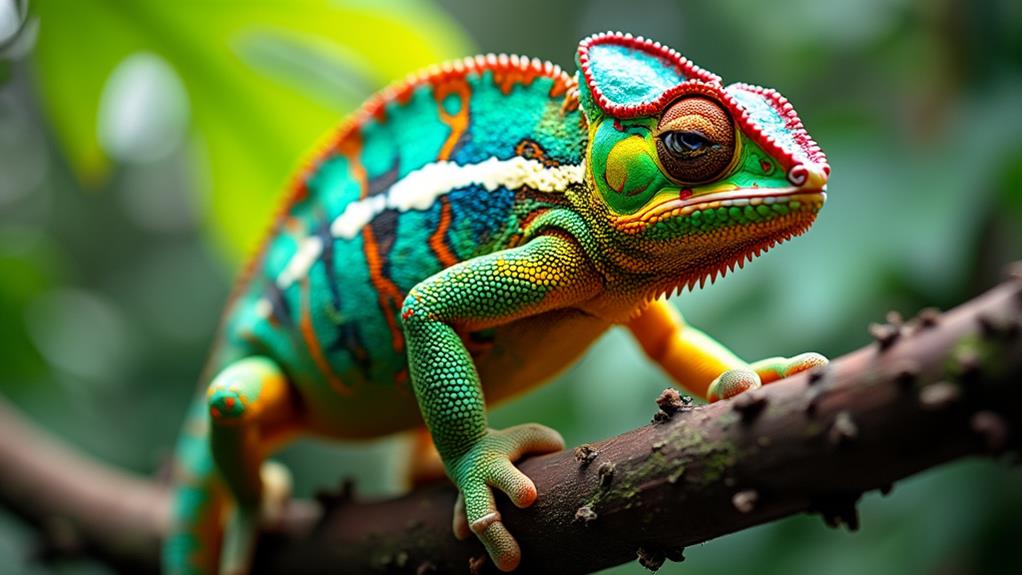
As you confirm your chameleon's health, starting with the right choice of chameleon is vital. When choosing the right chameleon, consider the species that best matches your experience and lifestyle. For beginners, the Veiled Chameleon is a great option due to its hardiness and adaptability. If you're more experienced and seek a lively pet, the Panther Chameleon, known for its striking colors, might be ideal. It's important to research specific care requirements, as each species of chameleon has unique needs. For instance, Jackson's Chameleons thrive in high humidity, necessitating specialized environmental setups.
When selecting your chameleon, verify that it appears healthy. Look for bright colors, clear eyes, and active behavior. Avoid chameleons showing signs of illness, such as lethargy or discoloration. Furthermore, be aware that chameleons are solitary animals, so housing them individually is necessary to prevent stress and aggression. Consider these factors:
- Species suitability: Veiled, Panther, or Jackson's Chameleons
- Health indicators: Bright colors, clear eyes, active behavior
- Solitary nature: House chameleons alone
- Care requirements: Tailored environments for each species
Lastly, consider the maturity and size, as juveniles have different care and feeding routines.