
Can You Get Bursitis From Riding Horses? Causes and Prevention
Yes, you can develop bursitis from riding horses, primarily due to prolonged pressure and repetitive motion on the joints. Sitting in the saddle too long, poor riding posture, and ill-fitting saddles contribute to inflammation of the bursae, especially in your hips and elbows. High-impact activities and muscle imbalances also raise the risk. To prevent bursitis, verify your saddle fits well, maintain good posture, and incorporate stretching and strengthening exercises. Taking regular breaks during rides can also help alleviate pressure. Uncovering more about these prevention strategies can protect you from the painful effects of bursitis.
Key Takeaways
- Yes, bursitis can occur from horse riding due to prolonged pressure and repetitive joint motion.
- Poorly fitting saddles and incorrect posture significantly contribute to joint strain, leading to bursitis.
- Regular saddle fit checks and posture maintenance are essential to prevent inflammation and joint strain.
- Stretching, strengthening exercises, and taking breaks during rides help alleviate pressure on bursae.
- Seeking feedback from trainers can enhance posture awareness, reducing the risk of bursitis.
Understanding Bursitis
Many people might not know that bursitis is the inflammation of bursae, those small fluid-filled sacs that cushion your joints. It often occurs in areas under pressure or repetitive motion, like the hips and elbows. When you experience bursitis, you might notice localized pain, swelling, and stiffness. These symptoms can really limit your range of motion and make everyday activities quite uncomfortable. An injury to the elbow, for instance, can quickly lead to bursitis, especially if the joint is repeatedly stressed or subjected to trauma.
Understanding the causes of bursitis is vital to preventing it. Repetitive activities, such as certain sports or occupational tasks, can put you at risk. Even simple actions like leaning on your elbows for extended periods can be culprits. To manage bursitis effectively, a proper diagnosis is fundamental. This usually involves a physical exam and might include imaging tests like X-rays or MRIs to rule out other conditions and confirm inflammation.
Once diagnosed, treatment options often include rest, anti-inflammatory medications, and physical therapy. In some cases, corticosteroid injections can help reduce pain and inflammation, allowing you to return to your normal activities sooner.
How Riding Causes Bursitis
Riding horses can be a delightful activity, but it also poses a risk for developing bursitis. When you sit in a saddle for long periods without proper cushioning, it puts prolonged pressure on your joints. This can lead to inflammation of the bursae, which are small, fluid-filled sacs that cushion your joints. The repetitive motion of riding, especially with gaited horses, causes friction and trauma to these bursae, particularly in the hip, elbow, and ischial regions.
Poor riding posture and using ill-fitting saddles can make things worse by placing undue strain on certain joints. If you ride for extended hours on hard surfaces or engage in high-impact activities, you're more susceptible to bursitis. The olecranon bursa, located in the elbow, is especially at risk due to shoe contact. Regular riding without adequate breaks can cause muscle imbalances and increase pressure on the bursae, heightening the risk of inflammation and bursitis.
To prevent bursitis, focus on maintaining good posture, using a well-fitted saddle, and taking frequent breaks. These adjustments can help reduce pressure and friction on your joints, keeping the bursa safe from inflammation.
Common Symptoms
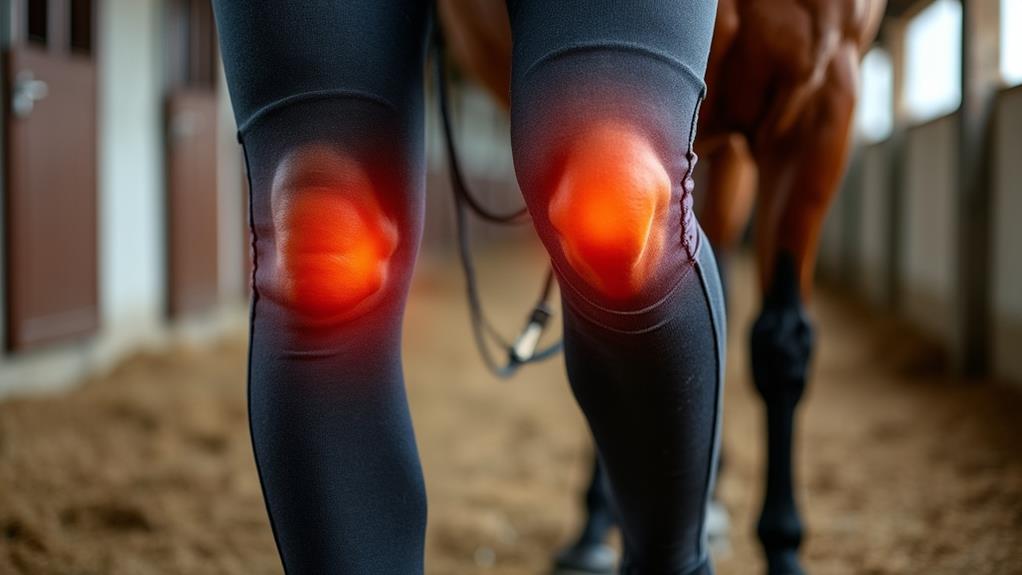
Experiencing bursitis from riding horses involves recognizing common symptoms that can affect your ability to enjoy this activity. You might notice localized pain and swelling around the joints, especially in areas like your elbow or hip. This often results from prolonged pressure and repetitive motion during rides. If you're dealing with bursitis, stiffness and a reduced range of motion in affected joints can make it tough to perform routine tasks, such as mounting or riding comfortably.
Sitting in a saddle for long periods, particularly one lacking proper support, can worsen pain, causing significant discomfort and muscle tightness. You might also see visible swelling or feel tenderness when touching the affected area. This region could feel warm, signaling inflammation within the bursa. These symptoms can be quite bothersome, impacting your riding performance and general mobility.
In some cases, bursitis can become chronic, leading to the development of a firm fibrous capsule around the bursa. This chronic condition means persistent symptoms that don't go away easily, further affecting your ability to ride. Recognizing these signs early can help you address the issue and maintain your passion for horseback riding.
Diagnosing Bursitis
Diagnosing bursitis involves a detailed process to accurately identify the condition and guarantee proper treatment. Initially, a thorough physical examination is conducted to evaluate symptoms like localized pain, swelling, and reduced range of motion in the affected area. Your healthcare provider will also consider your history of activities, such as riding horses, to determine if repetitive motion or prolonged pressure might have led to your bursitis.
To further confirm the diagnosis and rule out other conditions like fractures or tendon injuries, imaging tests such as X-rays, MRIs, or ultrasounds are often utilized. These tests provide a clearer picture of the affected area, helping to pinpoint the exact cause of your symptoms. In some cases, if an infection is suspected, a synovial fluid analysis might be necessary to differentiate between septic and non-septic bursitis.
Additionally, differential diagnosis is crucial to exclude other related conditions like tendonitis or arthritis, ensuring that you receive the correct treatment and management plan. By following this extensive approach, your healthcare provider can accurately diagnose bursitis and guide you toward effective recovery strategies, allowing you to get back to your equestrian activities with confidence.
Treatment Options
Managing bursitis from riding horses involves a combination of practical and medical approaches aimed at reducing inflammation and relieving pain. Start by resting and applying ice to the affected area. These initial steps can greatly reduce swelling and ease discomfort. To further manage pain, consider taking non-steroidal anti-inflammatory drugs (NSAIDs). They're effective in decreasing the swelling associated with bursitis.
For severe cases, corticosteroid injections offer rapid relief by targeting inflammation directly within the bursa. These injections can be a game-changer, especially when pain becomes unbearable. Alongside medical treatment, engaging in physical therapy can speed up recovery and prevent future issues. Focus on exercises that strengthen and stretch the muscles involved in riding. This not only improves flexibility but also helps ward off recurring episodes of bursitis.
In situations where conservative methods fall short, and bursitis remains persistent, surgery might be necessary. This involves removing the inflamed bursa to restore normal function.
Here's a quick recap of treatment options:
- Rest and ice application
- NSAIDs for pain management
- Corticosteroid injections for severe inflammation
- Physical therapy for strength and flexibility
Prevention Strategies
To prevent bursitis from developing while riding horses, it's vital to employ strategies that minimize pressure and stress on your joints. Start by using padded saddle pads and stirrup covers. These help reduce the pressure and friction on your hips and legs, minimizing the risk of bursitis from prolonged riding. Incorporating stretching and strengthening exercises focused on your hip and gluteal muscles is important. These exercises improve joint stability and reduce the likelihood of developing bursitis.
Proper saddle fit is important, but you should also take frequent breaks during long rides. This allows you to change positions and relieve pressure on the bursa, particularly during extended periods. Maintaining a proper riding posture is another effective prevention strategy. By distributing your weight evenly and using correct body mechanics, you can avoid placing excessive stress on your hip joints, which is a common contributor to bursitis.
Saddle Fit and Bursitis
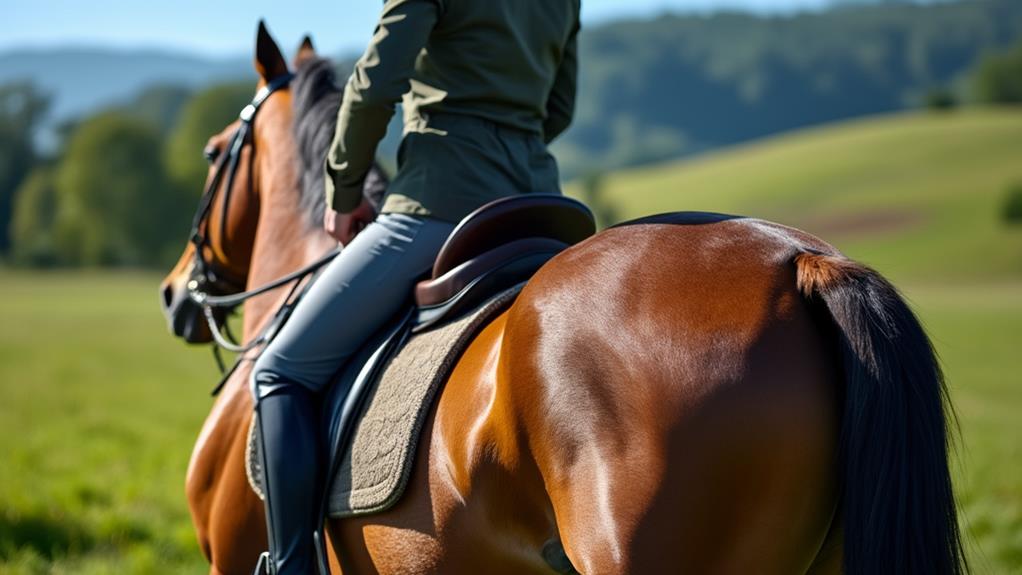
In the domain of horseback riding, a well-fitted saddle is crucial to preventing bursitis, particularly in the hips and elbows. Poor saddle fit can lead to increased pressure and inflammation of the bursae, especially in the olecranon region, resulting in conditions like capped elbow or bursitis. If your saddle is too narrow, it might cause excessive rubbing and friction on your hips; a saddle that's too wide can lead to instability and improper weight distribution. Both scenarios can increase your risk of developing bursitis.
To minimize this risk, regularly check and adjust your saddle fit to make certain it doesn't exacerbate pressure points or lead to repetitive strain injuries. Use padded saddle pads and make sure your stirrup length is appropriate to help alleviate direct pressure on your hips and elbows, effectively reducing inflammation and the likelihood of bursitis.
Here are some tips to guarantee a proper saddle fit:
- Check saddle width: Verify it's neither too narrow nor too wide.
- Use padded saddle pads: Provide extra cushioning.
- Adjust stirrup length: Reduce unnecessary strain on joints.
- Regular inspections: Frequently assess the saddle condition and fit.
Importance of Posture
While ensuring a proper saddle fit is crucial for preventing bursitis, your posture plays a significant role in mitigating strain on your body during horseback riding. Maintaining the right posture helps reduce strain on your hips and lower back, preventing excessive pressure that could lead to bursitis. When you slouch or lean too much to one side, you increase pressure on the bursae, causing inflammation and discomfort. By focusing on proper posture, you can reduce friction and keep these issues at bay.
A well-adjusted saddle supports your posture, minimizing the risk of repetitive strain injuries, including bursitis. Engaging your core muscles and maintaining an upright position can improve balance and evenly distribute your weight. This approach reduces the likelihood of bursitis developing from prolonged pressure on your hips. Remember, having good posture isn't just about looking good; it's about feeling good and staying healthy.
Incorporating posture awareness exercises into your routine and seeking feedback from trainers can help you develop healthy habits. By consistently practicing these techniques, you'll prevent excessive strain and protect yourself from the onset of bursitis, ensuring a more enjoyable and pain-free riding experience.