Can the Mexican Redleg Tarantula Be a Good Pet? What You Need to Know
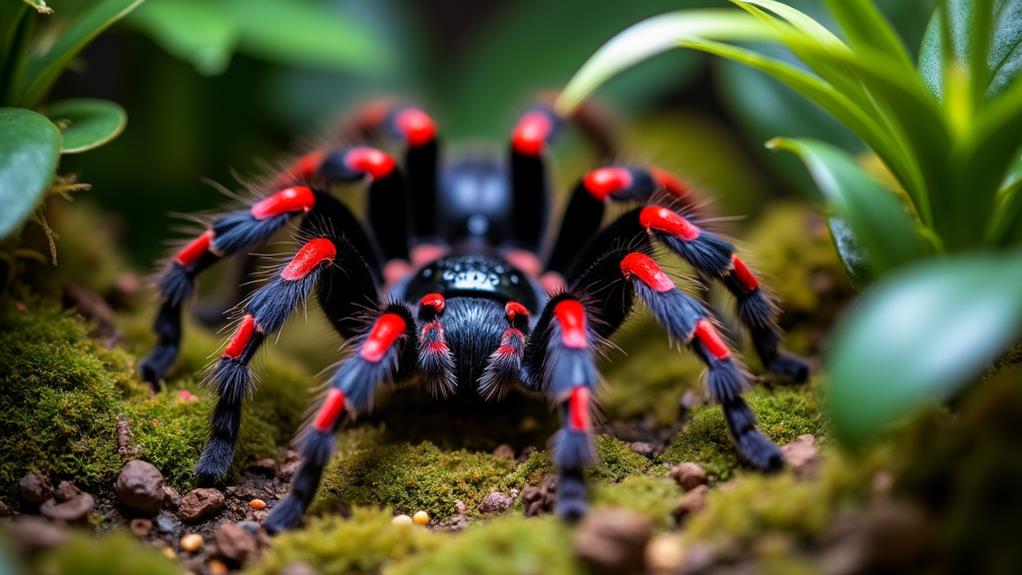
You might find the Mexican Redleg Tarantula a great pet because it's docile and requires minimal care. With a lifespan of up to 30 years, females can offer long-lasting companionship. They thrive in small enclosures, need low-cost feeding, and show fascinating behaviors. You don't have to handle them much as their venom is mild, but their hairs can irritate skin. Proper humidity, temperature, and occasional cleaning are key to their health. They're perfect for those who prefer less interactive pets. If you're considering one, there are significant details about their care and purchasing that could guide you further.
Key Takeaways
- The Mexican Redleg Tarantula is known for its docile nature, making it ideal for novice pet owners.
- Females can live up to 30 years, offering extended companionship.
- The tarantula requires minimal maintenance, needing just a few hours of care weekly.
- Feeding costs are low, ranging from $5 to $10 monthly for live insects.
- Minimal handling is recommended due to urticating hairs, not suitable for those wanting interactive pets.
Mexican Redleg Overview
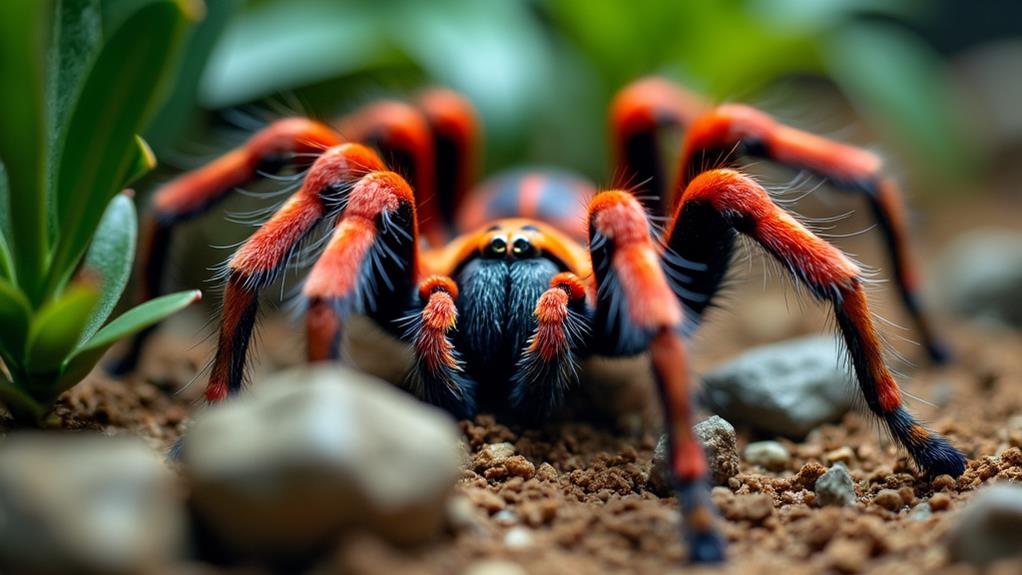
The Mexican redleg tarantula, or Brachypelma emilia, is an intriguing arachnid native to western Mexico. Known for its dark brown body and lively orange and red leg markings, it's a favorite among pet tarantula enthusiasts. As a docile species, it's ideal for novice keepers due to its calm nature and minimal socialization needs. If you're considering one as a pet, understanding its habitat requirements is vital.
Mexican redleg tarantulas thrive in environments that mimic their natural habitat. You'll need to maintain humidity levels between 65% and 70% and temperatures ranging from 75°F to 85°F. A suitable enclosure should include secure hiding spots, which provide comfort and reduce stress. Fresh water is fundamental, and you should make sure it's always available to keep your tarantula healthy.
Care and maintenance involve feeding your tarantula a diet of insects like crickets and mealworms, supplemented with nutritional powders to guarantee ideal health. With the right attention to its habitat and diet, your Mexican redleg tarantula can thrive and become a fascinating enhancement to your home, offering years of companionship and interest.
Behavior and Temperament
Understanding your Mexican redleg tarantula's behavior and temperament is key to guaranteeing its well-being. Known for its docile nature, this tarantula is a favorite among arachnid enthusiasts and a great choice for beginners. Its calm temperament means it rarely bites, and its venom is comparable to a bee sting, which is generally not harmful to humans. However, like other tarantulas, it does have urticating hairs that can cause skin irritation if it's disturbed. Consequently, it's wise to handle your tarantula infrequently to minimize stress and potential irritation.
These fascinating creatures thrive as low-maintenance pets, needing only a few hours of care each week. Their minimal socialization needs align well with their preference for a quiet environment, allowing them to showcase their unique behaviors undisturbed. When you do choose to handle your Mexican redleg tarantula, you'll find it generally remains calm, though it's best to keep handling to a minimum. Observing your tarantula can be quite entertaining, as its behavior reflects intriguing natural instincts. By understanding its needs and respecting its space, you can guarantee your Mexican redleg tarantula stays healthy and content in your care.
Housing Essentials
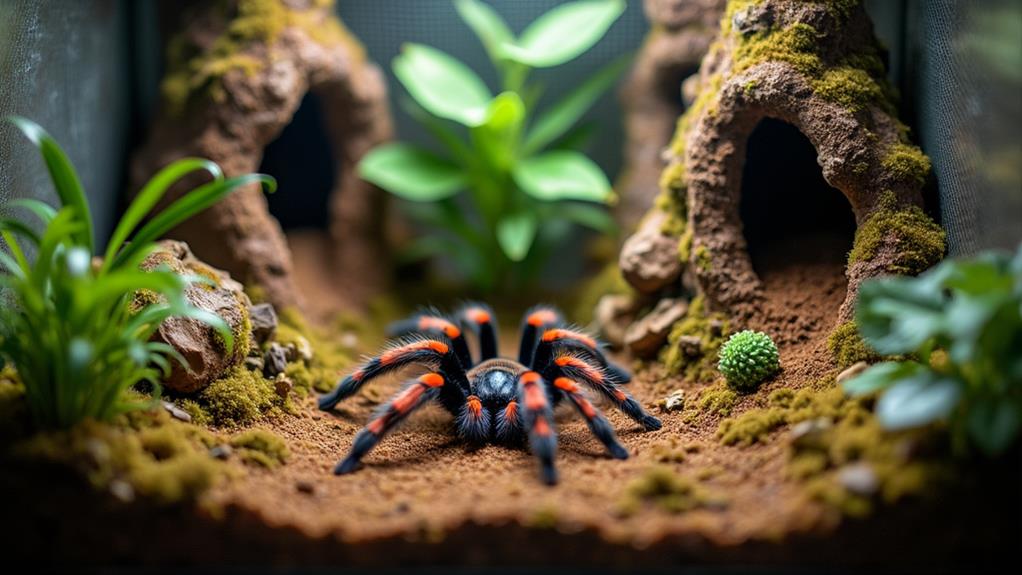
A spacious 10-gallon enclosure serves as an ideal home for your Mexican redleg tarantula, offering ample room to investigate and feel secure. It's significant to choose dimensions that provide width 2-3 times their leg span and a height of around 1 foot. For substrate, a depth of about 3.5 inches is perfect to accommodate their natural burrowing behavior. Consider using coconut fiber or cypress mulch as these materials help retain moisture, vital for maintaining proper humidity levels.
Keeping the enclosure's humidity between 65%-70% is fundamental. You can achieve this by lightly misting the enclosure regularly and providing a shallow water dish for hydration. A secure screen top is non-negotiable, as it guarantees proper airflow while preventing any sneaky escapes. Incorporate hiding places, like half logs or artificial plants, to give your tarantula some much-needed security and privacy.
Temperature control is another key housing fundamental. Aim for a thermal gradient between 75-85°F, which allows your Mexican Red Legs to choose a cozy warm side or a cooler retreat as needed. With these housing fundamentals in place, your tarantula will thrive and feel right at home.
Diet and Nutrition
In relation to feeding your Mexican Redleg Tarantula, variety and moderation are essential. These fascinating creatures primarily thrive on a diet of live insects such as crickets, mealworms, and roaches. Confirm the insects are smaller than your tarantula's body for safe consumption. You should feed them 1-2 times a week, providing 5-15 minutes for feeding. After this period, any uneaten food should be promptly removed to maintain a healthy home environment.
Incorporating nutritional supplements can improve your tarantula's diet. Dusting the live insects with vitamin and calcium powders promotes ideal health and nutrition. For variety, adult Mexican Redleg Tarantulas can occasionally enjoy frozen pinkie mice, slugs, earthworms, and waxworms. This not only diversifies their diet but also prevents dietary monotony.
Fresh water is vital, so always provide a shallow dish in their habitat. Change the water daily to confirm it remains fresh and free from stagnation, supporting your pet's hydration needs. By focusing on a balanced diet and proper hydration, you can guarantee your Mexican Redleg Tarantula remains healthy and thriving, contributing to a well-rounded, enriching pet-keeping experience.
Health and Wellness
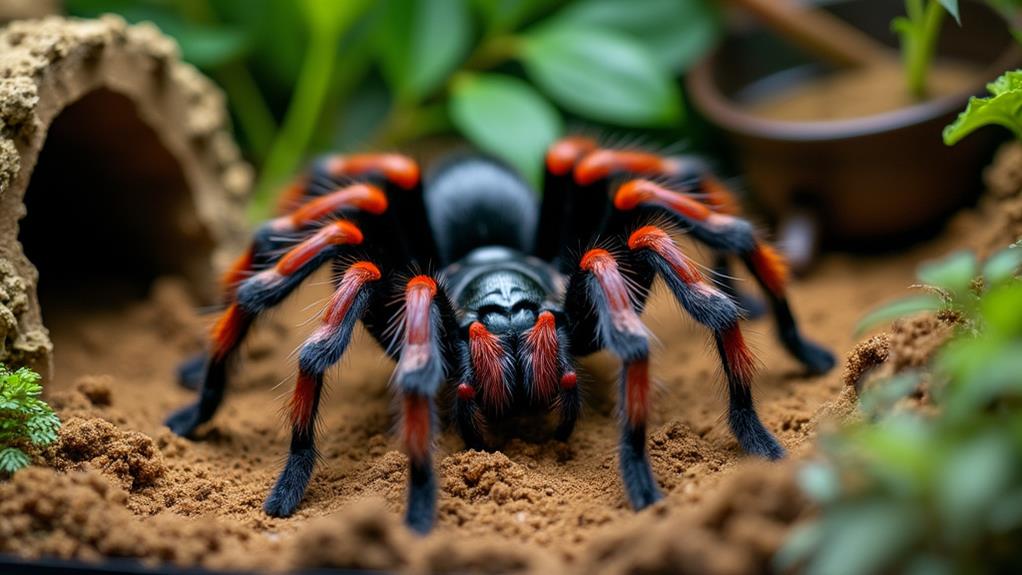
As a resilient species, Mexican Redleg Tarantulas can make hardy pets, but it's necessary to guarantee their safety by using secure enclosures to prevent falls, which can lead to serious injuries or even death. Keeping your tarantula healthy involves several key practices. Regular enclosure cleaning every 4-6 months is important to maintaining their health by preventing mold and bacteria growth. A clean habitat promotes wellness and provides a safe environment for your exotic pet.
Hydration plays an important role in your tarantula's wellbeing. Make sure to provide fresh water in a shallow dish, changing it daily to maintain peak hydration. This simple task guarantees that your Mexican redleg tarantula remains in good health.
Molting, a natural and stressful process for tarantulas, requires careful attention. Avoid feeding your pet during this time, as they are vulnerable and not ready to eat until after the molt is complete. Observing this period guarantees their safety and contributes to their general wellness.
Pros and Cons
Owning a Mexican Redleg Tarantula comes with its own set of pros and cons that potential pet owners should evaluate. This tarantula, known for its docile temperament, is a popular choice among novice pet owners who seek a low-maintenance companion. One of the significant advantages is its long lifespan; females can live up to 30 years, offering a long-term pet ownership experience that few other pets can provide.
They require minimal space, thriving comfortably in a 5 to 10-gallon enclosure, which is perfect for small living areas like apartments. Furthermore, their feeding costs are quite affordable, averaging only $5 to $10 per month. If you decide to raise your own feeder insects, you can save even more.
However, there are some cons to evaluate. Despite their calm nature, these tarantulas aren't ideal for those looking for interactive or cuddly pets, as handling should be minimal to avoid causing stress. If you're keen on a pet that you can frequently interact with, a Mexican Redleg Tarantula may not meet those expectations. Weighing these factors will help determine if this unique arachnid is the right pet for your lifestyle.
Purchasing Guide
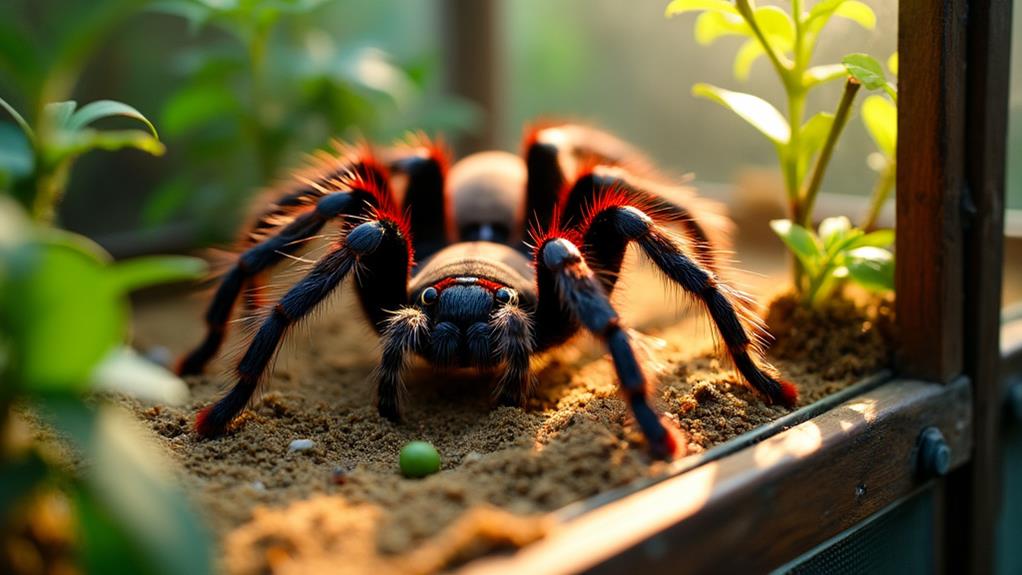
Considering a Mexican Redleg Tarantula as your next pet? It's a fascinating choice, but there's a lot to know before making a purchase. Initially, you should buy from reputable breeders or rescue organizations. This guarantees ethical sourcing and that your tarantula is healthy. Local pet stores might not provide adequate care, so exercise caution.
When you're ready to buy, prices for a Mexican red-knee can range from $100 to $200, depending on its maturity and sex. Make certain to gather thorough health and history information from the seller to avoid surprises like sick or pregnant spiders. This will make your ownership experience much smoother.
Also, keep in mind the total setup costs. A proper habitat is crucial, requiring a minimum 10-gallon enclosure, substrate, decor, and a water dish. These initial expenses can add up quickly.
Here's a quick guide to streamline your purchase:
- Source: Choose reputable breeders for ethical sourcing and healthy pets.
- Cost: Prepare for both acquisition and setup costs.
- Documentation: Request detailed health and history records.
Similar Species
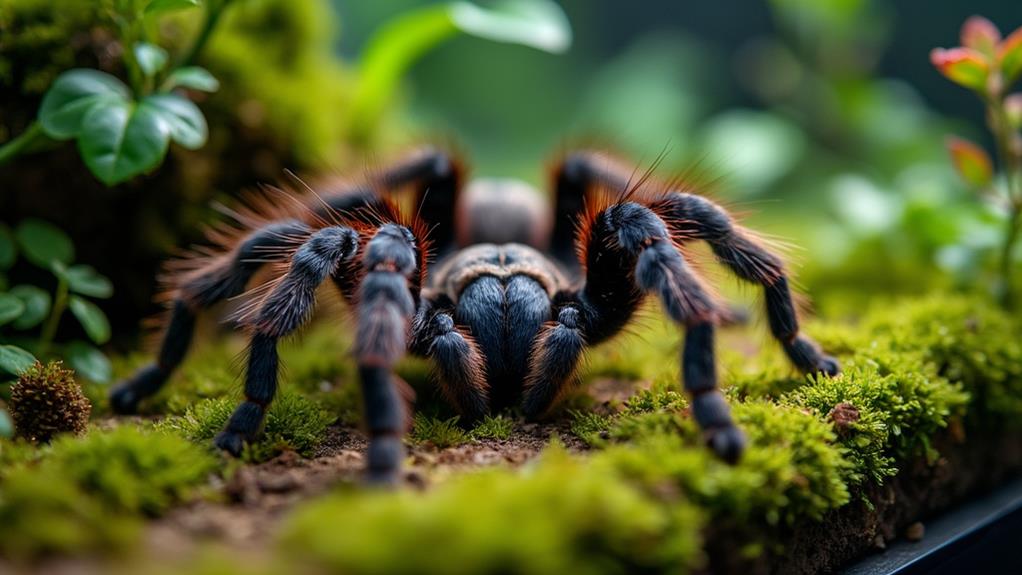
Exploring similar species can broaden your understanding and help you make an informed decision. If you're considering a Mexican redleg tarantula as your initial tarantula, you may also want to look into other species of tarantulas that are easy to care for and docile. The Mexican red knee (Brachypelma smithi) is quite similar in care requirements and temperament, making it another excellent choice for beginners. This species shares the gentle nature of the Mexican redleg and is known for being a great deal for novice enthusiasts.
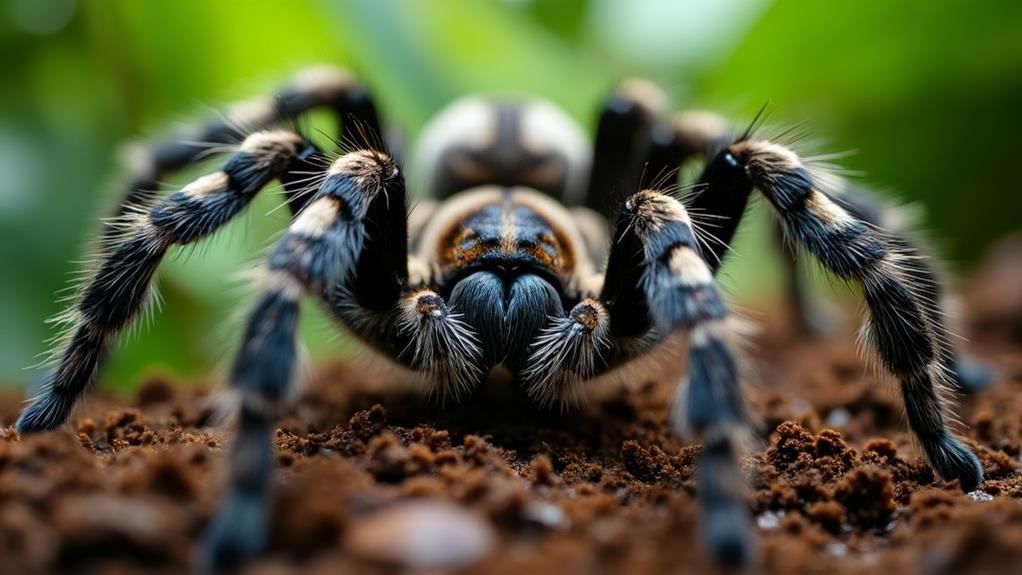
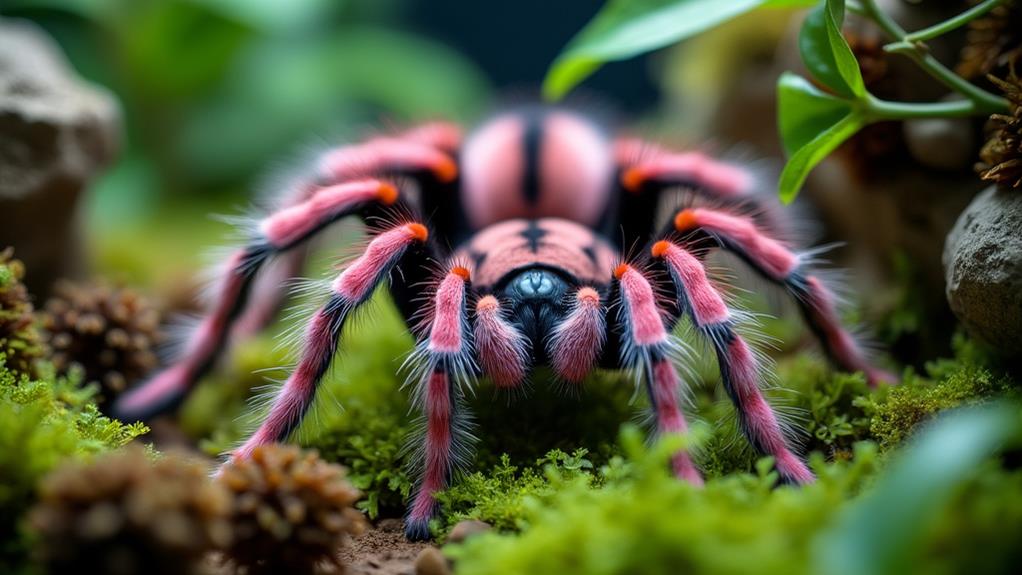
Another option is the pink toe tarantula (Avicularia avicularia), which stands out with its lively colors and arboreal habits. It offers a different experience compared to the primarily terrestrial Mexican redleg. Meanwhile, the desert blond tarantula (Aphonopelma chalcodes) is adapted to drier environments and features a lighter coloration, which might appeal to those interested in a species better suited for arid setups.
Lastly, the Chaco golden knee (Grammostola pulchripes) is a docile species that's also easy to care for, providing a gentle introduction to arachnid keeping. Each of these choices has unique traits, so research them to find the best fit for your lifestyle.
Care Costs
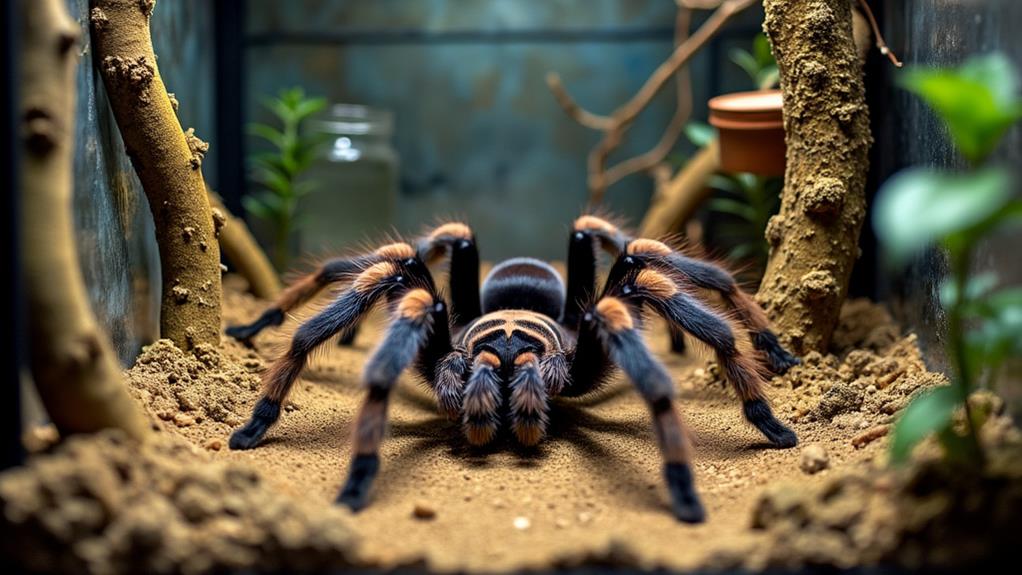
When planning to keep a Mexican Redleg Tarantula, you'll find that the care costs are quite manageable compared to more traditional pets. You can expect to spend between $5 and $10 monthly on food, which primarily consists of live feeder insects. If you're looking to cut down on these expenses, consider raising crickets at home. This can greatly lower your feeding costs over time.
Your tarantula's environment will also require some attention to maintain its health. Periodic substrate changes are crucial, with costs ranging from $10 to $20 each time. This small investment guarantees your tarantula has a clean and comfortable habitat.
Here's a quick breakdown of the main costs:
- Food: $5 to $10 monthly.
- Habitat Upkeep: $10 to $20 for periodic substrate changes.
- Vet Care: Budget for occasional specialized care.
While the general maintenance expenses remain low, don't forget about potential vet care. Exotic pets like the Mexican Redleg Tarantula may require specialized attention, and it's wise to budget for these situations. Keeping this in mind will help assure you're prepared for any unexpected health issues that may arise.
Related posts