Can Cats Be Trained? Tips for Training Your Feline

You can definitely train your cat by understanding their behavior and using positive reinforcement. Start with short training sessions of 3-5 minutes in a quiet environment. Use a clicker and high-value treats to reward desired behaviors. It's essential to stay patient and consistent, as cats need multiple repetitions to learn new tasks. Avoid negative reinforcement and instead celebrate small successes to build your cat's confidence. Keep your cat engaged by gradually increasing task difficulty and incorporating play. You'll need to identify what truly motivates your feline friend. Uncover more about effectively training your cat by exploring engaging techniques and strategies.
Understanding Cat Behavior
Understanding cat behavior is vital regarding training. To teach your cat effectively, you need to explore feline psychology, which reveals that they're primarily motivated by rewards. Positive reinforcement is essential because cats don't have a natural inclination to please humans, unlike dogs. Instead, they learn through observation and experience, so rewarding your cat for desired actions encourages repetition of those behaviors.
When it comes to unwanted behaviors, it's significant to keep in mind that any form of negative attention might actually reinforce them. Cats often use subtle tactics, like meowing or pawing, to manipulate human responses. Ignoring these behaviors can sometimes be the best strategy to eliminate them. Instead, focus on rewarding positive actions, thereby guiding your cat's behavior in a constructive direction.
Moreover, understanding that training your cat involves both mental and physical stimulation can improve your approach. This means considering activities that engage their minds and bodies, making training more effective. By observing your cat closely, you can tailor your methods to suit their individual needs. Ultimately, a deep understanding of their behavior and psychology enables you to create a harmonious environment where positive behaviors are naturally reinforced.
Essential Training Tools
To effectively train your cat, having the right tools can make a significant difference. Vital training tools like a clicker are indispensable for marking desired behaviors during training cats. This small device helps in clicker training by providing a consistent sound that signals your cat they've done something right. Pair the clicker with positive reinforcement in the form of training treats to enhance your cat's motivation. High-value treats such as small bits of tuna or prawns are perfect for engaging your feline during training sessions without causing overfeeding.
A quiet training environment is similarly important. Cats can be easily distracted, so a calm space free from noise guarantees they can focus on learning. To further capture their attention, consider incorporating items like stacking cups or yoga blocks. These can add enrichment and keep your cat engaged while working on diverse exercises.
Understanding your cat's preferences is vital, as not all cats respond similarly to the same rewards. Observe your cat closely to determine which treats they find most appealing. By tailoring the rewards to your cat's taste and using the right tools, you'll encourage the desired behavior and make training sessions both productive and enjoyable.
Effective Training Techniques
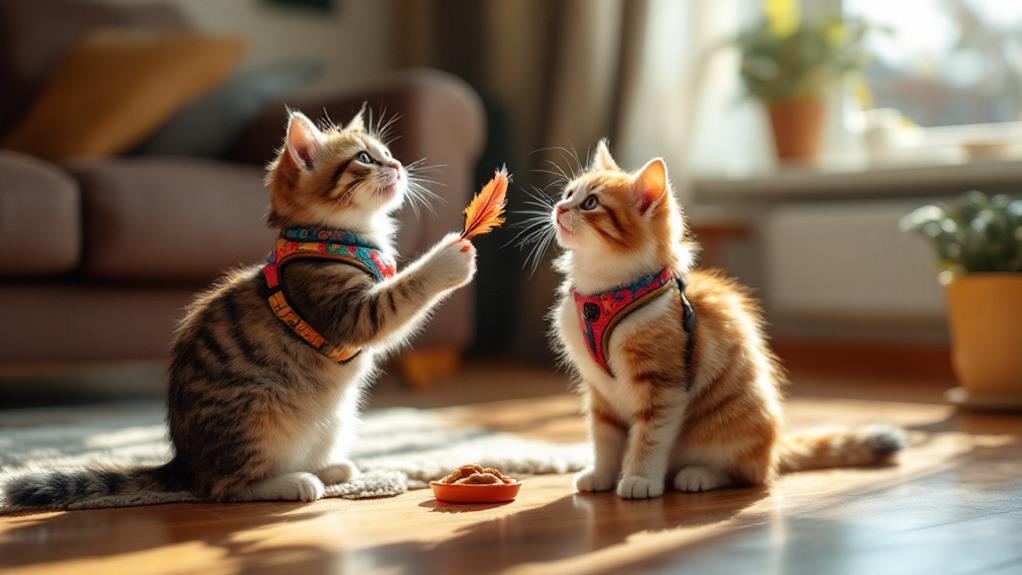
Having the right tools sets the stage for success, but knowing how to use them is just as essential when training your cat. Start by implementing clicker training, a popular cat training method that uses a distinct sound to mark good behavior. When you click at the moment your cat performs the desired action, and follow it with a training treat, you reinforce the behavior positively. It's significant to keep training sessions short—just 3-5 minutes—so your cat remains focused and engaged.
Incorporating consistent vocal cues and hand signals can also teach a cat to respond to specific commands. Remember, patience and consistency are key. Gradually increase the difficulty of tasks to prevent boredom and keep your cat motivated. Here are some techniques to reflect upon:
- Use clicker training: Provides clear auditory feedback.
- Short training sessions: Maintain focus and interest.
- High-value training treats: Increase motivation and reward.
- Consistent vocal cues: Improve communication and learning.
- Gradually challenging tasks: Keep your cat's skills progressing.
Positive Reinforcement Strategies
When training cats, positive reinforcement is a powerful strategy that boosts learning and strengthens your bond with your feline friend. Cats can learn a variety of behaviors, and using high-value treats is an effective way to motivate them to repeat good behavior. To teach them to sit or perform other actions, deliver rewards immediately and consistently. A clicker is a great tool for this, as clicking it at the moment of the desired behavior helps your cat associate their actions with positive outcomes.
Incorporating vocal cues and hand signals can further reinforce learning. Cats respond more effectively when they can link multiple forms of communication with rewards. This combination helps keep your cat focused during training sessions, making it easier to teach complex behaviors over time. Studies show that positive reinforcement not only improves learning but also reduces stress levels, creating a more enjoyable and productive experience for both you and your cat.
Gradually building skills during training sessions guarantees that your cat remains engaged and motivated. By using positive reinforcement, you're not just training a cat; you're fostering a deeper connection with your feline companion, making the process rewarding for both of you.
Common Training Challenges
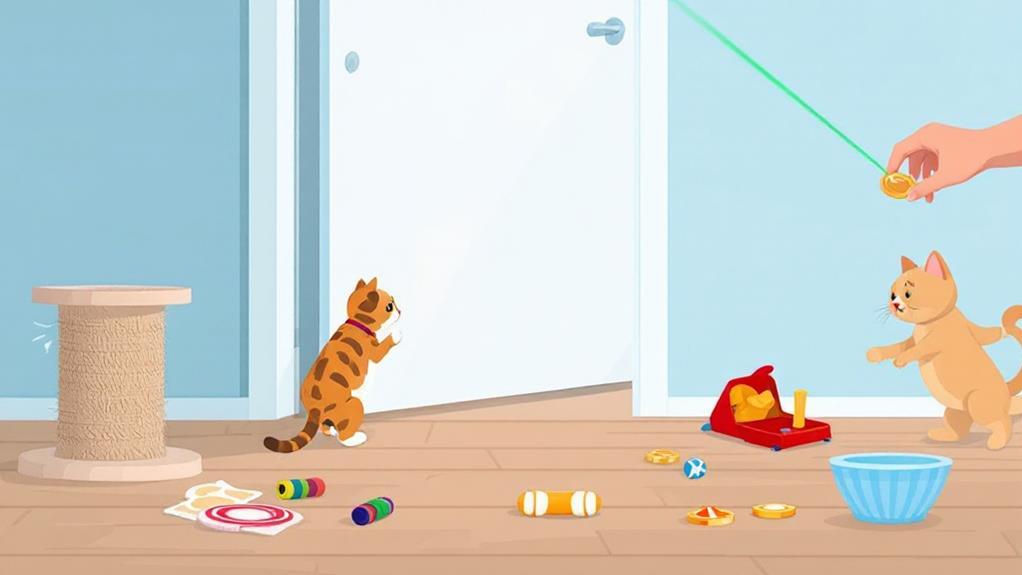
Training cats can sometimes be a puzzling endeavor due to their independent nature. Unlike dogs, cats often exhibit a lack of motivation to perform commands, making it essential to understand their unique rewards for encouraging desired behaviors. You'll encounter several training challenges, including selective compliance or resistance from your feline friend. Successfully training cats requires a strategic approach that emphasizes positive reinforcement rather than punishment, which can lead to anxiety and avoidance behaviors.
To tackle these challenges, consider the following:
- Rewards: Identify specific treats or toys that motivate your cat to engage in training.
- Patience: Understand that cats often need multiple repetitions and consistent reinforcement to learn new behaviors.
- Distractions: Choose quiet environments free from interruptions to maintain your cat's focus during training sessions.
- Consistency: Reinforce desired behaviors consistently to foster long-term compliance.
- Understanding: Acknowledge your cat's independent nature and tailor your training methods accordingly.
Benefits of Cat Training
Although cats are often seen as independent creatures, training them offers a wealth of benefits that go beyond simple obedience. When you train a cat using positive techniques, you provide vital mental enrichment. This not only reduces boredom but also decreases the likelihood of unwanted cat behaviors like scratching or aggression. Engaging your feline friend in training activities also raises physical activity, keeping them healthy and active.
The benefits of training extend to strengthening the bond between you and your cat. By fostering trust and communication, training sessions become a shared experience that improves your relationship. Trained cats typically display lower stress levels, especially during vet visits, which contributes to their general well-being. This stress reduction is important for ensuring your cat remains calm and comfortable in different situations.
Training also facilitates cooperative care tasks. Regardless of whether it's nail trimming or administering medication, a trained cat is more likely to cooperate, making these processes easier for both of you. Research even shows that shelter cats trained through methods like clicker training exhibit more positive behaviors and lower stress levels than their untrained counterparts. So, investing time in training your cat can lead to a happier, more harmonious life together.
Engaging Training Sessions
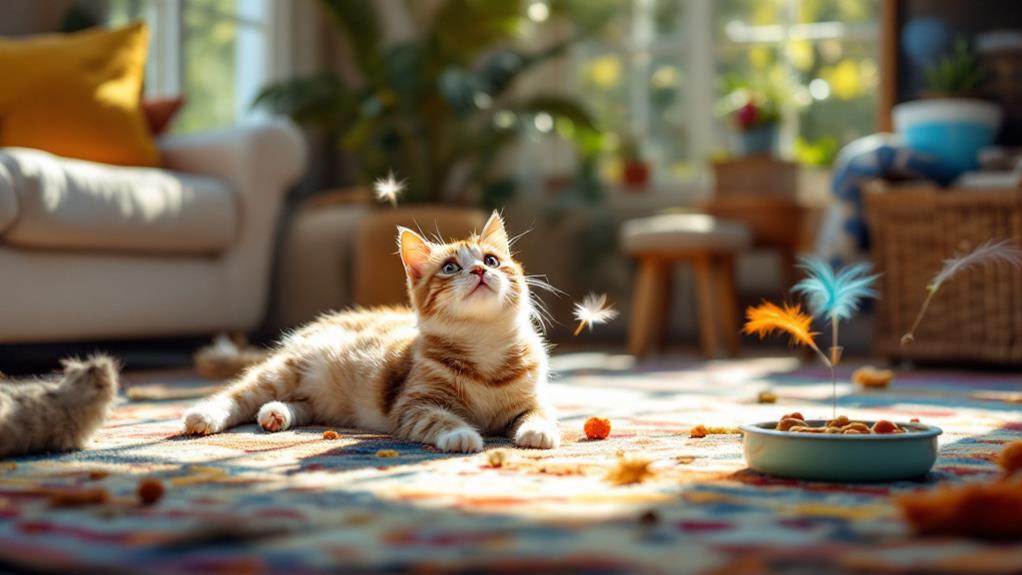
To make the most out of your cat's learning experience, it's essential to design engaging training sessions. Keep them short, around 3-5 minutes, to maintain focus and prevent boredom. Schedule training right after your cat's nap or early in the morning when they're more alert. Select a quiet space free from distractions to improve concentration. Incorporating activities like tricks or problem-solving tasks will teach your cat new behaviors and keep them mentally stimulated.
Using positive reinforcement is key. High-value treats serve as excellent motivation, ensuring your cat knows they're on the right track. These treats should be appealing but small enough to avoid overfeeding.
Here are some tips to make your training sessions more effective:
- Teach your cat to come: This fundamental behavior can be taught with consistent practice.
- Address unwanted behaviors: Redirect actions like scratching with positive alternatives.
- Introduce new behaviors: Gradually work on new skills to keep your cat engaged.
- Use high-value treats: Choose the right treats to maintain motivation.
- Avoid confusion: Keep commands clear and consistent to promote understanding.