Bulldog: The Courageous Yet Calm Companion Dog
You'll find bulldogs embody courage wrapped in calmness, making them wonderful companions. Originating from 13th century England, they were bred for bull-baiting but have since become affectionate family dogs. Their distinct look includes a short muzzle, wrinkled face, and a muscular build. Despite their stocky figure, they prefer lounging over rigorous activity, which suits relaxed households. Bulldogs are known for a charming personality, complete with endearing snorts. Though they have some health concerns, proper care guarantees a healthy life. With patient training and consistent positive reinforcement, they thrive as loyal companions. Curious to uncover more about bulldogs' unique traits?
Origins and History
The Bulldog's roots stretch back to 13th century England, where these dogs were bred for the brutal sport of bull-baiting. Bulldogs' origins lie in their role as tenacious and strong contenders, showcasing their formidable strength and bravery. The breed's name itself highlights their early function in controlling bulls, underscoring their robust and courageous nature. However, the grisly sport of bull-baiting was banned in England in 1835 with the passage of the Cruelty to Animals Act. This legislative change prompted breeders to shift their focus, aiming to cultivate the Bulldogs' gentler temperament and affectionate nature.
As time went on, Bulldogs evolved considerably, transforming from fierce bull-baiters into beloved family pets. Their evolution was recognized by the American Kennel Club (AKC) in 1886, a critical moment that cemented their status as cherished companion animals. Today, Bulldogs maintain a strong presence in diverse cultures, consistently ranking among the top dog breeds. Their history is a reflection of their adaptability, as they've seamlessly shifted from their original, more aggressive roles to become the calm and loyal companions we recognize and adore today. Their path reflects a remarkable blend of resilience and affection.
Physical Characteristics
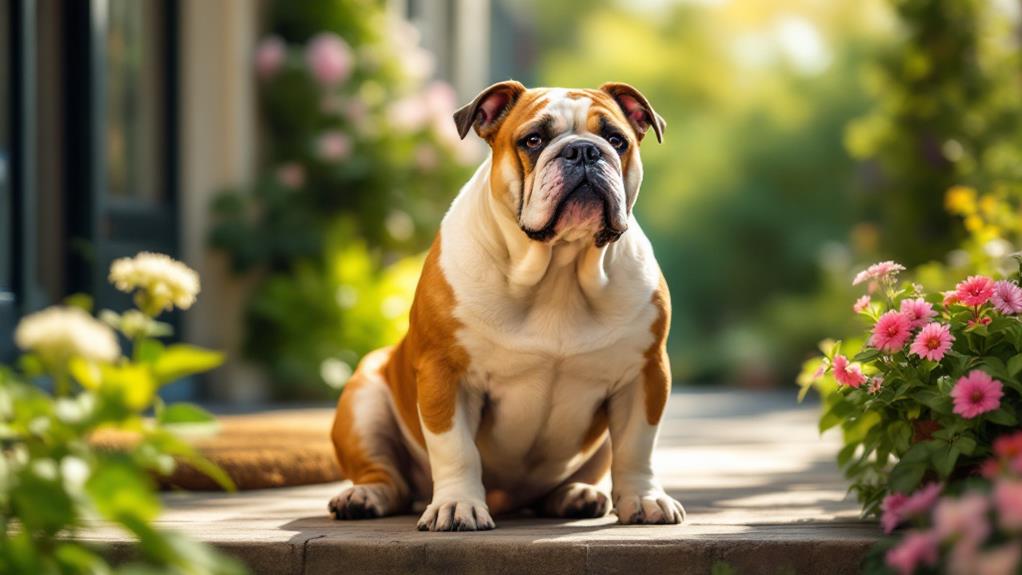
Curious about what makes Bulldogs so distinct? When you initially see a Bulldog, their distinctive appearance immediately catches your eye. Their short muzzle and wrinkled face give them a charming, unique look that sets them apart from other breeds. Bulldogs sport a smooth coat that comes in a variety of colors, including fawn, red, and brindle, often accented with striking markings like black face masks or piebald patterns. This smooth coat not only adds to their visual appeal but also makes grooming relatively easy.
The Bulldog's stocky build is another hallmark of the breed. Weighing between 40-55 pounds, they have a muscular frame and a broad chest, contributing to their powerful yet compact body structure. Standing about 14-15 inches tall at the shoulder, Bulldogs possess a sway-backed posture that, combined with their loose skin, improves their recognizable silhouette. Their small, thin ears and round dark eyes add to their endearing expression, making them a favorite among dog lovers.
All these physical characteristics—wrinkled faces, a broad chest, and compact body—make Bulldogs a breed you can easily recognize and adore, contributing to their popularity as beloved companion animals.
Temperament and Behavior
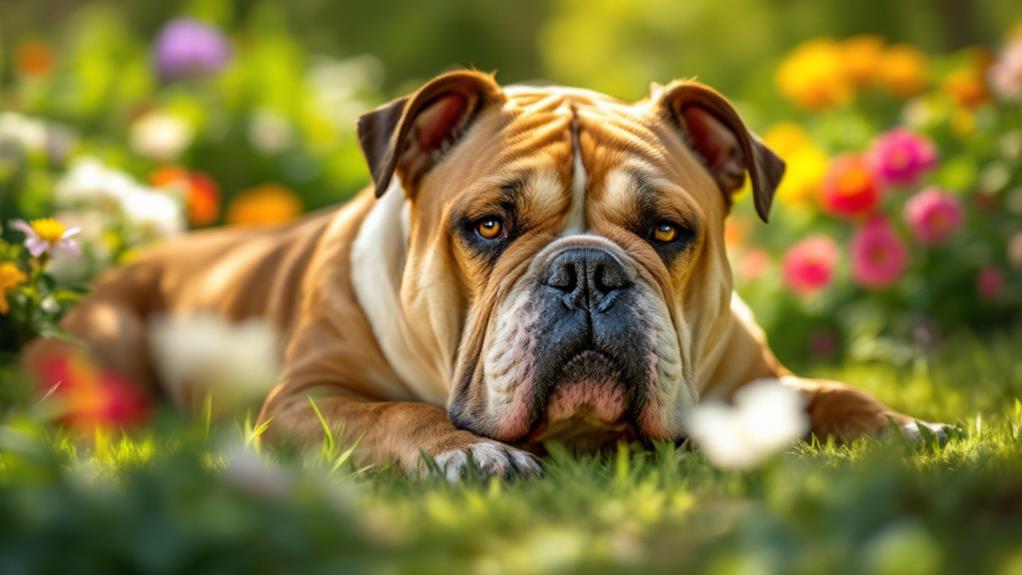
Bulldogs' temperament makes them stand out as calm yet courageous companions. They're known for their affectionate nature, making them excellent family dogs. You'll find that Bulldogs are incredibly loyal, forming strong bonds with their owners. Their calm demeanor is perfect for a relaxed household, and they often prefer lounging over extensive exercise. Despite this laid-back attitude, Bulldogs can surprise you with playful bursts, making them delightful companions for children.
However, don't mistake their calmness for complete compliance. Bulldogs can be quite stubborn, especially the males, so patient training is vital. Consistency is key when guiding these dogs, and using positive reinforcement can work wonders. Bulldogs respond well to treats, praise, and gentle encouragement, helping them learn and adhere to rules.
Early socialization also plays a significant role in shaping their behavior. Introducing them to different environments, people, and other animals helps nurture their gentle nature and guarantees they're well-adjusted. Furthermore, Bulldogs have distinctive vocalizations, like snorts and grunts, adding charm to their unique personality. In summary, with the right approach, a Bulldog's temperament and behavior make them a wonderful enhancement to any family seeking a loyal, affectionate companion.
Health and Lifespan
In regards to the health and lifespan of Bulldogs, you'll need to be particularly mindful of their unique needs. Bulldogs typically live 8 to 10 years, but their lifespan can be influenced by genetics and care practices. They are prone to specific health concerns like brachycephalic syndrome, hip dysplasia, and skin allergies. Regular veterinary check-ups are fundamental to monitor and manage these common health issues. Their brachycephalic structure can lead to breathing difficulties, especially in hot weather, so you'll want to watch their activity level carefully.
Managing a healthy weight is significant since Bulldogs easily gain weight, which can worsen health problems and reduce their lifespan. To keep them healthy, focus on:
- Diet: Make sure they maintain a healthy weight through a balanced diet.
- Exercise: Provide moderate exercise to keep them active without overexertion.
- Skin Care: Maintain cleanliness to prevent skin infections, especially in their folds.
While Bulldogs are sturdy and courageous, they need attentive care to guarantee they live a long and healthy life. By being proactive about their health concerns, you can help them enjoy their years with liveliness.
Care and Maintenance
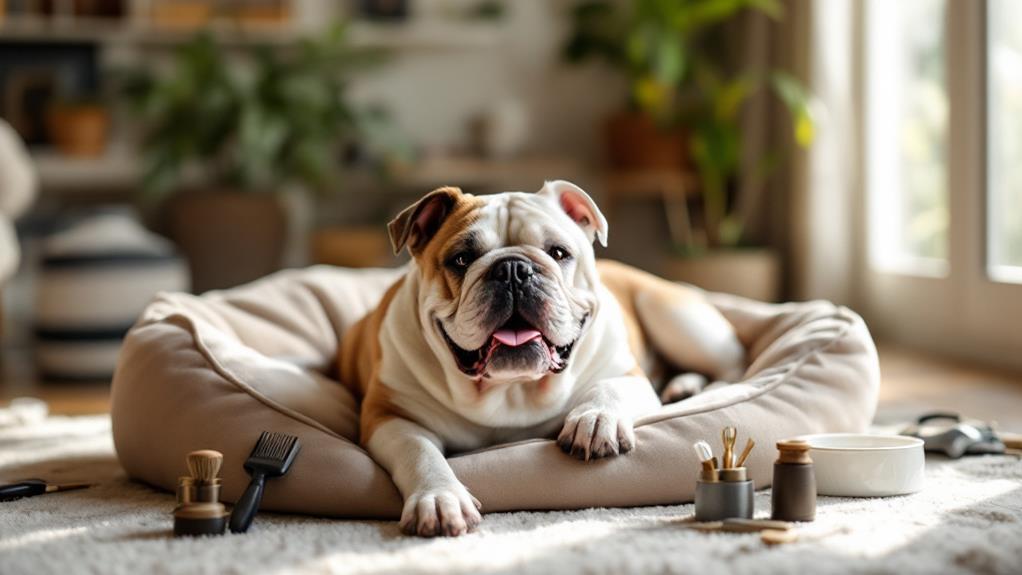
Caring for a Bulldog involves focusing on their unique grooming and exercise needs. This Bulldog Dog Breed is low-maintenance regarding grooming, requiring regular brushing and occasional baths. Pay special attention to cleaning their facial wrinkles and ears to prevent infections. Moderate exercise is significant for their health. Daily walks and short play sessions will help maintain a healthy weight and prevent obesity, a common health issue in Bulldogs.
Regular veterinary checkups are critical for monitoring health concerns such as brachycephalic syndrome, hip dysplasia, and skin conditions. These checkups guarantee early detection and treatment, keeping your dog in peak health. Bulldogs thrive in a comfortable indoor environment, so consider air conditioning during hot weather to prevent overheating due to their brachycephalic structure.
A balanced diet and careful monitoring of calorie intake are crucial for this breed. Bulldogs are prone to gaining weight easily, so high-quality food and portion control are significant. By focusing on these aspects, you can make sure your Bulldog remains a healthy and happy companion. Regular care and attention to their specific needs will go a long way in maintaining their well-being.
Training and Socialization
Shifting focus from care and maintenance, you'll find that training and socialization are likewise important aspects of having a Bulldog. Bulldogs are known for their stubbornness, so consistent and patient training is necessary for achieving good behavior. Positive reinforcement, using treats and praise, works wonders in motivating them during puppy training sessions. Early socialization is significant, helping Bulldogs develop favorable interactions with other dogs and people, thereby preventing potential aggression.
To guarantee success, follow a few key strategies:
- Consistent Routines: Establish firm daily routines for feeding, walking, and training. This helps Bulldogs understand expectations and reinforces housebreaking, which may take longer for them than other breeds.
- Puppy Training Classes: Enrolling your Bulldog in these classes provides a structured environment where they encounter assorted stimuli and commands, promoting social development.
- Veterinary Checkups: Regular visits to the vet are important to address any health concerns that might affect behavior and to guarantee your Bulldog's general well-being.
Role in Therapy and Support

Bulldogs have become cherished therapy and support animals due to their gentle and empathetic nature. Bulldogs are typically recognized for their loving nature, making them effective therapy dogs and emotional support animals. Their calm temperament and affectionate disposition allow them to provide much-needed comfort and companionship to individuals grappling with mental health challenges. With early socialization and training, Bulldogs improve their ability to positively impact families and individuals seeking emotional support. This early interaction is vital, enabling them to adjust seamlessly into therapeutic settings.
Their charming personality, highlighted by unique vocalizations like snorts and grunts, makes Bulldogs endearing companions. These traits not only draw smiles but also create a soothing environment for those in need. When you encounter a Bulldog, their presence can be incredibly reassuring and uplifting, providing a sense of stability and peace.
As their popularity in therapy roles continues to rise, Bulldogs are anticipated to remain valued contributors to mental health and well-being initiatives. You'll find that their unwavering support and calming presence make them stand out in the sphere of emotional support. Embracing their role, Bulldogs offer a unique blend of courage, calmness, and affection, making a significant difference in many lives.