Bichon Frisé: The Fluffy and Cheerful Companion Dog
Uncover the lovable Bichon Frisé, a fluffy, cheerful companion that's perfect for families and individuals. Originating from the Mediterranean and cherished by European royalty, this delightful dog boasts a distinctive curly white coat and expressive eyes. Energetic and affectionate, Bichons thrive on human interaction and are trainable with positive reinforcement. Guarantee their happiness with daily exercise and a balanced diet, while regular grooming keeps their coat healthy. They're prone to issues like allergies and dental problems, so routine vet check-ups are key. If intrigued by this charming breed, there's more to investigate about their care and companionship.
Origins and History
Although the Bichon Frisé is a breed that many cherish today, its fascinating adventure began in the Mediterranean region. You can trace the origins of this delightful companion dog back to the 14th century when Spanish sailors introduced it to the island of Tenerife. The Bichon Frisé belonged to the Bichon family, sharing its lineage with the likes of the Maltese, Havanese, and Bolognese. Its cheerful disposition quickly made it a favorite among European royalty, especially in France during the late 16th century, where it often graced the courts and was immortalized in artworks by celebrated artists like Goya and Renoir.
However, the Bichon Frisé's popularity waned by the late 19th century. During this period, the breed found itself performing in circuses, showcasing its intelligence and charm. Despite this decline, its expedition took a positive turn when the American Kennel Club recognized the breed in 1972. This recognition helped the Bichon Frisé reclaim its status as a beloved companion dog. Its ability to adapt to diverse lifestyles and cultures, along with its joyful nature, solidified its place in history as a cherished pet across the globe.
Physical Characteristics
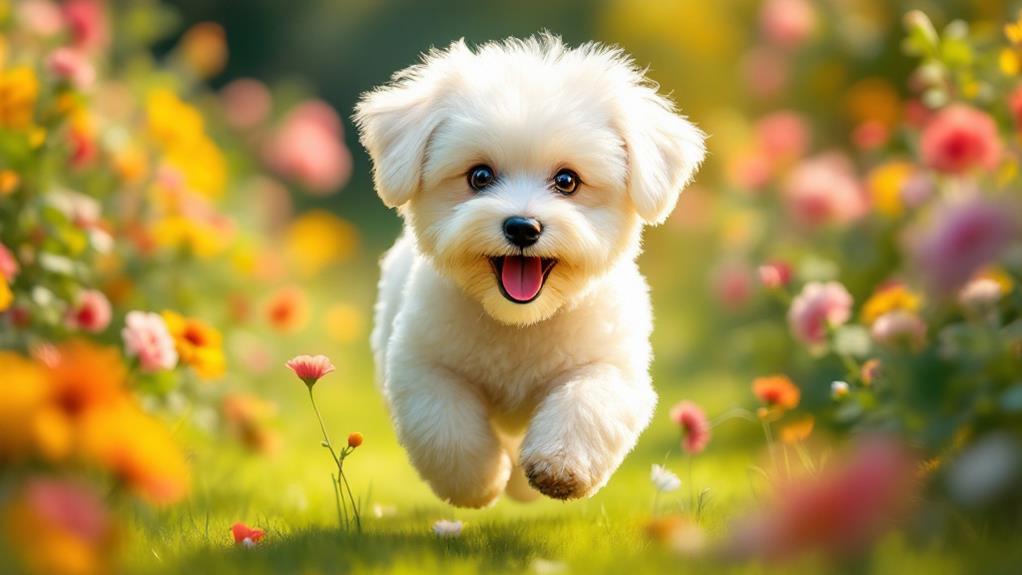
When you initially encounter a Bichon Frisé, its distinctive fluffy, curly white coat immediately grabs your attention. This breed's coat may also feature subtle cream, buff, or apricot shadings, adding to its unique charm. Weighing between 10 to 20 pounds and standing about 9.5 to 11.5 inches tall at the shoulder, the Bichon Frise presents a perfectly balanced, compact body. Its deep chest, straight back, and slightly arched neck contribute to an elegant yet sturdy appearance.
The Bichon Frisé's head is similarly charming, with a rounded skull and medium-length muzzle that lend a sense of proportion to its comprehensive look. Perhaps one of its most enchanting features is its dark, expressive eyes, which seem to communicate a cheerful demeanor at every glance. These eyes, combined with the breed's playful antics, make it impossible not to smile in its presence.
Completing the Bichon Frisé's distinctive appearance is its plumed tail, which curls gracefully over its back. This feature, along with the breed's fluffy coat, improves its charming and playful nature, making it a delightful companion. Regardless of at play or rest, the Bichon Frisé is sure to leave a lasting impression.
Temperament and Behavior
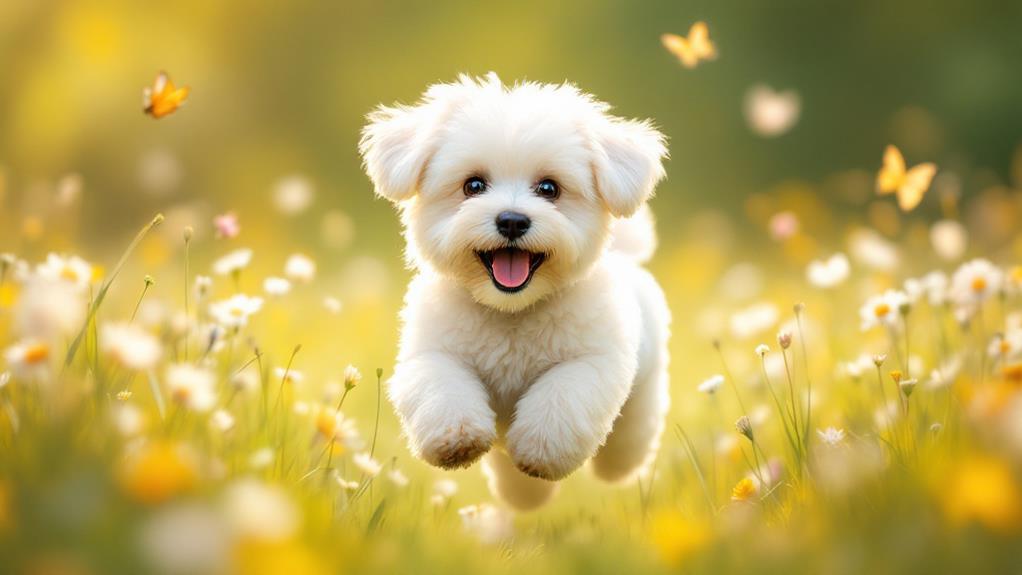
Beyond their charming appearance, Bichon Frises captivate with their delightful temperament and lively behavior. When you bring a Bichon Frise puppy into your home, you're welcoming an affectionate and energetic companion. Known for their playful nature, they often engage in spontaneous bursts of activity, affectionately called the "Bichon Buzz." These dogs thrive on human interaction, making them wonderful family pets who are generally good with children and other animals.
Early socialization is key to nurturing a well-rounded temperament in your Bichon Frise. By exposing them to diverse environments and situations, you help prevent common issues like separation anxiety and excessive barking. Their enthusiasm to please makes them highly trainable, and they respond exceptionally well to positive reinforcement methods. Using treats, praise, and consistency in training sessions guarantees your Bichon Frise quickly learns new commands and behaviors.
Their affectionate nature means they form strong bonds with their families, so spending quality time together is vital. Regardless of it being playing in the yard or snuggling on the couch, a well-socialized and trained Bichon Frise puppy will bring endless joy and companionship to your life.
Health and Care
Caring for a Bichon Frise involves several key aspects to guarantee your furry friend remains healthy and happy. To start, understanding common health issues like patellar luxation, allergies, ear infections, and dental problems is fundamental. Regular veterinary check-ups will help catch these problems early, assuring effective management and treatment. Don't overlook dental care; brushing your Bichon Frise's teeth regularly is crucial to prevent periodontal disease.
Daily exercise is another significant component of maintaining your Bichon Frise's health. This breed thrives on walks and playtime, which not only helps avoid obesity but also provides essential mental stimulation. Their affectionate temperament means they'll enjoy these activities with you, strengthening your bond.
A balanced diet is just as significant for your Bichon Frise. Confirm their meals are nutritious to support their overall health and longevity, potentially extending their lifespan to 12-15 years or even longer with proper care.
Incorporating regular grooming into their routine is also necessary to prevent matting and maintain their coat's health. Keep these crucial tips in mind:
- Routine veterinary check-ups
- Daily exercise for physical and mental well-being
- Balanced diet and dental care
Following these guidelines will help your Bichon Frise flourish.
Grooming Requirements
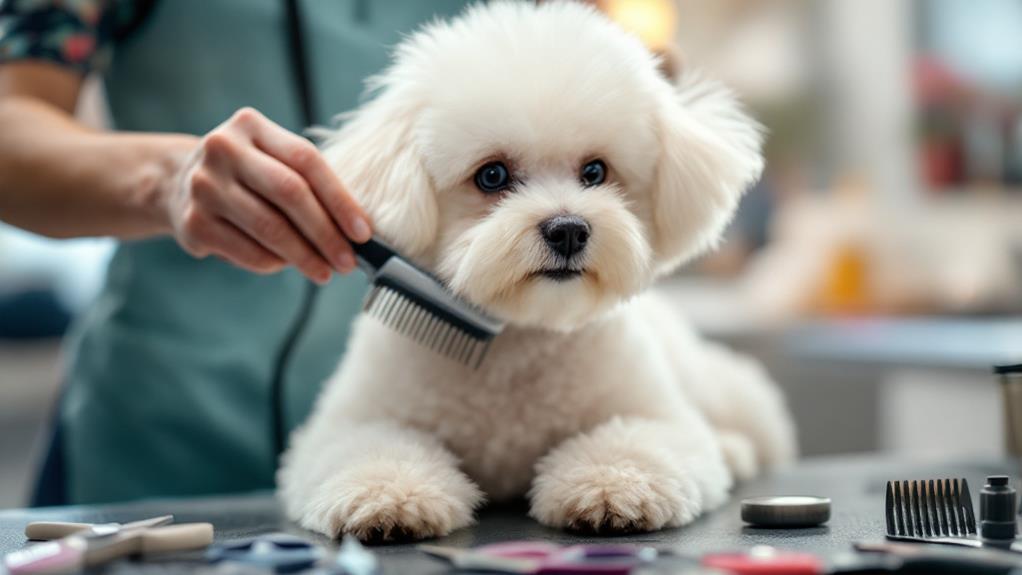
A Bichon Frise's grooming requirements are fundamental to keeping their fluffy, curly coat healthy and beautiful. Regular grooming is necessary, with brushing recommended several times a week to prevent matting. Daily brushing is ideal, ensuring their coat remains tangle-free and reducing shedding in your home. To maintain their coat's health and appearance, professional grooming should be scheduled every 4 to 6 weeks. This helps in keeping that fluffy coat in top condition.
Bathing your Bichon Frise every 3 to 4 weeks using a mild dog shampoo is critical. This routine preserves the natural oils in their coat, contributing to their comprehensive coat health. Don't forget that grooming goes beyond just their fur. Regular ear cleaning is important to prevent infections, and teeth brushing should be part of their routine to maintain dental health. Nail trimming is also necessary to prevent overgrowth and discomfort.
Training and Socialization
In relation to training and socializing your Bichon Frise, starting early is essential. Early socialization is vital, ideally beginning between 3 to 16 weeks of maturity, to develop a well-rounded temperament and prevent behavioral issues. By introducing your Bichon to different environments and situations, such as doggy playdates and training classes, you'll improve their social skills and reduce anxiety. These experiences help your Bichon adapt better to various settings and enhance their overall behavior.
Positive reinforcement is the most effective training method for Bichon Frises. They're intelligent and keen to please, making them highly responsive to consistent training. Using treats, praise, and affection to reward good behavior encourages your Bichon to follow basic commands like sit, stay, and come. These commands foster effective communication and make it easier for you to guide them in different situations.
Establishing clear boundaries and structure within your home is just as significant. This approach helps your Bichon Frise understand their place, especially in shared living spaces like apartments. Here's how you can guarantee successful training and socialization:
- Start early with socialization and training.
- Use positive reinforcement consistently.
- Expose your Bichon to different environments.
Exercise Needs
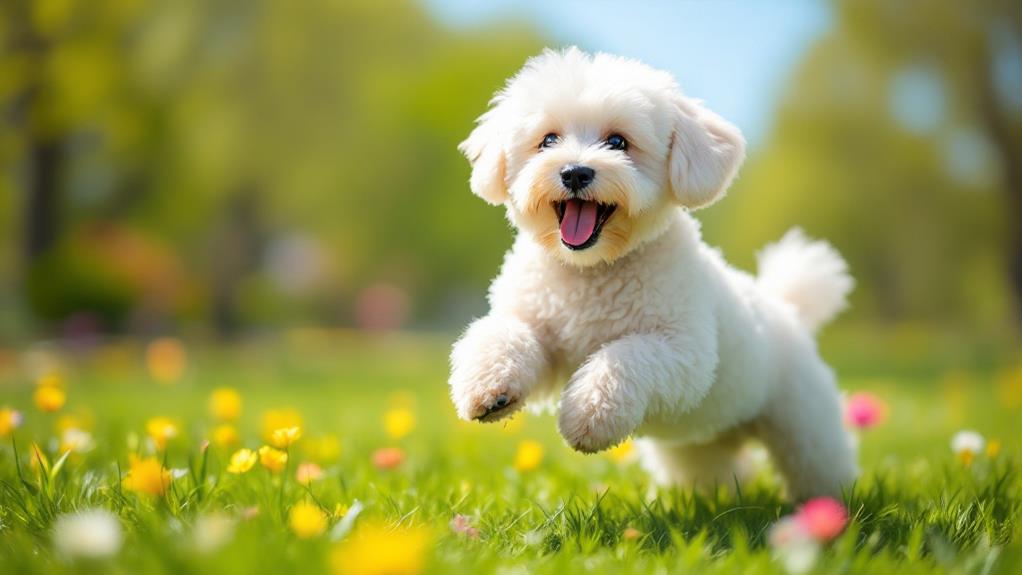
Your Bichon Frise's exercise needs are a fundamental part of maintaining their general health and happiness. Given their playful nature, guaranteeing they get daily exercise is vital. Aim for at least 30 minutes each day to keep them physically fit and mentally stimulated. Regular walks are a key component of this routine, offering the physical activity they need while also providing valuable mental stimulation. Bichon Frises are intelligent and curious, so these walks help keep their minds sharp and prevent boredom-related behaviors.
Incorporating engaging activities like fetch or agility games not only meets their exercise needs but also strengthens your bond with your furry friend. These activities tap into their energetic spirit and allow them to expend energy in a fun, fulfilling way. If you're busy, consider using dog walking services to guarantee your Bichon Frise still receives their necessary daily exercise. This way, you maintain their physical health and keep their playful nature in check, even when your schedule is tight. Remember, a well-exercised Bichon Frise is a happy and content companion, ready to bring joy into your life every day.
Choosing a Breeder
After guaranteeing your Bichon Frise's exercise needs are met, it's just as important to choose the right breeder when bringing a new puppy into your home. Start by seeking responsible breeders who prioritize the compatibility between Bichon Frises and your lifestyle. They should inquire about your living situation and daily routine to ascertain a good match. A reputable breeder will be transparent about significant aspects of the puppy's background, including its temperament and vaccination history.
Meeting the puppy's parents is a noteworthy step, as it gives insight into the potential health and temperament of your new companion. Ask for documented health screenings for conditions like hip dysplasia and patellar luxation, guaranteeing the puppy's well-being. It's also essential to confirm the puppy's stage of development; it should be at least eight weeks old before leaving its mother, important for proper socialization.
Here's what to look for when choosing a breeder:
- Compatibility Assessment: Confirm the breeder asks about your lifestyle and living situation.
- Health Assurance: Request health screenings and vaccination history.
- Parental Meet-and-Greet: Meet the puppy's parents to understand temperament and health.