Best Hypoallergenic Dog Breeds for Allergy Sufferers
If you suffer from allergies but dream of having a dog, several hypoallergenic breeds might be perfect for you. Consider a Poodle or the cheerful Bichon Frise, both having low-shedding coats that help reduce allergen spread. An American Hairless Terrier might suit you too, known for producing fewer allergens in general. Hybrid breeds like the Labradoodle or Goldendoodle, blending Poodle traits, offer friendliness with minimal shedding. Regular grooming is essential to keep allergens at bay. Choosing the right breed and maintaining a clean environment will make your home more allergy-friendly and allow you to investigate a world of joyful companionship.
Understanding Hypoallergenic Dogs
Understanding hypoallergenic dogs is vital if you're considering a canine companion but suffer from allergies. These dog breeds are known to produce fewer allergens, which can make life easier for those prone to allergic reactions. It's essential to acknowledge that no breed is entirely free from allergens. Dander, saliva, and urine are the main sources of these allergens, with dander being the most common trigger.
Hypoallergenic breeds often have hair rather than fur, which means they shed less. This reduced shedding helps minimize the spread of allergens throughout your home, offering some relief to allergy sufferers. However, having a hypoallergenic dog doesn't mean you're off the hook regarding grooming. Regular grooming is critical to manage allergens effectively. By keeping dander levels low, you can maintain a cleaner environment and reduce the likelihood of allergy flare-ups.
With approximately 10% to 20% of the U.S. population affected by dog allergies, understanding these factors is vital. Choosing the right breed and maintaining consistent grooming routines can greatly improve your quality of life while enjoying the companionship of a furry friend.
Top Breeds for Allergy Relief
Now that you're familiar with the basics of hypoallergenic dogs, let's investigate some of the top breeds that offer allergy relief. The Poodle, available in standard, miniature, and toy sizes, stands out with its low-shedding, curly coat and remarkable intelligence. Its ability to produce less dander makes it a favorite among allergy sufferers. Known for being playful and requiring regular grooming, the Poodle also boasts an affectionate nature.
Next, consider the Bichon Frise, a breed with a playful, non-shedding coat that demands regular grooming. This makes the Bichon Frise an excellent choice for families and individuals with allergies. Its lively personality and affectionate nature make it a delightful companion.
For active individuals, the Portuguese Water Dog, with its water-resistant, curly coat, is ideal. It sheds minimally and requires daily exercise, making it perfect for energetic allergy sufferers. Its loyal and affectionate nature adds to its appeal.
Lastly, the American Hairless Terrier and Maltese are great choices. The American Hairless Terrier, unique for its lack of fur, produces considerably fewer allergens, while the Maltese, with its long, silky coat, is low-shedding and reduces dander, offering relief to those with allergies.
Grooming and Maintenance Tips

How can you guarantee your hypoallergenic dog remains comfortable and minimizes allergens in your home? Regular grooming and maintenance are essential. For hypoallergenic breeds, reducing dander and maintaining coat health is imperative. Some dogs need professional grooming every 4 to 8 weeks, but you can also establish a consistent routine at home.
- Daily Brushing: If you have a long-haired breed like a Maltese or Bichon Frise, daily brushing is important. It prevents matting and greatly reduces allergens by removing loose hair and dander.
- Bathing: Use hypoallergenic shampoos during baths to reduce dander and prevent skin irritation for both your dog and yourself. Regular bathing, as recommended for your specific breed, helps maintain clean fur and skin.
- Washing: Don't forget about your dog's bedding and toys. Washing these items weekly eliminates accumulated allergens and keeps your home environment cleaner.
Creating an Allergy-Friendly Home
In pursuit of a comfortable living space for both you and your hypoallergenic dog, it is vital to create an allergy-friendly home. Start by investing in air purifiers equipped with HEPA filters. These devices capture airborne allergens, like pet dander and dust mites, contributing to a cleaner environment. To further reduce allergens, regularly vacuum carpets and upholstery using a vacuum cleaner designed for pet hair. This minimizes allergen accumulation, helping to keep allergies in people at bay.
Establishing pet-free zones, such as bedrooms, can greatly limit exposure to allergens. These safe havens offer relief for allergy sufferers and guarantee a restful night's sleep. Don't forget to wash pet bedding and any fabrics your dog frequently contacts at least once a week in hot water. This step is key to effectively removing dander and other allergens.
A routine cleaning schedule is fundamental. Consistent dusting and washing floors reduce allergen buildup throughout your home. By maintaining this regimen, you create a more welcoming environment for everyone, including your hypoallergenic dogs. With these measures, you'll enjoy a cleaner space and better health, allowing you and your furry friend to coexist comfortably.
Evaluating Your Living Environment
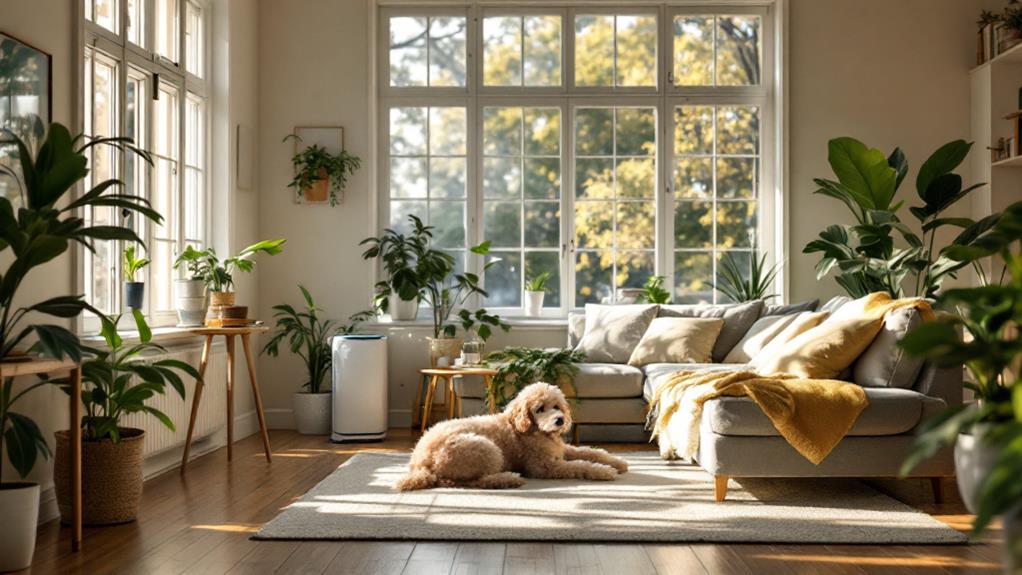
When deciding on a hypoallergenic dog breed, it's important to thoroughly evaluate your living environment. By doing so, you can better manage allergens and create a comfortable space for both you and your furry friend. Here are some key considerations:
- Size and Activity Level: Evaluate your living space. If you have a smaller apartment, you might prefer hypoallergenic breeds like the Bichon Frise or Maltese, which don't require extensive exercise. In contrast, energetic breeds such as the Portuguese Water Dog need more room to roam and exercise.
- Carpets and Cleaning Routines: Consider the presence of carpets and heavy drapes, which can trap allergens. Opt for hard surface flooring to help mitigate allergy symptoms. Maintaining a regular cleaning routine is vital for minimizing allergens in your home, regardless of the dog breed.
- Allergy Management and Grooming: Even hypoallergenic breeds can produce some allergens. Monitoring how you react within your specific living environment is significant for effective allergy management. Regular grooming can also help reduce allergens, keeping your dog's coat clean and less likely to irritate your allergies.
Choosing the Right Puppy
Selecting the perfect hypoallergenic puppy involves more than just picking a cute face; it requires considering breeds known for lower allergen production, like Poodles, Bichon Frises, and Maltese. These breeds have non-shedding coats that help minimize dander, making them excellent choices for allergy sufferers. But individual reactions can vary, so it's vital to spend time with potential breeds to assess any allergic reactions before making a decision.
Once you've narrowed down your breed choice, prepare for regular care and grooming. Many hypoallergenic breeds, including the Bichon Frise, need consistent grooming to control dander and keep their coats healthy. This involves not only regular brushing but also using hypoallergenic grooming tools that help manage allergens effectively.
Before bringing your new puppy home, create a designated space with all the necessities. This includes food, toys, and grooming supplies tailored for hypoallergenic dogs. By doing this, you'll guarantee a smooth changeover and help manage allergens from the start. Remember, choosing a hypoallergenic breed known for its non-shedding coat is just the initial step; maintaining their coat and health through regular grooming is key to minimizing allergic reactions.
Working With Reputable Breeders
Finding a reputable breeder is vital in guaranteeing you bring home a healthy and well-adjusted hypoallergenic puppy. Start by focusing on breeders registered with recognized kennel clubs like the American Kennel Club (AKC). This guarantees they adhere to breed standards and ethical practices. You'll want a breeder who prioritizes health testing and provides genetic testing results. This minimizes inherited health issues, guaranteeing your new companion is as healthy as possible.
When working with reputable breeders, it's important to evaluate their breeding facility. Visiting in person lets you see the living conditions firsthand, confirming that the dogs and puppies are raised in a nurturing environment. Ask for references from previous puppy buyers to gain insights into the breeder's reputation and the quality of puppies they produce.
Here are steps to guide you:
- Check AKC Registration: Verify the breeder's affiliation with the American Kennel Club to guarantee they meet breed standards and ethical practices.
- Visit the Facility: Inspect the breeding facility to assess the living conditions and care provided.
- Review Contracts and Guarantees: Guarantee the breeder offers a written contract and health guarantee, providing ongoing support for your puppy's health and well-being.
Popular Hybrid Breeds
Imagine a world where allergy sufferers can enjoy the companionship of a dog without the constant sniffles and sneezes. Popular hybrid breeds like the Labradoodle, Goldendoodle, Schnoodle, Whoodle, and Shih-Poo offer this possibility with their hypoallergenic coats and minimal shedding. These breeds combine the best traits of their parent breeds, resulting in dogs perfect for those sensitive to allergens.
Labradoodles, a cross between a Labrador Retriever and a Poodle, are known for their friendly nature and low-shedding coats, making them a favored choice among allergy sufferers. Likewise, Goldendoodles, born from a Golden Retriever and a Poodle, boast a curly, low-shedding coat that reduces allergen exposure while maintaining an intelligent and sociable demeanor. Schnoodles, from Schnauzer and Poodle parents, are adaptable and friendly, often inheriting the Poodle's hypoallergenic traits.
The Whoodle, a blend of Soft Coated Wheaten Terrier and Poodle, offers minimal shedding and a playful, affectionate personality. Finally, the Shih-Poo, a cross between a Shih Tzu and Toy Poodle, is small but friendly, with a hypoallergenic coat requiring regular grooming. These hybrid breeds prove that you can find a furry friend without the allergic reactions.