Best Cat Breeds for Those With Allergies: Hypoallergenic Feline Friends
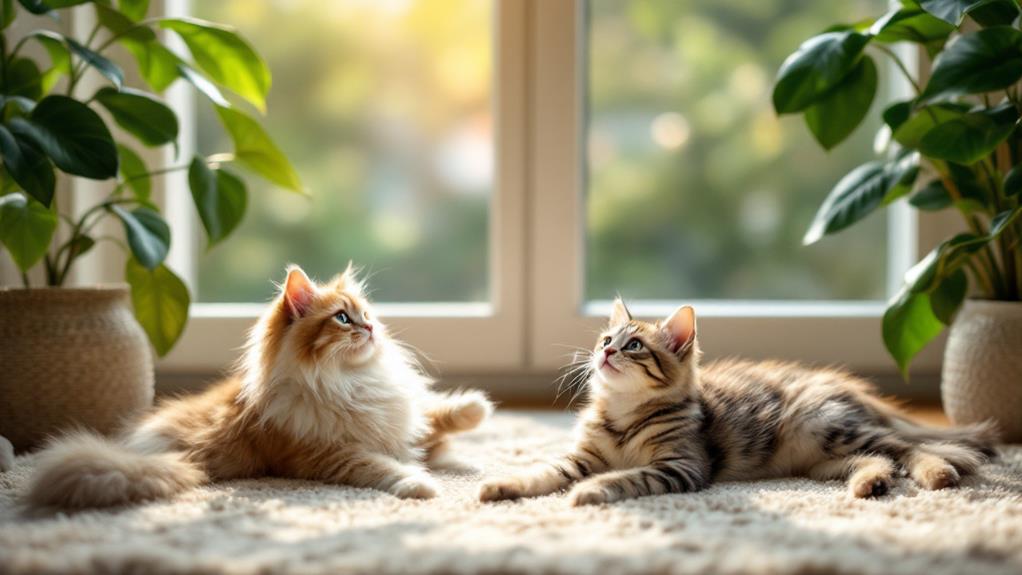
If you're allergic to cats but still want a feline friend, consider hypoallergenic breeds like the Siberian, Siamese, or Sphynx. These breeds produce fewer allergens, especially the Fel d 1 protein, which is often the cause of allergic reactions. Siberian cats have a loving personality and require regular grooming, while Siamese cats are social and interactive with minimal shedding. For something truly unique, the hairless Sphynx cat might steal your heart with its affectionate nature. Regular grooming and cleaning can help keep allergens at bay. There's much more to investigate about these ideal companions.
Understanding Cat Allergens
Many people don't realize that cat allergies are mainly caused by proteins found in cat saliva, skin, and dander, not the fur itself. The Fel d 1 protein is the primary culprit in triggering allergic reactions. When cats groom themselves, they spread saliva onto their fur, which dries and becomes airborne, exposing allergy sufferers to these allergens. Notably, female cats typically produce lower levels of allergens compared to their male counterparts. Neutered males also emit considerably less Fel d 1 protein than intact males, making them a better choice for those with cat allergies.
To manage these allergies, you can consider certain hypoallergenic cat breeds known to produce less Fel d 1 protein. While no cat is completely free of allergens, selecting breeds that naturally produce lower levels can make a considerable difference in reducing allergic reactions. Furthermore, maintaining a clean environment by vacuuming regularly and using air purifiers can help reduce allergens in your home. This proactive approach is crucial for creating a comfortable space for both you and your feline companion. Understanding these factors can guide you in choosing a cat that aligns with your needs, minimizing the impact of cat allergens in your life.
Benefits of Hypoallergenic Cats
Choosing the right cat breed can considerably impact how you manage allergies, especially for those sensitive to cat allergens like the Fel d 1 protein. Hypoallergenic cat breeds are a game changer for allergy sufferers. These breeds, such as the Siberian and Balinese, are known to produce fewer allergens, particularly the Fel d 1 protein. This means you can enjoy the companionship of a feline friend without experiencing severe allergy symptoms.
Owning hypoallergenic cats offers more than just reduced allergic reactions. Many of these breeds boast affectionate temperaments, making them excellent companions. The Sphynx and Devon Rex, for instance, are not only friendly but also provide emotional support, enhancing your general well-being. This emotional connection is a significant benefit of pet ownership, allowing you to enjoy the joys of having a cat without the usual allergy concerns.
Regular grooming is another advantage of hypoallergenic cat ownership. It helps maintain your cat's coat health and minimizes allergen spread around your home. By keeping allergens at bay, you create a more comfortable living environment, making cat ownership a fulfilling and manageable experience for allergy sufferers.
Siberian Cat Features
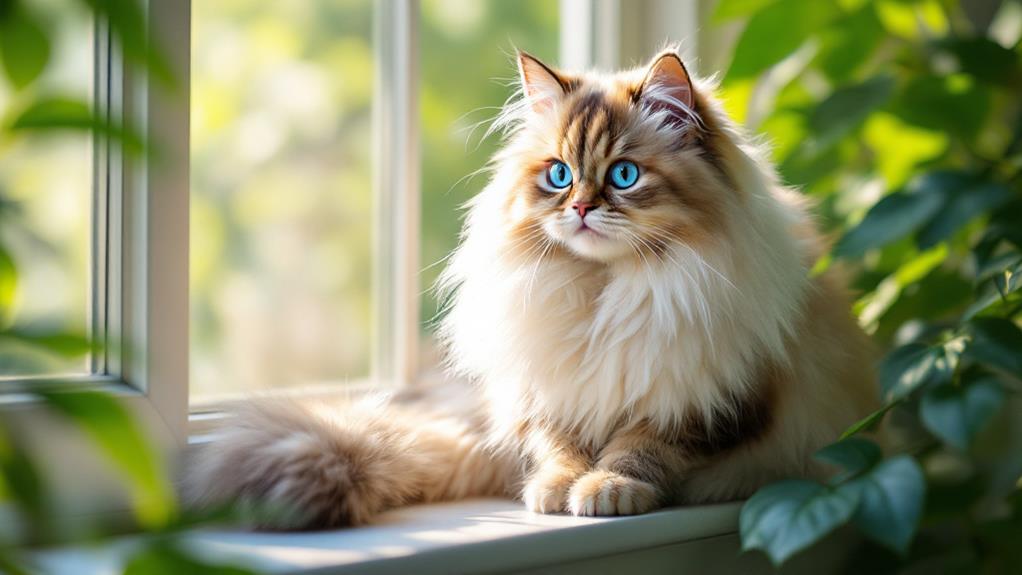
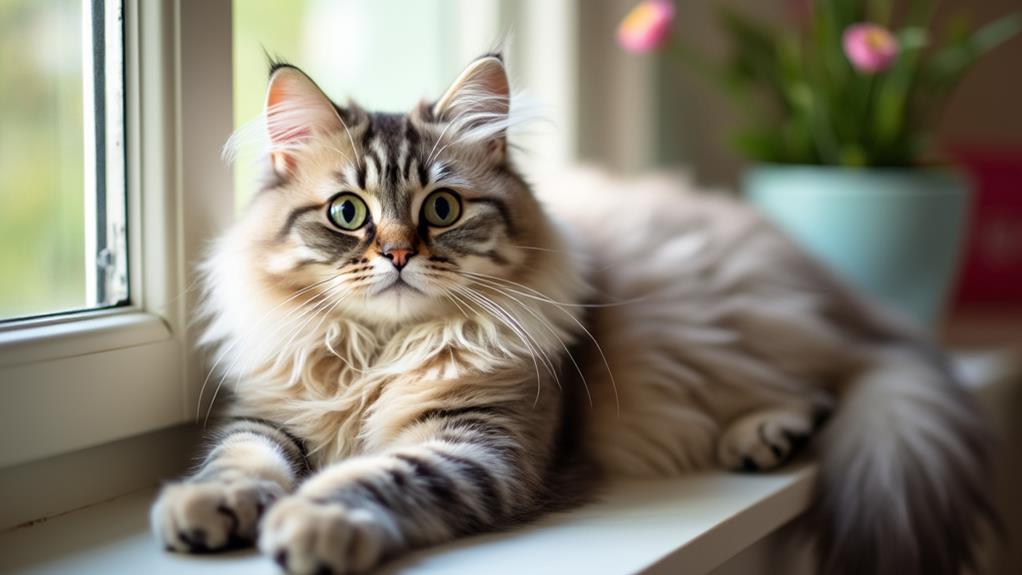
Siberian cats are often celebrated for their hypoallergenic qualities, primarily due to their lower production of the Fel d 1 protein, which is a common trigger for cat allergies. If you're prone to allergies but still dreaming of a feline friend, Siberian cats might just be your ideal companion. Their saliva contains reduced levels of this allergenic protein, making them a better choice for allergy sufferers.
These furry companions boast a triple coat, which requires regular grooming. By maintaining a consistent grooming routine, you can effectively manage dander and allergens, ensuring your Siberian's coat remains healthy and minimizing allergic reactions. Their dense fur also highlights their medium to large-sized, robust build, weighing in at a substantial 10 to 20 pounds and standing 9 to 11 inches tall.
Siberians are known for being incredibly affectionate and friendly, making them a wonderful enhancement to families and social environments. Their adaptable nature allows them to thrive in different living situations, providing you with a loving and interactive pet. Plus, with an impressive lifespan ranging from 10 to 18 years, you can look forward to many years of rewarding companionship with your Siberian cat.
Siamese Cat Traits
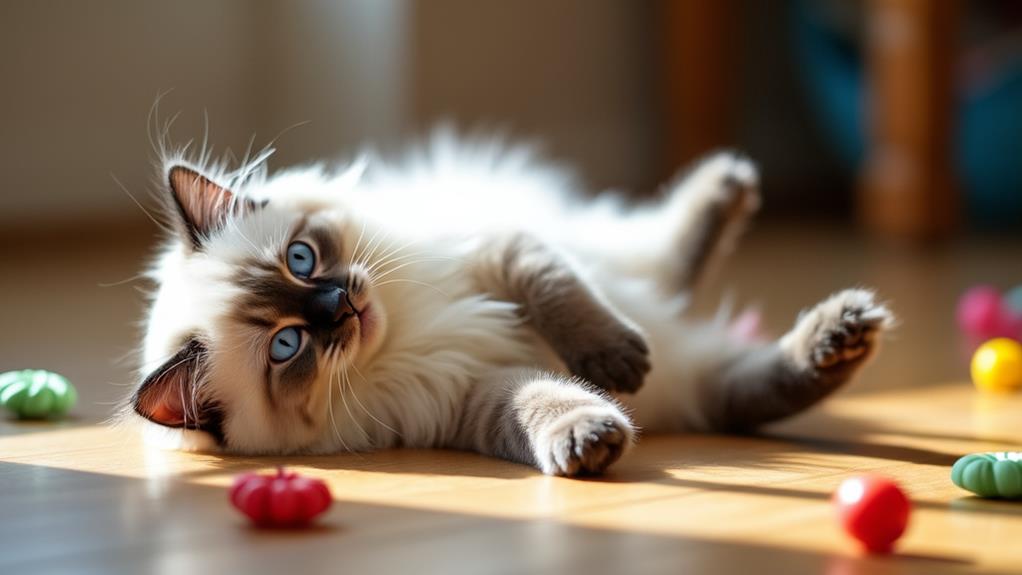
While Siberians are known for their hypoallergenic qualities, Siamese cats offer a different set of traits that might pique your interest, especially if you're looking for a sociable and engaging pet. These elegant felines have a short, dense coat that requires minimal maintenance and sheds very little. This minimal shedding can help reduce allergens in your home, an essential factor if you or your family members have allergies to cats.
Siamese cats are renowned for their affectionate and social nature. They form strong bonds with their human companions and are happiest when they're part of the action. If you're someone who enjoys a chatty pet, you'll appreciate their vocal communication. Siamese cats love to "talk" and express themselves, making them an engaging presence in any household.
An active and playful breed, Siamese cats require regular interaction and mental stimulation to thrive. They're not the kind of pets who'll be content lounging around all day. Instead, they enjoy playtime and activities that challenge their intelligence. With a lifespan of up to 12 years, Siamese cats make for a long-term companion, adding warmth and vibrancy to your life for many years.
Bengal Cat Characteristics
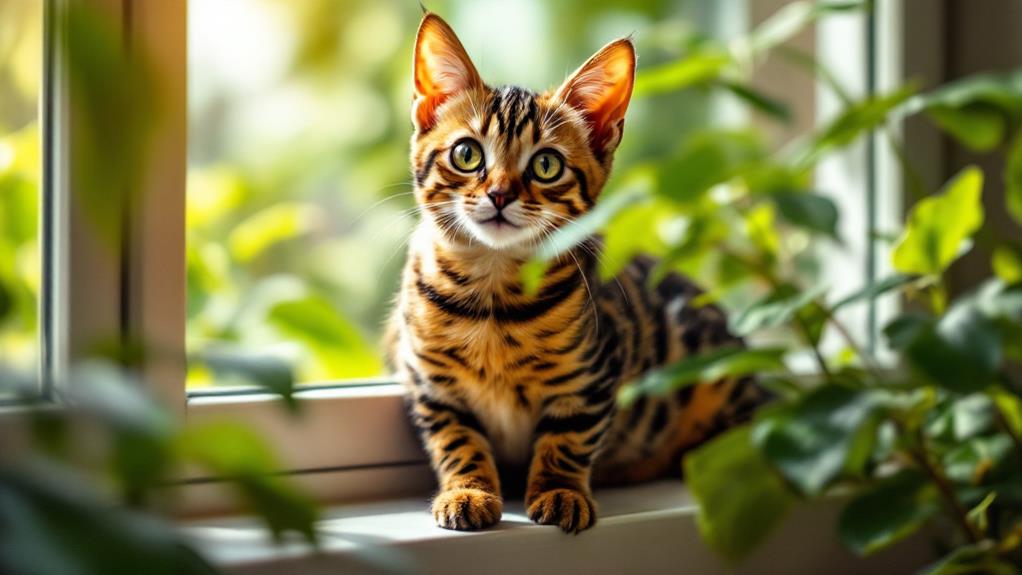
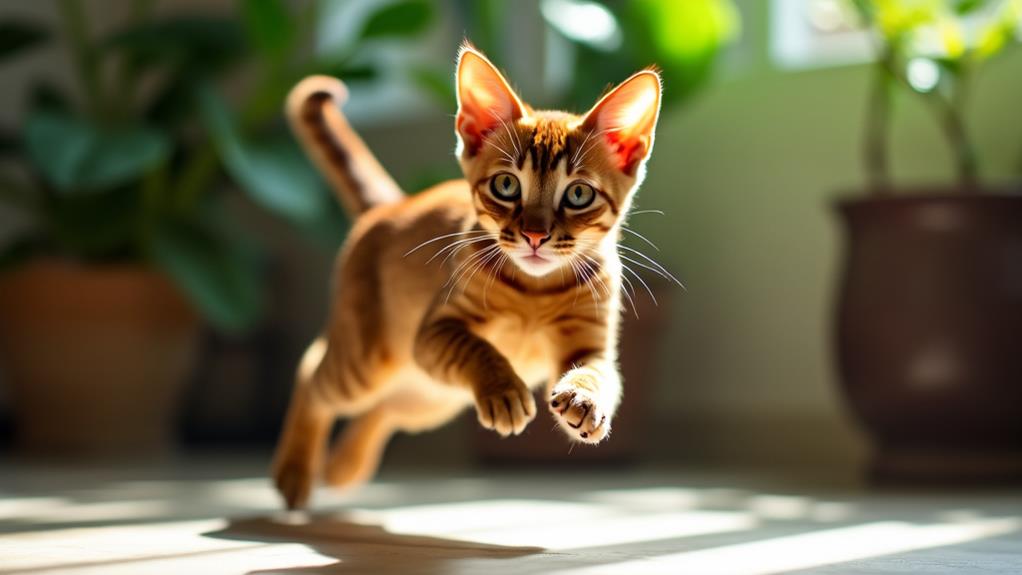
For those intrigued by Siamese cats' social nature but seeking a breed with even lower allergen potential, Bengal cats might be your perfect match. Their unique, short coat resembles a pelt, minimizing shedding and the spread of allergens, making Bengal cats a suitable choice for allergy sufferers. This striking breed, with its spotted or marbled coat inherited from Asian leopard cat ancestry, is not only beautiful but also practical for those sensitive to cat allergens.
Bengal cats are known for their friendly and social temperament. They form strong bonds with their human companions and thrive on family interactions. Their intelligence sets them apart, requiring regular interactive play and mental stimulation to keep them engaged and happy. You'll find that they're not just content to lounge around; they're curious adventurers and love to be part of the action.
Before adopting Bengal cats, spend time with them to assess any allergic reactions, as individual sensitivities can vary. Despite their lower allergen levels, this precaution guarantees a good fit for your home. If you're ready for an intelligent, active, and sociable feline friend, Bengal cats could be an ideal addition to your family.
Russian Blue Qualities
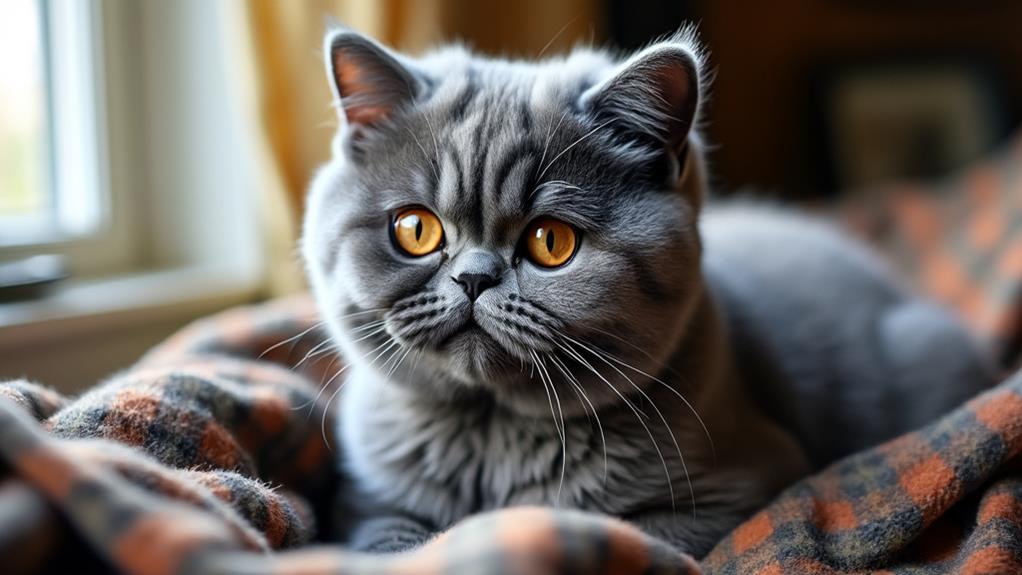
Admiring the elegant Russian Blue cat, you'll notice their striking green eyes and plush double coat, which helps trap allergens and makes them a great choice for allergy sufferers. This breed is especially appealing due to its production of lower levels of the Fel d 1 protein, the primary culprit behind cat allergies. Their hypoallergenic nature can make a significant difference if you're sensitive to allergens but still want a feline friend.
Russian Blues are not only beautiful but also possess a calm temperament, making them ideal companions. They often form strong, loyal bonds with their owners, providing a sense of companionship that's hard to match. With proper care, they can be a part of your life for up to 20 years, offering long-term companionship.
To keep their coat healthy and minimize dander, regular grooming is crucial. A weekly brushing routine is recommended to reduce allergens in your home, ensuring a cleaner environment for allergy sufferers. Embracing the Russian Blue means welcoming a gentle and elegant cat into your life, offering both hypoallergenic benefits and a loving, calm presence that enriches your daily experiences.
Sphynx Cat Details
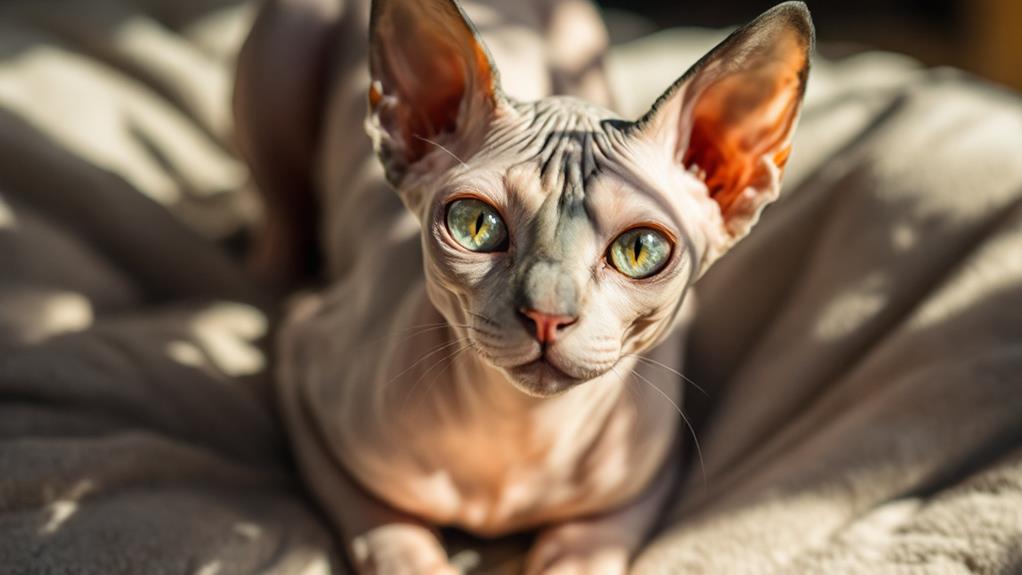
Step into the world of the Sphynx cat, a breed that stands out with its unique hairless appearance. This fascinating feline is a top pick for allergy sufferers, thanks to its hypoallergenic nature. Unlike traditional cats, the Sphynx cat produces fewer allergens, making your home a more comfortable place if you're prone to sneezing fits around furry friends.
Despite its lack of fur, the Sphynx has a fine layer of downy fuzz. You'll need to manage oils on its skin, requiring regular bathing to keep the cat clean and reduce the spread of allergens. This maintenance might seem like a chore, but it's a small price for the companionship this affectionate creature offers.
Sphynx cats are known for their playful and high-energy temperament. They thrive on interaction and will often seek out your attention, making them perfect for those who enjoy an active pet. Their love for engaging playtime guarantees they're never a dull presence in your home.
With an average lifespan of 8 to 14 years, a Sphynx cat can be a long-term companion with the right care and regular veterinary check-ups. Welcome the lively spirit of this remarkable breed.
Devon Rex Attributes
Switching our focus from the Sphynx, let's investigate the Devon Rex, an excellent choice for those with allergies. This hypoallergenic cat breed stands out because of its unique short, curly coat. The texture of their fur helps minimize shedding and dander, making them a suitable option for allergy sufferers. While regular grooming is necessary, it's not as intensive as with other breeds. The Devon Rex's fur absorbs oils that might contain allergens, making them a considerate choice for a feline friend.
You'll find this breed's personality charming with its playful and energetic demeanor. Often described as having a "dog-like" affection, the Devon Rex loves to interact with humans. Their social nature means they thrive in environments where they get plenty of attention and playtime. This makes them perfect companions for active households looking for an affectionate pet.
Typically weighing between 6 to 9 pounds, the Devon Rex is a manageable size for most homes. With a lifespan of about 9 to 15 years, they promise to be a long-term companion. If you're an allergy sufferer seeking a lively, loving pet, the Devon Rex could be your ideal match.
Tips for Allergy Management
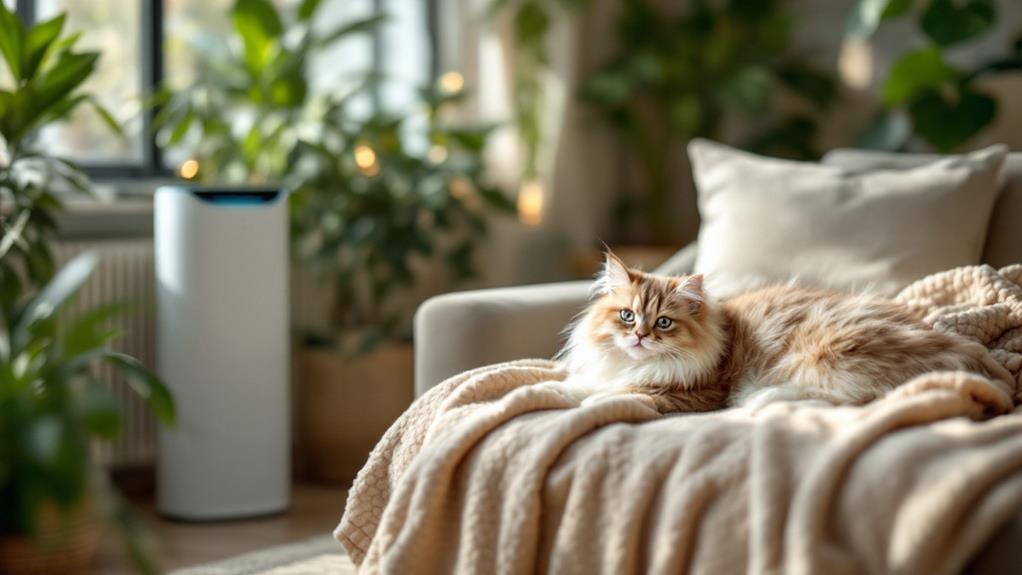
Managing allergies while living with a cat can seem challenging, but with the right strategies, you can enjoy your feline friend's company without constant discomfort. Start by incorporating regular cleaning into your routine. Frequent vacuuming and dusting can greatly reduce allergens, making it easier to manage allergy symptoms effectively. To further improve indoor air quality, use HEPA air purifiers. These devices capture airborne allergens, helping to reduce your allergic reactions.
Designating cat-free zones, especially in bedrooms, can provide much-needed relief. By having spaces where allergens are minimized, you'll create a sanctuary for times when you need a break. Regular grooming of hypoallergenic cats is another crucial step. By maintaining a consistent grooming schedule, you'll minimize dander and fur accumulation, further reducing allergens in your home.
Consulting with allergy specialists can offer tailored solutions. They can recommend management plans, such as medications or immunotherapy, to alleviate symptoms when living with cats. With these personalized strategies, you'll be better equipped to enjoy your pet without the worry of constant discomfort. Remember, with the right approach, you can successfully balance allergy management while sharing your home with a beloved cat.