Are Lovebirds Good Pets? What to Know Before Adopting One
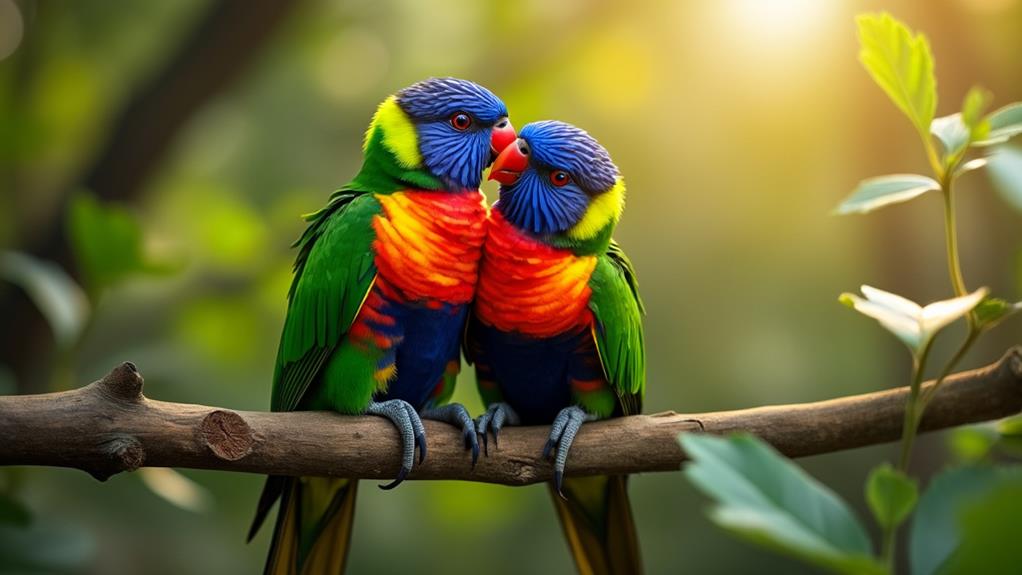
Lovebirds make delightful pets with their affectionate and playful personalities, but they require significant time and care. They thrive in pairs and need daily interaction to prevent loneliness and behavioral issues like biting or excessive noise. A balanced diet, spacious cage, and proper hygiene are vital for their well-being. They can be vocal, which may not suit quieter households. Regular vet check-ups are important due to potential health concerns. Choosing the right lovebird involves careful consideration and sometimes DNA testing for gender. As you investigate further, you'll uncover more about the joys and challenges of sharing your life with these charming birds.
Key Takeaways
- Lovebirds are affectionate and social, requiring daily interaction to thrive.
- They need a spacious cage and regular cleaning for a healthy environment.
- A balanced diet of pellets, seeds, fruits, and vegetables is crucial.
- Lovebirds can be noisy and require time, making them unsuitable for quiet homes.
- Regular veterinary care is essential for monitoring and maintaining their health.
Understanding Lovebird Behavior
Understanding lovebird behavior is essential for creating a happy home for these charming pets. Lovebirds love social interaction and are known for their strong bonding behaviors. They thrive in pairs, often seen grooming and feeding each other, which showcases their need for companionship. If you decide to adopt a lovebird, be prepared to engage with them daily. Their constant chirping and chatter aren't just background noise; they're expressing their need for mental stimulation and social contact.
Each lovebird has its own individual personality, which can vary widely. While some are affectionate and playful, others might be shy or even a bit aggressive. It's significant to understand these differences to cater to their unique needs. Regular interaction can help prevent behavioral issues like biting or excessive noise, which can arise from boredom or lack of stimulation.
If left alone for long periods, lovebirds can become distressed, making daily socialization a necessity. They seek companionship not only from other birds but also from their human caretakers. By paying attention to their behavior and providing consistent interaction, you'll guarantee a joyful environment for both you and your lovebird.
Essential Care Requirements
Caring for lovebirds involves meeting their important needs to guarantee they live happy and healthy lives. These colorful birds make great pets, provided that you follow some fundamental care requirements. Start by making sure their living space is adequate. You'll need a spacious cage, at least 32 x 20 x 20 inches, to give them room for movement and exercise. This is crucial for their physical and mental well-being.
Regular Bird Care includes maintaining hygiene in their environment. Clean their food and water dishes daily and disinfect the cage weekly. This prevents illness and keeps your lovebirds healthy. Social interaction also plays a key role in their care. Lovebirds thrive on companionship, so let them out for daily playtime and provide mental stimulation with engaging toys and activities.
Veterinary check-ups are another important aspect of their care. Regular visits help monitor their health and catch any signs of illness early, such as lethargy or changes in droppings. By attending to these fundamental care requirements, you'll guarantee your lovebirds lead a fulfilling and joyful life, making them truly great pets in your home.
Lovebird Diet and Nutrition
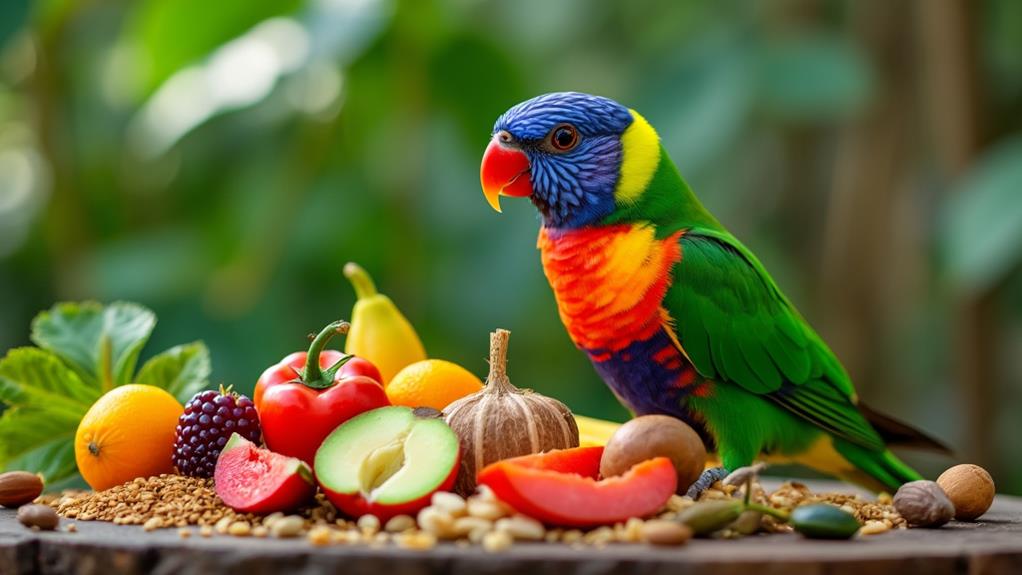
Feeding lovebirds a balanced diet is vital for their health and well-being. Their daily food intake should be around 1.5 to 2 ounces, consisting of high-quality pellets, seeds, and a variety of fresh fruits and vegetables. This combination guarantees they receive the necessary nutrition for peak health. Fresh fruits and vegetables are fundamental for providing vitamins and minerals, while calcium sources like cuttlebone support their bone health.
It's significant to know which foods to avoid. Toxic items like avocado, chocolate, and caffeine can be harmful or even fatal to lovebirds. Always confirm that their diet is free of these dangerous foods to keep them safe.
Water is another key component of their care. Lovebirds drink a lot, so you must provide regular access to fresh water, changing it frequently to maintain cleanliness.
Additionally, promoting hygiene and plumage health can be achieved by allowing your lovebird to bathe. You can use earthenware dishes or gently mist them with lukewarm water. These practices will support your lovebird's general well-being and guarantee they thrive in your care. Proper diet, fresh water, and good hygiene are vital to their happiness.
Housing and Environment Needs
After confirming your lovebirds are well-fed and hydrated, it's important to reflect on their housing and environment needs. Start by choosing a cage that meets the minimum cage size of 32 x 20 x 20 inches for a pair of lovebirds. This space allows them enough room to move around and exercise, essential for their well-being. Position the cage at eye level to guarantee they feel part of the family and place it in a well-ventilated area. Avoid exposing them to drafts or direct sunlight, as these can negatively impact their environment.
Maintaining an ideal temperature is important. During the day, keep the area between 60°F and 70°F, confirming nighttime temperatures don't fall below 40°F. Providing a stable climate will keep your lovebirds comfortable and healthy. If you plan on breeding, include high, uniform nest boxes with suitable dimensions such as 8"x8"x8" or 10"x6"x6".
Regular cleaning is key to preventing illness. Make it a habit to clean food and water dishes daily, and disinfect the cage weekly. This routine helps maintain a healthy living space for your lovebirds, fostering a thriving environment.
Socialization and Companionship
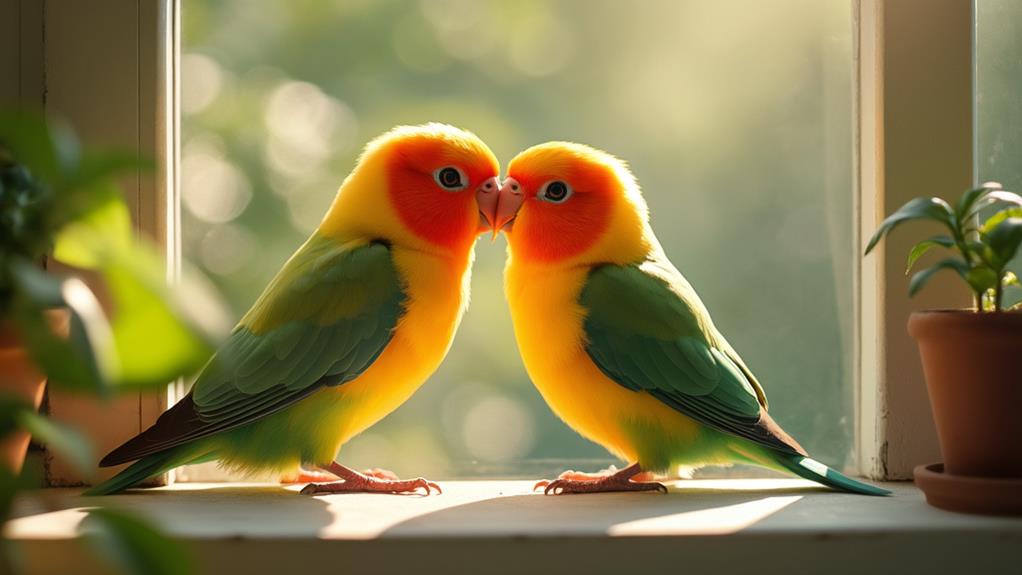
When considering lovebirds as pets, it's important to keep in mind that they are incredibly social creatures. They thrive on companionship and require either a fellow lovebird or frequent human interaction to avoid feelings of loneliness. To make certain your lovebird remains happy and mentally stimulated, daily interaction is vital. Without it, they might become fearful or aggressive due to a lack of socialization.
To help you understand the significance of socialization and companionship for lovebirds, consider the following:
- Pairing: Keeping lovebirds in pairs can greatly improve their well-being. They engage in affectionate behaviors like grooming each other, which fulfills their social needs.
- Human Interaction: If you choose to keep a single lovebird, be prepared to dedicate time daily for interaction. Engaging in playful activities outside the cage can help strengthen your bond and foster trust.
- Affectionate Bonding: Proper socialization leads to lovebirds becoming affectionate companions. They may cuddle with you, showing their strong bonding instincts.
Health and Veterinary Care
The well-being of your lovebird hinges greatly on attentive health and veterinary care. Regular veterinary check-ups are fundamental to monitor their health and catch potential issues early. Aim for annual visits to guarantee optimal care. Lovebirds can be prone to health problems like respiratory ailments and Psittacine Beak and Feather Disease. You must be vigilant for signs of illness such as lethargy or changes in droppings. These indicators shouldn't be ignored, as lovebirds can deteriorate quickly without swift intervention.
Immediate veterinary care is imperative when signs of illness appear. Acting promptly can make a significant difference in your lovebird's recovery and general health. Proper hydration is another crucial aspect of care. Dehydration poses serious health risks, so make sure fresh water is available daily and monitor their intake. It's not just about providing water but guaranteeing they're drinking enough.
Maintaining a clean environment is equally significant. Daily cleaning of food and water dishes, along with regular cage disinfecting, helps prevent illness and promotes good health. By keeping your lovebird's surroundings clean, you reduce the risk of infections and create a healthier habitat for your feathered friend.
Advantages of Owning Lovebirds
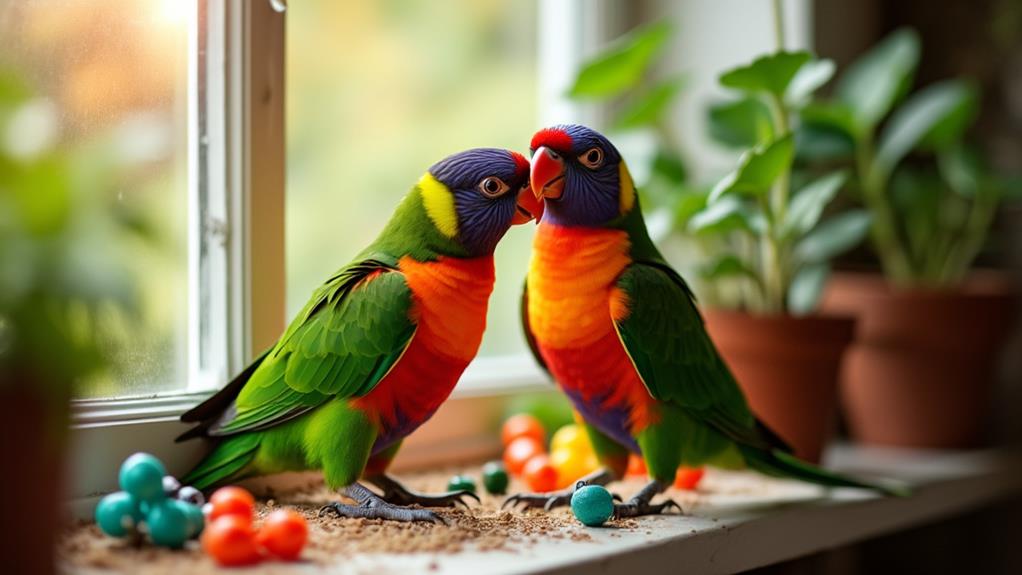
While maintaining your lovebird's health is crucial, the joys of having these lively companions are likewise rewarding. Lovebirds, as small parrots, bring a unique blend of love, loyalty, and entertainment to your home. Their affectionate nature often leads to strong emotional bonds with you, as they enjoy following you around and seeking your company. This loyalty isn't just heartwarming; it's a sign of a good pet relationship that can last for long periods of time.
Here are a few advantages of owning lovebirds:
- Entertainment and Joy: Lovebirds are highly entertaining with their playful antics. Regardless of whether they're shoulder hopping or cuddling, their activities never fail to bring joy to your day.
- Longevity: With a lifespan of 10-20 years, lovebirds offer you a long-term companionship that improves emotional well-being over many years. They are truly partners for the long haul.
- Social Companions: Their interactive nature makes them thrive in family settings. They foster a sense of community, providing companionship and strengthening family bonds.
Embracing a lovebird into your life means enjoying a small parrot's lively energy and love for many rewarding years.
Challenges of Lovebird Ownership
Owning lovebirds comes with its own set of challenges that aspiring pet owners should consider. Initially, lovebirds demand significant time and social interaction. Without regular attention, they may develop behavioral issues like feather plucking or excessive screeching. These behaviors can be distressing to witness and might indicate your lovebird is not getting the mental stimulation it craves.
Their loud vocalizations are another hurdle. Lovebirds are notorious for their high-pitched sounds, which can be incessant and disruptive, especially if you're seeking a quieter pet environment. This noise level can be surprising and may not be suitable for every household.
Aggressive behavior is also a concern. If not properly socialized or if they feel threatened, lovebirds can become aggressive, leading to biting incidents that are painful and concerning for owners. Ensuring they feel safe and socialized is vital to mitigating this issue.
Regarding health problems, lovebirds have specific dietary needs that require diligent attention. Providing a balanced diet of pellets, seeds, fruits, and vegetables is fundamental, and you must avoid toxic foods like avocado and chocolate. Furthermore, lovebirds can suffer from stress-related illnesses if left alone too long, highlighting the need for companionship.
Adoption and Sourcing Tips
Finding the right lovebird companion involves careful consideration and a bit of detective work. You'll want to start by looking into adoption from reputable breeders or rescue organizations. This guarantees your bird has been properly socialized and cared for, setting the foundation for a happy and healthy relationship. Here's how you can make the best choice:
- Research Breeders and Rescues: Seek out reputable breeders or rescue organizations. These sources often provide birds that are well-socialized, making the change into your home smoother. Verify their credentials and ask about the bird's health and socialization history.
- Local and Online Options: While local pet stores might have lovebirds, always inquire about their care and socialization to avoid behavioral issues. Be cautious with online platforms like Craigslist or eBay classifieds. If you decide to purchase online, confirm you meet the seller in a safe, public place and watch out for potential scams.
- Bird Clubs and Forums: Engage with local bird clubs or online forums. These communities can offer valuable recommendations and potential adoption opportunities. Furthermore, always request a DNA test to confirm the bird's gender, as it can affect compatibility and behavior in your household.
Resources for New Owners
As you commence on your adventure as a new lovebird owner, a wealth of resources is at your fingertips to guarantee a smooth changeover and successful care. Start by exploring online forums and communities like Lovebirds Plus. These platforms offer valuable resources for new owners, connecting you with other bird enthusiasts and fostering a sense of community. You can exchange tips and ask questions, making it easier to navigate the nuances of lovebird care.
Don't overlook the educational materials on lovebird care available through avian care websites and local bird clubs. These resources cover vital topics such as diet, socialization, and health monitoring, helping you provide the best environment for your feathered friend. Local bird rescue organizations can also be a goldmine of information. They often offer insights into care practices and may have lovebirds in need of homes, providing an opportunity to adopt while learning from the experts.
Engaging with experienced bird owners can further deepen your understanding of lovebird behavior and care practices. Ultimately, make sure you schedule regular veterinary check-ups with an avian veterinarian. This step is fundamental for maintaining your lovebird's health and addressing any issues early on.