African Fire Skink Care: How to Keep Your Skink Healthy and Happy
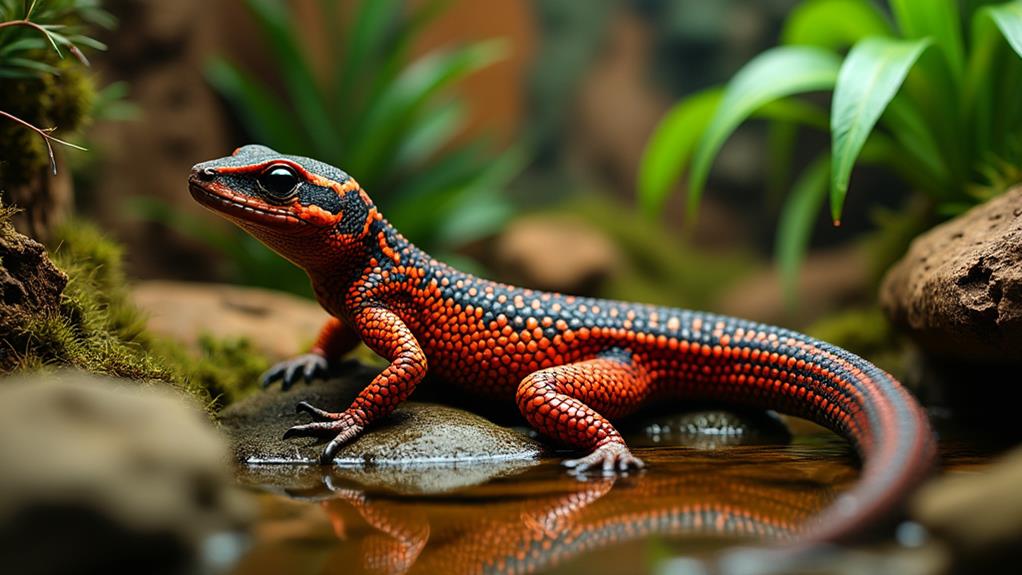
Keeping your African fire skink healthy and happy involves creating an ideal environment and meeting its dietary needs. Make certain your skink has a spacious tank, around 40 gallons, with a substrate mix for burrowing. Maintain a temperature gradient with a basking spot up to 96°F and cooler areas around 75-85°F. Humidity should be 60-70%, so mist the enclosure a few times daily. Provide a varied insect diet, dusted with calcium and vitamins, and fresh water. Minimize handling to reduce stress and establish trust with gentle interactions. For deeper insights, uncover more on enriching your skink's habitat and wellness.
Key Takeaways
- Maintain a temperature gradient of 90-96°F for basking, with cooler areas at 75-85°F, and night temperatures between 70-75°F.
- Ensure humidity levels are consistently between 60-70% by misting the enclosure 2-3 times daily.
- Provide a diet of varied insects, supplemented with calcium and vitamins, to prevent nutritional deficiencies.
- Incorporate hiding spots and enrichment like cork flats and logs to encourage natural behavior and reduce stress.
- Minimize handling and use feeding tongs to build trust, ensuring a stress-free environment for the skink.
Fire Skink Characteristics
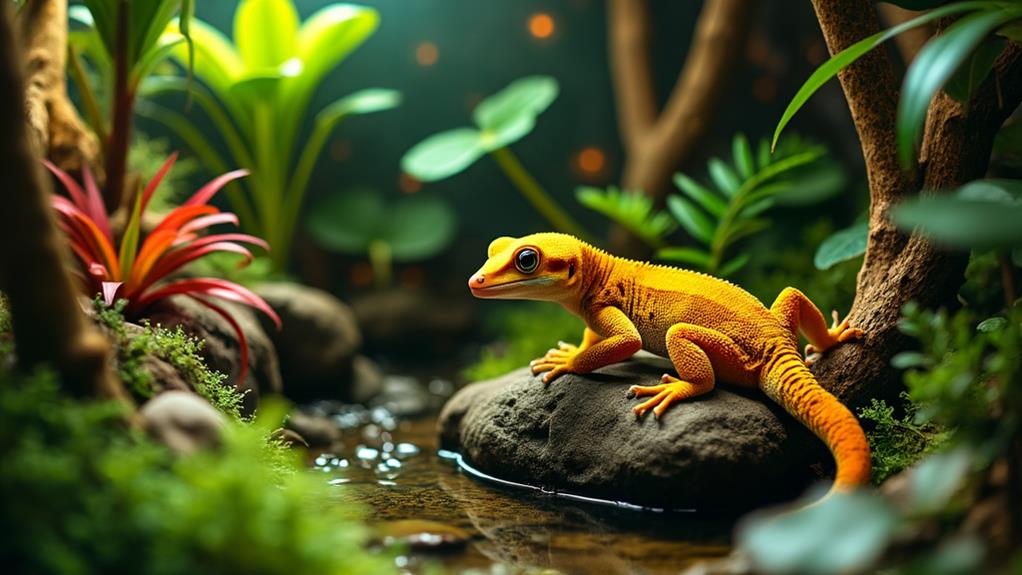
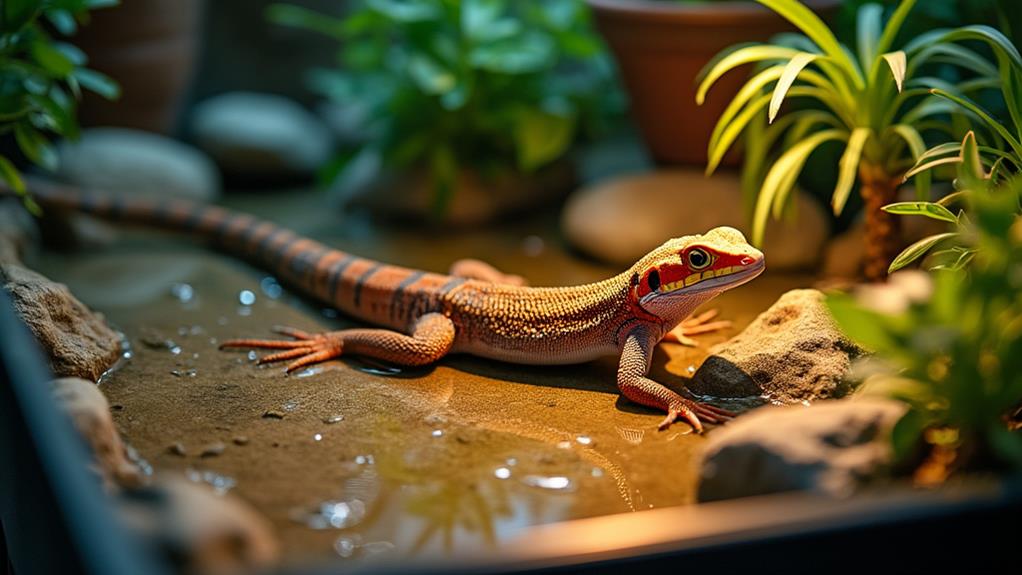
The African fire skink, known scientifically as Mochlus fernandi, captivates with its striking appearance. These fire skinks boast a glossy red and bronze body, complete with beautiful black markings and white speckles that make them truly eye-catching. Growing up to 12 to 15 inches long, they can live for 15 to 20 years in captivity, provided they're well cared for. You'll notice they're a bit shy and reclusive, but they become more personable with a comfortable and enriched environment.
When it comes to caring for fire skinks, it's significant to keep in mind that they're primarily terrestrial. They enjoy spending time in burrows, so providing a suitable substrate is essential for their well-being. They exhibit subtle sexual dimorphism, with females generally smaller and leaner than males. Moreover, maintaining appropriate humidity levels is crucial. Fire skinks thrive in an environment with humidity levels around 60-80%, which helps them stay healthy and happy.
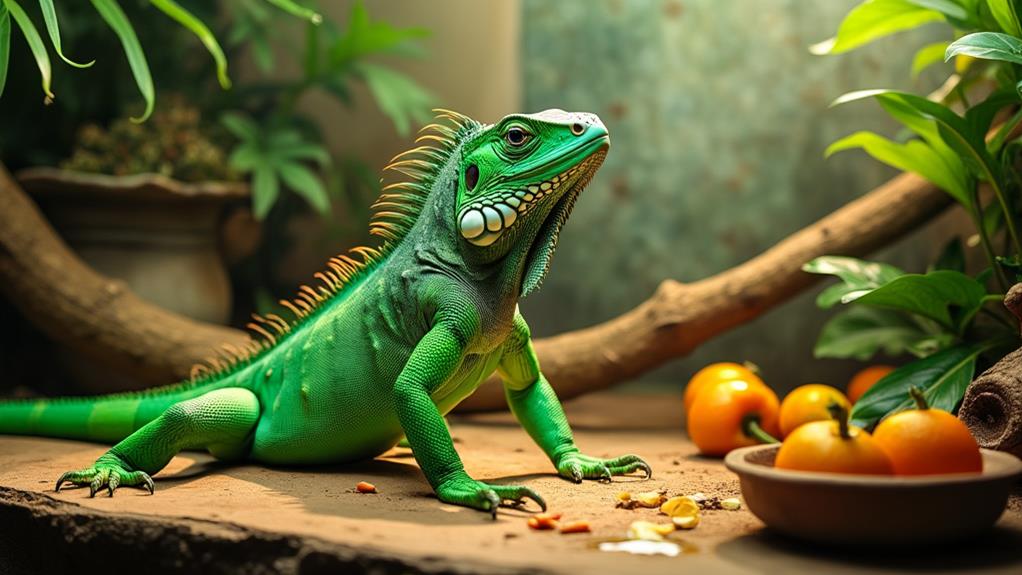
In terms of diet, skinks should be fed a variety of insects like crickets, mealworms, and occasional treats like waxworms. By meeting these basic needs, you'll guarantee your fire skink lives a long, fulfilling life.
Enclosure Setup
For setting up a fire skink's enclosure, aim for a minimum size of 36L x 18W x 18H inches, though 40 gallons will give your skink extra comfort. This size guarantees your skink has ample space to investigate and thrive. Start with a substrate mix of 40% organic topsoil, 40% coconut fiber, and 20% fine sand. This mix provides a natural environment that aids in burrowing and keeps humidity levels stable. Confirm the substrate is at least 4 inches deep.
Create a temperature gradient within the enclosure. You'll want a basking spot that reaches 90-96°F (32-36°C) to give your skink a warm area to regulate its body temperature. Include a cooler zone ranging from 75-85°F (24-29°C) to offer a comfortable variation. To maintain appropriate humidity levels between 60-70%, mist the enclosure 2-3 times daily. Use a hygrometer to keep an eye on humidity accurately.
Don't forget to add hiding spots using cork flats, hollow logs, and a mix of live or artificial plants. These elements not only provide security but also enrich the environment, keeping your skink engaged and happy.
Temperature and Humidity
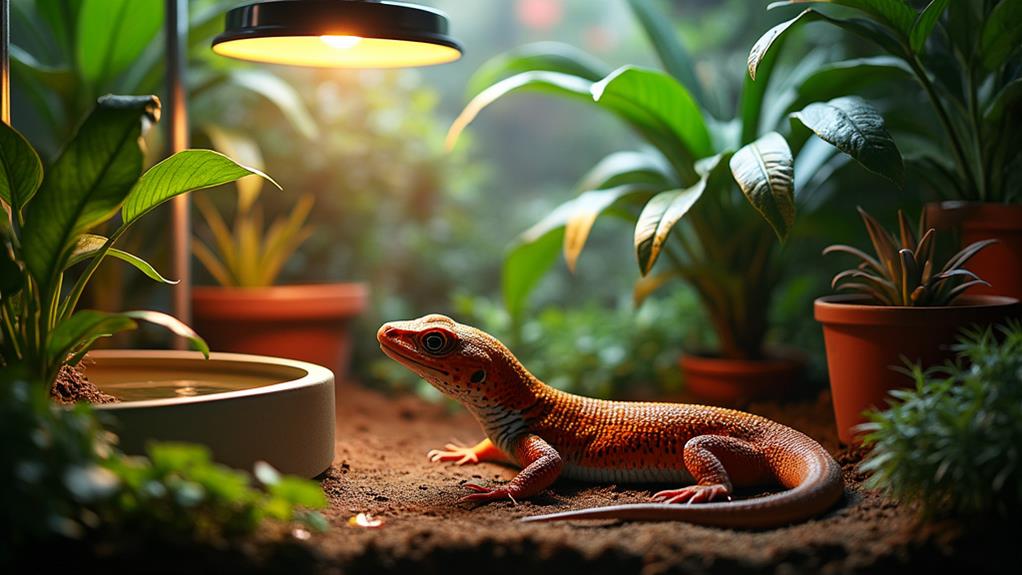
Maintaining the right temperature and humidity is vital for a fire skink's health and well-being. You'll want to create a temperature gradient in the enclosure to allow your skink to regulate its body temperature effectively. Keep basking spots at 90-96°F (32-36°C) and cooler areas at 75-85°F (24-29°C). At night, let temperatures drop to 70-75°F (21-24°C) to mimic their natural environment and promote healthy sleep.
Humidity levels are similarly significant, as they should remain between 60-70% to guarantee proper skin health and shedding. You can achieve this by misting the enclosure regularly and monitoring with a hygrometer. If needed, a humidifier can help maintain these levels consistently.
UVB lighting is vital, providing your skink with the necessary exposure for 10-12 hours each day. Position the UVB bulbs 8-10 inches (20-25 cm) above the basking surface to guarantee maximum benefits. Regularly check the temperature and humidity levels to make necessary adjustments using heat mats or other equipment. By maintaining these conditions, you'll create a comfortable and healthy habitat for your fire skink to thrive in.
Diet and Nutrition
When caring for African fire skinks, diet and nutrition play a crucial role in their general health. These lively creatures are obligate insectivores, which means their diet should consist of a variety of insects to guarantee they're receiving proper nutrition. A varied diet not only meets their nutritional needs but also encourages natural foraging behaviors, keeping them active and engaged.
Here's a quick guide to feeding your fire skink:
- Insect Variety: Offer crickets, mealworms, roaches, and superworms. This variety helps provide a balanced diet and keeps your skink interested in mealtime.
- Feeding Schedule: Adults should be given 3 to 5 insects every 2-3 days. Juveniles, however, require daily feeding to support their rapid growth.
- Supplements: Dust feeder insects with calcium powder and multivitamins, like Repashy CalciumPlus, to maintain a balanced calcium-phosphorus ratio and prevent nutritional deficiencies.
- Water: Always provide fresh water in a clean bowl, replacing it regularly to promote hydration and hygiene.
Handling and Behavior
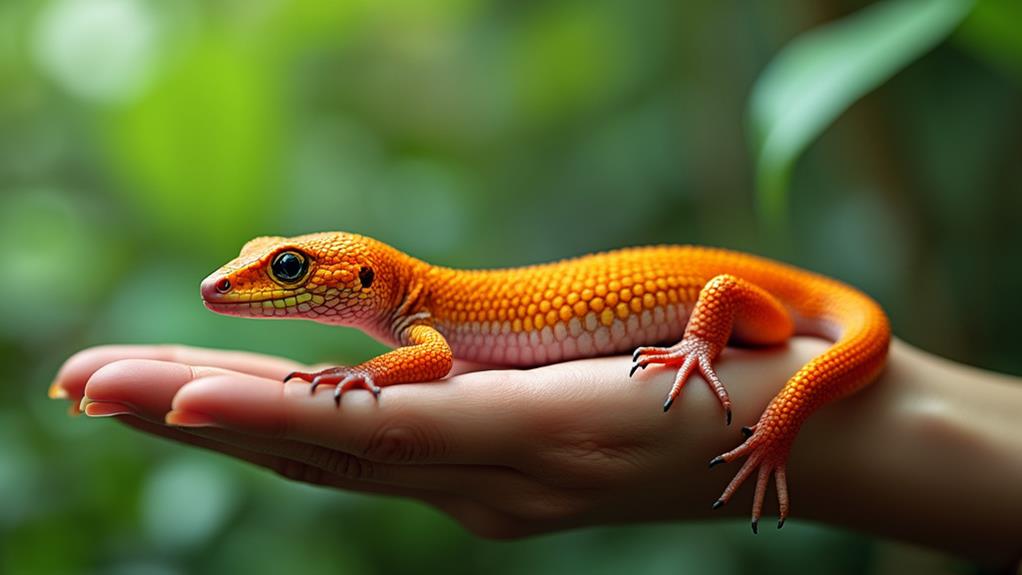
Handling your African fire skink requires patience and care to guarantee their well-being. As display animals, they should be handled minimally to reduce stress. Allow your skink a two-week acclimation period in their new environment before introducing any handling sessions. During interactions, use soft-tipped feeding tongs to offer food. This method helps build trust and minimizes stress, making handling a more positive experience for your skink.
When you start handling your fire skink, keep in mind that they can be quite fast and have a tendency to escape. Keep handling sessions short to prevent any undue stress. Be gentle and avoid grabbing them by the tail, as they might drop it as a defense mechanism. Tail dropping can lead to stress and potential health issues, which you definitely want to avoid.
To further promote healthy interactions, always wash your hands thoroughly after handling your skink. This practice maintains hygiene and reduces the risk of transferring pathogens to your pet. By taking these careful steps, you'll foster a trusting relationship with your fire skink, ensuring they stay healthy and happy in their environment.
Health and Well-being
To guarantee the health and well-being of your African fire skink, regular veterinary check-ups are a must. These visits help catch issues like respiratory infections and metabolic bone disease early, making sure your skink stays healthy. Maintaining a proper environment is just as important. Here's what to focus on:
- Humidity Levels: Confirm your enclosure's humidity stays between 60-70%. This range is essential for preventing shedding problems and keeping your skink's skin healthy.
- Diet and Nutrition: Offer a varied diet of insects, supplemented with calcium and vitamins. This prevents nutritional deficiencies and supports a long, healthy life, as fire skinks can live 15-20 years with the right care.
- Stress Monitoring: Watch for stress signs such as hiding or rapid breathing. Excessive stress can lead to health complications and reduce your skink's quality of life.
- Clean Environment: Regularly clean the enclosure and check for parasites. A clean habitat helps prevent common health issues and keeps your skink thriving.