African Fat-Tailed Gecko Care: A Beginner’s Guide to Owning One
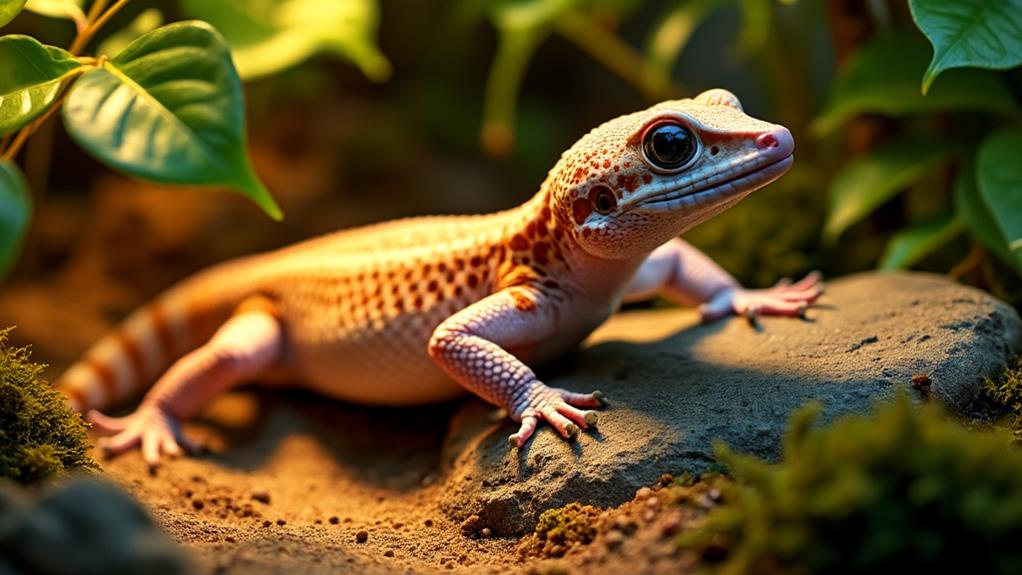
As a beginner, you'll find African Fat-Tailed Geckos rewarding and easy to care for. They thrive in a semi-arid setup; use a mix of untreated topsoil and play sand as substrate. Maintain a temperature gradient: a warm side at 88-90°F and a cool side at 70-77°F. Their diet should include a variety of insects dusted with calcium. Regular spot cleaning and timely full cleanings keep their environment healthy. They're nocturnal and can handle gentle interaction, which builds trust. With the right care necessities, you'll enjoy their docile nature and learn the finer details of providing a fulfilling gecko life.
Key Takeaways
- Provide a spacious enclosure with a 36" x 18" x 16" minimum size and proper substrate for burrowing.
- Maintain a temperature gradient with a basking spot of 88-90°F and a cool area between 70-77°F.
- Feed a varied diet of appropriately sized insects, dusted with calcium, and provide fresh water daily.
- Use low-level UVB lighting and maintain humidity levels between 40-60% for optimal health.
- Handle gently and regularly to build trust, avoiding stress by not grabbing the tail.
Overview and Natural History
African fat-tailed geckos, with their distinctive fat tails and gentle demeanor, are fascinating reptiles native to the semi-arid regions of West Africa. Inhabiting the grasslands and savannas of countries like Senegal and northern Cameroon, these geckos have adapted to a habitat that's both challenging and unique. Their natural history is marked by their ability to thrive in these dry environments, making them a resilient species with intriguing behaviors.
These geckos typically grow to about 7-10 inches in length and can live up to 15-20 years in captivity, offering a long-term companionship for dedicated pet owners. Unlike many of their relatives, African fat-tailed geckos have eyelids, which is a rare trait among geckos. They lack sticky toe pads, rendering them less adept at climbing and more suited for a terrestrial lifestyle. Their docile nature makes them ideal pets, as they're generally non-aggressive and quiet.
Being nocturnal, they're most active during the night, often seeking shelter during the day. As a defense mechanism, they can drop their tails when threatened, though regrown tails may look different. Understanding these aspects of their natural history enriches your experience of caring for these remarkable African geckos.
Essential Enclosure Setup
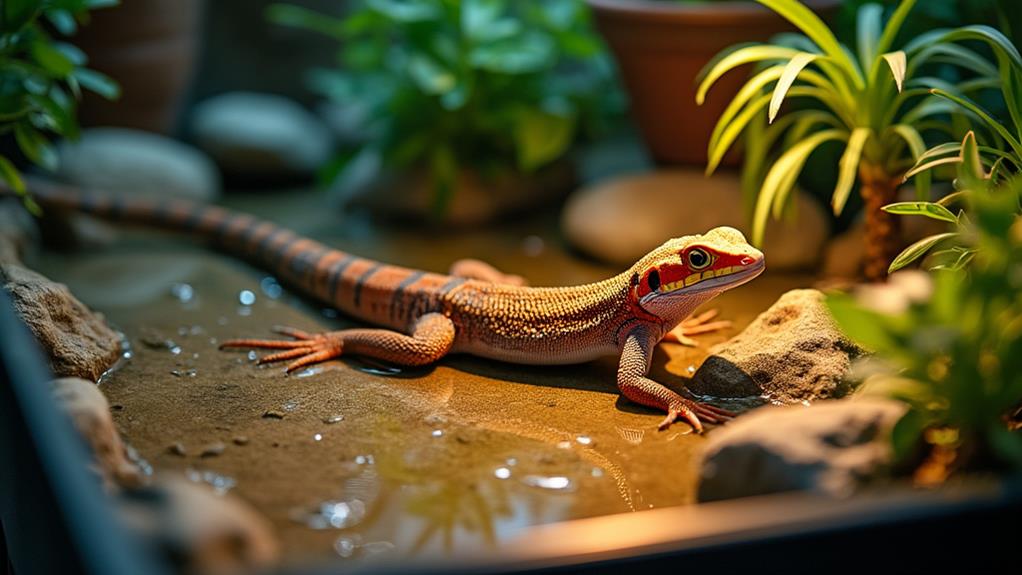
To provide ideal care for your African fat-tailed gecko, setting up a well-designed enclosure is fundamental. Start with a minimum size of 36" L x 18" W x 16" H to give your gecko enough space to roam and express natural behaviors. A larger enclosure can further improve their comfort and activity levels. Use a substrate composed of 70% untreated topsoil and 30% play sand, allowing for a depth of 3-6 inches to support burrowing instincts.
Creating a temperature gradient is essential for thermoregulation. Position a warm hide at 88-90°F and maintain the cool side between 70-77°F. Make certain the enclosure includes at least three hides: a warm hide, a cool hide, and a humid hide. The humid hide helps in shedding and provides a stress-free environment.
Ventilation is critical, so choose a front-opening enclosure for easy access and ideal airflow. This design guarantees your gecko's habitat remains fresh and secure. Regular spot cleaning keeps the enclosure hygienic, removing waste and uneaten food promptly. By focusing on these elements, you'll provide a comfortable and healthy environment for your African fat-tailed gecko.
Heating and Temperature Control
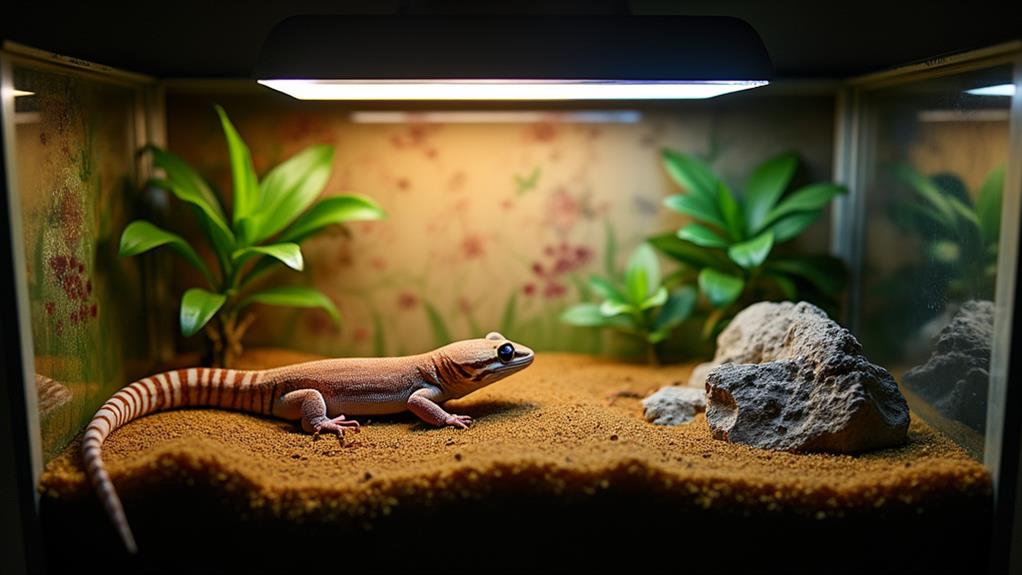
Proper heating and temperature control are vital for keeping your African fat-tailed gecko healthy and active. To achieve this, it's crucial to create a suitable environment within their enclosure. The basking spot should be maintained at a toasty 88-90°F, while the cool side should range between 70-77°F. This guarantees your gecko can regulate their body temperature by moving between warmer and cooler areas. Establish an ambient temperature gradient of 80-90°F, and confirm nighttime temperatures don't fall below 70°F.
For effective heating, consider using halogen flood lamps, deep heat projectors, or ceramic heat emitters. These options provide consistent warmth and help maintain the necessary UV gradient. Use a reliable thermostat to keep the temperatures within the ideal range, preventing fluctuations that could stress your gecko.
To accurately monitor the enclosure's temperature, place thermometers on both the warm and cool sides. Use infrared thermometers for precise surface readings and digital probe thermometers for air temperatures. While intense UVB exposure isn't required, providing 2-7% UVB lighting can be beneficial, especially for albino geckos, which thrive with lower UV levels compared to common fat-tailed geckos.
Lighting and Humidity
While maintaining the right temperature is vital, lighting and humidity also play significant roles in your African fat-tailed gecko's well-being. They don't need intense UVB exposure, but a low level of 2-7% UVB is recommended, especially for albino geckos that require less. It's important for their general health, helping to prevent potential health problems. When setting up your gecko's habitat, make certain there's a basking area, but also provide partial and full hiding spots so they can escape bright light and feel secure.
Humidity is another important factor. Aim for a level between 40-60% to support proper health and shedding. Depending on your climate, you might need to mist the enclosure to maintain this range. Here are some tips to help you manage lighting and humidity effectively:
- UVB Lighting: Use low-level UVB bulbs (2-7%) to support health without overexposing your gecko.
- Hiding Spots: Offer partial and full hiding spots to regulate exposure to light.
- Humidity Management: Mist the enclosure if necessary to keep humidity between 40-60%.
- Water Bowl Placement: Place the water bowl on the cool side to reduce evaporation and aid hydration.
Feeding and Nutrition
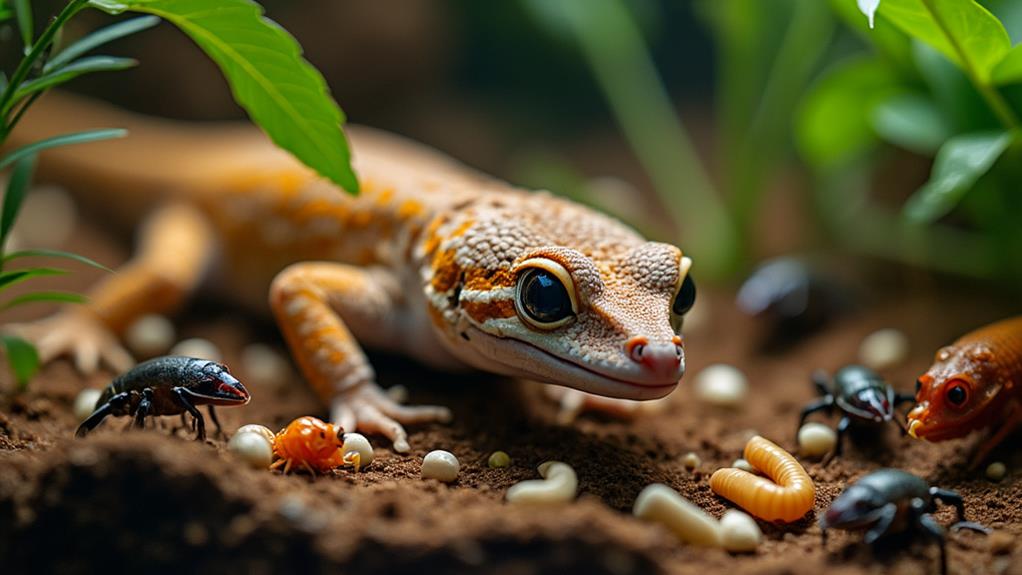
In relation to feeding your African fat-tailed gecko, understanding their dietary needs is vital for their health and well-being. African fat-tailed geckos are insectivores, thriving on a diet of crickets, mealworms, waxworms, and roaches. The feeding frequency depends on developmental stage: juveniles need daily feeding, sub-adults should be fed every other day, and adults require meals just 1-2 times a week. Make certain the size of crickets or mealworms doesn't exceed the width of your gecko's head to prevent choking or digestive issues.
To provide proper nutrition, dust the feeder insects with calcium powder every feeding. Include multivitamins every fourth feeding to prevent metabolic bone disease. Hydration is similarly significant, so always provide fresh water in a heavy, shallow dish. Regular cleaning of the dish is vital for maintaining hygiene.
Uneaten insects should be promptly removed to prevent stress and maintain a clean environment. Mealworms can stay in shallow dishes, but crickets should be taken out to avoid them harming the gecko. By keeping these tips in mind, you'll guarantee your gecko's feeding and nutrition needs are well-met, promoting their general health.
Health and Wellness
How can you guarantee your African fat-tailed gecko stays healthy and well? Regular monitoring and proper care are key. Start by observing your gecko's weight and behavior. A plump tail is a good sign, while lethargy or a lack of appetite may indicate health issues. To prevent such problems, focus on the following:
- Maintain a Clean Environment: Spot clean the enclosure daily and do a thorough cleaning every four weeks. This prevents the buildup of bacteria and parasites, which can lead to illnesses.
- Ensure Proper Hydration: Provide fresh water in a shallow dish and clean it regularly. This prevents dehydration and supports general wellness.
- Calcium Supplementation: Dust feeder insects with calcium powder at every feeding, especially for breeding females, to prevent issues like metabolic bone disease and egg binding. Offer multivitamins every fourth feeding to round out their nutrition.
- Monitor for Health Issues: Be vigilant for signs of common health problems such as metabolic bone disease, intestinal parasites, and respiratory infections. These can often be avoided with proper habitat conditions and care.
Handling and Behavior
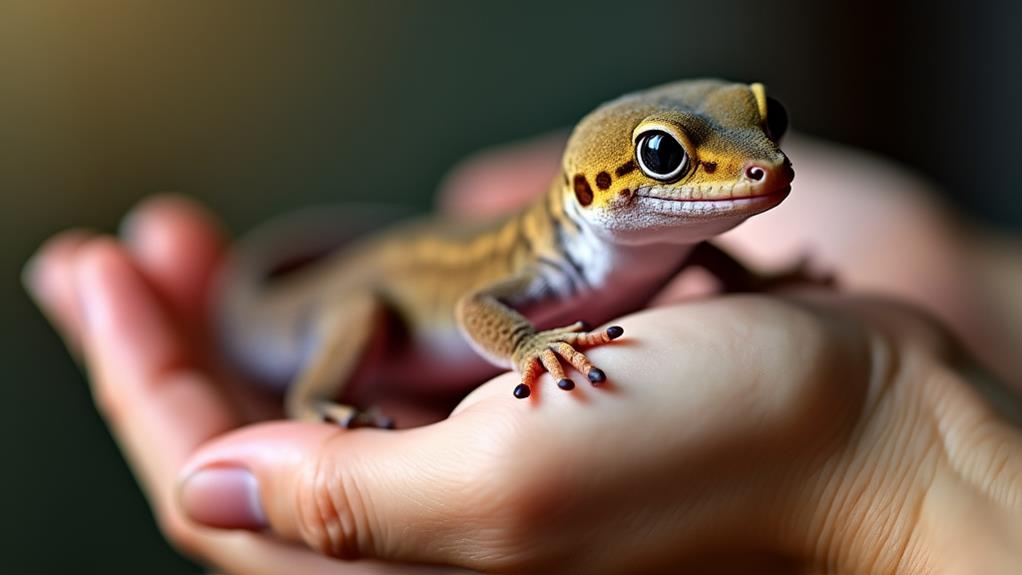
Handling and understanding the behavior of your African fat-tailed gecko is vital for a harmonious relationship. As a beginner reptile owner, you'll appreciate their docile nature, making them great for handling, even with children under supervision. These geckos are nocturnal, so they're more active and tolerant of interaction during evening hours.
When handling your gecko, always support its entire body and avoid grabbing its tail, as they can drop it when stressed. Though the tail will regrow, it won't look the same, so it's best to prevent this. Regular, gentle handling can tame your gecko, but remember to give it time to acclimate to its new environment before starting. Rushing this process can cause unnecessary stress, which negatively impacts your gecko's health.
Watch for signs of stress, like hiding, rapid breathing, or tail curling. These indicate your gecko should be left alone to relax. Respecting their behavior and needs guarantees a healthy, stress-free life for your gecko. With patience and understanding, you'll foster a rewarding bond with your African fat-tailed gecko, enhancing your experience as a beginner reptile owner.
Costs and Budgeting
Caring for your African fat-tailed gecko involves more than just understanding their behavior; it also requires a thoughtful approach to budgeting. The initial cost of acquiring a gecko ranges from $50 to $75 for standard morphs, but if you're eyeing a rare morph, you could spend up to $1,000. Beyond the gecko itself, budgeting for vital equipment is significant. You'll need a proper enclosure, heating sources, and substrate, which can add between $200 to $500 to your initial setup costs.
Monthly expenses are another consideration. Feeding your gecko a healthy diet of insects will cost roughly $10 to $30 monthly, depending on the variety and quantity you choose. Furthermore, ongoing costs for supplements like calcium and multivitamins are around $5 to $15 per month. Don't forget to include potential veterinary costs in your budget for regular check-ups and treatments, as they can vary widely.
Here's a quick breakdown:
- Initial gecko cost: $50-$1,000
- Vital equipment: $200-$500
- Monthly feeding expenses: $10-$30
- Supplements and veterinary costs: $5-$15 monthly
Planning your budget carefully guarantees your gecko thrives in its new home.
Purchasing or Adoption
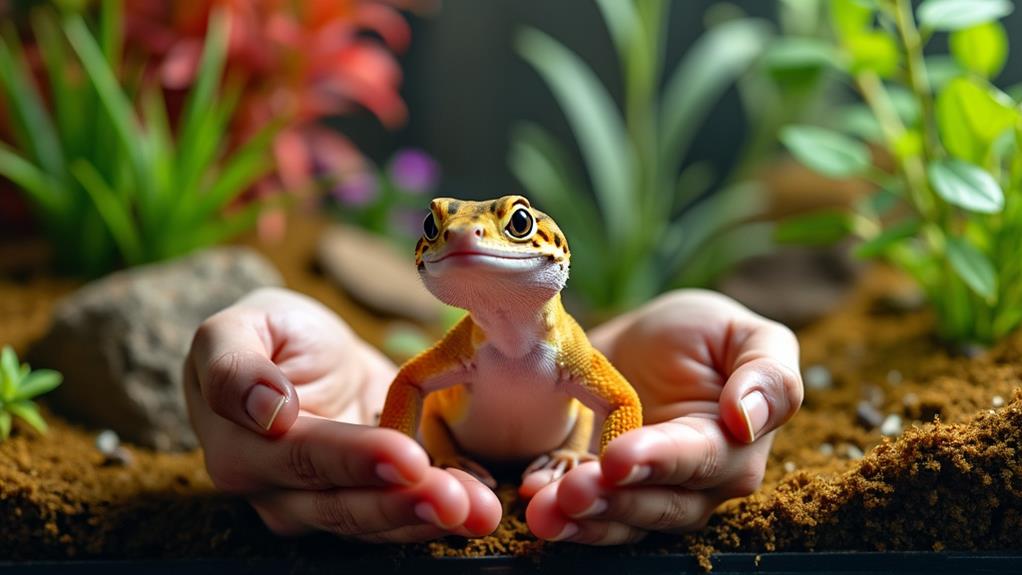
Deciding to welcome an African fat-tailed gecko into your home is an exciting adventure that starts with choosing between purchasing or adoption. If you're leaning towards purchasing, it's vital to prioritize health and genetic integrity. Buying from reputable breeders guarantees your gecko is free from parasites often found in wild-caught specimens. Breeders provide detailed insights into the gecko's health and care, which is invaluable for new owners. You can find breeders at local reptile expos or online platforms like Morph Market, where direct interaction with sellers helps secure health assurances.
Prices for these geckos can range from $50 to $75 for common morphs, but rare patterns may cost several hundred dollars. Budgeting for both initial purchase and ongoing care is fundamental. By establishing relationships with breeders, you might receive advice, support, and even discounts on future purchases or supplies.
Adoption is another option, often through reptile rescues or pet stores. However, verify the source is reputable to avoid potential health issues. Seeking recommendations from experienced keepers can help you identify reliable sources, regardless of whether you choose purchasing or adoption, guaranteeing your new pet thrives in its new home.