Ackies Monitor Care: A Comprehensive Guide for New Owners
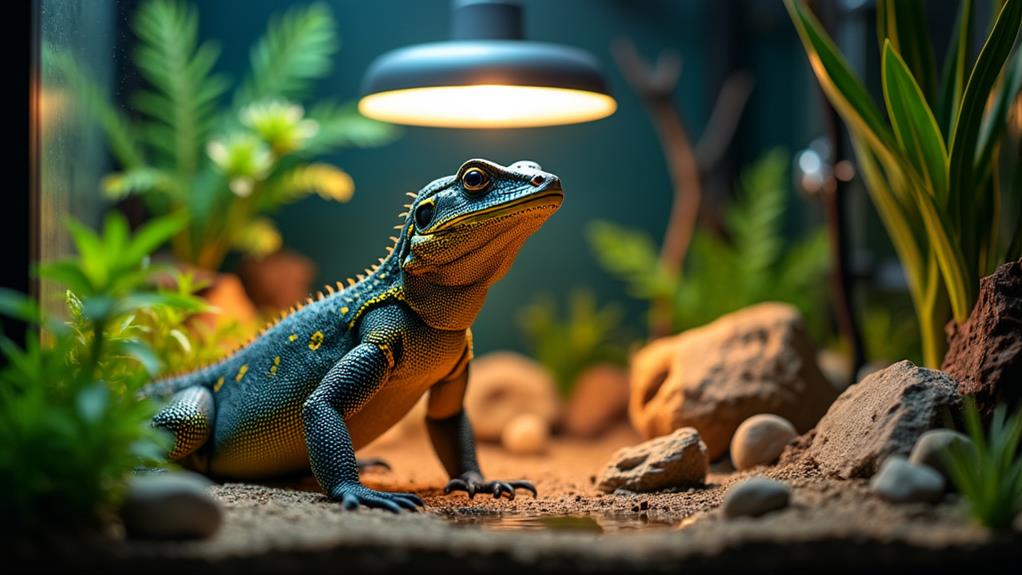
Caring for an ackies monitor can be a rewarding expedition. Start with a spacious enclosure—at least 5 ft long and guarantee it's well-ventilated. Maintain a temperature gradient with basking spots at 120-150°F and ambient temps around 80-85°F. Provide UVB lighting for their health, and keep humidity levels balanced with a proper substrate mix. Feed them mainly invertebrates, offering fresh water daily. Regular health checks and a clean habitat are crucial. Socialization with gentle handling fosters a strong bond. Understanding their behavior and habitat preferences improves your experience and theirs, and there's more to investigate on this expedition.
Key Takeaways
- Ensure the enclosure is at least 5 ft long, 2.5 ft wide, and 4 ft high.
- Maintain a temperature gradient with basking spots between 120-150°F and ambient temperatures of 80-85°F.
- Provide a varied diet of invertebrates, occasionally including small mammals, supplemented with calcium and vitamin D3.
- Create a stimulating environment with climbing branches, hiding spots, and deep substrate for exploration.
- Regularly monitor humidity and temperature using digital hygrometers and infrared temperature guns.
Understanding Ackie Monitors
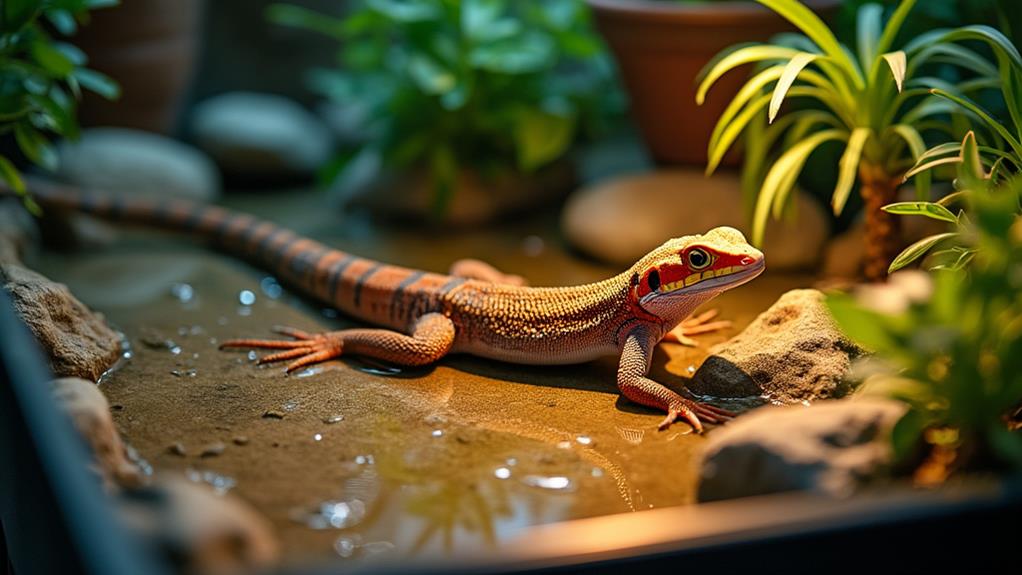
Investigate the intriguing world of Ackie monitors, scientifically known as Varanus acanthurus. Native to the arid, rocky environments of northern Australia, these fascinating reptiles can grow up to 76 cm (30 in) long. Their slender bodies, snakelike tongues, and distinct patterns of red, brown, or black-brown with yellow or cream spots make them quite enchanting. Ackie monitors are more than just visually appealing; they're intelligent creatures with a complex social nature. If you socialize them properly from a young period, they can form a strong bond with you, their handler.
To support their wellbeing, it's critical to mimic their native environment as closely as possible. Providing climbing opportunities and deep substrate for burrowing is fundamental, reflecting their natural habitat's structure. Ackie monitors thrive in environments with ample space to investigate and move around. As omnivores, their diet should mainly consist of insects, complemented by occasional fruits. Don't forget the importance of calcium and vitamin D3 supplements, which are essential for their growth and health.
Understanding these fascinating creatures is the initial step to ensuring they lead a happy and healthy life in your care. Welcome their world, and they'll reward you with their remarkable presence.
Enclosure Essentials
In relation to creating the perfect home for your ackie monitor, a well-designed enclosure is fundamental for their health and happiness. The minimum recommended enclosure size is 5 feet long, 2.5 feet wide, and 4 feet high. Opt for larger dimensions if possible to promote their best health and activity. Construct the enclosure from PVC or well-sealed wood to guarantee it's waterproof and can withstand substrate pressure.
A deep substrate layer of at least 1 foot is critical to support their natural nesting behaviors. A blend of organic topsoil and playsand or sandy loam is ideal. Proper ventilation is significant to prevent excessive humidity levels, which you can monitor using a digital hygrometer.
To enrich the environment, include elements like:
- Climbing branches for exercise and exploration
- Caves and logs to mimic their natural habitats
- Water bowls to provide hydration and humidity
- Deep substrate for burrowing and nesting
- Ample space beyond the minimum recommended enclosure size
These enhancements not only facilitate natural behaviors but also help in reducing stress. Remember, a thoughtfully designed enclosure guarantees your ackies thrive in a safe and stimulating environment.
Temperature and Lighting Needs
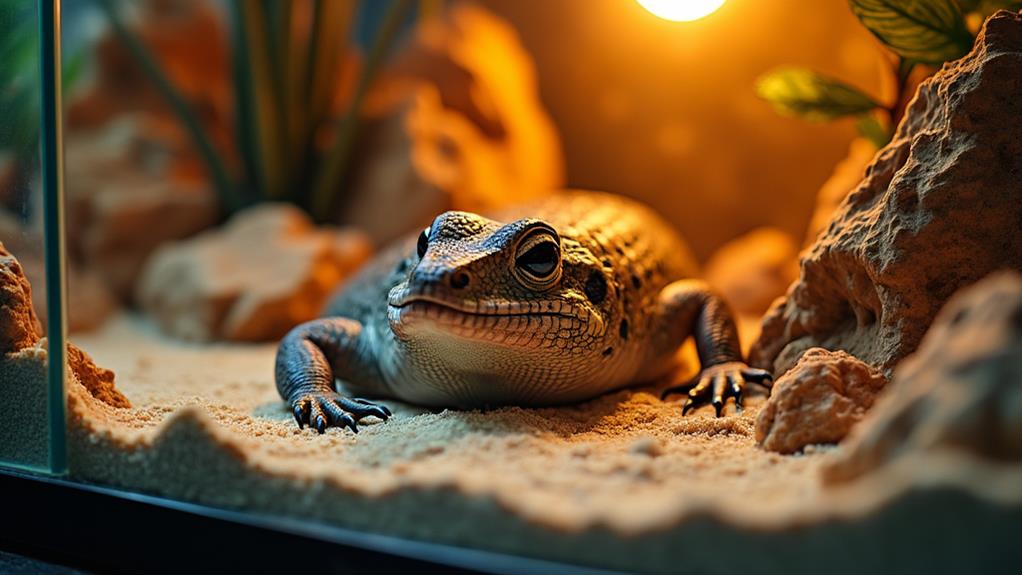
When creating the ideal environment for your ackie monitor, a well-regulated temperature and proper lighting are fundamental. Start by establishing a temperature gradient in the enclosure. Your ackie needs basking spots that reach between 120-150°F (48.9-65.6°C). Use heat bulbs to achieve this, making sure they're positioned safely. Ambient temperatures should range from 80-85°F (26.7-29.4°C) to maintain your pet's health and metabolism.
UVB lighting is key for vitamin D production, which helps in calcium absorption. Install UVB bulbs like Arcadia 12% or Zoo Med T5 HO Reptisun 10.0 about 7-15 inches above the basking area. This setup mimics their natural habitat and supports their overall wellbeing. A 12-hour day/night cycle is ideal, but you can adjust it to 13 hours in summer and 11 in winter to simulate seasonal changes.
Maintaining proper humidity levels is critical—20-50% above ground and up to 80% underground. Achieve this through appropriate substrate depth and moisture management. Regularly check temperatures and humidity with an infrared temperature gun and a digital hygrometer to guarantee accuracy. This careful monitoring will help keep your ackie healthy and thriving.
Ideal Diet and Feeding
A significant part of caring for your ackie monitor is providing a balanced diet that meets its nutritional needs. Ackie monitors are omnivorous, meaning their diet should consist mainly of invertebrates like crickets, Dubia roaches, and locusts. These food items supply crucial nutrients and should be supplemented with small mammals, such as pinky mice, occasionally to guarantee balanced nutrition. To support healthy growth and prevent obesity, adjust feeding habits according to maturity: young ackies need daily feedings, juveniles every other day to three times a week, and adults two to three times weekly.
- Calcium: Dust their food with calcium to promote strong bones.
- Vitamin D3: Include supplements to aid metabolic functions.
- Hydration: Always provide fresh water and consider weekly warm water soaks.
- Dehydration Signs: Watch for lethargy or sunken eyes as indicators.
- Monitor Weight: Regularly check their weight to verify proper growth.
These practices help maintain your ackie's health by guaranteeing proper nutrition and hydration. Remember, keeping an eye on their feeding habits and any signs of dehydration can prevent potential dietary issues, supporting a thriving and active pet monitor.
Health and Maintenance Tips
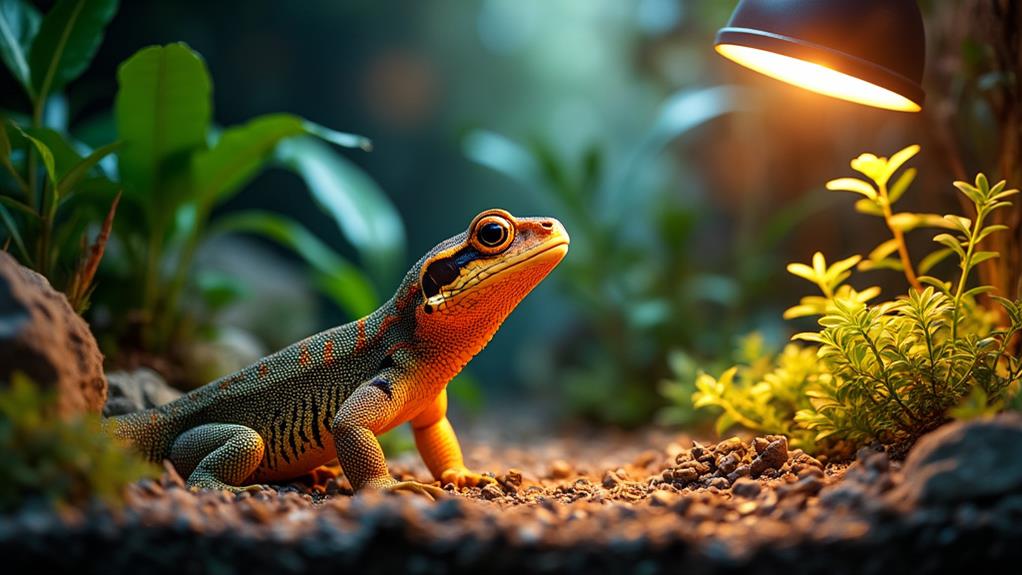
Having established the significance of a balanced diet for your ackie monitor, it's just as essential to focus on their health and maintenance. Regular health checks are important in identifying issues like respiratory infections and parasites early. Keep a close eye on their behavior and eating habits; any changes might signal a health problem that needs swift attention. Hydration is key, so make sure they always have access to clean, fresh water to support their general well-being.
Their habitat requires regular cleaning to maintain a hygienic environment. Replace the substrate as needed to prevent disease and confirm your monitor thrives. A clean habitat not only supports physical health but also provides a stress-free space. Consider adding environmental enrichment to their surroundings. This improves mental stimulation, reduces stress, and promotes a more active and healthier lifestyle for your ackie monitor.
Socialization and Handling
Socializing your ackie monitor is vital for developing a strong bond and ensuring a stress-free environment. Early and consistent socialization helps make handling easier and reduces stress for both you and your monitor lizard. Trust-building is fundamental, and you can achieve it through gentle handling and allowing your monitor to investigate its surroundings at its own pace. This approach improves comfort levels and fosters positive interactions.
When handling your ackie, it's significant to monitor its behavior closely. Each monitor lizard has a unique personality, and some may remain flighty if not properly acclimated. Watch for signs of stress, such as hiding, tail twitching, or aggressive behavior. If these occur, allow your monitor to retreat to a safe space.
To boost tameness and reduce territorial behavior, especially in young monitors, focus on these strategies:
- Gentle handling: Start with short sessions and gradually increase the time.
- Food rewards: Offer treats to encourage approachability.
- Safe exploration: Let them investigate their environment to build confidence.
- Observe body language: Adapt your approach based on their comfort levels.
- Consistent routine: Regular interaction builds familiarity and trust.
Common Behavioral Traits
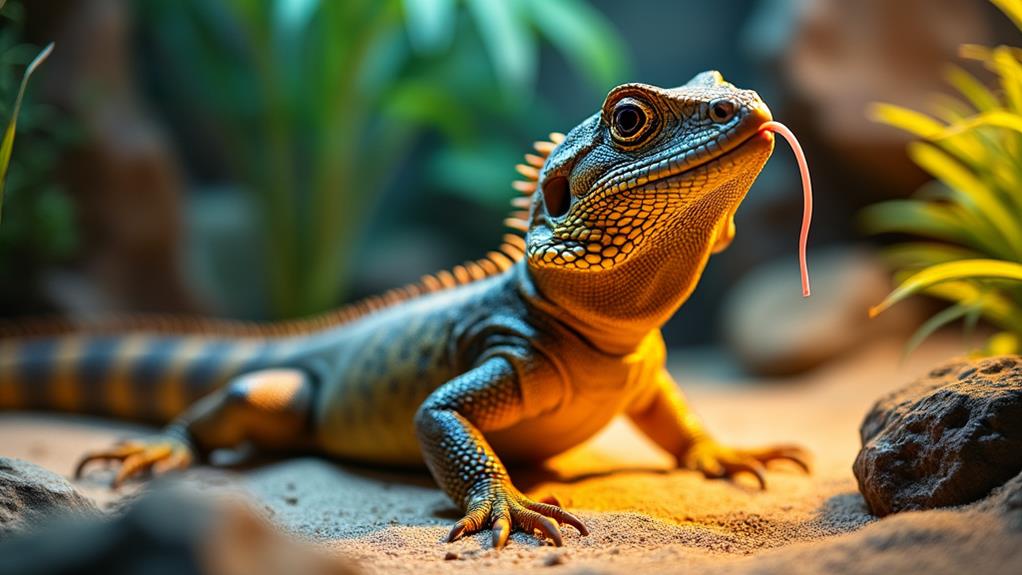
Ackie monitors are fascinating creatures with high intelligence and complex behaviors. They thrive on problem-solving and exploration, making them endlessly interesting pets. One of their key behavioral traits is their semi-arboreal nature. They love climbing and exploring, so ensuring your enclosure has plenty of vertical space is essential in Ackie Monitor Care. Giving them room to roam helps satisfy their natural curiosity and need for adventure.
Socialization plays an important role in making your ackie monitor handleable. If you start interacting with them from a young stage, they can become quite tame and comfortable with human contact. However, be attentive to stress signs. Hiding, tail twitching, and aggressive behavior are indicators that your monitor might be feeling overwhelmed. Monitoring their body language closely helps you address these issues promptly.
Ackie monitors have unique defense mechanisms to protect themselves. They may inflate their lungs or block their burrow entrances with their tails when they sense danger. Understanding these instinctual behaviors can help you create a more secure and stress-free environment for your pet. With proper care and attention, you can enjoy the full range of your ackie's intriguing behaviors.