A Beginner’s Guide to Owning a Bearded Dragon Lizard
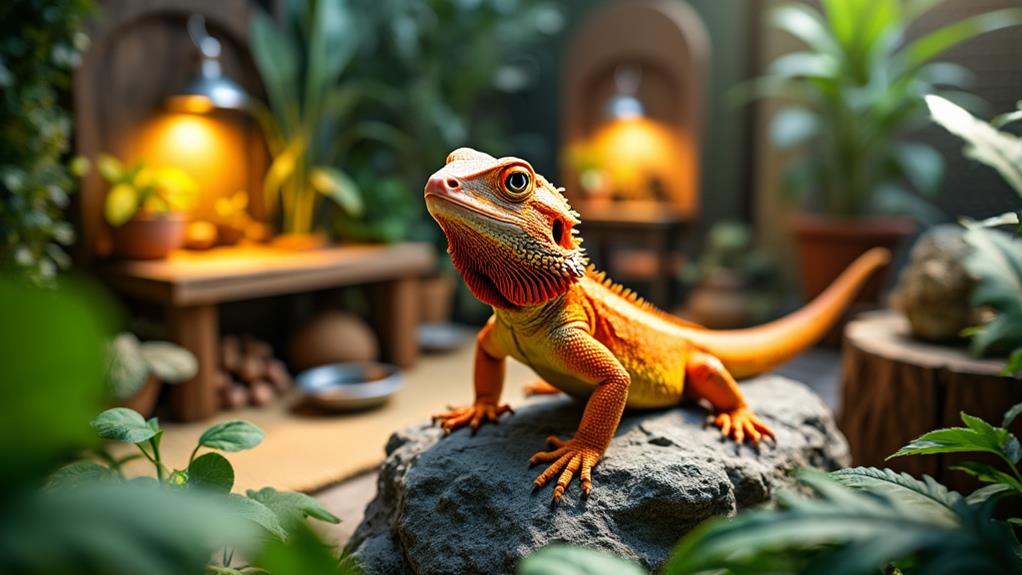
Owning a bearded dragon lizard can be a delightful experience, but it requires some know-how. Start by choosing a healthy dragon from a reputable source, confirming it's alert with clear eyes. Set up a minimum 40-gallon terrarium with a temperature gradient of 75-100°F and provide vital UVB lighting for bone health. Guarantee a balanced diet of insects and vegetables, adjusted as they mature, and keep humidity low. Regular handling helps build trust, so support their body fully. Monitor their health with routine checks and observe for signs of distress. There's much more to learn for a complete understanding.
Key Takeaways
- Ensure a 40-gallon terrarium with a temperature gradient of 75-100°F for a bearded dragon's habitat.
- Use full-spectrum UVB lighting for 12 hours daily to prevent metabolic bone disease.
- Feed young dragons 60-80% insects and adults 80% vegetables/fruits for a balanced diet.
- Regularly monitor health through diet tracking, behavior observation, and routine veterinary check-ups.
- Handle bearded dragons gently, using both hands to support their body and gradually increase interaction time.
Bearded Dragon Basics
Owning a bearded dragon is an exciting adventure into the world of reptiles, especially with the Central Bearded Dragon (Pogona vitticeps) being a popular choice. As a potential pet owner, you'll find these bearded creatures fascinating and surprisingly friendly. They can grow up to 24 inches and typically live around 10 years in captivity. If you're considering bringing one into your home, it's vital to understand their basic care requirements.
Creating the right environment is significant. Bearded dragons need a minimum 40-gallon terrarium with a temperature gradient ranging from 75-100°F. This setup allows them to thermoregulate by moving between cooler and warmer areas. A designated basking area with a higher temperature is important for their health. Make sure your pet receives full-spectrum UVB light, which is key for calcium absorption and preventing metabolic bone disease.
Humidity levels should mimic their natural arid habitat, maintaining a low range to avoid respiratory issues. Their dietary needs are diverse, requiring a mix of insects and leafy greens. Pet stores often carry the necessities, but always research to make certain you're meeting your bearded dragon's specific needs. With proper care, your bearded companion will thrive and bring joy to your home.
Choosing Your Pet
When choosing your bearded dragon, start by examining the lizard's activity level and general health. Look for an active and alert individual with clear eyes and healthy skin. Avoid any that show signs of lethargy or distress, as these could indicate underlying health problems. Bearded dragons make great pets, but it's vital to verify you're selecting a healthy one from the start.
Choosing a reputable breeder or pet store is fundamental. They should offer a health checklist and maintain proper habitat conditions to guarantee you're bringing home a healthy pet. This step helps prevent potential health issues down the line and confirms your bearded dragon thrives. Be prepared for the commitment; these fascinating reptiles typically live 8 to 10 years, requiring long-term care and attention.
Consider the cost of your new pet, which can range from $15 to $70, with rarer color morphs going beyond $250. Keep in mind that while they're ideal solitary pets, housing multiple males can lead to territorial aggression, necessitating separate habitats. By carefully choosing your bearded dragon, you're setting the stage for a rewarding pet-owning experience.
Essential Supplies
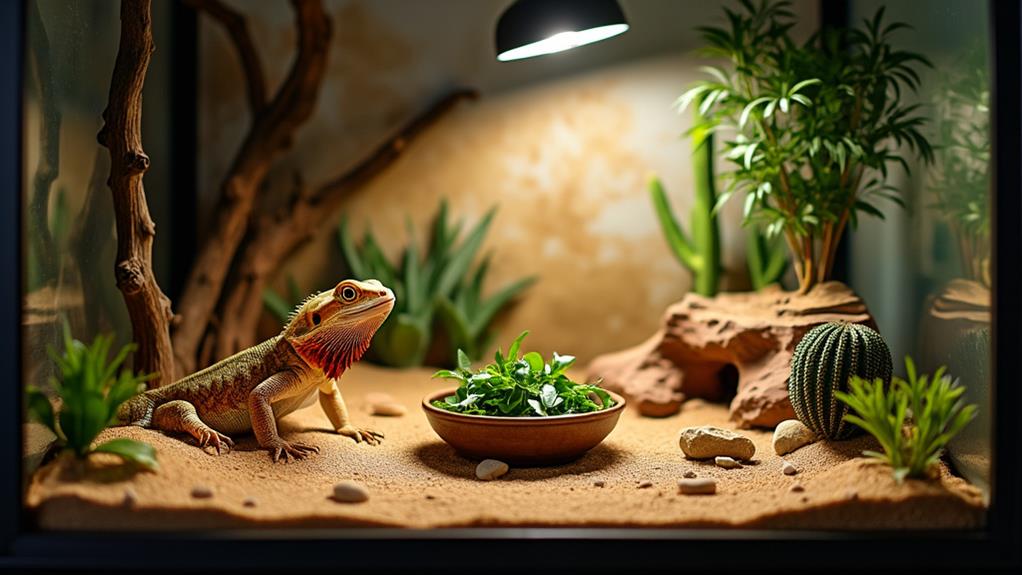
Once you've chosen your bearded dragon, it's time to gather the supplies that guarantee a healthy and comfortable environment. Start by selecting a minimum 40-gallon glass terrarium to provide sufficient space for your bearded dragon's habitat. This will allow them ample room to move and investigate. Opt for safe substrates like reptile carpet, tile, or newspaper to prevent health issues like impaction, which loose bedding can cause.
Temperature requirements are vital for your dragon's well-being. You'll need a reliable heat source, such as a basking lamp, to create a temperature gradient within the enclosure. Make sure basking areas reach 95-100°F, while cooler zones maintain 75-85°F. In addition, install full-spectrum UV-B lighting for at least 12 hours a day to support calcium metabolism and general health. Remember to replace the UV-A and UV-B bulbs every six months for peak effectiveness.
To enrich your dragon's environment, include food and water dishes, climbing structures, and hiding spots. These elements mimic their natural surroundings and provide stimulation. Live plants can also improve the habitat's aesthetic, but confirm they're safe for reptiles. With these necessities, your bearded dragon will thrive in its new home.
Habitat Setup
Setting up a bearded dragon's habitat is vital for its health and happiness. Bearded dragons need a proper environment to thrive, so start with a minimum 40-gallon glass terrarium, especially for adult bearded dragons. This size allows enough space for movement and exploration. When choosing a substrate, opt for reptile carpet or tile, avoiding loose bedding like sand to prevent impaction risks.
Creating a temperature gradient is imperative. Maintain a basking area of 95-100°F and a cooler zone of 75-85°F. This range allows your bearded dragon to regulate its body temperature effectively. Incorporate UVB lighting for 12 hours daily to facilitate calcium absorption and prevent metabolic bone disease. Remember, UVB bulbs lose effectiveness over time, so replace them every six months.
Your habitat setup should also include climbing structures and hiding spots to encourage natural behaviors. These enhancements provide mental stimulation and comfort. A shallow water dish is vital, ensuring hydration without the risk of drowning. For all these supplies, your local pet store will have a variety of options to choose from, making it easy to create a suitable home for your bearded dragon.
Temperature and Lighting
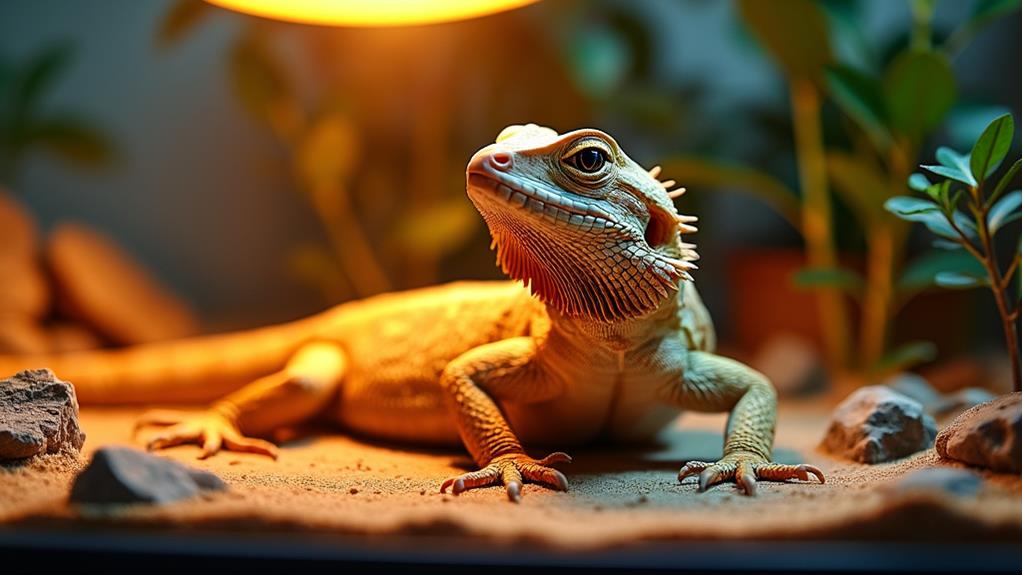
With your bearded dragon's habitat set up, it's time to focus on temperature and lighting to guarantee their well-being. Establishing a proper temperature gradient is important, with basking areas maintained between 95-100°F and cooler zones ranging from 75-85°F. This setup guarantees effective thermoregulation, allowing your pet to move between areas to regulate their body temperature.
A basking lamp is necessary for creating a basking spot with temperatures between 100-115°F. Pair it with a full-spectrum UVB light, which should be on for 12-14 hours daily. The UVB light promotes calcium absorption and helps prevent metabolic bone disease. Remember, UVB bulbs lose effectiveness over time and need replacement every six months.
Monitoring temperature accurately is significant, so use digital thermometers in both basking and cooler zones. This guarantees your dragon's environment remains comfortable and safe. Don't forget about humidity levels; keep them between 20-30% for a healthy habitat. A hygrometer will help you track and maintain the right humidity levels.
Position the UVB light carefully to avoid burns, ensuring it's not too close to your dragon. By following these guidelines, you'll create a perfect environment for your bearded dragon's health and happiness.
Dietary Needs
A balanced diet is vital for your bearded dragon's health and vigor. Bearded dragons eat a variety of foods as they are omnivorous, meaning their diet includes both animal and plant matter. For young bearded dragons, focus on providing about 60-80% of their diet from insects like crickets and mealworms, which are essential for their rapid growth. As they shift to adulthood, the Dragon Food should change to 80% vegetables and fruits, with leafy greens such as kale, collard greens, and dandelions being particularly significant.
Ensure to dust the insects and vegetables with calcium and vitamin D3 supplements. This practice is crucial to support bone health and prevent metabolic bone disease, especially for juveniles who need these nutrients every other day and adult beardies weekly. Feed My Bearded young dragons 3-4 small meals a day, while an adult beardie can be fed every other day. Remember to chop the food into manageable sizes for easy consumption.
Hydration is key, so provide fresh water daily. Misting the dragon or its food can help maintain hydration, as they can absorb moisture through their skin, ensuring your pet stays healthy and happy.
Health Monitoring
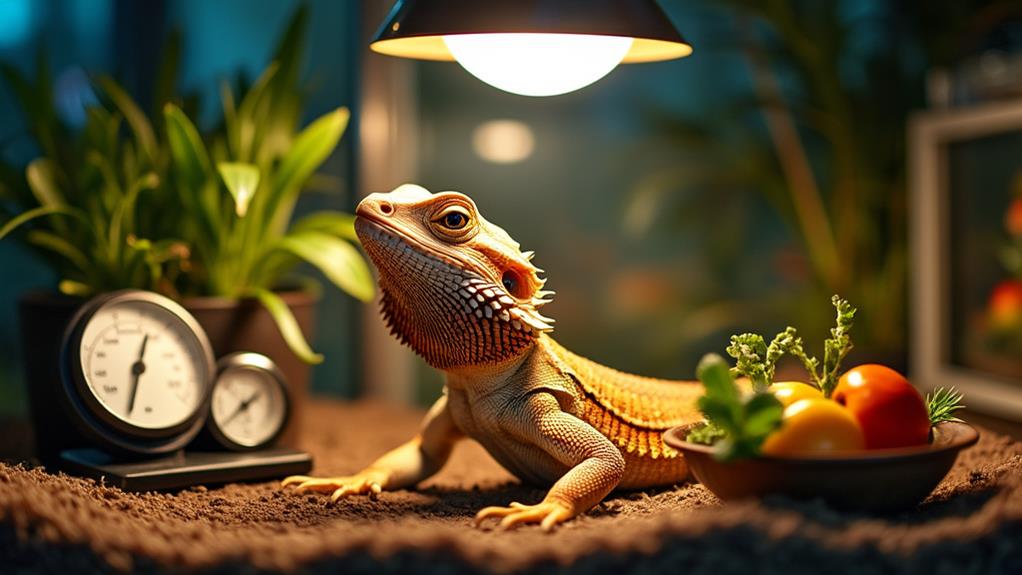
Vigilance is fundamental in relation to monitoring your bearded dragon's health. It's imperative to schedule regular veterinary check-ups to guarantee your pet's well-being. These visits typically include fecal exams to detect parasites and comprehensive wellness assessments. Pay close attention to signs of illness such as lethargy, lack of appetite, abnormal droppings, and noticeable weight loss, as they may indicate underlying health issues.
Dehydration is a significant concern for bearded dragons, so make certain they have constant access to fresh water and receive regular misting to maintain proper hydration levels. This is especially significant during shedding, which can take 1-2 weeks, as proper humidity levels (20-30%) aid in a smooth shedding process.
Preventing metabolic bone disease (MBD) is another key aspect of health monitoring. Verify your bearded dragon has proper UVB lighting and a balanced diet rich in calcium and vitamin D3. These elements are fundamental to support their bone health and overall well-being. By staying attentive and proactive, you'll help your bearded dragon thrive and enjoy a long, healthy life as part of your family.
Handling and Bonding
In regards to handling and bonding with your bearded dragon, gradual introduction is essential to ensuring a stress-free experience for both you and your pet. Start by letting your dragon acclimate to your presence; this helps reduce stress and builds trust. Gently lift your dragon, ensuring you're supporting its body fully with both hands. This not only prevents injury but also makes the dragon feel comfortable during handling.
Initially, limit handling sessions to 10-15 minutes. Prolonged interactions can overwhelm your pet, leading to stress. As your bearded dragon becomes more accustomed to being held, you can gradually increase the duration of these sessions. It's important to pay attention to your dragon's body language. Signs like puffing up its beard or becoming lethargic indicate discomfort or stress, prompting you to adjust your approach.
Regular interactions and gentle handling will improve the bond between you and your bearded dragon. Over time, this will make your pet more comfortable and social, fostering a trusting relationship. Remember, patience and consistency are essential. With time, your bearded dragon will not only trust you more but will also enjoy the handling experience.