World-Famous Animals: Legendary Creatures Who Made History
You're about to unearth legendary creatures that have left an indelible mark on history and culture. Dragons, symbols of power and wisdom, appear as both protectors and adversaries. Mermaids enchant with beauty yet pose perilous threats to sailors. The phoenix captivates with themes of rebirth and resilience, promising immortality through its fiery renewal. Chimeras embody chaos with their menacing hybrid forms, while werewolves reflect humanity's primal instincts and fears. Reveal the mysterious kraken, representing the dangers of uncharted waters. Each creature captivates with unique stories, inviting you to unveil deeper meanings and cultural significance woven throughout global folklore and mythology.
Iconic Creatures in Folklore
Across diverse cultures, many legendary creatures like dragons and mermaids have captured imaginations for centuries, often embodying power, danger, and the mysteries of nature. These mythical creatures, steeped in ancient mythology and folklore, have been a source of endless fascination. Dragons, with their formidable presence, are often seen as symbols of strength and luck in Eastern traditions, while Western stories portray them as fierce adversaries. Mermaids, enchanting yet perilous, lure sailors with their beauty and mystery.
The werewolf, another iconic figure, depicts the duality of human nature and the fear of losing control. It taps into the concept of lycanthropy, where humans transform into wolves, embodying primal instincts and hidden fears. The phoenix stands out as a symbol of immortality and renewal, rising from its ashes to represent resilience and transformation.
Chimeras, with their hybrid forms, embody chaos and the blending of different forces. Greek mythology often depicts them as fearsome legendary beasts. Finally, the Loch Ness Monster, a cryptid from Scottish folklore, keeps the mystery alive with countless sightings, sparking debates about its existence and humanity's fascination with the unknown, uncharted territories of nature.
Legendary Beasts in History
Throughout history, legendary beasts have captivated human imagination, symbolizing both the fears and wonders of the natural world. Consider the Kraken, a formidable sea monster from Scandinavian folklore. This legendary creature loomed large in sailors' tales during the Era of Exploration, embodying the dangers of the unknown and the perilous depths of uncharted waters. Its massive tentacles, capable of dragging entire ships beneath the waves, served as a stark warning to seafarers.
In ancient Greek mythology, the Chimera stands out as a terrifying hybrid monster. With the fierce attributes of a lion, goat, and serpent, it embodied the unpredictability of nature and the fears of hybrid creatures. Meanwhile, Mermaids, those enchanting half-human, half-fish beings found in sailors' folklore, symbolize the sea's perilous allure and the ever-present risk of shipwrecks.
The Minotaur, with its human body and bull's head, roamed the labyrinth of Crete, representing the complexities of human nature and the consequences of hubris. Finally, the Basilisk, known as the king of serpents in European folklore, embodied the ultimate danger of the unknown with its deadly gaze and venom, capturing medieval imaginations.
Mythical Animals in Culture
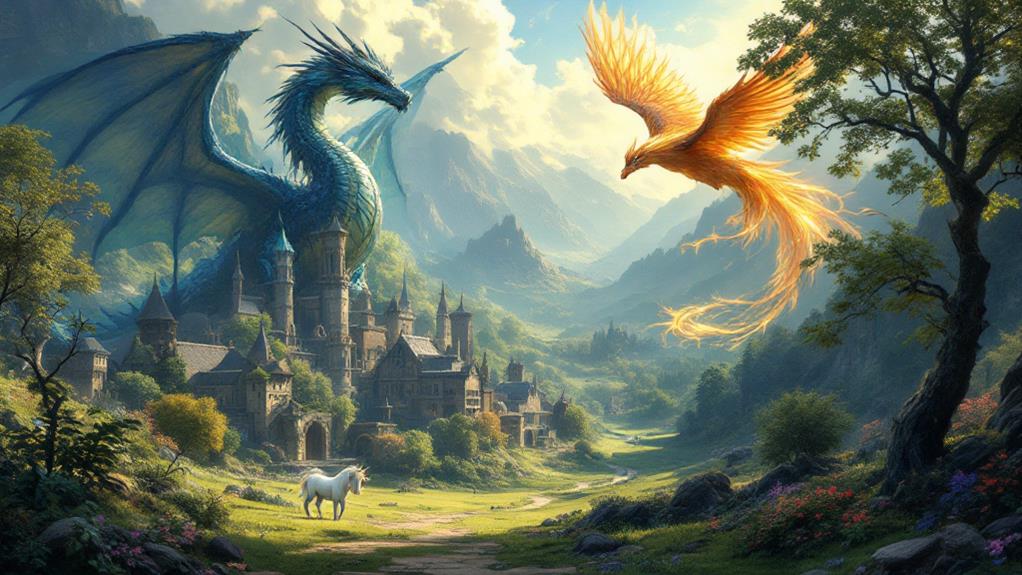
Mythical animals have long played a central role in cultural folklore, linking societies to ideals such as strength, purity, and mystery. These legendary creatures, like dragons, unicorns, and mermaids, are more than just stories; they reflect the values and fears of the cultures that created them. Dragons, for instance, symbolize power and good fortune in Asian cultures, standing as a revered mythical creature. In contrast, Western folklore often portrays dragons as fearsome adversaries to be vanquished by heroes.
Mermaids embody the dual nature of beauty and danger. Their enchanting siren songs captivate sailors, representing the perilous lure of the sea. Unicorns, on the other hand, are symbols of purity and healing. Their image of unattainable perfection has graced art and literature across diverse cultures, offering a glimpse into humanity's quest for the ethereal.
The phoenix and chimera illustrate themes of transformation and chaos. The phoenix rises from its ashes, symbolizing rebirth, while the chimera, with its mix of different animal parts, represents the unpredictable and chaotic nature of life. These mythical creatures highlight the complex relationship between humanity and the natural world in cultural folklore.
Famous Creatures of Mythology
In the tapestry of mythology, creatures like the Chimera, Minotaur, and Phoenix captivate our imaginations with their extraordinary attributes and stories. The Chimera, a famous hybrid creature from Greek mythology, embodies chaos with its lion's head, goat's body, and serpent's tail. Each part represents a blend of different forces that once roamed the ancient world. The Minotaur, another Greek mythology marvel, combines a man's body with a bull's head. Born from Queen Pasiphae and a sea bull, it symbolizes the eternal struggle between humanity and primal instincts within Crete's labyrinth.
The Phoenix, a mythical bird, fascinates with its cycle of fire and rebirth. You might imagine it rising majestically from its ashes, symbolizing immortality and renewal, a theme echoed across numerous cultures. Dragons, those legendary fire-breathing reptiles, are found in various mythologies worldwide. They represent wisdom, strength, and the untamed forces of nature, often depicted as both protectors and destroyers.
Legendary Animals in Art
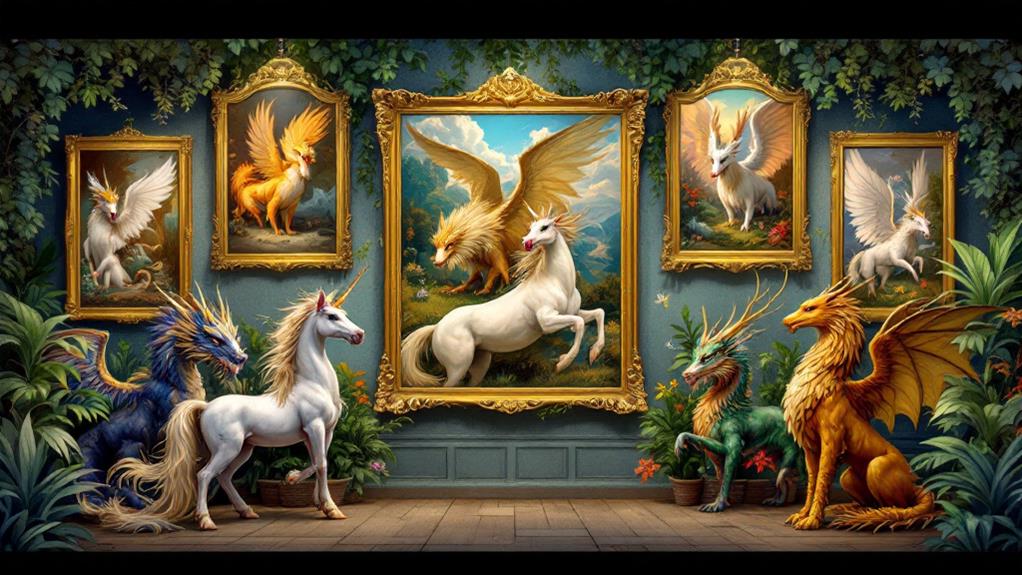
As you investigate the impact of legendary creatures in mythology, their presence in art becomes likewise enchanting. Across history, legendary creatures have been depicted in art through paintings, sculptures, and tapestries, each piece reflecting the cultural values and beliefs of its time. Consider the dragon, famously depicted in both Eastern and Western art; it symbolizes power and strength, embodying a dual nature as benevolent protectors or fearsome destroyers.
Mermaids, with their alluring beauty and perilous allure, are captured in art, highlighting themes of seduction and danger. These sea creatures intrigue with their mysterious presence. Meanwhile, unicorns, often associated with purity and grace, appear in medieval and Renaissance art, embodying ideals of unattainable beauty and healing powers.
In ancient Greek art, hybrid creatures like the Minotaur and the Chimera take center stage. These beings, often found in sculptures and pottery, represent complex narratives of heroism and monstrosity, illustrating the rich tapestry of Greek mythology. The depictions of these legendary creatures not only captivate the imagination but also preserve the myths and values of the cultures that revered them, immortalizing their stories in art.
Influential Creatures in Storytelling
Legendary creatures have been powerful symbols in storytelling, weaving rich narratives that resonate across cultures and time. From ancient myths to modern tales, they embody humanity's deepest fears, hopes, and values. Dragons, unicorns, and phoenixes frequently appear in stories, each representing unique themes and moral lessons. These mythical beings captivate our imaginations and often reflect societal beliefs and conflicts.
- Dragons: Symbolize wisdom, power, and mystery, often guarding valuables or ancient knowledge.
- Unicorns: Represent purity and grace, elusive and magical, often found in enchanted forests.
- Phoenixes: Embody rebirth and resilience, rising from ashes, inspiring new beginnings.
- Minotaur: A symbol of chaos and desire, trapped in labyrinthine tales of Greek mythology.
- Mermaids: Mesmerizing yet perilous, they mirror the duality of allure and danger in the sea's depths.
Folklore continues to evolve with creatures like the Chupacabra and Bigfoot, fueling our fascination with the unknown. These modern cryptids echo ancient storytelling traditions, reflecting societal fears and our eternal quest for understanding. Legendary creatures, regardless of ancient or contemporary, hold a mirror to the human condition, enriching our collective narrative tapestry.