Will an African Grey Parrot Be a Good Pet? A Guide for Prospective Owners
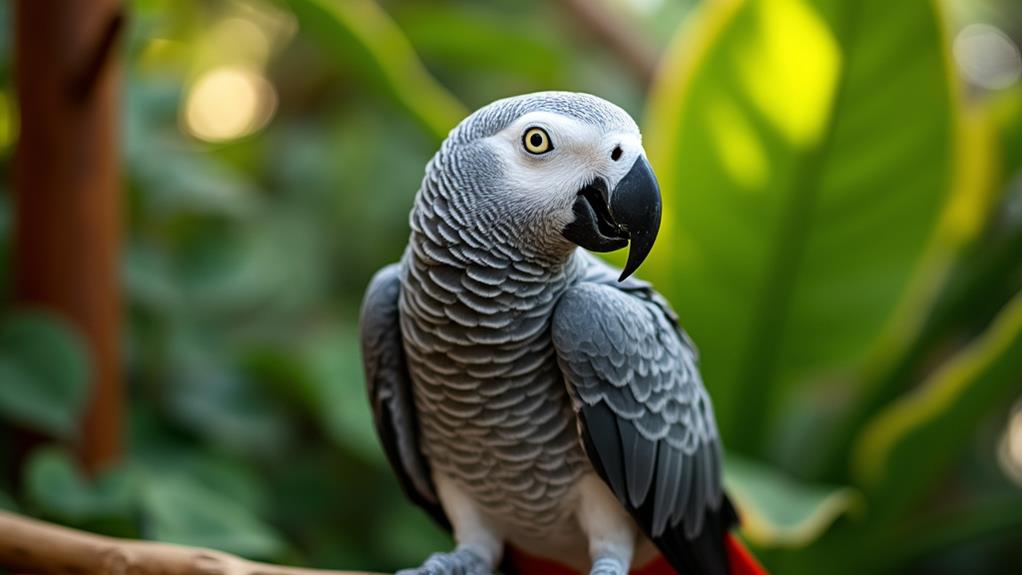
African Grey Parrots could be excellent pets if you're prepared for a long-term commitment. They're incredibly smart, matching the intellect of a young child, and can bond strongly with you, but they require daily interaction and mental stimulation. Their ability to mimic human speech adds charm, but they can be loud, which might not suit apartment living. Lifespan ranges from 40 to 60 years, so plan carefully. You'll need to provide a proper diet and spacious habitat, plus regular vet care due to potential health issues. To truly determine if they're the right pet for you, there's a lot more to uncover.
Key Takeaways
- African Grey Parrots require a long-term commitment due to their 40 to 60-year lifespan.
- They need regular interaction and mental stimulation to prevent boredom and behavioral issues.
- Prospective owners must provide a specialized diet of high-quality pellets, fruits, and vegetables.
- Their vocal and social nature may not suit noisy environments or apartment living.
- Potential owners should ensure access to avian veterinary care for routine health monitoring.
Characteristics of African Greys
When considering an African Grey Parrot as a pet, you'll be amazed by their exceptional intelligence and engaging personalities. These intelligent birds boast cognitive abilities comparable to a five-year-old child, which means they can learn and understand hundreds of words and phrases. Their mimicry skills are unmatched, allowing them to replicate sounds and human speech with impressive accuracy. This makes for delightful social interaction, as they often engage in playful and curious exchanges with their human companions.
African Grey Parrots are affectionate birds that thrive on mental stimulation and companionship. They require daily mental challenges to prevent boredom and potential destructive behaviors. You'll need to know that keeping them entertained is vital for their well-being. Their unique traits include not only their intelligence but also their memorable personalities, characterized by a blend of curiosity and playfulness.
With a long lifespan ranging from 40 to 60 years, African Greys demand a long-term commitment. Understanding their need for social interaction and mental engagement is significant if you're considering adding one to your family. These birds are not just pets; they're lifelong companions that enrich your life with their remarkable talents and affectionate nature.
Considerations for Ownership
Owning an African Grey Parrot is a significant commitment, often spanning up to 50 years, and requires thoughtful consideration. These intelligent and affectionate birds demand a lifestyle that matches their social needs. If you're considering owning an African Grey, be prepared for their strong ability to bond with one person, which can sometimes lead to jealousy in multi-person households. Their intelligence means they need plenty of mental stimulation to prevent boredom and potential behavioral issues like feather plucking.
Before bringing an African Grey parrot into your home, evaluate the pros and cons carefully. They need time outside their cage daily to investigate and stay active. Consequently, ensuring you have the time to engage with them is vital. Furthermore, a proper cage size and setup are necessary to their health, requiring regular cleaning and maintenance to avoid health issues.
Their specialized diet includes high-quality pellets, fresh fruits, and vegetables, which means ongoing expenses for food and veterinary care should be factored into your budget. Engaging with communities on social media can provide valuable insights and support, helping you understand the extensive needs involved in owning an African Grey.
Advantages and Disadvantages
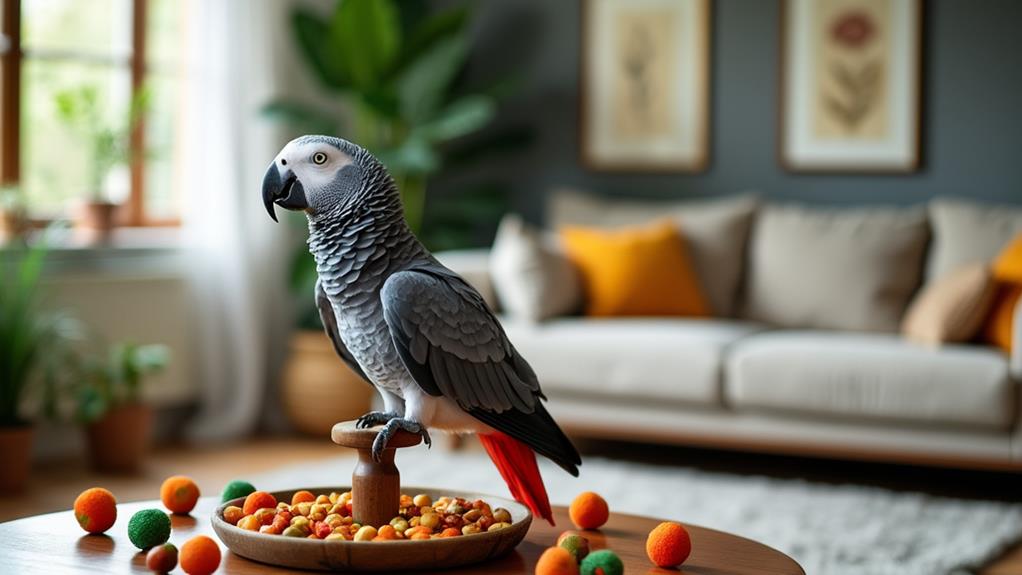
While African Grey Parrots are renowned for their exceptional intelligence and ability to mimic words and phrases, these qualities come with both advantages and challenges. Their ability to learn makes them incredibly engaging companions, offering endless entertainment and mental stimulation. You'll have the joy of forming affectionate bonds with these intelligent birds, which can improve your life with their playful and interactive nature.
However, owning an African Grey isn't without its challenges. Their long lifespan of 30 to 50 years means you're committing to decades of care, which isn't a decision to take lightly. They need daily interaction and mental stimulation to prevent boredom, which can lead to destructive behaviors, such as chewing on furniture or plucking feathers. For novice bird owners, these high maintenance needs can be overwhelming.
Additionally, African Greys can be quite vocal, and their loud calls might not suit apartment living. Effective noise management becomes vital, especially if you live in close quarters with neighbors. They may also develop jealousy towards other family members, which can complicate social dynamics within your household. These factors make it important to evaluate if an African Grey is the right pet bird for you.
Care and Habitat Needs
How do you create a suitable environment for your African Grey Parrot? Start by selecting a spacious cage with minimum dimensions of 24"x24"x36". This size allows African Greys to move comfortably. Make certain the bird cage has horizontal bars for climbing, as these parrots love to investigate. Place the cage in a safe area of your home where natural light and fresh air are accessible, but free from any potential hazards.
Daily cleaning and maintenance of the cage are essential. Remove waste and replace soiled bedding to maintain a healthy environment. This routine helps prevent illness and keeps your parrot happy.
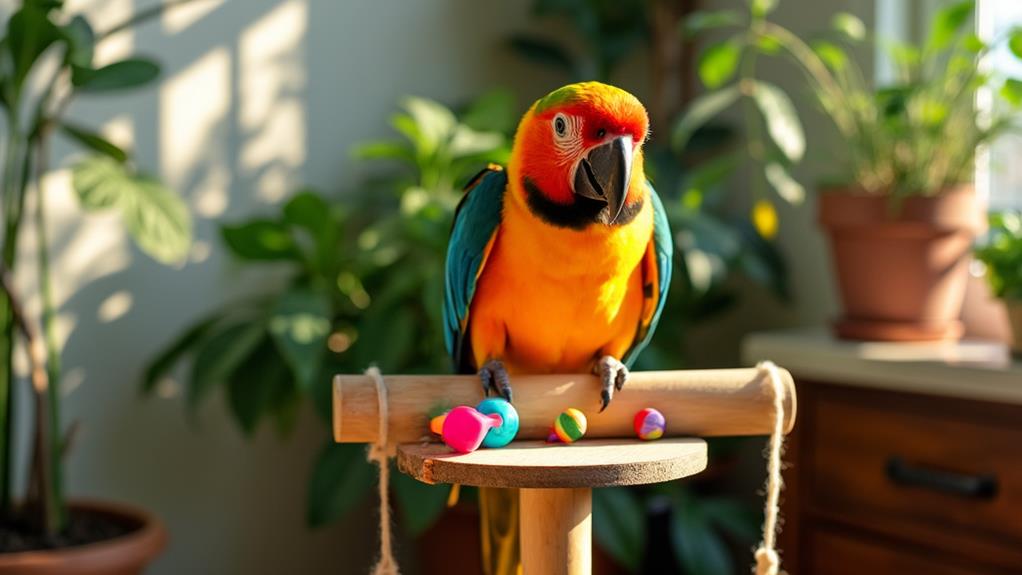
To meet the mental stimulation and exercise needs of African Greys, provide a variety of toys and activities. Rotating different toys and perches can prevent boredom and destructive behaviors. Remember, a stimulated parrot is a content parrot.
Diet also plays a significant role in their care. Offer a balanced diet of high-quality pellets, along with fresh fruits and vegetables. Avoid feeding them toxic foods like avocado and chocolate, which are harmful to their health. With the right habitat needs and care, your African Grey will thrive in your home.
Health and Veterinary Care
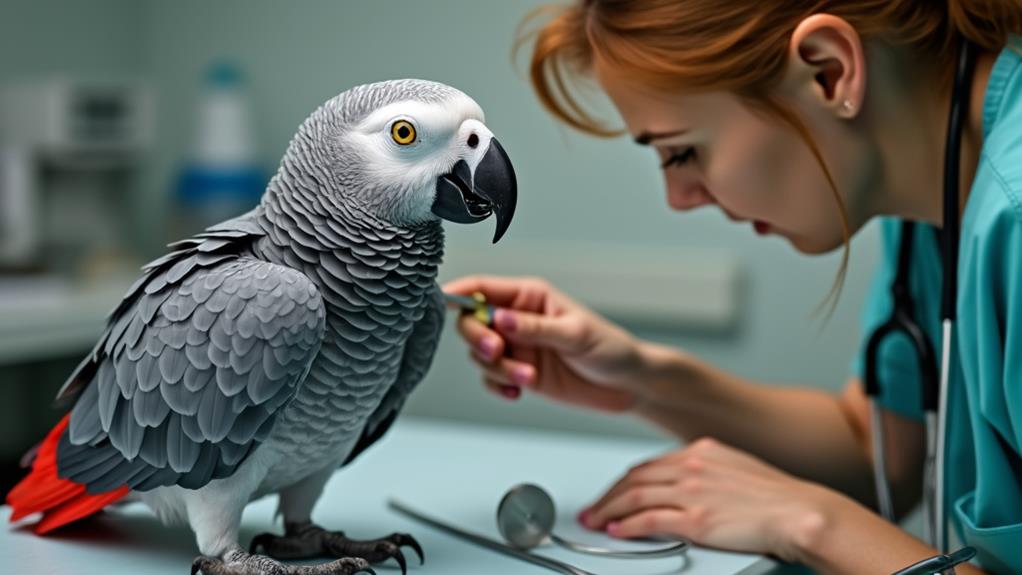
Regular health check-ups are fundamental for your African Grey Parrot, guaranteeing any potential issues are caught early. With only 114 board-certified avian vets in the US as of 2016, finding a specialist can be challenging. However, their expertise is essential, as African Grey Parrots are prone to specific health problems like feather plucking, respiratory issues, and nutritional deficiencies. An avian vet can provide targeted care and advice to prevent or treat these ailments.
A balanced diet is crucial for maintaining your parrot's health. Make certain to include high-quality pellets, fresh fruits, and vegetables, and avoid toxic foods like avocado and chocolate. Diet plays a significant role in preventing common health issues, so discussing nutritional needs with your avian vet guarantees you're meeting your bird's specific requirements.
Prompt veterinary care is imperative if you notice signs of illness, such as changes in appetite, lethargy, or unusual vocalizations. Financial preparedness is also significant, as treatment costs can vary widely, sometimes reaching hundreds or thousands of dollars. Being proactive about your African Grey's health and veterinary care helps assure a long, healthy life for your feathered friend.
Commitment and Responsibility
Caring for the health of your African Grey Parrot is just the beginning of your adventure as a responsible owner. Embracing an African Grey means committing to a lifelong voyage, as these intelligent birds can live up to 60 years. This commitment isn't just about providing food and water; it requires a deep understanding of their ongoing needs. Daily interaction is imperative since they thrive on social engagement. Without sufficient time and attention, they might develop loneliness-related behavioral issues.
Financial responsibility can't be overlooked either. The costs of food, toys, and regular veterinary check-ups add up over the years, so being financially prepared is fundamental. Beyond the material, there's an emotional bond that develops between you and your African Grey. This bond impacts their behavior and general well-being, making your presence and interaction crucial to their happiness.
Before bringing one of these remarkable creatures into your home, assess your lifestyle. Can you provide the time, care, and resources they require? Your commitment will shape their life, ensuring they remain healthy and content throughout their long life. Remember, owning an African Grey Parrot is a lifelong responsibility, not a fleeting experience.