Will a Parakeet Make a Good Pet Bird? The Complete Guide
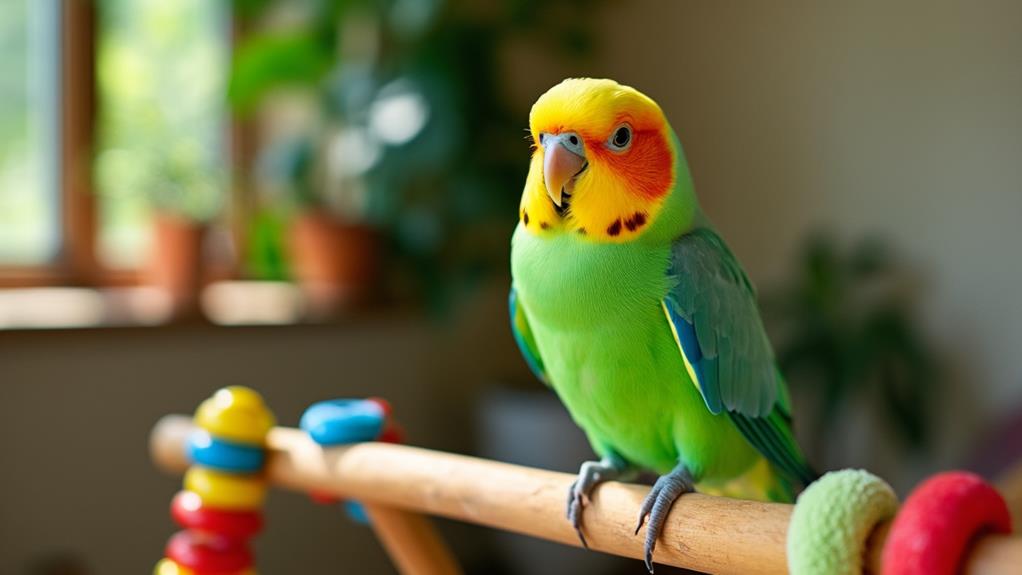
If you're looking for a friendly and sociable pet, parakeets are a great choice. They're intelligent, easily trainable, and thrive with regular interaction. You should provide them with a spacious cage, nutritious diet, and plenty of mental stimulation through toys and activities. Daily cleaning and allowing at least an hour outside the cage for exercise are vital for their well-being. They can live for 10-12 years with proper care. Understanding their needs, from socialization to health concerns, will guarantee a rewarding companionship. Investigate further to fully grasp what makes a parakeet an ideal feathered friend in your home.
Key Takeaways
- Parakeets are sociable, friendly, and intelligent, making them good companions for pet owners.
- They require regular interaction and socialization to thrive, preventing loneliness and stress.
- Proper care, including a balanced diet and clean environment, can extend their lifespan to 10-12 years.
- Parakeets need a safe and spacious cage, with toys and perches for mental and physical stimulation.
- Consistent training and positive reinforcement enhance their mimicry skills and behavior.
Understanding Parakeet Basics
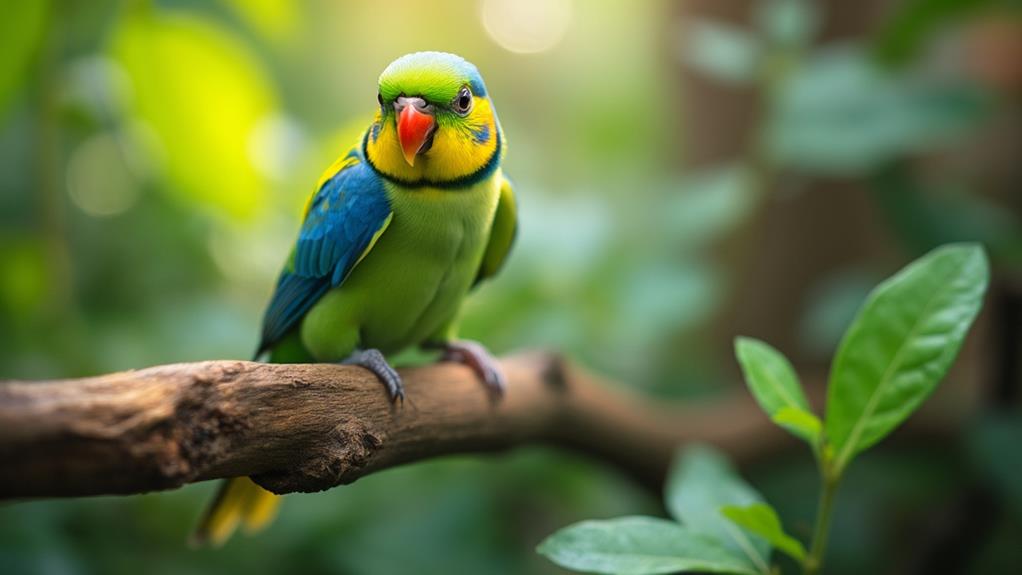
When you're pondering a pet that's both engaging and sociable, parakeets, also known as budgerigars or budgies, are an excellent choice. These small, friendly birds, averaging about 7 inches in length, can become lively companions with the right care. As social birds, parakeets thrive when they have company, either from their human caretakers or fellow feathered friends. Their intelligence allows them to learn basic commands and mimic sounds, which adds an entertaining dynamic to your interactions.
A healthy parakeet's diet includes a balanced mix of seeds, pellets, fresh vegetables, and fruits. Providing a variety of parakeet food guarantees they receive all the necessary nutrients, helping prevent nutritional deficiencies. Regular veterinary care is also vital to monitor their health and address any potential issues early on.
Identifying their gender can be straightforward; male parakeets have a blue cere, while females display a brownish-pink one. This knowledge helps you understand their behavior and social dynamics better. While it's significant to evaluate their living environment carefully, making sure they have space to fly and investigate is just as fundamental for their well-being. With thoughtful care, parakeets can live 10 to 12 years, offering years of companionship.
Ideal Living Environment
Creating the ideal living environment for your parakeet is essential for their health and happiness. As a parakeet pet owner, you should provide a large cage with a minimum size of 18x18 inches and half-inch bar spacing to guarantee they have enough room to move safely. Place the cage away from direct sunlight, drafts, and excessive noise to keep their environment comfortable and stress-free. Inside the cage, include natural branch perches of different sizes to promote foot exercise and improve their living space.
To keep your parakeet as a pet content and engaged, introduce toys regularly. Opt for toys made from natural fibers, which encourage foraging and provide the necessary mental stimulation. It's significant to clean their cage every day with spot-cleaning and perform weekly substrate changes. This routine helps prevent infections and maintains their general health.
Alongside a clean, engaging environment, offer your parakeet a range of fresh fruits and vegetables to guarantee a balanced diet. Remember, parakeets are social creatures, so providing opportunities for interaction and socialization is key to their well-being. By focusing on these elements, you'll create an ideal living environment for your feathered friend.
Interaction and Behavior
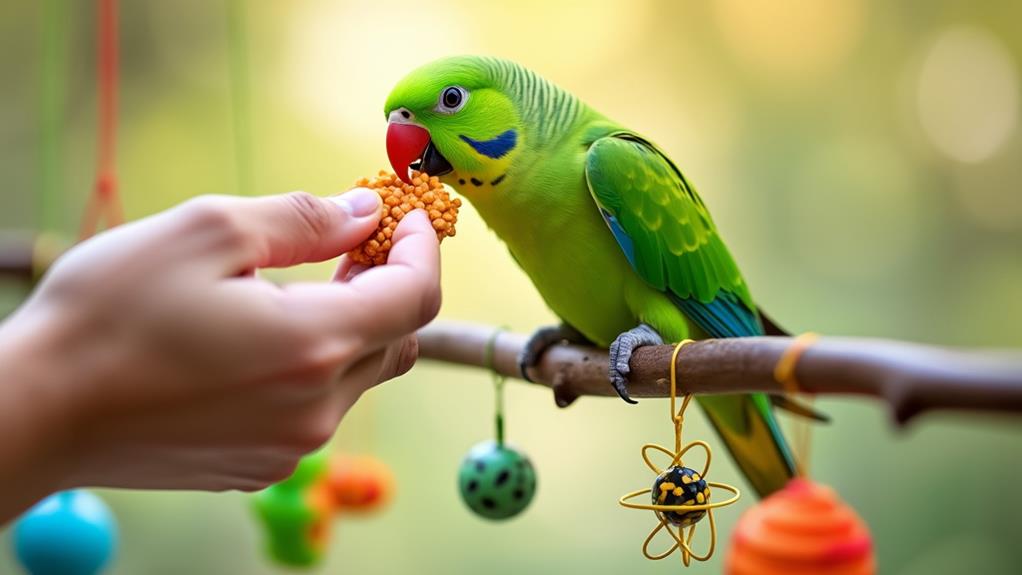
Parakeets are incredibly social birds that thrive on daily interaction, making it vital for their holistic well-being. They're not just pets, but companions that need regular engagement to stay happy and healthy. When you spend time with your parakeet, you're not just helping them; you're also forming a strong bond. This bonding is easier if your bird is hand-tamed from a young period, making them gentle and docile.
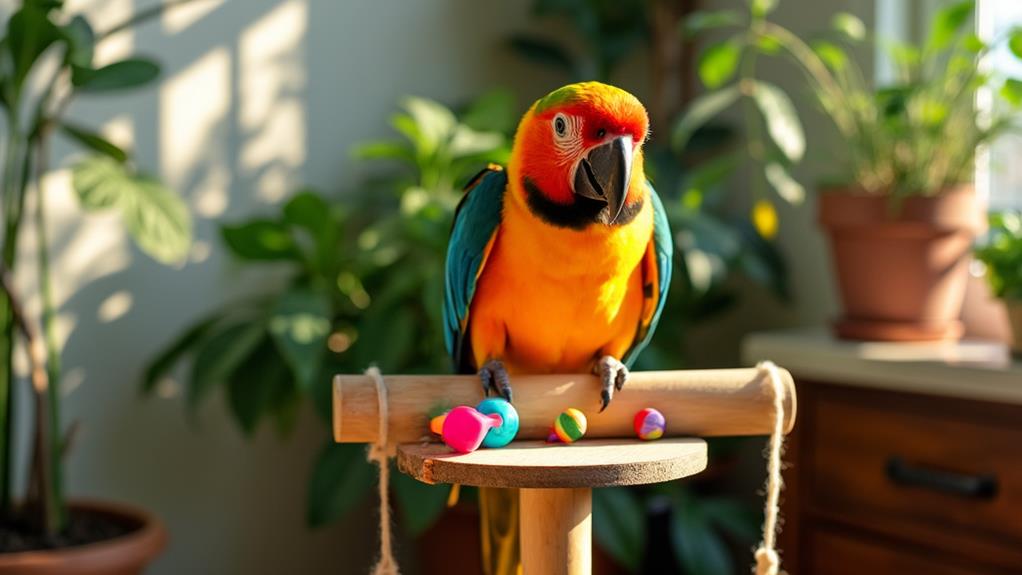
To keep your parakeet mentally and emotionally stimulated, provide a variety of toys and perches. These playful birds love to climb, swing, and investigate. Interactive toys can prevent boredom and contribute positively to their mental and emotional well-being. Furthermore, by understanding their vocalizations and body language, you can better care for them, recognizing signs of stress or discomfort early on.
Parakeets have an impressive ability to mimic sounds and even words, which you can improve through consistent social interaction and training, especially if you start before they're a year old. This not only enriches their lives but also strengthens your connection with them. By investing time and care into your parakeet's social needs, you're ensuring they lead a fulfilled life.
Essential Care Practices
While interaction and behavior are key components of your parakeet's happiness, knowing how to care for them is just as important. Fundamental care practices include providing an appropriate cage, at least 18x18 inches, with half-inch bar spacing. This guarantees safety and gives your parakeet room to move and exercise their feet. A clean environment is critical; spot-clean the cage daily, wash food and water bowls, and change the bedding weekly. This keeps your bird's home hygienic and comfortable.
To keep your bird mentally and physically stimulated, let them out of their cage for at least an hour each day. This not only exercises their feet but also satisfies their social nature. Never leave them alone for more than 12 hours. Regular interaction plays a significant role in keeping them happy and healthy. Alongside social engagement, make sure your parakeet diet includes high-quality pellets and fresh produce, though we'll explore nutritional needs in the next section.
Nutritional Needs
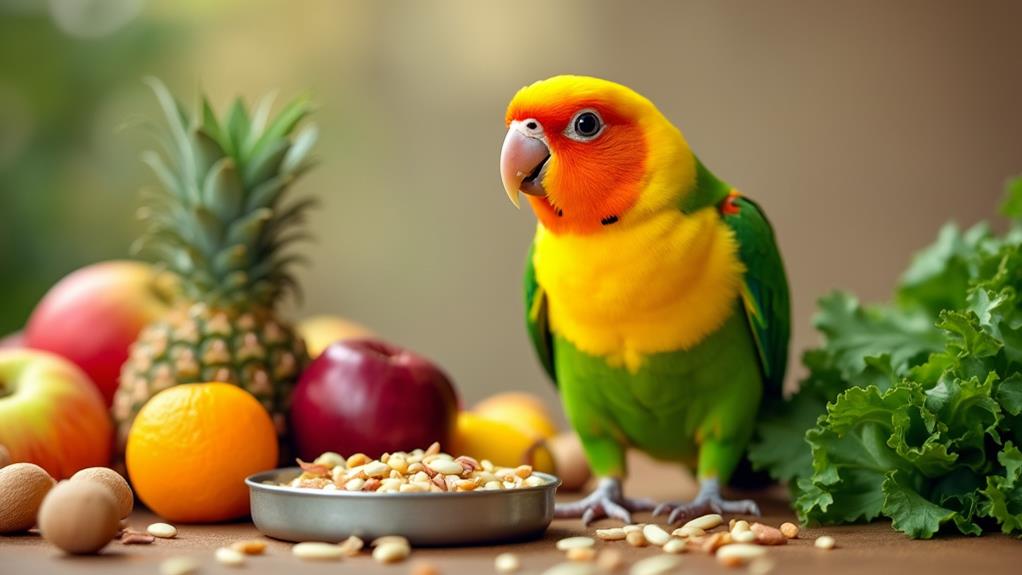
A well-balanced diet is vital for maintaining your parakeet's health and vigor. Parakeets need a diet that primarily consists of high-quality pellets, making up about 60-70% of their food intake. This guarantees they receive vital nutrients and helps prevent malnutrition. While seeds and grains can be a tasty enhancement, they should form a smaller portion of your parakeet's diet.
Incorporating fresh fruits and vegetables into their daily intake is significant. Aim for 10-20% of their meals to come from safe options like berries, melons, sweet potatoes, and bell peppers. These provide supplementary vitamins and variety. However, be cautious of toxic foods—avocados, chocolate, caffeine, fruit seeds, and alcohol are dangerous and must be avoided.
Calcium supplementation is also significant, especially for female parakeets. Providing a cuttlebone in their cage can help support bone health and aid in egg production.
Common Health Issues
Ensuring your parakeet receives proper nutrition is just one aspect of keeping them healthy. Parakeets are social creatures and thrive in environments where their health is prioritized. Regular observation is fundamental to catch common health issues early. One such issue is sour crop, often resulting from feeding unwashed fruits and vegetables. This digestive problem needs immediate attention from an avian veterinarian to prevent further complications.
Young budgies, in particular, are susceptible to polyomavirus, which can lead to lethargy and feather abnormalities. Keeping a close watch for these symptoms can help in getting timely veterinary care. Moreover, maintaining a balanced diet is significant as poor nutrition can cause conditions like goiters and tumors, which are preventable with proper dietary habits.
Parakeets can also be affected by Salmonella, transmitted through contaminated food or water. Practicing strict hygiene is critical in preventing such infections. In addition, don't overlook regular checks for mites and intestinal parasites, as these can lead to significant issues if untreated.
Grooming and Maintenance
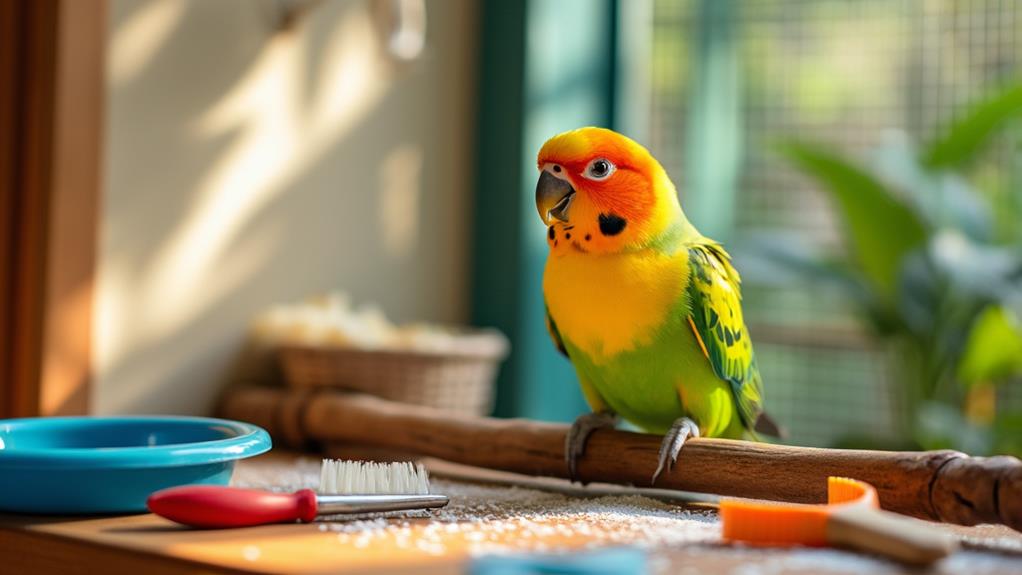
Proper grooming and maintenance are fundamental for parakeet health and happiness. Start with regular grooming by guaranteeing your parakeet has opportunities for daily preening, which is a sign of feather health. Bathing can be fun for them, so provide a shallow water dish or gently mist them to encourage this behavior. Nail trimming is another important aspect, typically needed every few weeks or months. It's best to let a trained professional handle this to avoid cutting the quick and causing bleeding.
Daily cleaning of your parakeet's cage is critical. Verify food and water dishes are clean to prevent bacteria and fungal infections. Replace the substrate and bedding weekly, or more often if you have multiple birds. Maintaining a clean living environment is significant, including avoiding non-stick cookware, as their fumes can be harmful.
Keep an eye on your parakeet's general health by monitoring for signs of illness, like a lack of preening or unusual behavior. If you notice anything concerning, seek veterinary care promptly. Always provide fresh food and a safe, clean environment to promote your parakeet's well-being and happiness. With proper care, your parakeet will thrive as a delightful companion.
Training Tips
Training your parakeet can be a rewarding experience for both you and your feathered friend. Start when they're young, ideally before one year of maturity, as this is when they're most receptive to learning. Morning sessions work best since parakeets are typically more alert and enthusiastic at that time. During these sessions, incorporate learning activities that engage your bird and stimulate their natural curiosity.
Consistency is key. Repeat commands and phrases regularly to reinforce learning. This repetition helps improve retention and makes the training process smoother. Parakeets respond well to positive reinforcement, so use small healthy treats to encourage desired behaviors. Not only will this help in training, but it will also strengthen the bond between you and your bird.
Pay close attention to your parakeet's body language throughout the process. Understanding their signals is essential for tailoring your training methods to suit their comfort level. If they seem stressed, adjust your approach to create a more effective learning environment. By being observant and patient, you'll find that your parakeet becomes more comfortable and willing to participate in training sessions, leading to a happier, well-behaved companion.
Socialization Strategies
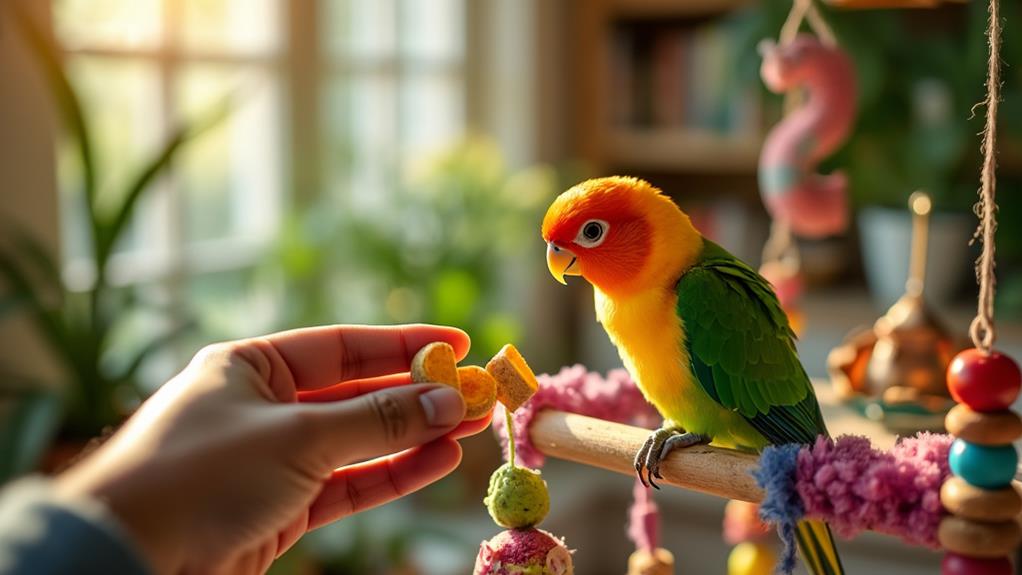
Socializing your parakeet is vital for their general well-being and happiness. Spending time with your feathered friend is significant, as these active and playful creatures thrive on interaction. As a pet parent, dedicate at least an hour each day to guarantee they're engaged and content. This could involve talking, whistling, and playing during regular training sessions, which help keep your parakeet mentally stimulated and foster a strong bond.
Understanding their body language is another key aspect of socialization. Recognizing signs like head bobbing or tail flaring allows you to respond appropriately to their moods and needs, enhancing communication. By doing so, you'll build trust and make your parakeet feel more at ease in their environment.
If you're introducing them to new parakeets, do so carefully within the parakeets' cage, as they may form bonds with each other that could affect their interactions with humans. Keeping parakeets in pairs can also reduce loneliness, encouraging natural social behaviors, especially for those who can't be home often. By investing time and effort in these socialization strategies, you'll create a harmonious and fulfilling relationship with your parakeet, guaranteeing a happy pet and owner alike.
Choosing Your Parakeet
Selecting the right parakeet is an exciting and significant decision that will impact your daily life and the bird's well-being. When you choose a parakeet, prioritize health and activity levels over appearance. Although a Colorful Parrot might catch your eye, it's advisable to focus on a parakeet species known for being healthy and sociable. Young males often make great companions due to their social nature and ease of training, providing a rewarding interactive experience.
Before bringing a parakeet home, assess your living conditions to guarantee you can provide a suitable environment. Your home should have a safe, draft-free area where harmful fumes are absent, creating a comfortable space for a single bird. The cage size should be at least 18 inches in each dimension for one parakeet, with more space required for extra birds.
When meeting potential parakeets, look for signs of sociability, like curiosity and engagement. This will help you choose a bird that thrives as a Low-Maintenance Pet. Keep in mind that a healthy parakeet is more crucial than striking colors. Once you've chosen your parakeet, it's vital to learn how to feed your parakeet properly.
- Prioritize health and activity
- Assess your living conditions
- Look for sociable signs