Why the Sphynx Dwelf Cat Doesn’t Have Hair: Exploring Hairless Breeds
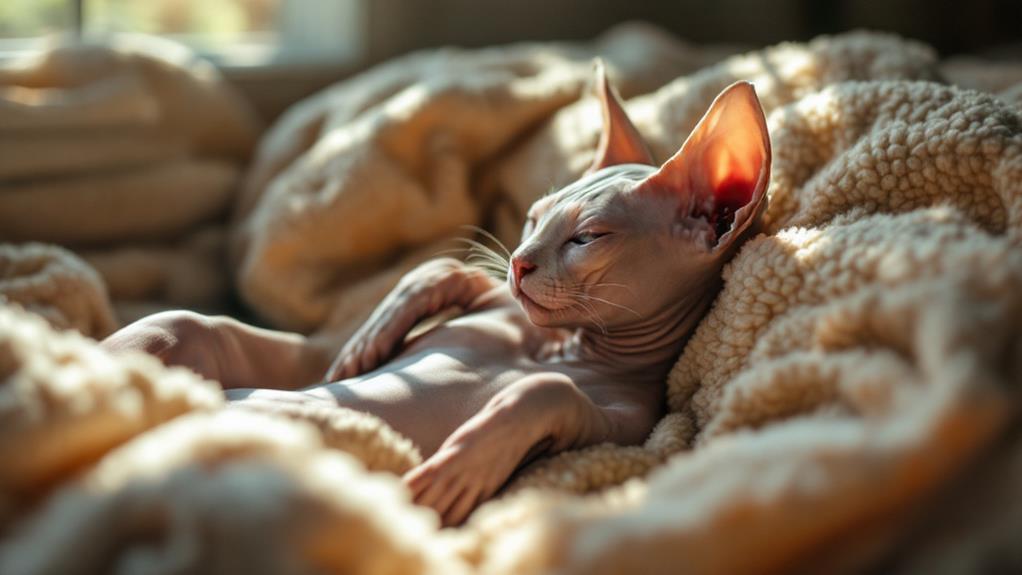
You might wonder why Sphynx and Dwelf cats are hairless. It's due to a unique mutation in the KRT71 gene, which means these cats have to inherit two copies to be truly hairless. Their skin feels like warm suede and can come in different colors and patterns despite lacking fur. Don't be misled; these cats need regular grooming and are sensitive to temperatures, requiring warm, cozy spaces. They're known for their affectionate nature, often seeking warmth and closeness. There's more to uncover about their intriguing characteristics and care requirements, offering deeper insights into these unique pets.
Genetic Mutation in Hairless Cats
The fascinating world of hairless cats begins with a genetic twist. At the heart of this twist is the KRT71 gene, responsible for the hairlessness seen in breeds like the Sphynx and the unique Dwelf. This gene mutation affects hair follicle formation, resulting in the absence of fur. To achieve true hairlessness, a cat must inherit two copies of this mutated gene. If a cat inherits only one, it might display a light layer of fur.
The expedition of hairless breeds started in 1966 with Prune, a hairless kitten born in Toronto. From there, selective breeding practices took over, focusing on enhancing the hairless trait while keeping health and genetic diversity in mind. Breeders selectively paired cats to guarantee that the desirable mutations of the KRT71 gene were passed on, creating the distinctive look of the Sphynx and the Dwelf.
Interestingly, this same mutation can cause curly or wavy fur in other species like dogs and rodents. Understanding these genetic nuances helps guarantee that hairless breeds maintain their health and unique appearance through careful breeding choices. As you plunge deeper into the world of hairless cats, you'll appreciate the complex science behind their creation.
Texture and Feel of Hairless Breeds
Imagine running your hand over a warm peach or a suede-covered hot water bottle—that's the distinctive tactile experience of petting a hairless cat breed like the Sphynx or Dwelf. These cats don't possess the traditional fur coat; instead, their hairless bodies are adorned with a peach fuzz texture that gives them a warm and smooth feel. This downy fur, or sometimes complete lack of fur, sets them apart from other breeds and contributes to their exceptional appearance.
When you touch a Sphynx or Dwelf cat, you might notice slight variations in fur presence, especially on their nose, ears, and tail tip. Some have short downy fur in these areas, while others are entirely bald. Their skin, warm to the touch, offers a sensory interaction unlike any furry feline.
The lack of fur means these cats are often more affectionate, seeking warmth and closeness with their humans. When you pet them, you get a distinct tactile experience that's not only comforting but also intriguing. Despite their hairless bodies, Sphynx and Dwelf cats display a wide range of colors and patterns, making each one exceptionally beautiful.
Overview of Hairless Cat Breeds
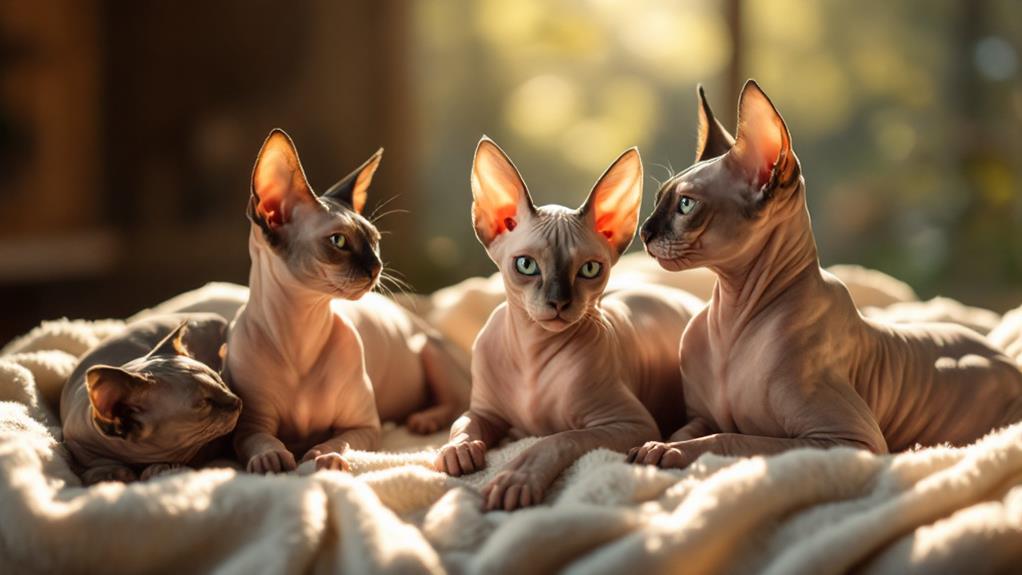
Hairless cat breeds offer a fascinating glimpse into genetic diversity and feline companionship. Leading the charge is the Sphynx breed, celebrated for its smooth, nearly bald skin. The expedition of these enchanting creatures began with the initial hairless kitten, Prune, born in Toronto in 1966, marking the start of selective breeding aimed at enhancing this genetic mutation. While the Sphynx is perhaps the most renowned, other breeds like the Donskoy, Peterbald, Bambino, and Elf cats contribute to the hairless cat family, each with their unique characteristics. For instance, some possess distinctive curled ears that add to their charm.
You'll find these hairless cats boast a loving nature, often seeking human interaction due to their social nature. However, they require special care, particularly regarding skin maintenance. Without fur, their skin accumulates oil buildup, necessitating regular cleaning. Furthermore, despite their lack of fur, they're not entirely hypoallergenic. A balanced diet is essential for maintaining their health and ensuring their skin remains in top condition. As you investigate the world of hairless cats, you'll uncover a unique blend of affection, uniqueness, and a need for attentive care, making them remarkable companions.
Unique Traits of Hairless Cats
Curiosity often surrounds the unique traits of hairless cats, drawing attention to their extraordinary characteristics. Among these intriguing creatures are Sphynx cats and the fascinating Dwelf cat. Both belong to hairless cat breeds distinguished by a genetic mutation in the KRT71 gene. This mutation disrupts normal hair follicle development, resulting in their iconic lack of fur.
Contrary to what you might think, Sphynx cats aren't entirely bald. They usually sport a fine layer of fuzz, similar to peach skin, offering a unique tactile experience that many find delightful. The Dwelf cat, on the other hand, is a captivating mix of the Sphynx and Munchkin breeds. It features not only the absence of fur but also charmingly short legs, making it a standout among hairless cats.
Because of their lack of fur, hairless cat breeds like the Sphynx and Dwelf require diligent skin care. They produce more skin oils, necessitating regular bathing to keep their skin healthy. Despite their hairless appearance, these cats maintain a warm body temperature. Coupled with their affectionate nature, they're perfect for those who appreciate warmth and cuddles.
Care Needs for Hairless Cats
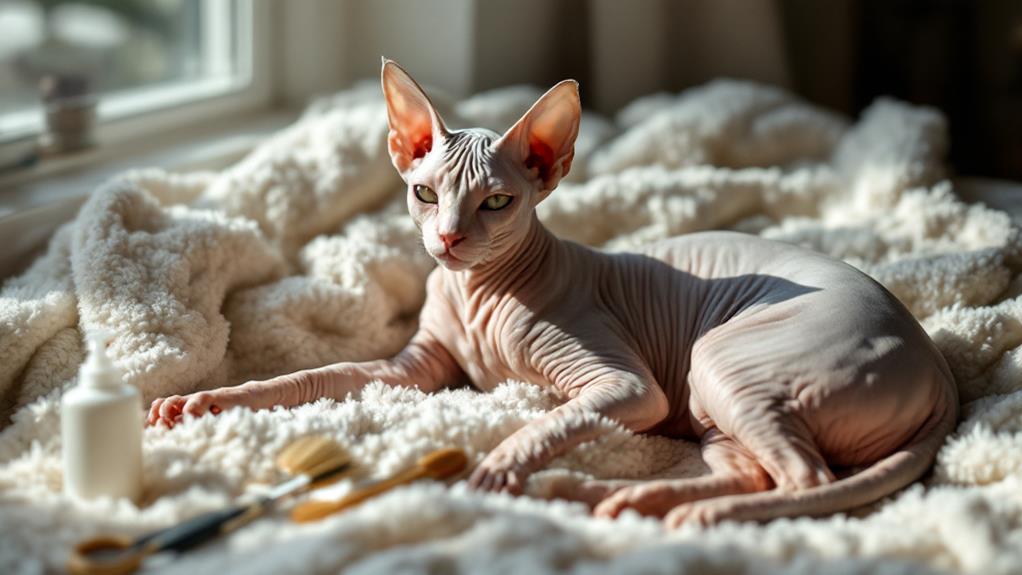
When owning a Sphynx or a Dwelf, understanding their care needs is vital for their health and happiness. Hairless cats like these require regular bathing to manage oil production on their skin. Without fur to absorb oils, their skin can become oily, leading to acne and irritation. A weekly skincare routine with cat-safe shampoos is fundamental for maintaining skin health and preventing oil buildup.
Besides skin care, their large ears need special attention. Dirt can easily accumulate in these areas, so clean them regularly using veterinarian-approved solutions. This prevents infections and keeps your cat comfortable.
Temperature extremes pose another challenge. Without fur, hairless cats are sensitive to both cold and heat. Guarantee they have cozy environments to thrive in, protecting them from harmful UV rays that can cause sunburn. Providing warm clothes or blankets can help them stay comfortable.
Regular veterinarian check-ups are vital. These visits monitor skin conditions and general health, addressing any concerns specific to hairless breeds. By giving your Sphynx or Dwelf the special attention they need, you guarantee a happy, healthy life for your unique feline friend.
Health Considerations for Owners
Owning a Sphynx Dwelf cat comes with unique health considerations that require your careful attention. Due to their lack of fur, Sphynx cats are more susceptible to skin irritations and have increased sensitivity to temperature changes. Regular veterinary check-ups are essential to monitor their health and catch any issues early. You should be vigilant for signs of skin conditions like acne or oil buildup, as these are common in hairless breeds.
To keep your Sphynx Dwelf healthy, guarantee they have proper grooming and care routines:
- Bi-weekly baths: This helps manage oil production and prevents skin infections, as their skin can get greasy without fur to absorb oils.
- Ear cleaning: Regular cleaning prevents buildup and potential infections, enhancing their comprehensive health.
- Balanced diet and hydration: Since Sphynx cats have higher body temperatures, maintaining proper hydration and nutrition supports their metabolism and health.
Understanding the genetic predispositions in Sphynx breeding can help you make informed decisions about your cat's care. Be attentive to their temperature sensitivity and create a comfortable environment. Your commitment to their health and well-being guarantees a happy life for your Sphynx Dwelf.
Myths About Hairless Cats
Hairless cats, like the Sphynx and Dwelf, often come with a host of misconceptions that can mislead potential owners. One prevalent myth is that these cats require no grooming. In reality, they need regular skin maintenance to avoid oil buildup and skin irritations. Although the hairless Sphynx and its kin lack fur, they still produce dander and saliva, dispelling the belief that they're hypoallergenic. If you're prone to allergies, don't assume you'll be safe around them.
Another misconception is that these cats are completely hairless, when in fact, they have a fine, peach-like fuzz covering their skin. This fuzz gives them their unique texture and requires attention to keep their skin healthy. You might also hear that hairless cats have extra sensitive skin. While they can get sunburned, their skin isn't inherently more sensitive than that of other cats.
Ethical Adoption Considerations
Adopting a hairless cat, like the Sphynx or Dwelf, involves careful consideration of ethical adoption practices. With the rising demand for hairless breeds, it's vital to be aware of the ethical concerns surrounding animal welfare and health. Overbreeding can lead to compromised genetic health, so always prioritize responsible breeders who focus on general well-being, not just the hairless trait.
When considering adoption, think about visiting shelters. Many hairless cats need homes, making adoption an ethical choice compared to buying from breeders. Shelters often have cats that require a loving environment, and adopting from them can help alleviate the pressures of overbreeding.
Be prepared for the specific needs of hairless breeds. Their lack of fur introduces potential health risks like temperature sensitivity and skin conditions. Here are three key considerations for potential adopters:
- Temperature Sensitivity: Without fur, these cats are more vulnerable to cold and heat, demanding a controlled environment.
- Skin Care: Regular baths are fundamental to prevent skin issues.
- Long-term Care: Hairless breeds require ongoing veterinary care and lifestyle adjustments for their unique needs.
Understanding these factors guarantees you're ready for the long-term commitment to their care.