Why Cats Are Independent: Understanding Feline Behavior
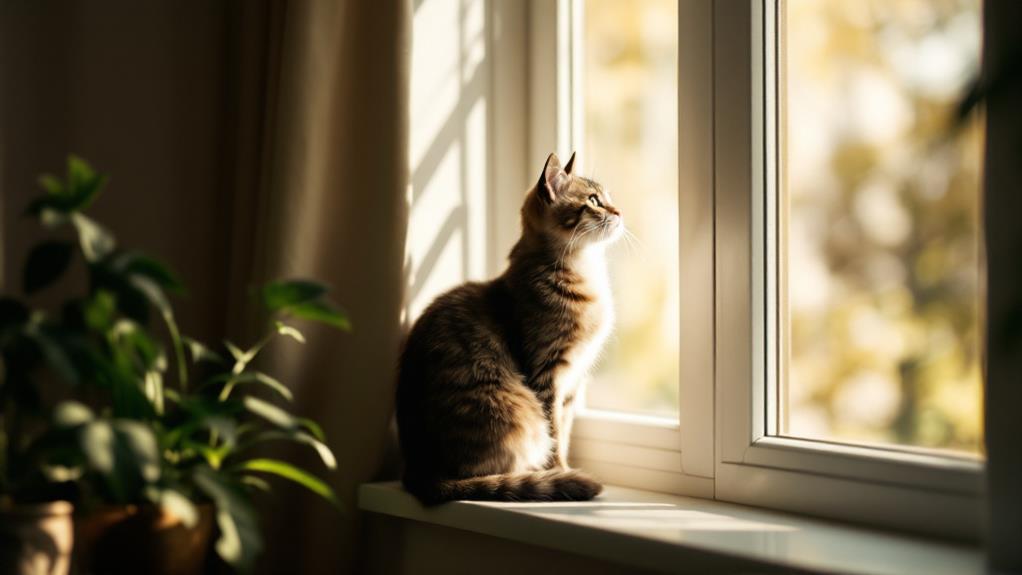
Cats are independent thanks to their evolutionary instincts and need for solitude. They thrive on their own, exploring without stress and valuing personal space for relaxation. Predictable routines give them security, reducing anxiety and unwanted behaviors. Cats are naturally territorial, marking their domain to guarantee safety. They show affection subtly, requiring you to understand their body language. Each cat's personality influences how independent or social they are. Unlike dogs, cats don't depend on us for emotional comfort, showcasing their autonomy. Uncovering more about their behaviors and instincts will offer greater insights into their remarkable independence.
Enjoying Solitude
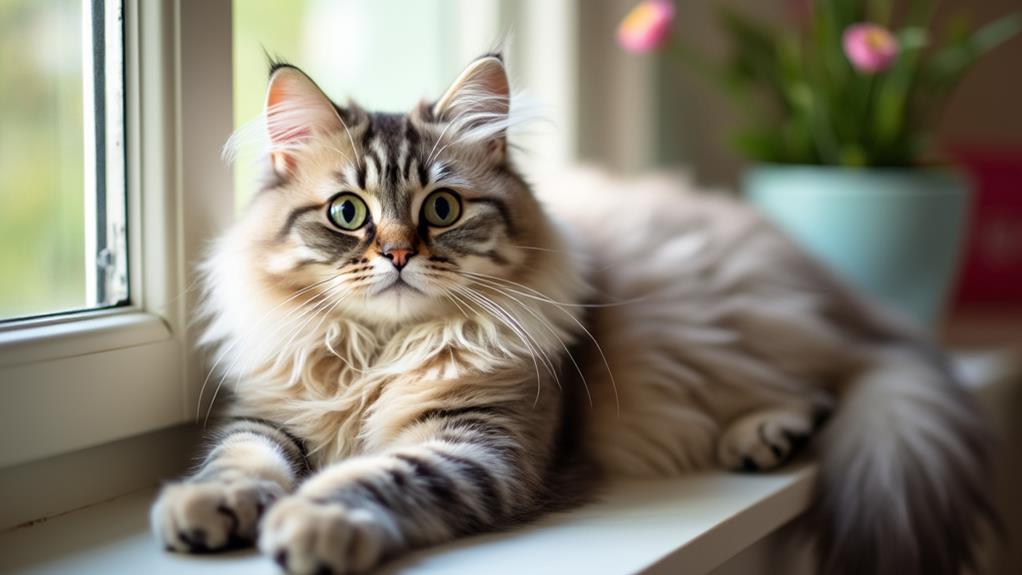
In understanding feline behavior, you'll quickly notice that cats have a natural penchant for solitude, allowing them to thrive in their own company. These independent creatures often relish the opportunity to investigate their surroundings without the stress of constant interaction. Regardless of whether it's lounging in a sunbeam or curling up in a cozy corner, cats appreciate their personal space for relaxation and comfort. Their ability to take uninterrupted cat naps exemplifies their enjoyment of these solitary moments.
Despite their independent nature, cats don't shy away from affection. They often show their appreciation for their human parents during playtime, and evening cuddles become cherished bonding moments. This balance between independence and interaction is essential for a fulfilling relationship with your feline friend. By respecting their need for personal space, you're honoring their natural instincts.
When they retreat to their chosen spots, it's not a sign of detachment but rather a moment to recharge. Providing your cat with the freedom to enjoy solitude fosters a harmonious household dynamic. Understanding this aspect of feline behavior enables you to support their independent spirit while strengthening the affectionate bond you share. Welcome their need for solitude, and your cat will thrive.
Routine and Security
While cats cherish their moments of solitude, they also rely on routine and security to feel truly at ease. Establishing a predictable routine provides them with a comforting sense of security, reducing anxiety and potential behavioral issues. When cats know what to expect, it helps them feel more in control of their environment, allowing their independence to flourish. However, disruptions in this routine or environment, such as moving furniture or introducing new pets, can lead to confusion and stress. These changes might prompt undesirable behaviors like excessive scratching or inappropriate urination, as their territorial nature makes them sensitive to unpredictability.
As a cat owner, recognizing signs of anxiety in your feline friend is essential. These signs can include changes in behavior or vocalizations. By noticing these cues, you can make adjustments to help your cat regain their sense of security. Maintaining consistent feeding schedules and creating safe, familiar spaces are supportive adjustments that can restore their comfort and independence. Providing this stable environment not only reassures your cat but also strengthens the bond you share. Remember, a familiar and predictable environment is vital to keeping your cat happy and stress-free.
Territorial Instincts
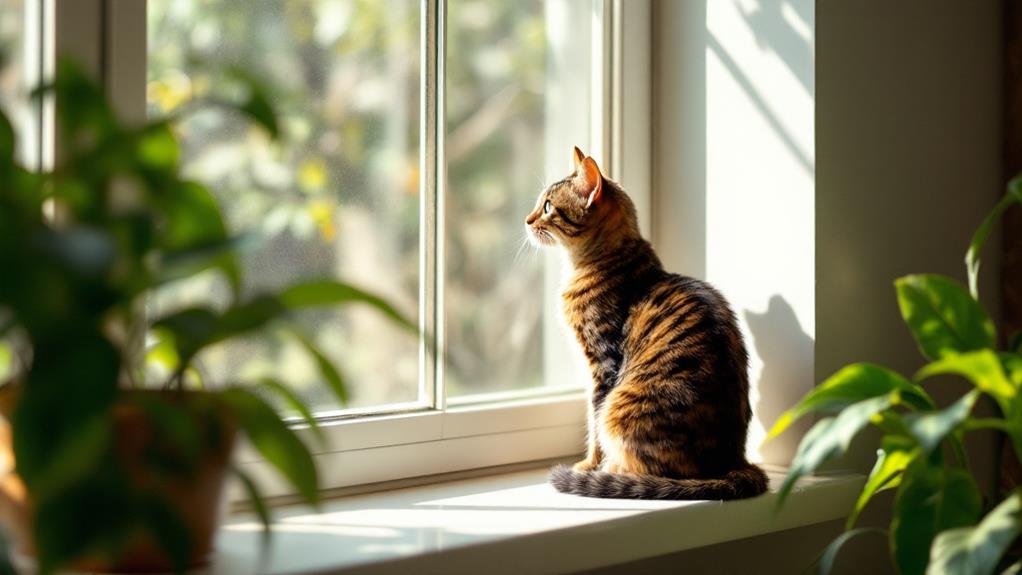
Cats have an innate drive to claim and control their territory, vital for their security and independence. This territorial behavior guarantees that your cat feels safe and in control of their environment. By marking their territory, often through spraying, cats communicate their presence to other felines, subtly asserting ownership and reducing potential conflicts. Their territorial instincts are not just about marking boundaries but also about maintaining access to critical resources like food, water, and safe resting spots.
In multi-cat homes, it's significant to recognize each cat's need for personal space and preferences. Providing individual resources minimizes disputes and fosters harmony. Here's what you can do:
- Confirm each cat has its own food bowl, bed, and litter tray to prevent competition.
- Observe their sleeping spot preferences, which may change with their mood.
- Recognize that spraying is a form of communication, not just a nuisance.
- Provide vertical spaces like shelves or cat trees to expand their territory.
- Regularly play with your cats to satisfy their instincts and reduce stress.
Human Interactions
Engagement with humans forms a unique aspect of feline behavior, showcasing their capacity for affection and interaction. Cats express their affection subtly, through behaviors like head bunting, slow-blink "kisses," and purring. These gestures strengthen the bond between you and your cat, building a sense of companionship. Despite their autonomy, cats appreciate social interactions, though they approach them on their own terms. Unlike dogs, they don't rely on you for safety and security, often showing comfort in unfamiliar environments.
Understanding a cat's body language is essential in enhancing these interactions. Recognizing the specific areas they prefer to be touched can improve your bond and prevent misunderstandings. For instance, a twitching tail or flattened ears can indicate discomfort, while a gentle purr signals contentment. Playtime also plays a significant role in human-feline interactions. Using interactive toys that mimic hunting behaviors not only entertains your cat but also nurtures your connection.
While cats are independent, they still need care and companionship. Misinterpreting their behaviors might lead you to overlook their need for social interaction. By acknowledging their subtle cues, you foster a rewarding relationship that respects their unique nature.
Distinct Personalities
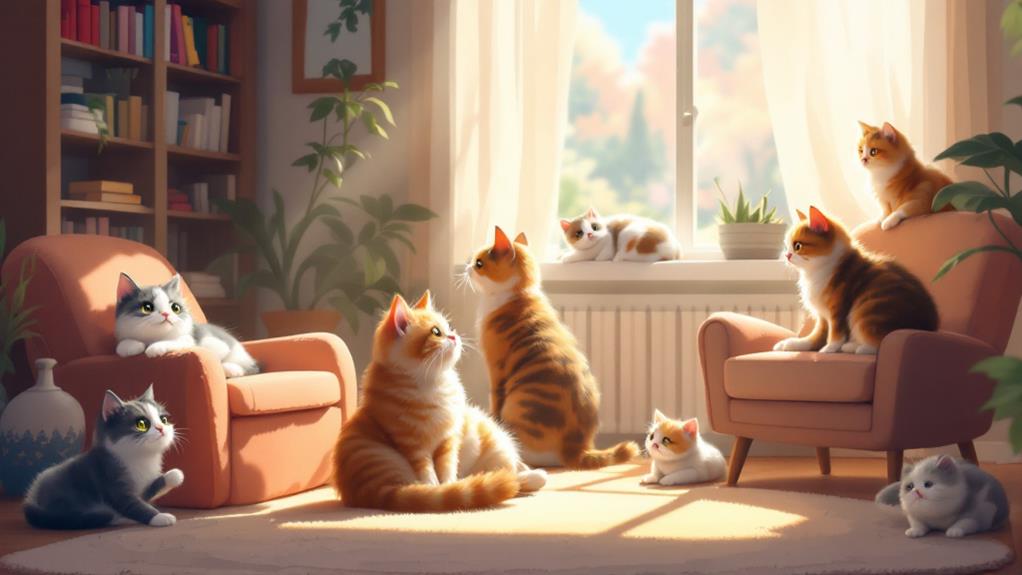
Just as they interact with humans in unique ways, each cat possesses a distinct personality that defines their behavior and preferences. You'll notice that these personalities can range from highly independent to more sociable, reflecting their unique temperaments and individual preferences. Some cats relish social interaction and actively engage in play, while others value their personal time for investigation and solitary activities. This diversity means that understanding your cat's distinct personality is essential for fostering a healthy relationship.
To improve their comfort, consider creating a calming environment where they can feel at ease. Products like the FELIWAY Optimum Diffuser can be beneficial in soothing and accommodating different personalities. Cats often select their own resting areas, favoring sunny spots that cater to their independent nature. Recognizing this behavior can help you cater to their need for comfort and relaxation.
- Independent adventurers: Some cats love investigating new environments independently.
- Social butterflies: These cats enjoy frequent interaction and playtime.
- Solitary observers: Preferring quiet observation over active engagement.
- Calm seekers: Appreciate a calming environment for ideal relaxation.
- Sun lovers: Often choose sunny resting areas for warmth and comfort.
Understanding these traits helps you provide the perfect balance of interaction and independence.
Attachment Styles
Curiously, the way cats form attachments is quite different from that of dogs, reflecting their unique social behaviors. Research from the University of Lincoln highlights that cats often don't see their owners as a source of safety and security. Unlike dogs, who rely on their owners as a secure base in unfamiliar environments, cats exhibit a remarkable level of independence. This independence is evident in their attachment styles. When cats vocalize as you leave, it typically signals frustration rather than deep emotional reliance or secure attachment.
The study adapted the Ainsworth Strange Situation Test to assess how cats form attachments. It found that cats show more autonomy when facing strange scenarios. Unlike their canine counterparts, who display clear signs of secure attachment, cats manage their social behavior with a degree of self-reliance. These findings challenge the traditional belief that feline friends are emotionally dependent on their human companions. Instead, cats may enjoy your company, but their relationships aren't typically grounded in secure attachment. Understanding this independence can help you appreciate the unique ways your feline friends interact with you, emphasizing their preference for autonomy over dependence.
Social vs. Solitary
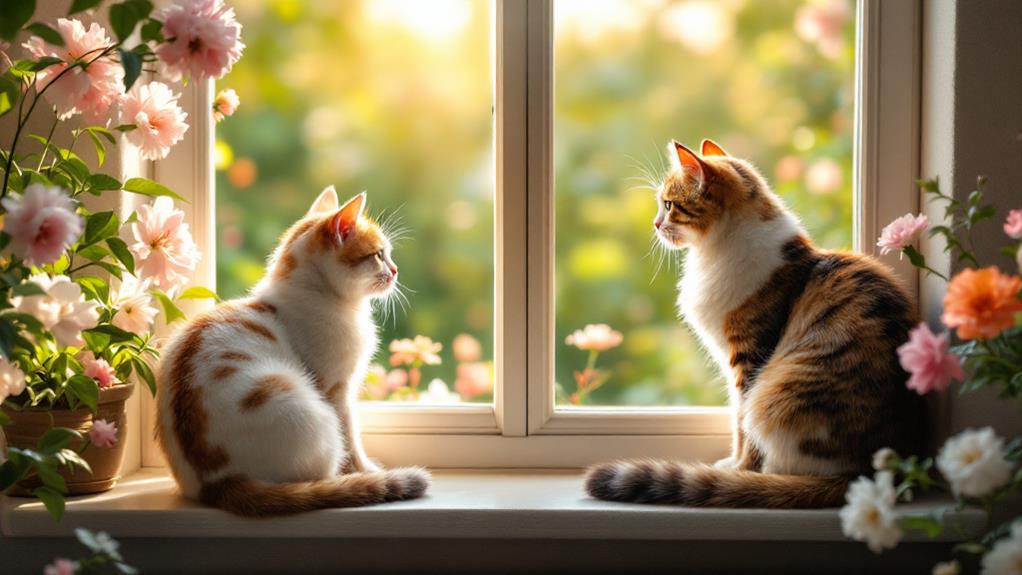
In understanding feline behavior, it's essential to recognize the balance between their social and solitary tendencies. Cats often display a remarkable degree of independence, contrasting with more social animals like dogs. While they can enjoy companionship, their social structures primarily depend on resource availability rather than constant interaction. This means that in a multi-cat household, providing adequate resources such as food bowls and litter trays can encourage more harmonious social behaviors and reduce territorial disputes.
Cats are unique because they are both solitary hunters and social creatures. Their interactions with other animals or humans can vary greatly based on their environment. They generally cope well in unfamiliar settings, further emphasizing their solitary nature. To better understand these behaviors, consider the following:
- Independence: Cats thrive on their ability to function alone, requiring less emotional support.
- Social Structures: Their social networks often form around available resources.
- Interactions: Positive interactions often stem from adequate resource management.
- Coping: Cats adapt well to new environments, highlighting their solitary traits.
- Territorial: Proper resource distribution can minimize territorial conflicts.
Understanding this balance helps you create a living environment that respects and nurtures your cat's natural independence.