What You Need to Know When Caring for a Senior Cat: Health and Comfort Tips
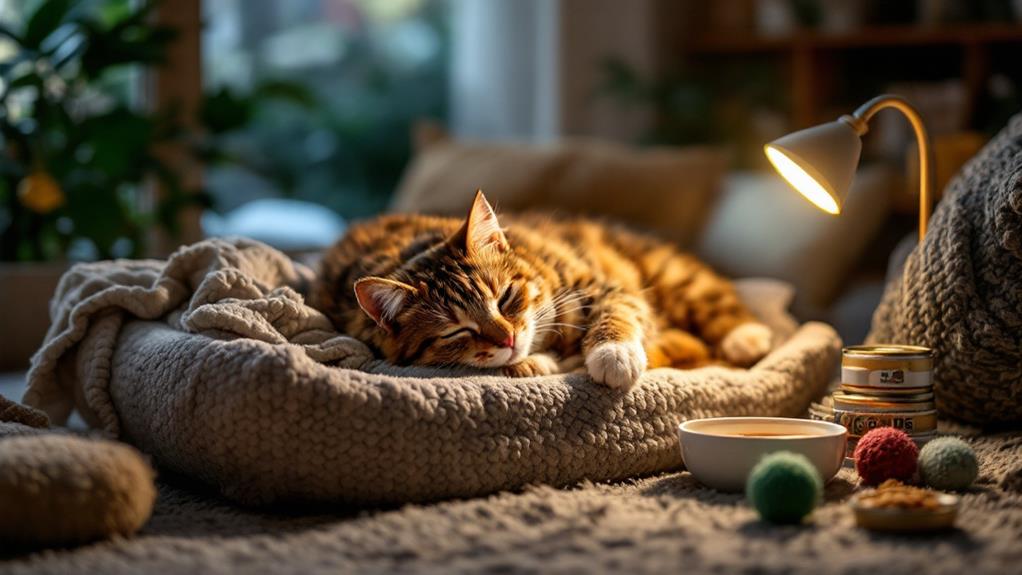
When caring for a senior cat, prioritize their health by scheduling veterinary check-ups every four to six months. Make home modifications like using low-sided litter boxes, ramps, and nightlights to improve comfort. Groom your cat regularly to prevent matting and check for health issues, while ensuring proper hydration with canned food and accessible water sources. Monitor your cat's behavior for changes in appetite, activity, or grooming. Recognize signs of pain such as decreased energy or reluctance to climb. Provide emotional support with predictable routines and gentle play. Exploring further will offer deeper insights into the well-being of senior cats.
Regular Veterinary Checkups
Making sure your senior cat receives regular veterinary checkups is fundamental for maintaining their health and well-being. As cats grow older, particularly those between 10-15 years, it's recommended to schedule these check-ups every six months. For cats over 15 years, increasing the frequency to every four months helps closely monitor their health. These regular veterinary visits are imperative for early detection of diseases, which often present as subtle shifts in their behavior or physical condition that might be easily overlooked at home.
Building a strong relationship with a veterinarian is significant. They can recognize health changes more effectively due to their familiarity with your cat's history and personality. During these visits, blood work is an essential tool in identifying any underlying health issues, allowing for timely intervention. Dental care, too, is a key aspect of these check-ups, as dental problems can lead to more serious health concerns if left untreated.
Monitoring health through routine examinations not only helps keep track of your cat's weight and health trends but also guarantees any subtle changes are addressed promptly. Keeping diligent records during these visits aids in identifying potential health concerns before they escalate.
Adapting the Home Environment
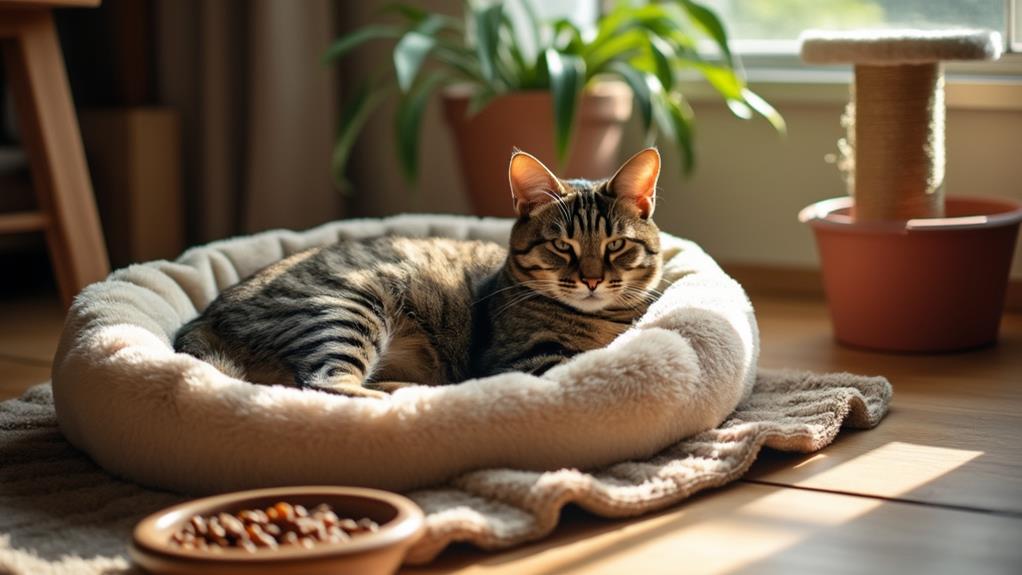
As your cat matures, adapting their home environment can greatly improve their quality of life. Senior cats often face mobility and sensory challenges, so making a few thoughtful adjustments can augment their comfort and access. Start by creating warm resting areas with soft bedding in draft-free spots, as older cats tend to struggle with regulating body temperature. Soft bedding offers the comfort they need for a restful sleep.
Consider these home adjustments:
- Low-sided litter boxes: Place them on each floor of your home for easy access, helping your cat avoid the challenge of stairs.
- Ramps or steps: These assist senior cats in reaching favorite perches without straining joints, which is essential for those with arthritis.
- Nightlights: Install them to help vision-impaired cats navigate safely at night, reducing anxiety and preventing accidents.
- Raised food and water bowls: Elevating them slightly minimizes joint strain during meals, promoting healthier eating and drinking.
- Soft bedding: Confirm that their resting spots are cozy and warm, ideal for maintaining comfort and reducing discomfort from cold drafts.
Grooming and Maintenance
In conjunction with creating a comfortable environment, maintaining your senior cat's grooming routine is imperative for their well-being. As cats grow older, their self-grooming abilities often decline. This can lead to matting and skin issues, which require your prompt attention. Regular grooming is essential to help prevent these problems, especially if your cat has long hair. Frequent brushing not only prevents tangles but also maintains coat condition by stimulating circulation.
Keep an eye on any sudden changes in grooming behavior. If your senior cat shows a decreased interest in self-grooming, it might indicate underlying health problems that need veterinary evaluation. Increased grooming frequency might be necessary, particularly for senior cats with mobility issues. These cats may struggle to reach certain areas, resulting in matting and hygiene concerns.
During grooming sessions, monitor your cat's coat condition closely. A dull or unkempt appearance can signal health concerns or nutritional deficiencies. Addressing such issues early on is important for maintaining your cat's general health. By staying attentive to your senior cat's grooming needs, you'll help them remain comfortable and healthy in their golden years. With a little extra care, you'll support their well-being greatly.
Nutrition and Hydration
A well-balanced diet and proper hydration play significant roles in maintaining your senior cat's health. As cats grow older, their nutritional needs change, and staying on top of these changes is essential. You should consult a veterinarian to discuss potential dietary adjustments, as senior cats often require increased protein intake to combat muscle loss and maintain a healthy weight. Canned food can be especially advantageous for senior cats since it aids in hydration, which is critical for those prone to kidney disease and constipation.
To guarantee your cat remains hydrated, provide multiple water sources around your home. This encourages more frequent water intake, which is imperative for complete organ function. Remember, accessibility is key. Place food and water bowls in quiet, comfortable areas to make them easily accessible for senior cats, particularly those with mobility issues.
Here are some tips to keep in mind:
- Consult your veterinarian for personalized dietary adjustments.
- Incorporate canned food to enhance hydration.
- Provide several water sources like bowls and fountains.
- Monitor your cat's eating habits for any signs of medical changes.
- Guarantee easy access to food and water bowls.
Monitoring Health Changes
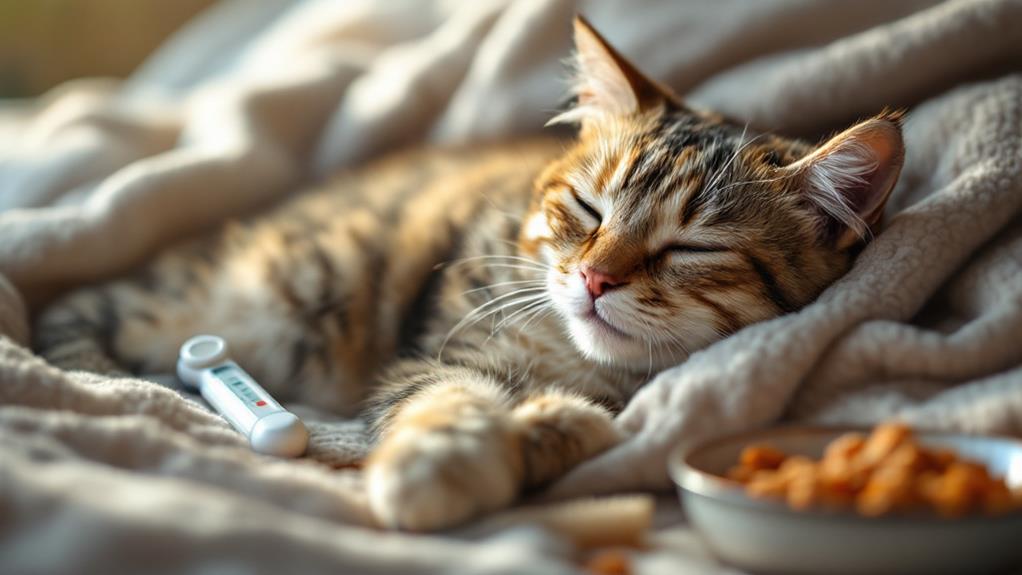
Nutrition and hydration form the foundation of your senior cat's health, but keeping a close eye on health changes is just as critical. Monitoring health changes helps you detect potential health issues early. Watch for behavior changes like shifts in sleeping patterns, appetite, and activity levels. These can be subtle signs of illness. Maintaining a daily journal to track your cat's habits, including litter box usage and eating patterns, is essential. It allows you to spot any changes that might indicate underlying health concerns.
Pay attention to increased thirst or changes in urination frequency. These are significant signs and could point to conditions such as kidney disease or diabetes, warranting immediate veterinary consultation. Furthermore, observe your senior cat's grooming habits. Decreased grooming or changes in coat condition may signify health problems, as senior cats often struggle with self-grooming due to mobility issues or pain.
Regular veterinary check-ups are important for addressing any health changes. For cats over ten years old, these should occur every six months. These visits help you manage and monitor any emerging health issues, ensuring your senior cat remains as healthy and comfortable as possible.
Recognizing Pain Signs
Pain in senior cats can often be challenging to identify, as they tend to hide their discomfort well. Studies show that 90% of senior cats have signs of arthritis, so it's essential to watch for subtle changes in their behavior. A decrease in energy levels, altered sleeping patterns, or reluctance to participate in activities they once enjoyed might indicate underlying pain. Mobility issues, such as trouble jumping or using the litter box, could signal joint pain or other health concerns that need a veterinarian's attention.
Regularly assess and monitor your senior cat for any signs of discomfort to guarantee their quality of life. Changes in grooming habits or increased irritability are significant indicators that something may be off. If you notice any of these signs, consult your veterinarian about pain management options. Early intervention can greatly improve your cat's well-being.
Here's what to look for:
- Decreased energy levels
- Altered sleeping patterns
- Reluctance to engage in activities
- Difficulty with mobility tasks, like jumping
- Changes in grooming habits or irritability
Emotional and Social Needs
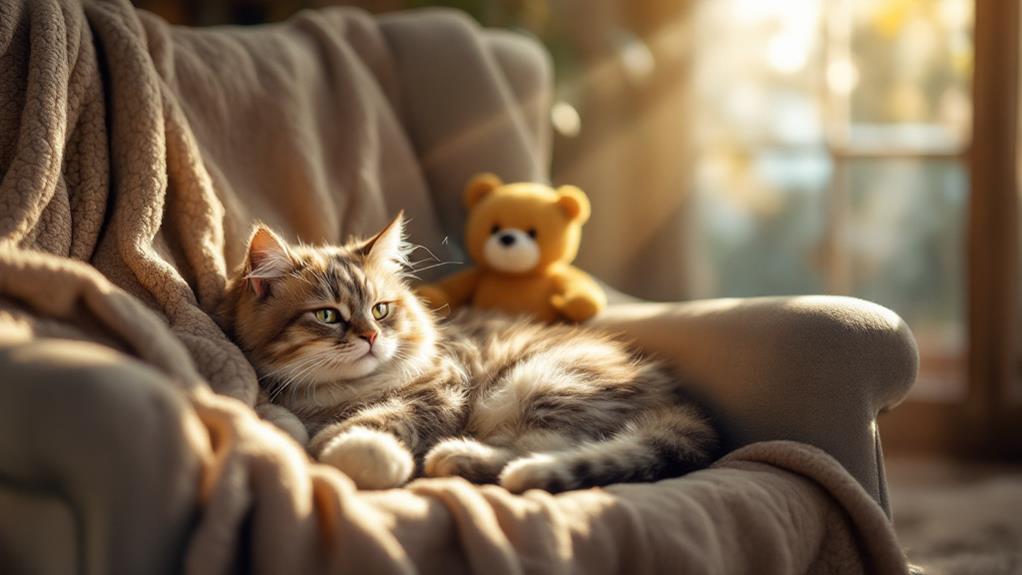
As your cat matures, you'll notice they may need more emotional support and attention to stay content. Senior cats often experience anxiety and behavioral changes due to aging. To help them feel secure, establish predictable daily routines. This consistency provides comfort and reduces stress, promoting your cat's general well-being. Avoid introducing energetic kittens into the home, as their rambunctious nature can overwhelm your senior cat, increasing their anxiety and stress levels.
Engaging your older cat with gentle play activities is essential for maintaining their activity levels and mental health. Choose toys that are easy for them to interact with and focus on short, enjoyable play sessions. This not only keeps them physically active but also mentally stimulated, addressing their emotional needs and improving their well-being.
Spending quality time with your senior cat strengthens your bond, offering them the emotional support they crave. Simple activities, like sitting together or gently brushing their fur, provide comfort and a sense of security. Understanding these emotional and social needs is key to ensuring your senior cat remains happy and healthy in their golden years, ultimately enhancing their overall quality of life.
Weight and Diet Management
Caring for your senior cat's emotional well-being goes hand in hand with managing their physical health, particularly concerning weight and diet. Senior cats often face decreased metabolism, so it's essential to monitor their calorie intake to prevent obesity, which can lead to chronic diseases. Focus on a balanced diet rich in protein to help combat muscle loss. It's wise to consult your veterinarian to tailor dietary recommendations specific to your cat's health needs. Mixing wet and dry food can enhance hydration, vital since senior cats are prone to dehydration, contributing to kidney issues and constipation.
Regularly assess your cat's body condition score to catch weight-related health risks early. If you notice gradual changes, like unexpected weight loss, it's time to visit the veterinarian, as this might signal underlying issues such as hyperthyroidism or diabetes.
Here are some tips to keep in mind:
- Monitor calorie intake and adjust portions to manage weight.
- Include high-protein foods to support muscle mass.
- Mix wet and dry food for better hydration.
- Regularly check the body condition score.
- Consult your veterinarian for personalized diet advice.